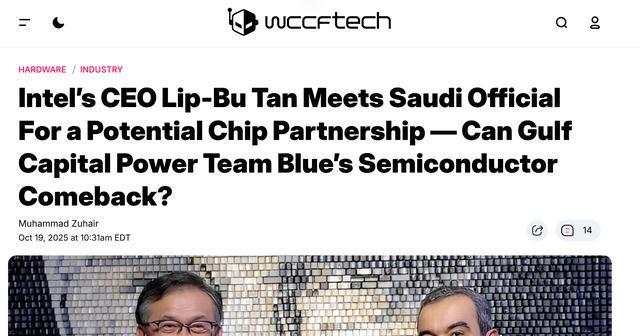
INTEL(04335)

Search documents
美股前瞻 | 三大股指期货齐跌 油价跳涨 特斯拉、IBM绩后走低 英特尔盘后公布财报
智通财经网· 2025-10-23 11:59
盘前市场动向 1. 10月23日(周四)美股盘前,美股三大股指期货齐跌。截至发稿,道指期货跌0.20%,标普500指数期货跌0.11%,纳指期货跌 0.21%。 | = US 30 | 46,498.50 | 46,615.60 | 46,418.50 | -91.90 | -0.20% | | --- | --- | --- | --- | --- | --- | | = US 500 | 6.692.10 | 6,716.60 | 6,682.80 | -7.30 | -0.11% | | 트 US Tech 100 | 24,827.40 | 24,973.10 | 24,799.30 | -51.60 | -0.21% | 2. 截至发稿,德国DAX指数跌0.15%,英国富时100指数涨0.62%,法国CAC40指数涨0.40%,欧洲斯托克50指数涨0.30%。 | 德国DAX30 | 24,121.53 | 24,221.46 | 24,037.79 | -36.24 | -0.15% | | --- | --- | --- | --- | --- | --- | | 英国富时100 | 9,574 ...


股价飙升、资金涌入,英特尔(INTC.US)面临高业绩门槛考验
智通财经网· 2025-10-23 11:46
智通财经APP获悉,此前,白宫、英伟达(NVDA.US)和软银集团(Softbank Group Corp.)的一波投资推动 英特尔(INTC.US)股价在不到三个月内飙升86%,这家芯片制造商即将于周四盘后披露第三季度财报, 投资者在净利润数据之外,还将重点关此次财报成绩单透露的深层信息。 此次股价涨势迅猛,以至于近几周多名分析师下调了其评级。美国银行上周在给客户的报告中将英特尔 评级从"中性"下调至"跑输大盘",并表示担忧该股"涨得太快、太高"。市场热情的高涨也推高了英特尔 股价的估值——目前其未来12个月动态市盈率已达63倍,远高于1月的约20倍,跻身标普500指数成分股 中估值最高的15家公司之列。 这一涨幅格外引人注目,因为就在大约一年前,英特尔被道琼斯工业平均指数剔除——它自1999年起便 已加入该指数——取而代之的是其竞争对手、人工智能领域热门企业英伟达。 周三,特朗普政府表示正考虑针对科技行业出台对华出口限制措施,受此影响,英特尔股价承压,当日 收跌3.2%,报36.92美元,但这一价格仍远高于市场共识的12个月目标价28.80美元。费城证券交易所半 导体指数当日下跌2.4%,除一只成分股外, ...

“ 红蓝厂”主导的服务器CPU迎来新势力! NextSilicon携RISC-V架构挑战英特尔与AMD
Zhi Tong Cai Jing· 2025-10-23 07:25
Core Insights - NextSilicon, an Israeli chip startup, is developing a new CPU based on the open-source RISC-V architecture, aiming to compete with AMD and Intel in the data center server CPU market [1][2] - The company's flagship product, the Maverick-2 data stream accelerator, is designed to significantly enhance precision scientific computing tasks, previously dominated by Nvidia [2] - NextSilicon's upcoming RISC-V architecture CPU, named "Arbel," is intended for high-performance computing (HPC) scenarios and aims to challenge the traditional x86+GPU architecture [5][6] Company Developments - NextSilicon has raised approximately $300 million in funding to support its chip development efforts [2] - The Maverick-2 is currently in mass production, while the Arbel CPU is still in the testing phase [4] - The company claims that its architecture can execute similar computing tasks as Nvidia's GPUs with faster speeds and lower power consumption without requiring extensive software code rewrites [4] Industry Context - The RISC-V architecture is gaining traction in the chip design sector, positioning itself as a competitor to the established x86 and ARM architectures [5] - RISC-V's open nature allows free access and usage, making it popular among academia, startups, and large tech companies [5] - The integration of RISC-V in data centers is expected to challenge the dominance of x86 and ARM architectures, potentially reshaping market dynamics [5][6]


“?红蓝厂”主导的服务器CPU迎来新势力! NextSilicon携RISC-V架构挑战英特尔与AMD
Zhi Tong Cai Jing· 2025-10-23 07:22
Core Insights - NextSilicon, an Israeli chip startup, is developing a new CPU based on the open-source RISC-V architecture, aiming to challenge the dominance of Intel and AMD in the data center server CPU market [1][2][5] - The company's flagship product, the Maverick-2 data stream accelerator, is designed to significantly enhance precision scientific computing tasks, previously dominated by Nvidia [2][4] - NextSilicon's upcoming RISC-V CPU, named "Arbel," is targeted at high-performance computing (HPC) scenarios and is intended to work closely with the Maverick-2/3 accelerators [5][6] Group 1 - NextSilicon has raised approximately $300 million in funding to support its development efforts [2] - The Maverick-2 operates on a "data flow/reconfigurable" architecture, integrating multiple RISC-V cores to handle serial code paths and control tasks efficiently [3][4] - The company claims that its products can execute similar computational tasks as Nvidia's GPUs with faster speeds and lower power consumption, without requiring extensive software code rewrites [4] Group 2 - The RISC-V architecture is gaining traction in the server domain, posing significant pressure on both x86 and ARM architectures [4][6] - NextSilicon's Arbel CPU is positioned to create a "host + accelerator" stack that competes directly with the traditional x86 + GPU architecture [5][6] - The open nature of RISC-V allows for widespread adoption across academia, startups, and large tech companies, making it a formidable competitor to ARM [6]
“红蓝厂”主导的服务器CPU迎来新势力! NextSilicon携RISC-V架构挑战英特尔与AMD
智通财经网· 2025-10-23 07:15
Core Insights - NextSilicon, an Israeli chip startup, is developing a new CPU based on the open-source RISC-V architecture, aiming to compete with AMD and Intel in the data center server CPU market [1][2] - The company's flagship product, the Maverick-2 data stream accelerator, is designed to significantly enhance precision scientific computing tasks, previously dominated by NVIDIA [2] - NextSilicon's upcoming RISC-V architecture CPU, named "Arbel," is targeted at high-performance computing (HPC) scenarios and is currently in the testing phase [5][6] Group 1: Product Development - NextSilicon has raised approximately $300 million in funding to support its chip development efforts [2] - The Maverick-2 is characterized as a "data flow/reconfigurable" accelerator, integrating multiple RISC-V cores to handle serial code paths and control tasks efficiently [3] - The company claims that Maverick-2 can execute similar types of computations as NVIDIA's GPU products with faster speeds and lower power consumption without requiring extensive software code rewrites [4] Group 2: Market Positioning - The RISC-V architecture is gaining traction in the server domain, posing significant pressure on x86 and ARM architectures [6][7] - NextSilicon's Arbel CPU is positioned to challenge the long-standing dominance of Intel and AMD in the server CPU market, particularly in HPC applications [6][7] - The open nature of RISC-V allows for broader access and usage, making it popular among startups and large tech companies, and it is increasingly being adopted in data center environments [6][7] Group 3: Competitive Landscape - NextSilicon's architecture aims to reduce instruction and data transfer overhead compared to traditional CPU/GPU architectures, enhancing energy efficiency and throughput [7] - The integration of RISC-V in data centers is expected to create a competitive dynamic with x86 and ARM architectures, potentially leading to a shift in market share [6][7] - The ongoing evaluation of NextSilicon's chips by the Sandia National Laboratories indicates promising performance results, highlighting the potential for significant computational capability improvements [4]
英特尔之后,特朗普政府欲用联邦资金入股多家量子计算公司
Feng Huang Wang· 2025-10-23 02:19
凤凰网科技讯 北京时间10月23日,据《华尔街日报》报道,多家量子计算公司正在洽谈向美国商务部 出让股权,以换取联邦资金支持。这表明,特朗普政府正在扩大对其认为是关键经济领域的干预力度。 据知情人士透露,包括IonQ、Rigetti Computing和D-Wave Quantum在内的多家公司正在讨论让美国政府 成为股东,以换取政府为有潜力的科技公司提供的专项资金。Quantum Computing Inc和Atom Computing等其他企业也在考虑类似安排。 知情人士称,这些公司正在争取美国政府为每家企业提供的最低1000万美元资助额度。其他科技公司预 计也将加入这场资金角逐战。 知情人士称,美国商务部副部长保罗·达巴尔(Paul Dabbar)正牵头负责政府与该行业公司的资金洽谈。达 巴尔曾是量子计算行业高管,并担任过能源部官员。商务部的一名官员表示,由达巴尔联合创立并担任 四年CEO的Bohr量子科技公司不在此次资助候选名单之列。 今年8月,美国政府同意利用89亿美元的联邦补助资金收购英特尔近10%的股份,这一安排将使得美国 政府成为英特尔的最大股东。此前,美国已与某稀土材料生产商达成了类似协议, ...

美股异动 | 芯片股普跌 英特尔(INTC.US)跌逾4%
智通财经网· 2025-10-22 15:45
Group 1 - U.S. chip stocks experienced a broad decline on Wednesday, with Intel (INTC.US) and AMD (AMD.US) dropping over 4% [1] - Micron Technology (MU.US) fell by more than 3%, while TSMC (TSM.US) and NVIDIA (NVDA.US) saw declines of over 1% [1]


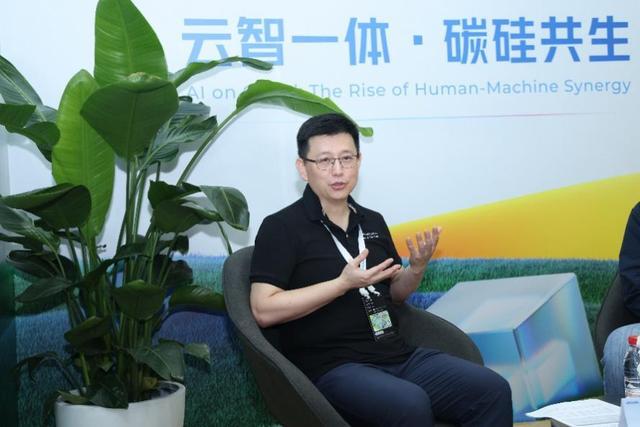
英特尔与阿里云深度合作 CPU重新定义“中央调度”
Huan Qiu Wang Zi Xun· 2025-10-21 05:54
Core Insights - Intel and Alibaba Cloud announced a series of cloud instances and storage solutions based on the new generation Xeon® 6 processors, addressing the challenges posed by AI scalability on cloud infrastructure [1][9] - High performance, high elasticity, and low total cost of ownership (TCO) are becoming key competitive indicators for global cloud providers [1] Group 1: Cloud Infrastructure Innovations - The introduction of "memory pooling" and flexible architecture is transforming cloud infrastructure, allowing dynamic allocation of resources based on demand [2][6] - Alibaba Cloud has deployed a unified hardware architecture across 29 global regions and 91 availability zones, enabling rapid resource allocation in response to sudden computing demands [4][9] Group 2: AI and Heterogeneous Computing - AI-driven heterogeneous computing is redefining the role of CPUs as central coordinators, with Intel integrating AMX matrix acceleration instruction sets to support various precision calculations [7] - The Xeon® 6 processors can efficiently handle large AI models, demonstrating significant performance improvements in various applications, such as data preprocessing for autonomous driving [7][8] Group 3: Collaboration and Competitive Edge - The stability and engineering support of the collaboration between Intel and Alibaba Cloud are highlighted as foundational elements for their long-term partnership [8] - The optimization of both hardware and software is becoming a key differentiator in the market, with Alibaba Cloud leveraging CXL 2.0 memory pooling technology for enhanced performance [8][9] Group 4: Future Directions - The shift from cloud adoption to intelligent cloud solutions is seen as an inevitable development path, with AI moving into a phase of large-scale application [9][10] - The collaboration between Intel and Alibaba Cloud aims to provide scalable and sustainable pathways for various industries through enhanced hardware performance and optimized software stacks [9][10]
为摆脱危机,英特尔寻求与沙特合作
Huan Qiu Wang Zi Xun· 2025-10-20 06:04
Core Insights - Intel's CEO Pat Gelsinger met with Saudi Arabia's Minister of Communications and Information Technology, Abdullah Al-Swaha, to discuss potential collaboration in the semiconductor and artificial intelligence sectors [1][3] - This interaction is seen as a strategic move for Intel to explore new development paths and reflects the deep interconnection between global semiconductor industry dynamics and regional economic transformations [3] Group 1: Intel's Strategic Moves - Intel is currently facing competitive and developmental challenges in the chip industry, and the communication with Saudi Arabia is viewed as a key initiative to expand its "capital front" and seek external partnerships [3] - The discussions focused on the synergy between advanced computing technologies and the semiconductor industry, highlighting a willingness for collaboration in technological innovation and industrial implementation [3] Group 2: Regional Economic Transformation - Gulf countries, including Saudi Arabia and the UAE, are actively promoting economic structural transformation, aiming to reduce reliance on the oil industry and focus on high-tech fields such as artificial intelligence and semiconductors [3] - Despite having limited experience in manufacturing, Saudi Arabia possesses resource advantages that support large-scale production operations, providing foundational conditions for the semiconductor industry [3] - Previous attempts, such as Qatar's invitation to TSMC to establish a factory, although unsuccessful due to labor costs and supply chain constraints, indicate the Gulf countries' commitment to the semiconductor industry's development [3]