蚂蚁集团(06688)

Search documents
蚂蚁集团发布AI眼镜可信连接技术框架gPass,Rokid、小米等AI眼镜已率先应用
Xin Lang Ke Ji· 2025-09-12 03:06
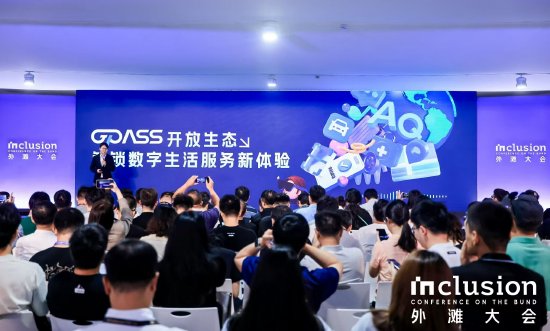
Core Insights - Ant Group launched the world's first trusted connection technology framework for smart glasses, named gPass, at the 2025 Inclusion Bund Conference, focusing on "security, interaction, and connectivity" [1][2] - The current AI glasses industry is still in the basic interaction stage, with significant gaps compared to smartphones, due to limited hardware capabilities and a fragmented software ecosystem [1] - gPass aims to address the urgent need for a unified, secure, and interconnected infrastructure to advance AI glasses from basic tools to personal intelligent assistants [1][2] Security Capabilities - gPass incorporates financial-grade security features, ensuring user information safety through trusted identity circulation, end-to-end encryption, and device authentication [2] - The technology has successfully adapted to both Android and RTOS chip-level security solutions [2] Interaction Features - gPass integrates biometric technologies such as voiceprint, iris, and fingerprint recognition for seamless user verification, enhancing reliability and security [2] Connectivity Functions - gPass intelligently recognizes user context, enabling instant and secure message exchanges with various smart devices, featuring cross-device synchronization and multi-modal reminders [2] - The technology has been applied to brands like Rokid, Xiaomi, Quark, and Thunderbird, with future applications in healthcare, travel, and cultural sectors [2]

2025外滩大会开幕,蚂蚁集团CEO韩歆毅:在医疗健康领域,专业AI做到极致会更强
Cai Jing Wang· 2025-09-11 16:57
Core Insights - The discussion at the 2025 Inclusion Bund Conference highlighted the transformative potential of AI in redefining user interfaces, business models, and industry divisions [1] Group 1: AI Applications and Market Dynamics - The rise of AI has initiated a competition for user entry points, with significant implications for software demand, particularly in low-code and no-code applications, which may see a 10% reduction in user numbers [3] - Investors are focusing on user retention as a key metric for AI products, noting that the cost of user recall for AI products could be over ten times that of mobile internet products [3] - Specialized AI applications in sectors like healthcare are seen as irreplaceable by general models, with a focus on personalized services and high-frequency user engagement [3][4] Group 2: Hardware Innovations and User Interaction - AI is driving a reimagining of hardware, with products like AI phones, glasses, and robots emerging, emphasizing the importance of user engagement and interaction [4] - AI glasses are changing interaction paradigms, with usage frequency reported to be 6 to 7 times higher than that of mobile phones [5] - The future of AI hardware lies in creating scenarios with strong user stickiness, particularly in AI glasses [4][5] Group 3: Entrepreneurial Opportunities and Market Trends - The AI sector is expected to experience a significant surge in applications in the coming year, with ample opportunities for entrepreneurs [5] - There is a noted difference in AI entrepreneurship between the US and China, with the US focusing more on B2B and China excelling in C2C applications [5] - In specialized service areas, there remains substantial room for entrepreneurial exploration, particularly in healthcare AI [5][7] Group 4: Challenges and Strategic Focus - Companies should prioritize high-quality data chains, professional capabilities, and ethical considerations over immediate commercialization in the AI healthcare space [6] - The focus should return to understanding human needs, which remain constant, while leveraging AI for enhanced user experiences [7]

蚂蚁集团韩歆毅:坚决不发虚拟币 不参与任何形式炒作
Bei Jing Shang Bao· 2025-09-11 15:39
Core Viewpoint - Ant Group's CEO Han Xinyi emphasized the importance of balancing the exploration of token economy value and risk prevention, stating that compliance is the lifeline of innovation [1] Group 1: Compliance and Innovation - Ant Group has clearly defined its boundaries from the beginning, stating it will not issue virtual currencies or engage in any form of speculation [1] - The company focuses on technological infrastructure to serve the industry rather than disrupt it, aiming to create new value instead of competing for existing resources [1] Group 2: Long-term Exploration - Han Xinyi highlighted the need for continuous long-term exploration and research, suggesting that understanding value and risk is still insufficient [1] - The emphasis is on stability and sustainable development rather than merely seeking speed and novelty [1]
蚂蚁集团CEO:通证经济即将迎来“破晓时刻”
Sou Hu Cai Jing· 2025-09-11 15:16
Core Viewpoint - The CEO of Ant Group, Han Xinyi, emphasized that the value of token economy can only be realized when it transitions from being a speculative asset in the virtual world to a tool that addresses trust, efficiency, and cost issues in the real economy [1] Group 1: Token Economy Insights - Han Xinyi stated that the future of token economy must be deeply rooted in the real economy to truly unleash its value [1] - The current moment is described as the "dawn of the token economy," indicating a significant turning point that requires ongoing exploration [1] Group 2: Compliance and Innovation - The exploration of tokenization should balance the pursuit of value and risk prevention equally [1] - Han Xinyi highlighted that "compliance is the lifeline of innovation," indicating a strong commitment to regulatory adherence from the outset [1] - Ant Group has clearly defined its boundaries by refusing to issue virtual currencies and avoiding any form of speculation [1]
蚂蚁集团韩歆毅:坚决不发虚拟币,不参与任何形式炒作
Bei Jing Shang Bao· 2025-09-11 13:24
Core Viewpoint - Ant Group's CEO emphasizes the equal importance of exploring the value of token economy and risk prevention, stating that compliance is the lifeline of innovation [1] Group 1: Compliance and Innovation - Ant Group has clearly defined its boundaries from the beginning, stating it will not issue virtual currencies or engage in any form of speculation [1] - The company focuses on technological infrastructure to serve the industry rather than disrupt it [1] - The goal is to create new value instead of competing for existing resources [1] Group 2: Long-term Exploration - The understanding of value and risk is still insufficient, necessitating continuous long-term exploration and research [1] - The company prioritizes steady progress over the pursuit of speed and novelty [1]
蚂蚁集团韩歆毅:通证经济价值探索和风险防控应放在同等位置
Guo Ji Jin Rong Bao· 2025-09-11 11:37
Core Viewpoint - The future of token economy must be deeply rooted in the real economy to truly unleash value, transitioning from a virtual world focus to addressing trust, efficiency, and cost issues in the physical economy [1]. Group 1: Token Economy and Real Economy Integration - The global scale of Web3 native assets has exceeded $3.8 trillion, but most of it remains focused on speculative trading and value storage, lacking sufficient interaction with real industries [2]. - Ant Group has been exploring the token economy, particularly through its RWA sandbox practice, aiming to anchor real value and enhance efficient circulation and value interconnection in the real economy [3]. Group 2: Technological Advancements and Applications - The current moment is seen as the "dawn" of the token economy, driven by advancements in blockchain infrastructure, AI, and IoT, which are creating more digital assets suitable for tokenization [3]. - Asset tokenization is expanding from the financial sector to broader real industries such as renewable energy and computing power, transitioning from serving on-chain investments to supporting real industry financing [3]. Group 3: Compliance and Risk Management - The exploration of tokenization should balance value exploration and risk management, with compliance being essential for innovation [4]. - Ant Group has established clear boundaries from the beginning, avoiding virtual currency issuance and speculative activities, focusing instead on technological infrastructure to serve rather than disrupt industries [4].

蚂蚁集团CEO韩歆毅:AI无法替代医生,更应该是医生的助手
Bei Ke Cai Jing· 2025-09-11 11:36
Core Viewpoint - Ant Group's CEO, Han Xinyi, emphasized that AI will not replace doctors in the foreseeable future but should serve as an assistant to enhance their capabilities [1] Group 1: AI in Healthcare - Ant Group is committed to using AI to support doctors, helping specialists expand their capabilities towards becoming general practitioners [1] - The company has established a medical health laboratory to explore AI-enabled multidisciplinary team (MDT) consultations [1] - Han stated that the only viable path for AI in healthcare is through human-machine collaboration [1] Group 2: Challenges in AI Medical Implementation - Han identified three core challenges in the implementation of AI in healthcare: high-quality data, suppressing hallucinations, and medical ethics [1] - High-quality data is fundamental, with costs for data labeling and training potentially exceeding hundreds of dollars per data point, requiring involvement from senior medical experts [1] - Suppressing hallucinations while maintaining model performance is a significant challenge, necessitating a balance between reducing errors and preserving service capability [1] - Ant Group has established a medical ethics advisory committee to explore regulations in this previously unaddressed area [1] Group 3: Market Focus and Strategy - Despite the healthcare market being valued at trillions, Ant Group is not in a rush to commercialize its AI healthcare solutions in the coming years [1] - The company aims to focus on accumulating professional data, suppressing model hallucinations, and building medical ethics frameworks [1] - Han believes that as long as the services are professional and trustworthy, users will naturally engage with them [1]
蚂蚁集团CEO韩歆毅:通证经济即将迎来“破晓时刻”
Sou Hu Cai Jing· 2025-09-11 11:15
Core Viewpoint - The CEO of Ant Group, Han Xinyi, believes that the token economy is at a "dawn moment" and must be deeply rooted in the real economy to truly unlock its value [1][4]. Group 1: Token Economy Insights - The global Web3 native asset scale has exceeded $3.8 trillion, but most of it is still focused on speculative trading and value storage, lacking deep interaction with the real economy [4]. - If tokens remain confined to internal cycles within the virtual world, their value potential will be very limited [4]. - Ant Group has been exploring the token economy for years, particularly through recent RWA sandbox practices, aiming to anchor real value and enhance efficient circulation and value interconnection in the real economy [4]. Group 2: Technological and Application Developments - The token economy is seen as emerging, requiring ongoing exploration based on the maturity of technology, assets, and scenarios [5]. - Advances in blockchain infrastructure, AI, and IoT are creating more digital assets suitable for tokenization, while privacy computing technologies are evolving traditional trust models into digital trust mechanisms [5]. - Asset tokenization is expanding from the financial sector to broader real industries, transitioning from serving on-chain investments to supporting real industry financing [5]. Group 3: Future Growth Engines - "Asset tokenization" and "token payments" are identified as key growth engines in the Web3 space, facilitating the deep integration of the crypto economy with the real economy [5]. - These two elements are expected to merge into a new infrastructure that supports efficient value circulation in the real economy [5]. Group 4: Compliance and Risk Management - The exploration of tokenization should balance the pursuit of value and risk management equally [6]. - Compliance is viewed as the lifeline of innovation, with Ant Group focusing on technological infrastructure to create new value while clearly defining boundaries from the outset [6]. - Continuous exploration and research are emphasized as more important than merely seeking speed and novelty [6].

蚂蚁集团CEO韩歆毅外滩分享:AI不会取代医生,但可以让名医分身有术,让基层医生有好助手
Sou Hu Cai Jing· 2025-09-11 10:51
Core Insights - Ant Group's CEO Han Xinyi emphasized the importance of specialized AI models in the healthcare sector, stating that general models cannot easily replace them in the short term [1][3] - The dual characteristics of "urgent need + high frequency" in healthcare drive Ant Group's exploration of AI in this field, combining low-frequency medical actions with high-frequency health management [3] - The ultimate goal of AI in healthcare is to provide personalized, precise, and trustworthy recommendations akin to professional doctors, which general models struggle to achieve [3] Data Quality and Challenges - High-quality data is fundamental for AI healthcare applications, with costs for data labeling and training potentially exceeding hundreds of dollars per data point, requiring involvement from senior medical experts [4] - The challenge of suppressing hallucinations in AI models is crucial, as it involves balancing the reduction of errors without compromising service capabilities [5] - Ethical considerations in AI healthcare are complex, prompting Ant Group to establish a Medical Ethics Advisory Committee to explore regulations collaboratively with top medical experts [5] Market and Future Focus - Despite the healthcare market being valued at trillions, Ant Group is not rushing into commercialization but is focusing on accumulating professional data, suppressing model hallucinations, and building medical ethics [5] - Since 2023, Ant Group has accelerated its exploration of AI in healthcare, launching the AI Health Manager AQ, which has served over 140 million users and connected with more than 5,000 hospitals and nearly 1 million real doctors [5]

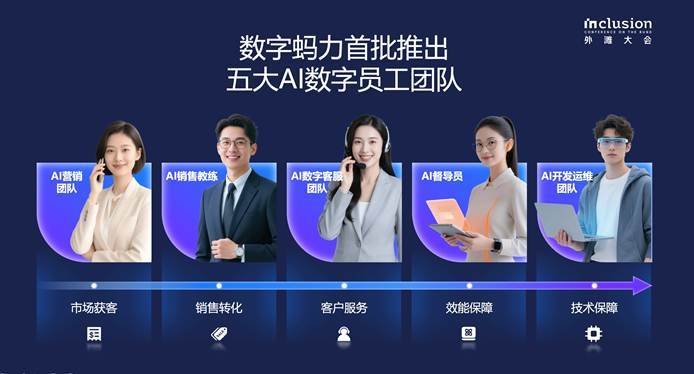
蚂蚁集团数字蚂力首批专家级“AI数字员工团队”亮相外滩大会
Huan Qiu Wang· 2025-09-11 10:29
Core Insights - Ant Group's digital division, Digital Mali, announced a significant product upgrade by launching the first batch of expert-level "AI digital employee teams" aimed at integrating AI deeply into enterprise operations to provide quantifiable and certain business growth results [1][3] Group 1: AI Digital Employee Teams - The AI digital customer service team can enhance employee efficiency by approximately 70% and reduce operational costs by 35%, leading to a significant increase in business conversion rates [1] - In e-commerce client practices, this model has resulted in about a 10% growth in Gross Merchandise Value (GMV) for businesses [1] - The five AI digital employee teams cover core business areas, including customer service, marketing, inspection, sales training, and development, each with clear roles and objectives [6] Group 2: Challenges in AI Application - The application of AI in the service industry faces a significant "technology-business" gap, with challenges primarily in performance, cost, and collaboration mechanisms [3] - AI models often struggle with hallucinations and logical errors, making it difficult to meet high-precision business requirements [3] - Companies are cautious about AI applications due to inadequate governance mechanisms and high reliability demands from business scenarios [3] Group 3: Human-Machine Collaboration - The "human-machine integration" model proposed by Digital Mali emphasizes that clients should purchase not just complex AI functions but guaranteed business results that include technology, expert experience, and operations [3][4] - This model aims to maximize efficiency by allowing AI to handle standardized tasks while human experts address complex or edge cases seamlessly [3] Group 4: Real-World Applications - The AI digital customer service team provides 24/7 customer support, turning every customer interaction into a growth opportunity [6] - The AI marketing team captures and converts business opportunities effectively, while the AI sales coach enhances employee sales skills [6] - The AI supervisor can achieve 20 times the efficiency in inspections, significantly improving store conversion rates compared to traditional methods [6][7]