
SPD BANK(600000)

Search documents
17家公司业绩快报抢先看
Zheng Quan Shi Bao Wang· 2026-01-16 01:37
Core Insights - The article discusses the performance forecasts and reports of 17 companies that released their earnings reports as of January 16, 2025, highlighting the accuracy of earnings quick reports compared to forecasts [1] Group 1: Revenue Performance - The highest revenue among the companies reporting was achieved by CITIC Bank, with a revenue of 212.475 billion yuan, showing a year-on-year decline of 0.55% [1] - Following CITIC Bank, Shanghai Pudong Development Bank and Yangtze Power reported revenues of 173.964 billion yuan and 85.882 billion yuan, respectively [1] - Eleven companies reported a year-on-year increase in revenue, with the highest growth recorded by Siyuan Electric, which achieved a revenue of 21.205 billion yuan, up 37.18% [1][2] - CITIC Securities and Beiding Co. also showed significant revenue growth, with increases of 28.75% and 26.04%, respectively [1][2] Group 2: Profit Performance - All companies that released earnings quick reports reported profits, with five companies achieving net profits exceeding 10 billion yuan [2] - CITIC Bank led in net profit with 70.618 billion yuan, reflecting a year-on-year increase of 2.98% [2] - Shanghai Pudong Development Bank and Yangtze Power followed with net profits of 50.017 billion yuan and 34.167 billion yuan, respectively [2] - Ten companies reported an increase in net profit, with the highest growth seen in Quanyuan Spring, which achieved a net profit of 0.15 billion yuan, up 147.89% [2] - Beiding Co. and Siyuan Electric also reported substantial net profit growth, with increases of 59.05% and 54.35%, respectively [2]




上海浦东发展银行股份有限公司 关于选举新一届董事会职工代表董事的公告
Zhong Guo Zheng Quan Bao - Zhong Zheng Wang· 2026-01-15 23:44
优先股代码:360003 360008优先股简称:浦发优1 浦发优2 证券代码:600000证券简称:浦发银行公告编号:临2026-004 上海浦东发展银行股份有限公司 关于选举新一届董事会职工代表董事的公告 截至本公告披露之日,赵万兵先生不存在《上海证券交易所上市公司自律监管指引第1号一一规范运 作》第3.2.2条所列情形,与公司亦不存在利益冲突。除上述简历信息外,赵万兵先生与公司其他董事、 高级管理人员或持股5%以上股东不存在关联关系。 特此公告。 上海浦东发展银行股份有限公司董事会 上海浦东发展银行股份有限公司(以下简称"公司")近日召开了第四届职工代表大会第八次会议,会议 审议并选举赵万兵先生连任公司职工代表董事,任期与新一届董事会一致。 赵万兵先生简历及相关信息如下: 赵万兵,男,1970年出生,工商管理硕士。曾任共青团上海市委员会研究室副主任,上海市金融工作党 委组织处(宣传处、统战处)处长,上海市金融办金融稳定处处长,上海市金融办副主任,上海市地方 金融监督管理局(上海市金融工作局)副局长。现任上海浦东发展银行股份有限公司党委副书记、职工 代表董事、工会委员会主席。 2026年1月15日 本公司 ...
上海浦东发展银行股份有限公司关于选举新一届董事会职工代表董事的公告
Xin Lang Cai Jing· 2026-01-15 19:28
赵万兵先生简历及相关信息如下: 赵万兵,男,1970年出生,工商管理硕士。曾任共青团上海市委员会研究室副主任,上海市金融工作党 委组织处(宣传处、统战处)处长,上海市金融办金融稳定处处长,上海市金融办副主任,上海市地方 金融监督管理局(上海市金融工作局)副局长。现任上海浦东发展银行股份有限公司党委副书记、职工 代表董事、工会委员会主席。 截至本公告披露之日,赵万兵先生不存在《上海证券交易所上市公司自律监管指引第1号一一规范运 作》第3.2.2条所列情形,与公司亦不存在利益冲突。除上述简历信息外,赵万兵先生与公司其他董事、 高级管理人员或持股5%以上股东不存在关联关系。 特此公告。 上海浦东发展银行股份有限公司董事会 ■ 上海浦东发展银行股份有限公司 关于选举新一届董事会职工代表董事的公告 本公司董事会及全体董事保证本公告内容不存在任何虚假记载、误导性陈述或者重大遗漏,并对其内容 的真实性、准确性和完整性承担法律责任。 上海浦东发展银行股份有限公司(以下简称"公司")近日召开了第四届职工代表大会第八次会议,会议 审议并选举赵万兵先生连任公司职工代表董事,任期与新一届董事会一致。 2026年1月15日 ...
上市银行业绩渐次出炉,资产规模稳健增长
Sou Hu Cai Jing· 2026-01-15 14:27
A股上市银行2025年度业绩快报披露大幕拉开。继浦发银行率先交出成绩单后,1月14日晚间,中信银 行也发布业绩快报。 值得注意的是,两家股份制银行均实现归母净利润稳健增长,且总资产规模双双突破10万亿元大关,跻 身"十万亿俱乐部",为新一年银行业发展注入强心剂,也显现出中国银行业的良好发展韧性。 从已披露数据来看,两家银行盈利表现亮眼。截至2025年末,浦发银行资产总额约为10.08万亿元,较 上年末增长6.55%。2025年,浦发银行实现营业收入1739.64亿元,同比增长1.88%;实现归母净利润 500.17亿元,同比增长10.52%。 截至2025年末,中信银行资产总额达10.13万亿元,较上年末增长6.28%。2025年,中信银行实现归母净 利润706.18亿元,同比增长2.98%;实现营业收入2124.75亿元,同比微降0.55%。 业绩增长的背后,是两家银行战略转型升级,精准服务实体经济的成效。谈及经营效益增长的主要原 因,浦发银行表示,一是服务实体经济能级有效提升;二是强化主动资产负债管理;三是资产质量持续 向好,风险抵补能力持续增强;四是集团协同质效并举,强化一体化经营和统一化管理,经营成效 ...
浦发银行:关于选举新一届董事会职工代表董事的公告
Zheng Quan Ri Bao· 2026-01-15 12:40
证券日报网讯 1月15日,浦发银行发布公告称,公司近日召开了第四届职工代表大会第八次会议,选举 赵万兵先生连任公司职工代表董事,任期与新一届董事会一致。 (文章来源:证券日报) ...

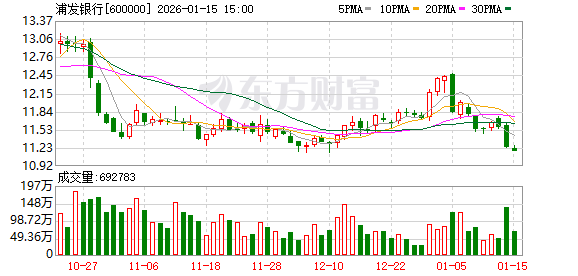
浦发银行(600000) - 上海浦东发展银行股份有限公司关于选举新一届董事会职工代表董事的公告
2026-01-15 09:30
公告编号:临2026-004 证券代码:600000 证券简称:浦发银行 优先股代码:360003 360008 优先股简称:浦发优1 浦发优2 上海浦东发展银行股份有限公司 关于选举新一届董事会职工代表董事的公告 赵万兵,男,1970年出生,工商管理硕士。曾任共青团上海市委员会研究室 副主任,上海市金融工作党委组织处(宣传处、统战处)处长,上海市金融办金 融稳定处处长,上海市金融办副主任,上海市地方金融监督管理局(上海市金融 工作局)副局长。现任上海浦东发展银行股份有限公司党委副书记、职工代表董 事、工会委员会主席。 截至本公告披露之日,赵万兵先生不存在《上海证券交易所上市公司自律监 管指引第1号——规范运作》第3.2.2条所列情形,与公司亦不存在利益冲突。除 上述简历信息外,赵万兵先生与公司其他董事、高级管理人员或持股5%以上股东 不存在关联关系。 特此公告。 上海浦东发展银行股份有限公司董事会 2026 年 1 月 15 日 本公司董事会及全体董事保证本公告内容不存在任何虚假记载、误导性陈述 或者重大遗漏,并对其内容的真实性、准确性和完整性承担法律责任。 上海浦东发展银行股份有限公司(以下简称"公司") ...
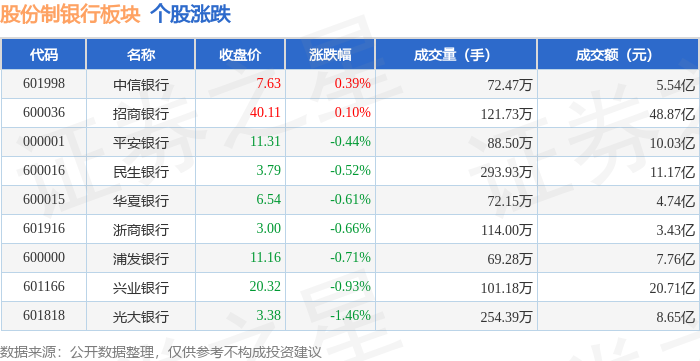
股份制银行板块1月15日跌0.37%,光大银行领跌,主力资金净流出3850.97万元
Zheng Xing Xing Ye Ri Bao· 2026-01-15 08:58
Group 1 - The banking sector experienced a decline of 0.37% on January 15, with Everbright Bank leading the drop [1] - The Shanghai Composite Index closed at 4112.6, down 0.33%, while the Shenzhen Component Index rose by 0.41% to 14306.73 [1] - The trading volume and turnover for various banks showed mixed results, with CITIC Bank closing at 7.63, up 0.39%, and Everbright Bank at 3.38, down 1.46% [1] Group 2 - The net outflow of main funds from the banking sector was 38.51 million yuan, while retail investors saw a net inflow of 42.9 million yuan [1] - The detailed fund flow data indicated that Industrial Bank had a net inflow of 13.72 million yuan from main funds, while CITIC Bank had a net outflow of 12.12 million yuan [2] - Retail investors showed varying trends, with CITIC Bank experiencing a net outflow of 7.91 million yuan, while Industrial Bank had a net inflow of 23.6 million yuan [2]




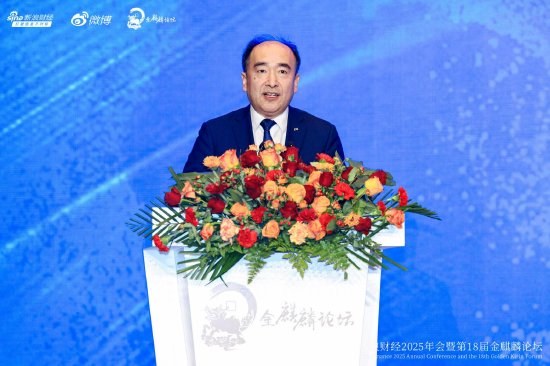
浦发银行薛宏立:破解金融体系转型梗阻 以三重创新筑牢银行高质量发展根基
Xin Lang Cai Jing· 2026-01-15 07:42
Core Viewpoint - The forum emphasizes the need for commercial banks to innovate and adapt to high-quality development through strategic planning, service optimization, and robust risk management. Group 1: Strategic Planning - The transformation of the financial system faces three systemic bottlenecks: disconnection of credit expansion, insufficient local government capital, and accumulation of risks, which are interrelated and require a systematic reconstruction of financial functions [3][7][19] - Commercial banks must align their strategic goals with national priorities, moving from scale expansion to value creation, and establish a comprehensive strategic goal system that matches high-quality development [19] Group 2: Service Optimization - The enhancement of total factor productivity relies on breakthroughs in technological innovation, upgrading of industrial structures, and increased levels of openness, with commercial banks focusing on technology finance, industrial finance, and cross-border finance [4][9][21] - Commercial banks should deepen their engagement in technology finance to support high-level technological self-reliance, creating innovative products and services that align with the lifecycle of technological innovation [10][21] - Strengthening industrial finance is essential for building a modern industrial system, requiring banks to shift from serving individual enterprises to servicing entire industrial chains [10][22] Group 3: Risk Management - The risk landscape of the real economy has changed significantly, necessitating a risk management model that aligns with quality improvement and efficiency [5][11][23] - Banks must construct a data-driven intelligent risk control system that transitions from post-event identification to pre-event warning, adapting to the characteristics of the digital economy [12][23] - Establishing a differentiated risk management approach is crucial, avoiding a one-size-fits-all strategy and enhancing risk management capabilities through advanced technologies [24]
2025中国企业ESG“金责奖”优秀奖评选结果揭晓


Xin Lang Cai Jing· 2026-01-15 03:45
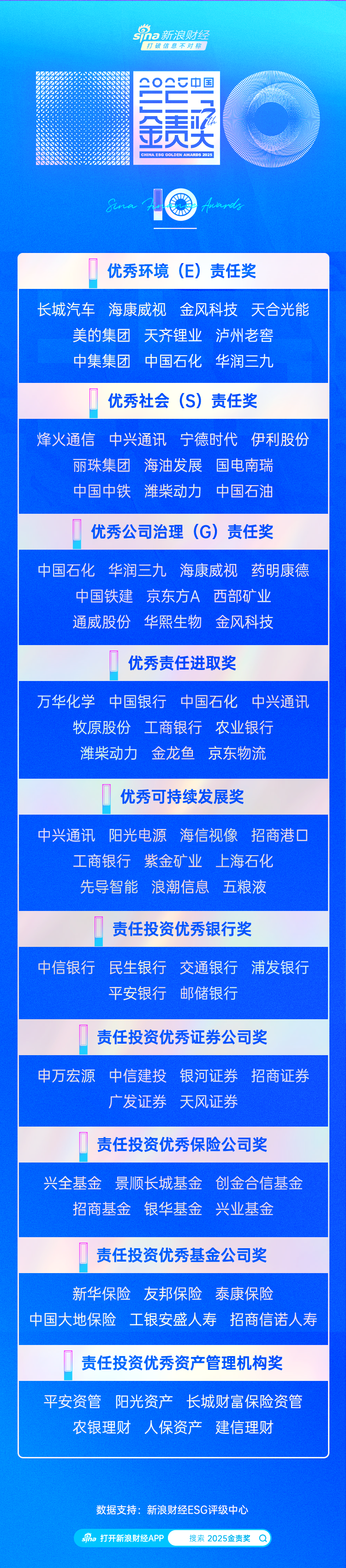
Core Viewpoint - The 2025 China Enterprise ESG "Golden Responsibility Award" aims to recognize companies and institutions that have made significant contributions to ESG initiatives in China, reflecting a shift from voluntary practices to compliance requirements in ESG performance [1][12]. Group 1: ESG Development and Awards Overview - By 2025, China's ESG development has transitioned from "setting standards" to "strengthening regulations," with a comprehensive disclosure standard system being established [1][12]. - The award selection attracted over 5,000 companies, with results based on ESG performance, online voting, and professional evaluations [2][12]. Group 2: Award Categories and Winners - The award categories include Excellent Environmental Responsibility Award, Excellent Social Responsibility Award, Excellent Corporate Governance Responsibility Award, Excellent Responsibility Initiative Award, Excellent Sustainable Development Award, and various responsibility investment awards [1][12]. - Notable winners of the Excellent Environmental Responsibility Award include Great Wall Motors, Hikvision, and China Petroleum [7][24]. - The Excellent Social Responsibility Award was awarded to companies such as YF Communication, ZTE, and Ningde Times [7][24]. - Winners of the Excellent Corporate Governance Responsibility Award include China Petroleum, Hikvision, and WuXi AppTec [7][24]. - The Excellent Responsibility Initiative Award was given to companies like ZTE, Sunlight Power, and Industrial and Commercial Bank of China [7][24]. - The Excellent Sustainable Development Award included companies such as WanHua Chemical, China Bank, and China Petroleum [7][24]. Group 3: Responsibility Investment Awards - The Responsibility Investment Excellent Bank Award was given to institutions like CITIC Bank and Minsheng Bank [5][21]. - The Responsibility Investment Excellent Securities Company Award included firms such as Shenwan Hongyuan and CITIC Securities [5][22]. - The Responsibility Investment Excellent Insurance Company Award recognized companies like New China Life and AIA [5][26]. - The Responsibility Investment Excellent Fund Company Award included firms such as Xinhua Fund and Harvest Fund [5][27]. - The Responsibility Investment Excellent Asset Management Institution Award recognized institutions like Ping An Asset Management and Sunshine Asset Management [5][28]. Group 4: Call to Action and Future Directions - The award committee encourages more Chinese enterprises to integrate ESG principles into their operations and strategic planning, emphasizing the importance of balancing commercial and social values [10][29].
今日水贝金价及各大银行金条报价【2026.1.15】
Xin Lang Cai Jing· 2026-01-15 03:17
Group 1 - The price of gold bars from various banks and institutions has shown an increase, with specific examples including the Construction Bank and Industrial and Commercial Bank both reporting a rise of 3.40 yuan per gram [1][2] - The Shanghai Gold Exchange reported a gold bar price of 1035 yuan per gram, reflecting an increase of 3.00 yuan per gram [2] - The silver prices have also seen increases, with the average price for silver bars from different sources showing rises, such as the Baoquan Coin's silver bar increasing by 1.86 yuan per gram [2][3] Group 2 - The current market for gold and silver bars is dynamic, with prices subject to real-time changes, indicating a volatile investment environment [3]


