China Meheco(600056)

Search documents
中国医药健康产业股份有限公司关于子公司获得药品补充申请批准通知书的公告
Shang Hai Zheng Quan Bao· 2025-08-25 21:17
Core Viewpoint - China National Pharmaceutical Group's subsidiary, Tianfang Pharmaceutical, has received approval for the supplement application of enteric-coated aspirin tablets, which have passed the consistency evaluation for generic drug quality and efficacy [1][3]. Group 1: Drug Approval Information - The drug approved is enteric-coated aspirin tablets, with a specification of 100mg and classified as a chemical drug [1]. - The approval was granted based on the Drug Administration Law of the People's Republic of China and relevant regulations regarding the consistency evaluation of generic drugs [1]. Group 2: Drug Usage and Market Context - Enteric-coated aspirin tablets are primarily used for treating unstable angina, acute myocardial infarction, and preventing recurrent myocardial infarction, among other conditions [2]. - As of the announcement date, the total R&D investment for this drug project is approximately 9.36 million RMB (about 1.3 million USD) [4]. - The domestic annual sales for this drug in public hospitals and primary medical terminals are estimated to be around 2.8 billion RMB (approximately 400 million USD) for 2024, with first-quarter sales for 2025 at about 800 million RMB (approximately 113 million USD) [5]. Group 3: Market Competition - Other companies, including Chenxin Pharmaceutical and Lepu Medical, have also passed or are deemed to have passed the consistency evaluation for this drug, with a total of 20 companies in the domestic market [5]. Group 4: Impact on the Company - The approval of the drug is expected to enhance its market share due to increased support in medical insurance payments and procurement by medical institutions [7].

中国医药(600056.SH):阿司匹林肠溶片获得药品补充申请批准通知书
Ge Long Hui· 2025-08-25 09:32
Core Viewpoint - China Medical (600056.SH) announced that its wholly-owned subsidiary Tianfang Pharmaceutical Co., Ltd. received approval from the National Medical Products Administration for the supplemental application of enteric-coated aspirin tablets [1] Group 1 - The approval signifies a regulatory milestone for Tianfang Pharmaceutical, enhancing its product portfolio [1] - Enteric-coated aspirin tablets are expected to meet market demand, potentially increasing the company's revenue [1] - This development reflects the company's commitment to expanding its pharmaceutical offerings in response to healthcare needs [1]
中国医药:阿司匹林肠溶片获得药品补充申请批准通知书
Ge Long Hui· 2025-08-25 09:25
Group 1 - The core point of the article is that China Medical (600056.SH) announced that its wholly-owned subsidiary Tianfang Pharmaceutical has received approval from the National Medical Products Administration for the supplement application of enteric-coated aspirin tablets, which have passed the consistency evaluation of quality and efficacy for generic drugs [1] - The enteric-coated aspirin tablets are primarily used for the treatment of unstable angina, acute myocardial infarction, prevention of recurrent myocardial infarction, post-arterial vascular surgery or interventional surgery, prevention of transient ischemic attacks, and prevention of cerebral infarction after early symptoms have appeared [1]
中国医药(600056) - 关于子公司获得药品补充申请批准通知书的公告
2025-08-25 09:00
证券代码:600056 证券简称:中国医药 公告编号:临 2025-069 号 中国医药健康产业股份有限公司 关于子公司获得药品补充申请批准通知书的公告 本公司董事会及全体董事保证本公告内容不存在任何虚假记载、误导性陈述 或者重大遗漏,并对其内容的真实性、准确性和完整性承担法律责任。 近日,中国医药健康产业股份有限公司(以下简称"公司")下属全资子公 司天方药业有限公司(以下简称"天方药业")收到国家药品监督管理局(以下 简称"国家药监局")核准签发的阿司匹林肠溶片(以下简称"该药品")《药 品补充申请批准通知书》,该药品通过仿制药质量和疗效一致性评价。现将有关 情况公告如下: 一、通知书基本信息 药品名称:阿司匹林肠溶片 受理号:CYHB2450410 通知书编号:2025B03783 剂型:片剂 规格:100mg 注册分类:化学药品 上市许可持有人:天方药业有限公司 审批结论:根据《中华人民共和国药品管理法》、《国务院关于改革药品医 疗器械审评审批制度的意见》(国发[2015]44号)和《关于仿制药质量和疗效 一致性评价工作有关事项的公告》(2017年第100号)的规定,经审查,同意本 品增加100mg规 ...
中国医药:子公司天方药业阿司匹林肠溶片通过仿制药质量和疗效一致性评价
Xin Lang Cai Jing· 2025-08-25 08:40
Core Viewpoint - The announcement indicates that Tianfang Pharmaceutical, a subsidiary of China Pharmaceutical, has received approval from the National Medical Products Administration for the supplement application of enteric-coated aspirin tablets, which have passed the consistency evaluation of generic drug quality and efficacy [1] Group 1: Product Approval and Market Potential - The enteric-coated aspirin tablets are primarily used for the treatment of unstable angina and acute myocardial infarction, with Bayer being the original manufacturer [1] - A total of 20 domestic companies have either passed or are deemed to have passed the consistency evaluation for this drug [1] Group 2: Sales Forecast - The estimated annual sales for this drug in domestic public hospitals and grassroots medical terminals is approximately 2.8 billion yuan for 2024 [1] - The projected sales for the first quarter of 2025 are around 800 million yuan [1]
中国医药产业规模居全球第二位
Zhong Guo Xin Wen Wang· 2025-08-22 08:00
Core Insights - China's pharmaceutical industry ranks second globally, with approximately 30% of innovative drugs under research worldwide [1] - During the "14th Five-Year Plan" period, the National Medical Products Administration (NMPA) approved 204 innovative drugs and 265 innovative medical devices, with 50 innovative drugs and 49 innovative medical devices approved in the first seven months of this year [1] - The NMPA has optimized the review and approval process for urgently needed foreign new drugs, accelerating the market entry of pediatric and rare disease medications, approving 387 pediatric drugs and 147 rare disease drugs since the beginning of the "14th Five-Year Plan" [1] Industry Quality and Safety - The NMPA focuses on ensuring drug quality and safety, particularly for vaccines and blood products, implementing regular risk assessment and management in key areas such as rural and urban fringe regions [2] - The agency conducts over 200,000 drug inspections, 20,000 medical device inspections, and 20,000 cosmetic inspections annually, ensuring comprehensive coverage of selected products in national procurement [2] - China supports open cooperation in the pharmaceutical industry, facilitating global clinical trials and shortening the global market entry timeline for drugs, while also encouraging foreign investment in domestic production of original drugs and high-end medical equipment [2]
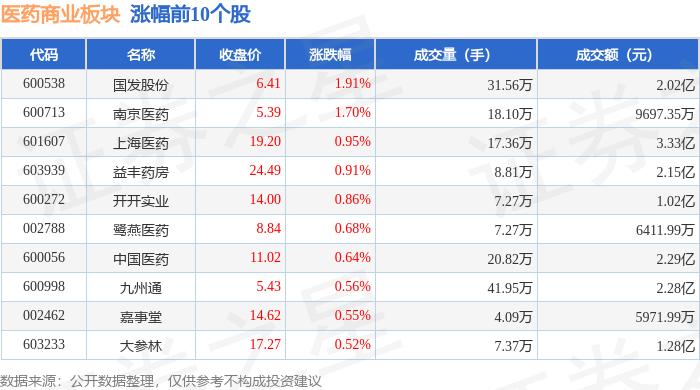
医药商业板块8月21日涨0.27%,国发股份领涨,主力资金净流出2.77亿元
Zheng Xing Xing Ye Ri Bao· 2025-08-21 08:30
Market Overview - The pharmaceutical commercial sector increased by 0.27% on August 21, with Guofang Co., Ltd. leading the gains [1] - The Shanghai Composite Index closed at 3771.1, up 0.13%, while the Shenzhen Component Index closed at 11919.76, down 0.06% [1] Stock Performance - Guofang Co., Ltd. (600538) closed at 6.41, up 1.91% with a trading volume of 315,600 shares and a transaction value of 202 million yuan [1] - Nanjing Pharmaceutical (600713) closed at 5.39, up 1.70% with a trading volume of 181,000 shares and a transaction value of 96.97 million yuan [1] - Shanghai Pharmaceuticals (601607) closed at 19.20, up 0.95% with a trading volume of 173,600 shares and a transaction value of 333 million yuan [1] - Yifeng Pharmacy (603939) closed at 24.49, up 0.91% with a trading volume of 88,100 shares and a transaction value of 215 million yuan [1] Capital Flow - The pharmaceutical commercial sector experienced a net outflow of 277 million yuan from institutional investors, while retail investors saw a net inflow of 293 million yuan [2] - The data indicates that institutional investors are withdrawing capital, while retail investors are increasing their investments in the sector [2] Individual Stock Capital Flow - Nanjing Pharmaceutical saw a net inflow of 16.81 million yuan from institutional investors, while retail investors had a net outflow of 4.14 million yuan [3] - Yifeng Pharmacy experienced a net inflow of 15.49 million yuan from institutional investors, with a net outflow of 23.62 million yuan from retail investors [3] - China National Pharmaceutical (600056) had a net inflow of 8.93 million yuan from institutional investors, while retail investors had a negligible net inflow of 0.12 million yuan [3]





2025年中国医药流通行业商业模式 医药流通模式随着产业需求不断丰富
Qian Zhan Wang· 2025-08-20 10:03
Core Viewpoint - The pharmaceutical distribution industry is characterized by three main business models: wholesale, retail, and various new distribution models, each with distinct operational dynamics and market implications [1]. Group 1: Wholesale Model - The wholesale model, also known as the distribution model, involves selling pharmaceuticals and medical devices in bulk to entities that directly interact with consumers, such as medical institutions and retail pharmacies [4]. - The third terminal in the wholesale model is increasingly favored by internet hospitals, indicating a shift towards digital integration in pharmaceutical distribution [4]. Group 2: Retail Model - The retail model involves retail pharmacies purchasing pharmaceutical products from manufacturers or other distributors and selling them to individual consumers, generating profit from the price difference [7]. - Although the retail model operates on a smaller scale compared to wholesale, it boasts higher profit margins, making it an attractive segment within the pharmaceutical distribution landscape [7]. Group 3: Internet Retail Model - The internet retail model encompasses various online platforms, including internet hospitals and pharmaceutical e-commerce, facilitating diagnosis and drug sales through digital channels [9]. - This model includes B2B, B2C, and O2O formats, reflecting the growing trend of digital transformation in the pharmaceutical sector [9]. Group 4: Third-Party Cold Chain Logistics - The "14th Five-Year Plan" emphasizes the need for a modern, intelligent pharmaceutical supply chain, focusing on enhancing networked, scaled, and specialized logistics services [12]. - Third-party cold chain logistics offer significant advantages, such as reducing initial investment costs for pharmaceutical companies and ensuring temperature-controlled transport, which is crucial for maintaining drug quality [12]. - These logistics providers can effectively manage reverse logistics and product recalls through advanced tracking and data exchange systems, thereby minimizing losses and ensuring compliance with quality standards [12].


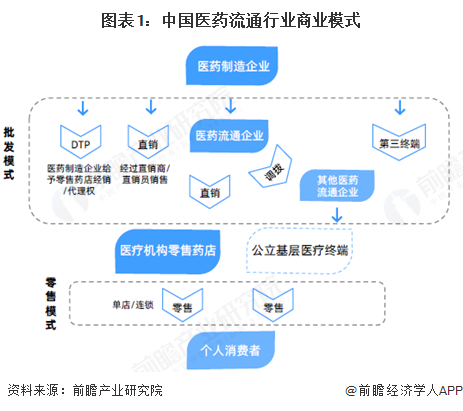
2025年中国医药流通行业商业模式 医药流通模式随着产业需求不断丰富【组图】
Qian Zhan Wang· 2025-08-20 09:15
Core Viewpoint - The pharmaceutical distribution industry is categorized into three main business models: wholesale, retail, and various new distribution models, each with distinct characteristics and profit margins [1]. Group 1: Wholesale Model - The wholesale model, also known as the distribution model, involves selling pharmaceuticals and medical devices in bulk to entities that directly interact with consumers, such as medical institutions and retail pharmacies [3]. - The wholesale model can be further divided into categories such as hospital direct sales, commercial allocation, and third terminal distribution, with the third terminal being a key focus for internet healthcare companies [3]. Group 2: Retail Model - The retail model involves retail pharmacies purchasing pharmaceutical products from manufacturers or other distribution companies and selling them to individual consumers for profit [4]. - Although the retail model is smaller in scale compared to wholesale, it offers higher profit margins, and can be subdivided into single-store and chain models, with chain models further categorized into direct-operated and franchise operations [4]. Group 3: Internet Retail Model - The internet pharmaceutical new retail model encompasses various internet hospitals and pharmaceutical e-commerce platforms that conduct diagnosis and drug sales through online channels, including B2B, B2C, and O2O models [6]. Group 4: Third-Party Cold Chain Logistics - The pharmaceutical distribution industry is expected to build a modern smart pharmaceutical supply chain service system during the 14th Five-Year Plan period, focusing on enhancing networked, scaled, and specialized levels for safer and more efficient logistics [10]. - Third-party cold chain logistics provide significant advantages, such as reducing upfront investment for pharmaceutical companies, ensuring temperature control during transport, and optimizing the pharmaceutical supply chain through integrated information management [11].
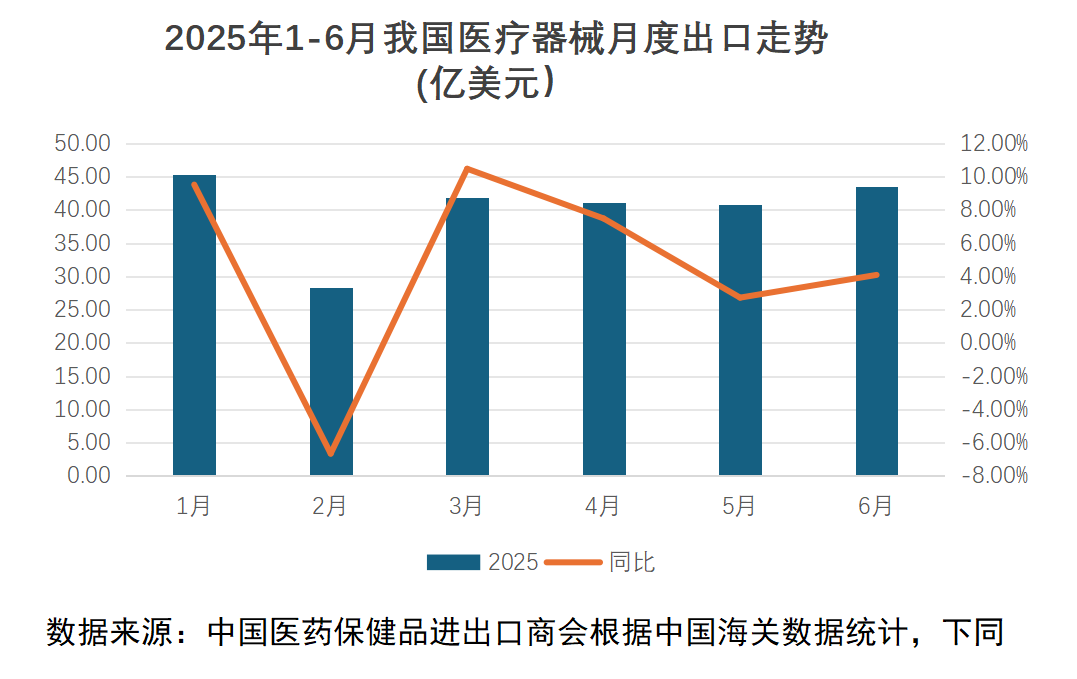
中国医药保健品进出口商会:上半年我国医疗器械进出口总额达410.9亿美元 同比增长1.1%
智通财经网· 2025-08-20 09:07
Core Insights - The total import and export value of China's medical devices reached $41.09 billion in the first half of 2025, with exports at $24.10 billion (up 5.0%) and imports at $16.99 billion (down 3.9%), resulting in a trade surplus of $7.11 billion [1] Group 1: Export Growth and Structure - Exports of medical devices continued to grow, with all months in the first half of 2025 showing positive growth except for February, indicating a stable external demand [2] - Exports to the U.S. faced challenges due to tariffs, with a 4.41% decline year-on-year, while non-U.S. markets showed strong demand [2] - The export structure improved, with significant growth in hospital diagnostic and treatment products, which reached $11.23 billion (up 8.2%), driven by high-tech products [4] - Exports of disposable consumables reached $5.27 billion (up 8.0%), while health recovery products saw a decline in export value to $4.68 billion (down 1.5%) due to price drops [4][5] Group 2: Market Diversification and International Presence - The export market remained dominated by the U.S., Japan, and Germany, with the U.S. accounting for $5.167 billion (21.44% of total exports), despite a decline in market share [8] - Exports to the EU reached $4.71 billion (up 11.2%), with high-end medical equipment driving growth [10] - Emerging markets showed increased penetration, with exports to ASEAN countries at $2.60 billion (up 1.8%) and to Latin America at $2.02 billion (up 13.8%) [11][13] Group 3: Import Trends and Domestic Innovation - Imports of medical devices totaled $16.99 billion, down 5.7%, marking three consecutive years of decline [19] - The decline in imports was particularly notable in categories like in vitro diagnostic reagents (down 19.4%) and imaging equipment [19][20] - The top three sources of imports remained the U.S., Germany, and Japan, accounting for 49.6% of total imports, with a notable decrease in import values from these countries [21] Group 4: Innovation and Globalization Strategy - The medical device industry in China is focusing on innovation and globalization amidst a complex international environment [23] - In the first half of 2025, 45 innovative medical devices were approved, with 83.3% being domestic products [23] - Companies are restructuring competitive dynamics through technology and global service networks, with significant advancements in high-end medical equipment [23]