
mailyard(600107)

Search documents
ST尔雅(600107) - 关于公司股票被实施其他风险警示相关事项的进展公告
2025-09-26 10:04
证券代码:600107 证券简称:ST 尔雅 公告编号:2025062 ● 根据《上海证券交易所股票上市规则(2025年4月修订)》第9.8.5条:"上 市公司股票因9.8.1条第(二)项至第(五)项规定情形被实施其他风险警示的,在 被实施其他风险警示期间,公司应当至少每月发布1次提示性公告,分阶段披露涉及 事项的解决进展情况"。公司将每月披露一次其他风险警示相关事项的进展情况, 提示相关风险。 湖北美尔雅股份有限公司 关于公司股票被实施其他风险警示相关事项的进展公告 本公司董事会及全体董事保证本公告内容不存在任何虚假记载、误导性陈述 或者重大遗漏,并对其内容的真实性、准确性和完整性承担法律责任。 重要提示: ● 湖北美尔雅股份有限公司(以下简称"公司")2024年度内部控制审计报告 被中审众环会计师事务所(特殊普通合伙)出具否定意见的审计报告,根据《上海证 券交易所股票上市规则(2025年4月修订)》9.8.1条第(三)项的规定,公司股票 于2025年5月6日被上海证券交易所实施其他风险警示。 一、公司被实施其他风险警示的相关情况 因公司 2024 年度内部控制审计报告被中审众环会计师事务所(特殊普通合伙) ...

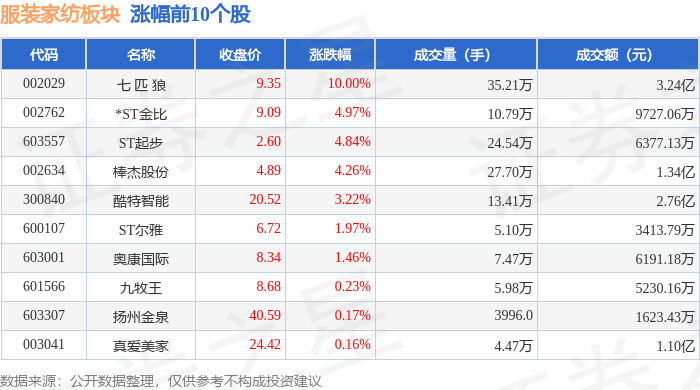
服装家纺板块9月25日跌1.12%,泰慕士领跌,主力资金净流出4.02亿元
Zheng Xing Xing Ye Ri Bao· 2025-09-25 08:37
Market Overview - The apparel and home textile sector declined by 1.12% on September 25, with Taimushi leading the drop [1] - The Shanghai Composite Index closed at 3853.3, down 0.01%, while the Shenzhen Component Index closed at 13445.9, up 0.67% [1] Stock Performance - Notable gainers included: - Qipilong (002029) with a closing price of 9.35, up 10.00% and a trading volume of 352,100 shares, totaling 324 million yuan [1] - ST Jinbi (002762) closed at 9.09, up 4.97% with a trading volume of 107,900 shares, totaling 97.27 million yuan [1] - ST Qibu (603557) closed at 2.60, up 4.84% with a trading volume of 245,400 shares, totaling 6.38 million yuan [1] - Major decliners included: - Taijing (001234) with a closing price of 32.20, down 10.01% and a trading volume of 47,000 shares, totaling 152 million yuan [2] - Hongdou (600400) closed at 3.61, down 5.74% with a trading volume of 3,849,700 shares, totaling 139.8 million yuan [2] - Tanluo (300005) closed at 8.70, down 4.81% with a trading volume of 511,700 shares, totaling 45.5 million yuan [2] Capital Flow - The apparel and home textile sector experienced a net outflow of 402 million yuan from institutional investors, while retail investors saw a net inflow of 373 million yuan [2] - The sector's overall capital flow indicates a mixed sentiment, with institutional investors pulling back while retail investors increased their positions [2] Individual Stock Capital Flow - Notable net inflows from institutional investors included: - Wanlima (300591) with a net inflow of 19.84 million yuan, representing 3.74% of total capital [3] - Zhiyaomeijia (003041) with a net inflow of 15.00 million yuan, representing 13.59% of total capital [3] - Kute Intelligent (300840) with a net inflow of 14.64 million yuan, representing 5.30% of total capital [3] - Conversely, significant net outflows from retail investors were observed in: - Zhiyaomeijia (003041) with a net outflow of 9.21 million yuan, representing -8.34% of total capital [3] - Kute Intelligent (300840) with a net outflow of 1.07 million yuan, representing -0.39% of total capital [3]




湖北美尔雅股份有限公司2025年第二次临时股东大会决议公告
Shang Hai Zheng Quan Bao· 2025-09-16 20:00
证券代码:600107 证券简称:ST尔雅 公告编号:2025061 湖北美尔雅股份有限公司 2025年第二次临时股东大会决议公告 本公司董事会及全体董事保证本公告内容不存在任何虚假记载、误导性陈述或者重大遗漏,并对其内容 的真实性、准确性和完整性承担法律责任。 重要内容提示: ● 本次会议是否有否决议案:无 一、会议召开和出席情况 (一)股东大会召开的时间:2025年9月16日 (二)股东大会召开的地点:北京市丰台区南三环草桥东路新华创新产业园4层会议室 (三)出席会议的普通股股东和恢复表决权的优先股股东及其持有股份情况: ■ (四)表决方式是否符合《公司法》及《公司章程》的规定,大会主持情况等。 2、公司在任监事4人,出席4人; 3、董事会秘书出席本次会议,部分高管列席本次会议。 二、议案审议情况 (一)非累积投票议案 1、议案名称:关于对子公司增资暨关联交易的议案 审议结果:通过 本次会议由公司董事会召集,副董事长刘友谊先生主持。会议采用现场投票 和网络投票相结合的表决方式。本次股东大会的召集、召开程序及表决程序符合《中华人民共和国公司 法》、《上市公司股东会规则》、《湖北美尔雅股份有限公司章程》及《湖 ...
ST尔雅(600107) - 2025年第二次临时股东大会决议公告
2025-09-16 10:00
证券代码:600107 证券简称:ST 尔雅 公告编号:2025061 湖北美尔雅股份有限公司 2025年第二次临时股东大会决议公告 本公司董事会及全体董事保证本公告内容不存在任何虚假记载、误导性陈述 或者重大遗漏,并对其内容的真实性、准确性和完整性承担法律责任。 重要内容提示: 本次会议是否有否决议案:无 本次会议由公司董事会召集,副董事长刘友谊先生主持。会议采用现场投票 和网络投票相结合的表决方式。本次股东大会的召集、召开程序及表决程序符合 《中华人民共和国公司法》、《上市公司股东会规则》、《湖北美尔雅股份有限公司 章程》及《湖北美尔雅股份有限公司股东会议事规则》的规定。 (五)公司董事、监事和董事会秘书的出席情况 二、 议案审议情况 一、 会议召开和出席情况 (一)股东大会召开的时间:2025 年 9 月 16 日 (二)股东大会召开的地点:北京市丰台区南三环草桥东路新华创新产业园 4 层会 议室 (三)出席会议的普通股股东和恢复表决权的优先股股东及其持有股份情况: | 1、出席会议的股东和代理人人数 | 95 | | --- | --- | | 2、出席会议的股东所持有表决权的股份总数(股) | 75 ...
ST尔雅(600107) - 湖北得伟君尚律师事务所关于湖北美尔雅股份有限公司2025年第二次临时股东大会的法律意见书
2025-09-16 10:00
湖北得伟君尚律师事务所 关于湖北美尔雅股份有限公司 2025 年第二次临时股东大会的 法律意见书 二〇二五年九月十六日 湖北得伟君尚律师事务所 地址:武汉市江汉区建设大道 588 号卓尔国际大厦 20 楼、21 楼 电话:(86 27 8562 0999) 电子邮箱:dewell@ dewellcn.com 湖北得伟君尚律师事务所 关于湖北美尔雅股份有限公司 2025 年第二次临时股东大会的法律意见书 致:湖北美尔雅股份有限公司 湖北得伟君尚律师事务所(以下简称本所)接受湖北美尔雅股份有限公司(以 下简称公司)的委托,指派律师出席公司 2025 年第二次临时股东大会,对公司本次 会议进行见证并出具法律意见书。 本所律师依据《公司法》《上市公司股东大会规则》《上海证券交易所上市公 司股东大会网络投票实施细则》(以下简称《网络投票细则》)及《公司章程》的规 定,对公司本次会议的召集与召开程序、召集人及出席会议人员的资格、表决程序 及表决结果的合法有效性发表法律意见。 本所律师根据《证券法》《律师事务所从事证券法律业务管理办法》和《律师 事务所证券法律业务执业规则(试行)》等规定的要求,严格履行法定职责,遵循 勤勉 ...
ST尔雅(600107) - 2025年第二次临时股东大会会议资料
2025-09-08 10:00
会议资料目录 三、会议议案 | 序号 | 议案名称 | 投票股东类型 | | --- | --- | --- | | | | A 股股东 | | 非累积投票议案 | | | | 1 | 关于对子公司增资暨关联交易的议案 | √ | | 2 | 关于取消监事会并修订《公司章程》的议案 | √ | | 3 | 关于修订《股东会议事规则》的议案 | √ | | 4 | 关于修订《董事会议事规则》的议案 | √ | | 5 | 关于修订《独立董事工作制度》的议案 | √ | | 6 | 关于废止《监事会议事规则》的议案 | √ | 一、股东大会须知 二、会议议程 湖北美尔雅股份有限公司 湖北美尔雅股份有限公司 2025年第二次临时股东大会会议资料 二〇二五年九月 湖北美尔雅股份有限公司 会议须知 为了维护全体股东的合法权益,确保股东大会的正常秩序和议事效率,保证大 会的顺利进行,根据《中华人民共和国公司法》《中华人民共和国证券法》、中国 证券监督管理委员会《上市公司股东大会规则》以及《湖北美尔雅股份有限公司章 程》等相关规定,特制定2025年第二次临时股东大会会议须知: 一、为确认出席大会的股东或其代理人或其他出席者 ...
每周股票复盘:ST尔雅(600107)三日涨逾12%被龙虎榜收录
Sou Hu Cai Jing· 2025-09-06 22:53
Core Points - ST Er Ya (600107) stock price increased by 11.02% to 6.65 CNY as of September 5, 2025, reaching a nearly one-year high of 7.07 CNY during the week [1] - The stock has experienced a cumulative increase of 62.77% since August 14, 2025, with significant price fluctuations leading to its appearance on the trading leaderboard [2][3] - The company reported a net loss of 21.86 million CNY in the first half of 2025, raising concerns about potential delisting risks if annual revenue falls below 30 million CNY and losses continue [3] Trading Information Summary - ST Er Ya was listed on the trading leaderboard due to a cumulative price deviation exceeding 12% over three consecutive trading days [2][4] - This marks the first appearance on the leaderboard in the last five trading days [2] Company Announcement Summary - The company acknowledged abnormal stock price fluctuations and confirmed no undisclosed significant matters related to the company or its major stakeholders [3] - The 2024 financial report received a qualified opinion, and if the 2025 internal control audit report is also negative or unable to express an opinion, it may trigger regulatory delisting warnings [3]
新股发行及今日交易提示-20250904


HWABAO SECURITIES· 2025-09-04 11:35
New Stock Offerings - Fushun Special Steel (600399) is undergoing a tender offer period from August 12, 2025, to September 10, 2025[1] - *ST Tianmao (000627) has a cash option declaration period from September 15, 2025, to September 19, 2025[1] - Tianpu Co., Ltd. (605255) has announced its latest updates on September 4, 2025[1] Market Alerts - Kaipu Cloud (688228) has reported severe abnormal fluctuations as of August 30, 2025[1] - Siquan New Materials (301489) and Xinhua Jin (600735) also reported significant market movements on August 22 and August 30, 2025, respectively[1] - Multiple companies including *ST Baoying (002047) and Wantong Development (600246) have updates as of September 4, 2025[1] Trading Notifications - A total of 30 companies have issued trading notifications with specific dates for announcements and updates, indicating active market participation[1] - The report includes links to detailed announcements for each company, ensuring transparency and accessibility of information[1]
新股发行及今日交易提示-20250903


HWABAO SECURITIES· 2025-09-03 07:58
New Stock Offerings - Fushun Special Steel (600399) has a tender offer period from August 12, 2025, to September 10, 2025[1] - ST Tianmao (000627) has a cash option declaration period from September 15, 2025, to September 19, 2025[1] - Tianpu Co., Ltd. (605255) announced significant trading activity on September 3, 2025[1] Market Volatility - Kaipu Cloud (688228) reported severe abnormal fluctuations on August 30, 2025[1] - Xinhua Jin (600735) experienced significant trading activity on August 30, 2025[1] - ST Chuntian (600381) had notable trading activity on September 3, 2025[1] Other Notable Announcements - ST Er Ya (600107) reported trading activity on September 3, 2025[1] - Shanghai Electric Power (600021) had significant trading activity on September 3, 2025[1] - ST Gao Hong (000851) reported trading activity on September 3, 2025[1]
湖北美尔雅股份有限公司关于股票交易异常波动的公告
Shang Hai Zheng Quan Bao· 2025-09-02 20:43
Core Viewpoint - Hubei Meirya Co., Ltd. has experienced significant stock price fluctuations, with a cumulative increase of 62.77% since August 14, 2025, leading to concerns about potential financial and regulatory risks [2][10]. Group 1: Stock Trading Anomalies - The company's stock price deviated significantly, with a cumulative closing price increase of over 12% during three consecutive trading days (August 29, September 1, and September 2, 2025) [2][4]. - The stock has triggered abnormal fluctuation limits three times since August 14, 2025, indicating severe deviation from the Shanghai Composite Index's performance [2][10]. Group 2: Financial Performance - In the first half of 2025, the company reported revenue of 129 million yuan and a net loss of 21.86 million yuan, continuing a trend of losses since 2022 [2][5]. - The company’s revenue for 2024 was 330 million yuan, reflecting a year-on-year decline of 27.42% [5]. Group 3: Audit and Compliance Issues - The auditing firm Zhongshun Zhonghuan issued a qualified opinion on the company's 2024 financial report, and the internal control audit received a negative opinion, indicating significant deficiencies [3][12]. - If the 2025 internal control audit also receives a negative opinion, the company may face regulatory delisting warnings [12][13]. Group 4: Ongoing Investigations - The company and its chairman, Zheng Jiping, are currently under investigation by the China Securities Regulatory Commission, with uncertain outcomes [3][14].