
BOB(601169)

Search documents
激活文化产业新动能——北京银行出席2025金融街论坛年会文化金融分论坛
凤凰网财经· 2025-10-30 13:14
Core Viewpoint - The forum focused on the theme of "Financial Empowerment for High-Quality Development of the Cultural Industry," emphasizing the deep integration of cultural industries and finance, exploring new paths and mechanisms for development [1] Group 1: Financial Support for Cultural Industries - Beijing Bank has provided credit support exceeding 600 billion yuan to over 16,000 cultural enterprises by the end of September 2025, maintaining a leading market share in Beijing [1] - The bank has developed a product matrix covering the entire lifecycle of cultural enterprises, including innovative loans like "Cultural Tourism E-Loan" for startups and "Cultural Leading Loan" for growing enterprises [1][2] - The bank has pioneered copyright financing models, including the use of copyright pledges for film and drama, addressing financing challenges for cultural enterprises [1] Group 2: Inclusive Financial Services - Beijing Bank has established a unified online product entry called "Tong E-Finance," significantly improving financing efficiency and customer experience [2] - The bank's specialized branches have provided loan support of nearly 15 billion yuan to over 800 cultural enterprises since their establishment in 2017 [2] - The bank focuses on high-level talent in the cultural sector, offering dedicated financial services like "Cultural Talent Loan" and establishing a cultural talent think tank for training and consulting [3] Group 3: Ecosystem Development - The bank aims to build a cultural financial ecosystem through collaboration with various cultural departments, enhancing the synergy between government and financial institutions [4] - It has set up a venture capital private equity business center to connect with over a thousand industry funds and VC/PE institutions, facilitating capital access for cultural enterprises [4] - The bank is enhancing its "Suohe Win" platform to provide comprehensive services for cultural enterprises, including industry guidance and financing support [4] Group 4: Digital Empowerment and Industry Upgrade - The bank has formulated a five-year plan focusing on serving the new quality of cultural production, targeting digital content, artificial intelligence, and media integration [5] - It is leveraging advanced technologies like AI, big data, and blockchain to innovate service processes in marketing, credit approval, risk control, and payment [5] - The bank is exploring specialized service models tailored to the characteristics of enterprises in the new quality of cultural production [5]


北京银行总资产增至4.89万亿元,不良贷款率降至1.29%
Feng Huang Wang Cai Jing· 2025-10-30 13:03
Core Insights - Beijing Bank reported a slight decline in operating income for the first three quarters of 2025, amounting to 51.588 billion yuan, a year-on-year decrease of 1.08% [1] - The bank's net profit attributable to shareholders increased by 0.26% year-on-year, reaching 21.064 billion yuan [1] - The weighted average return on equity stood at 9.86% as of the end of the third quarter [1] Financial Performance - Total assets of Beijing Bank reached 4.89 trillion yuan, reflecting a growth of 15.95% since the beginning of the year [1] - The total loan principal amounted to 2.37 trillion yuan, with a year-to-date increase of 7.38%, and loans constituted 48.51% of total assets [1] - The bank's total deposit principal was 2.64 trillion yuan, marking a 7.60% increase from the start of the year, with deposits accounting for 58.50% of total liabilities [1] Asset Quality - The asset quality of Beijing Bank showed improvement, with a non-performing loan ratio decreasing to 1.29%, down by 0.02 percentage points from the beginning of the year [1] - Specific loan categories such as technology finance, green finance, and inclusive small and micro enterprise loans saw significant growth, with increases of 20.16%, 26.20%, and 16.91% respectively [1]
聚力新生态,护航新赛道!北京银行携手各界共创科技企业跨越式发展新未来
Sou Hu Cai Jing· 2025-10-30 12:15
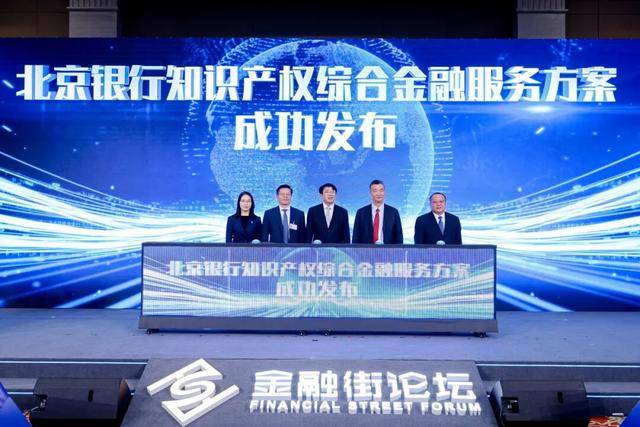
Core Insights - The 2025 Financial Street Forum, focusing on "Creating a New Ecosystem for Leapfrog Development of Technology Enterprises," was successfully held in Beijing, emphasizing the role of finance in empowering high-quality economic development [1][3] - The forum gathered various stakeholders from government, industry, academia, and finance to explore new paths and ecosystems for financial support of technology enterprises [1][3] Financial Policy and Environment - The Chinese government has been optimizing the technology finance policy framework, creating a favorable environment for the leapfrog development of technology enterprises [3] - Beijing has nurtured a number of competitive technology enterprises, achieving significant results in technology innovation and finance, with three trillion-level and seven hundred billion-level industrial clusters formed [3] Beijing Bank's Commitment - Beijing Bank has positioned itself as a key player in the financial system, focusing on serving technological innovation as a strategic core, and has provided over 1.4 trillion yuan in credit to 58,000 technology SMEs [5] - The bank serves 82% of companies listed on the Beijing Stock Exchange's Growth Enterprise Market and 75% of the New Third Board's innovative tier companies [5] Innovations and Services - During the forum, Beijing Bank launched several significant financial service initiatives, including a comprehensive financial service plan for intellectual property and a green finance product called "Green Electricity Loan" [7] - The bank's initiatives aim to create a multi-layered, full-cycle technology finance service ecosystem, supporting the integration of green technology [7] New Alliance Formation - The "Alliance for Creating a New Ecosystem for Leapfrog Development of Technology Enterprises" was officially established to unite resources and provide stronger support for technology enterprises [9] - The alliance focuses on collaborative ecosystem building, capital chain construction, smart finance promotion, professional service cultivation, and international space expansion [9] Discussions and Future Directions - The forum featured discussions on equity investment market trends and the capitalization paths of emerging technology sectors, highlighting the importance of financial tools in supporting technology enterprises [11] - Beijing Bank aims to continue enriching the technology finance ecosystem and contribute to high-quality economic development by providing robust financial support for technology enterprises [11]
北京银行:累计为5.8万家科技型中小微企业提供超1.4万亿元信贷资金
Zheng Quan Shi Bao Wang· 2025-10-30 11:51
Core Viewpoint - Beijing Bank has provided significant financial support to technology-oriented small and medium-sized enterprises (SMEs), highlighting its commitment to fostering innovation and entrepreneurship in the region [1] Group 1 - Beijing Bank has cumulatively provided credit funds exceeding 1.4 trillion yuan to 58,000 technology-oriented SMEs [1] - The bank has served over 29,000 specialized and innovative enterprises [1] - Beijing Bank supports 82% of the companies listed on the ChiNext board, 74% on the Sci-Tech Innovation Board, and 75% of the innovative tier on the New Third Board [1]
北京银行:截至9月末资产总额达4.89万亿元,较年初增长15.95%
Zheng Quan Shi Bao Wang· 2025-10-30 11:27
Core Viewpoint - Beijing Bank reported a slight decline in operating income for the first three quarters of 2025, while net profit showed a modest increase, indicating a mixed performance amidst a growing asset base [1] Financial Performance - The bank achieved operating income of 51.588 billion yuan, a year-on-year decrease of 1.08% [1] - Net profit attributable to shareholders reached 21.064 billion yuan, reflecting a year-on-year growth of 0.26% [1] Asset Quality - As of the end of September, the total assets of the bank amounted to 489.2227 billion yuan, representing a growth of 15.95% since the beginning of the year [1] - The non-performing loan ratio stood at 1.29%, which is a decrease of 0.02 percentage points compared to the beginning of the year [1]
北京银行(601169) - 北京银行股份有限公司监事会决议公告
2025-10-30 11:26
证券代码:601169 证券简称:北京银行 公告编号:2025-049 北京银行股份有限公司监事会决议公告 本公司监事会及全体监事保证本公告内容不存在任何虚假记载、误导性陈述或者重大遗 漏,并对其内容的真实性、准确性和完整性承担个别及连带责任。 北京银行股份有限公司(以下简称"本行")监事会二〇二五年第 十次会议于 2025 年 10 月 29 日在北京召开,采用现场表决方式。会 议通知和材料已于 2025 年 10 月 17 日以电子邮件方式发出。本次监 事会应到监事 4 名,实际到会监事 4 名。全体监事推举吴文杰监事主 持会议。 会议符合《中华人民共和国公司法》等法律法规、部门规章、规 范性文件及《北京银行股份有限公司章程》的规定,会议所形成的决 议合法、有效。 书面审核意见如下: 1.北京银行股份有限公司 2025 年第三季度报告的编制和审议程 序符合法律、法规、公司章程和公司内部管理制度的各项规定; 2.北京银行股份有限公司 2025 年第三季度报告的内容和格式符 合中国证监会和证券交易所的各项规定,报告内容真实、准确、完整 地反映出公司当期的经营管理和财务状况等事项; 3.在本次监事会之前,未发现 ...
北京银行(601169) - 北京银行股份有限公司董事会决议公告
2025-10-30 11:24
证券代码:601169 证券简称:北京银行 公告编号:2025-048 北京银行股份有限公司董事会决议公告 本公司董事会及全体董事保证本公告内容不存在任何虚假记载、误导性陈述或者重大遗漏, 并对其内容的真实性、准确性和完整性承担个别及连带责任。 北京银行股份有限公司(以下简称"本行")董事会二〇二五年第十 次会议于 2025 年 10 月 29 日在北京召开,采用现场表决方式。会议通 知和材料已于 2025 年 10 月 17 日以电子邮件方式发出。本次董事会应 到董事 12 名,实际到会董事 12 名。会议由霍学文董事长主持。监事 会成员列席本次会议。 会议符合《中华人民共和国公司法》等法律法规、部门规章、规 范性文件及《北京银行股份有限公司章程》的规定,会议所形成的决 议合法、有效。 表决结果:12 票赞成,0 票反对,0 票弃权。 三、通过《关于董事会专门委员会人员调整方案的议案》。 表决结果:12 票赞成,0 票反对,0 票弃权。 四、通过《关于对北银消费金融有限公司关联授信的议案》。同意 授予北银消费金融有限公司同业机构综合授信额度人民币 100 亿元(其 中流动性支持专项额度 70 亿元),具体业 ...
北京银行:前三季度实现归母净利润210.64亿元,同比增长0.26%
Cai Jing Wang· 2025-10-30 11:17
Core Insights - Beijing Bank reported a slight decline in operating income for the first three quarters of 2025, amounting to 51.588 billion yuan, a year-on-year decrease of 1.08% [1] - The net profit attributable to shareholders increased by 0.26% to 21.064 billion yuan, indicating stable profitability [1] - The bank's return on average equity stood at 9.86%, reflecting a solid earnings level [1] Financial Performance - Total assets reached 4.89 trillion yuan, growing by 15.95% since the beginning of the year [1] - Total liabilities increased by 16.62% to 4.51 trillion yuan [1] - The total loan principal amounted to 2.37 trillion yuan, a growth of 7.38%, with loans constituting 48.51% of total assets [1] - Deposits totaled 2.64 trillion yuan, up 7.60%, representing 58.50% of total liabilities [1] Loan and Deposit Growth - Technology finance loans grew by 20.16%, green finance loans by 26.20%, and inclusive small and micro enterprise loans by 16.91% compared to the beginning of the year [1] Asset Quality - The non-performing loan ratio was reported at 1.29%, a decrease of 0.02 percentage points from the beginning of the year, indicating improved asset quality [1]

北京科技成果转化效率持续提升,已产生3个万亿级产业集群
Bei Jing Ri Bao Ke Hu Duan· 2025-10-30 11:08
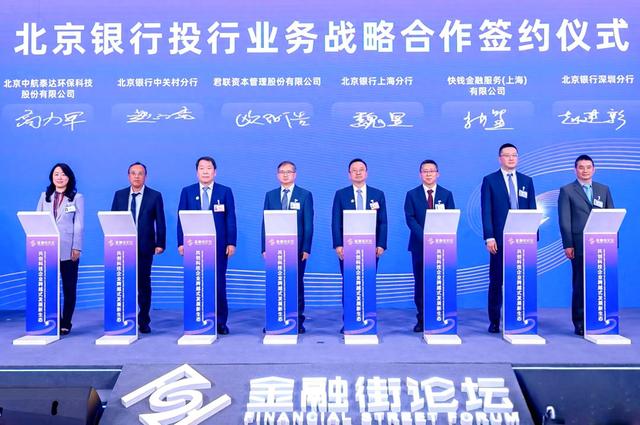
Core Insights - The forum focused on creating a new ecosystem for the rapid development of technology enterprises through financial empowerment [1][2] - Beijing has cultivated a number of competitive technology companies, achieving significant results in technology innovation and financial integration [1] - Beijing Bank aims to be the leading bank for specialized and innovative enterprises, providing substantial financial support to small and medium-sized technology firms [1] Financial Empowerment Initiatives - Beijing Bank has provided over 1.4 trillion yuan in credit to 58,000 technology SMEs, serving 29,000 specialized and innovative enterprises [1] - The bank supports 82% of companies listed on the Beijing Stock Exchange's Growth Enterprise Market and 74% on the Sci-Tech Innovation Board [1] - A comprehensive financial service plan for intellectual property was launched, including a value assessment model to facilitate financing [2] Green Finance and Sustainability - Beijing Bank introduced a comprehensive service plan for zero-carbon park construction and launched a green finance product called "Green Electricity Loan" [5] - The first batch of intention cooperation agreements for the "Green Electricity Loan" was signed during the forum [5] - A strategic cooperation agreement was signed with Zhonghe Life Insurance for the "Specialized and Innovative Enterprise Insurance Protection Plan" [5]
北京银行(601169) - 2025 Q3 - 季度财报
2025-10-30 10:40
Financial Performance - Total revenue for Q3 2025 was RMB 15,370 million, a decrease of 5.71% compared to RMB 16,215 million in the same period last year[5] - Net profit attributable to shareholders of the parent company for Q3 2025 was RMB 6,011 million, down 1.85% from RMB 6,039 million year-on-year[5] - The net profit margin for the year-to-date period increased slightly by 0.26% to RMB 21,064 million compared to RMB 20,618 million in the previous year[5] - Basic earnings per share for Q3 2025 was RMB 0.27, a decline of 6.90% compared to RMB 0.29 in the same period last year[5] - The weighted average return on equity for Q3 2025 was 8.36%, down 1.00 percentage points from 9.19% in the previous year[5] - For the first three quarters of 2025, the company reported operating income of CNY 515.88 billion, a year-on-year decrease of 1.08%, and a net profit attributable to shareholders of CNY 210.64 billion, an increase of 0.26%[26] - Net profit for the first three quarters of 2025 reached RMB 21,105 million, slightly up from RMB 21,060 million in 2024, indicating a marginal increase of 0.2%[47] - The bank's total operating income for the first three quarters of 2025 was RMB 51,588 million, a slight decrease from RMB 52,151 million in 2024, down by 1.1%[47] Asset and Liability Management - Total assets at the end of Q3 2025 reached RMB 4,892,227 million, reflecting a year-on-year increase of 15.95% from RMB 4,027,327 million[6] - Total liabilities amounted to RMB 4,505,082 million, a significant rise from RMB 3,863,202 million in 2024, marking an increase of 16.6%[46] - The total equity attributable to shareholders of the parent company increased to RMB 385,723 million, an 8.74% increase from RMB 353,733 million at the end of the previous year[6] - The total cash inflow from investment activities for the first three quarters of 2025 was RMB 1,287,458 million, up from RMB 546,926 million in 2024, marking an increase of 134.8%[50] Loan and Deposit Growth - The non-performing loan ratio improved to 1.29%, a decrease of 0.02 percentage points from 1.31% at the end of the previous year[8] - Company deposits grew by CNY 1,214 billion to CNY 18,255 billion, reflecting a 7.12% increase, while company loans (excluding discounts) rose by 11.98% to CNY 14,341 billion[36] - The bank's total financing for key sectors exceeded 670 billion RMB, covering over 4,400 clients[38] - The bank's green finance loan balance reached 265.46 billion RMB, growing by 26.20% year-on-year[39] Cash Flow Analysis - The net cash flow from operating activities for the year-to-date period was RMB 333,319 million, a significant increase of 354.99% compared to RMB 73,258 million in the previous year[5] - The net cash flow from financing activities for the first three quarters of 2025 was RMB 158,966 million, a significant rise from RMB 18,942 million in 2024, representing an increase of 738.5%[50] - The ending balance of cash and cash equivalents as of the end of the third quarter of 2025 was RMB 594,836 million, compared to RMB 369,045 million at the end of the same period in 2024, an increase of 61.0%[50] Capital and Risk Management - The provision coverage ratio decreased to 195.79%, down 12.96 percentage points from 208.75% at the end of the previous year[8] - The core Tier 1 capital ratio is 8.44% as of September 30, 2025, down from 8.95% at the end of 2024[21] - The total risk-weighted assets amount to RMB 3,152,500 million as of September 30, 2025, compared to RMB 2,911,405 million at the end of 2024[21] - The liquidity coverage ratio is 160.87% as of September 30, 2025, indicating strong liquidity position[24] Customer and Market Development - Retail customer base surpassed 31 million, with personal loan balance reaching CNY 7,056.84 billion, a year-on-year growth of 1.99%[29] - The bank's total customer base reached 351,873, an increase of 51,333 customers or 17.08% compared to the beginning of the year[38] - The company actively participated in the "Four Seasons Green Forum" to enhance its brand image in the elderly finance sector, with 1.9 million personal pension accounts opened, 67.89% of which are in Beijing[31] Strategic Initiatives - The company aims to optimize its operational system and embrace technological changes to achieve high-quality development[25] - The company has established a strategic framework referred to as "123456" to guide its operations and development[25]