
BOB(601169)

Search documents
北京银行三季度总资产增幅16%,净利润同比增长0.26%
Nan Fang Du Shi Bao· 2025-10-31 08:21
Core Viewpoint - Beijing Bank reported a slight decline in revenue for the first three quarters of 2025, while net profit showed a modest increase, indicating a mixed performance amid a challenging economic environment [2][4]. Financial Performance - For the first three quarters of 2025, Beijing Bank achieved operating income of 51.588 billion yuan, a year-on-year decrease of 1.08% [4]. - The net profit attributable to shareholders was 21.064 billion yuan, reflecting a year-on-year increase of 0.26% [4]. - In Q3 alone, the bank's revenue was 15.370 billion yuan, down 5.71% year-on-year, and net profit was 6.011 billion yuan, down 1.85% year-on-year [3][4]. Asset Quality - The total assets of Beijing Bank reached 4,892.227 billion yuan, growing by 15.95% since the beginning of the year [4]. - The non-performing loan ratio improved to 1.29%, down from 1.31% at the end of the previous year [4]. - The provision coverage ratio was 195.79%, a decrease of 12.96 percentage points from the previous year-end [4]. Retail and Digital Transformation - The bank's retail business showed strong growth, with average daily savings increasing by 12.53% since the beginning of the year [6]. - The number of retail customers surpassed 31 million, and the bank's assets under management (AUM) exceeded 1.33 trillion yuan, marking a year-on-year increase of 12.94% [6]. - The bank is focusing on digital transformation, with mobile banking users reaching nearly 20 million, a year-on-year growth of 12.01% [7]. Strategic Focus - The bank aims to enhance its long-term strategy and brand, focusing on high-quality development and digital banking transformation [8]. - Future initiatives include improving technology innovation evaluation systems and supporting technology enterprises through various financial tools [7].


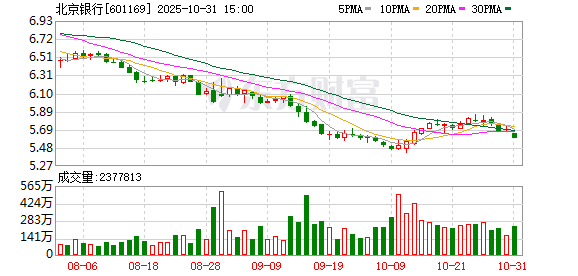
做好“普惠金融”大文章,北京银行如何用“差异化”解题
第一财经· 2025-10-31 06:56
Core Viewpoint - The article emphasizes the significant growth and transformation of inclusive finance in China over the past 20 years, highlighting Beijing Bank's proactive role in this sector, particularly through digital transformation and AI integration in financial services [1][4][6]. Group 1: Development of Inclusive Finance - The concept of "inclusive finance" was first proposed by the United Nations in 2005, and it has seen substantial growth in China, both in scale and service quality [1]. - Since 2022, Beijing Bank has achieved an average annual growth rate of 34.3% in its inclusive finance loan balance, showcasing its commitment to supporting small and medium-sized enterprises (SMEs) [1]. - Beijing Bank has positioned inclusive finance as a long-term strategic focus, aiming to provide differentiated and specialized services [1][7]. Group 2: Digital Transformation Initiatives - In November 2022, Beijing Bank launched the upgraded version 2.0 of its exclusive inclusive finance app "Xiao Juren," marking a new phase in its digital transformation [3]. - The bank's digital transformation is characterized by the integration of AI technologies, transitioning from "digital" to "intelligent" finance, which is seen as an inevitable trend [4][6]. - The introduction of "Linghang AI Loan," an AI-driven credit product for specialized and innovative enterprises, exemplifies the bank's commitment to leveraging AI for enhanced financial services [5]. Group 3: Structural and Mechanism Innovations - Beijing Bank has established a comprehensive organizational structure to support its inclusive finance strategy, with dedicated teams at the headquarters and branches [10]. - The bank has implemented a financing coordination mechanism and strengthened internal incentive systems to enhance the effectiveness of its inclusive finance initiatives [11]. - The bank's product innovation has led to a diverse range of inclusive finance products, including online renewal loans that support a seamless application process [11]. Group 4: Support for Small and Micro Enterprises - Beijing Bank has provided over 1.2 trillion yuan in credit to 50,000 technology-based SMEs, demonstrating its focus on enhancing the financial capabilities of this sector [7]. - As of mid-2025, the bank's inclusive loans to small and micro enterprises reached 261.6 billion yuan, reflecting a growth rate of 17.27% [11]. Group 5: Integration with Technology and Innovation - The bank has successfully combined inclusive finance with technology-driven financial solutions, breaking traditional credit assessment models to better serve innovative SMEs [13]. - A notable case involved the evaluation of a small enterprise's data assets, allowing for credit approval based on intangible assets, showcasing the bank's innovative approach [13]. Group 6: Contribution to Rural Revitalization - Beyond SMEs, inclusive finance plays a crucial role in poverty alleviation and rural revitalization, providing financial services to underserved regions [17]. - Beijing Bank actively participates in rural revitalization efforts, including funding key projects in various regions to support local economic development [18].
北京银行股份有限公司2025年第三季度报告
Shang Hai Zheng Quan Bao· 2025-10-31 05:51
Core Viewpoint - The report highlights Beijing Bank's financial performance and strategic initiatives for the third quarter of 2025, emphasizing growth in assets, loans, and deposits while maintaining asset quality and focusing on high-quality development in key financial sectors. Financial Performance - As of the end of the reporting period, the total assets of the company reached 48,922.27 billion RMB, an increase of 15.95% from the beginning of the year [6] - The total liabilities amounted to 45,050.82 billion RMB, reflecting a growth of 16.62% year-to-date [6] - The company achieved operating income of 515.88 billion RMB, a year-on-year decrease of 1.08%, while net profit attributable to shareholders was 210.64 billion RMB, up 0.26% [6] - The weighted average return on equity stood at 9.86%, indicating stable profitability [6] Asset Quality - The non-performing loan ratio was reported at 1.29%, a decrease of 0.02 percentage points from the beginning of the year, showcasing improved asset quality [7] Retail Business - Retail business saw steady growth, with personal loan balances reaching 7,056.84 billion RMB, a year-on-year increase of 1.99% [8] - The number of retail customers surpassed 31 million, with significant growth in high-end customer segments [8] - The average interest rate on personal savings decreased by 32 basis points compared to the beginning of the year [8] Corporate Business - Corporate deposits grew to 18,255 billion RMB, an increase of 7.12% year-to-date, while corporate loans reached 14,341 billion RMB, up 11.98% [14] - The company focused on enhancing service capabilities for strategic clients, particularly in key sectors such as clean energy and high-end manufacturing [15] Financial Market Operations - The financial market business saw a total scale of 59.4 trillion RMB, a growth of 28.09% from the beginning of the year [19] - The bank's foreign currency assets increased by 43.41%, with interest income from these assets rising by 41.06% [19] Strategic Initiatives - The company is committed to high-quality development, focusing on technology finance, green finance, and inclusive finance, with significant growth in these areas [5][6] - The bank has implemented a digital transformation strategy to enhance customer service and operational efficiency [10][18] Shareholder Information - The board of directors approved a cash dividend of 4.67 RMB per share for the "North Silver Preferred 1" shareholders, totaling 228.83 million RMB [29][46] Related Transactions - The bank approved a credit limit of 10 billion RMB for North Silver Consumer Finance Co., with a special liquidity support limit of 7 billion RMB [50][51] - A credit limit of 17.5 billion RMB was also approved for Beijing Financial Holdings Group and its subsidiaries [59][60]
北京银行前三季度净利逾210亿元 零售AUM同比两位数增长
2 1 Shi Ji Jing Ji Bao Dao· 2025-10-31 04:41
Core Insights - Beijing Bank reported a slight decline in operating income for the first three quarters of 2025, with total revenue at 51.588 billion yuan, down 1.08% year-on-year, while net profit attributable to shareholders increased by 0.26% to 21.064 billion yuan [1] Financial Performance - The bank's net interest income reached 39.246 billion yuan, up 1.79% year-on-year, and net fee and commission income rose by 16.92% to 3.269 billion yuan [1] - Total assets amounted to 4.892 trillion yuan, a growth of 15.95% since the beginning of the year, while total liabilities increased by 16.62% to 4.505 trillion yuan [1] - Loan principal totaled 2.37 trillion yuan, up 7.38%, and deposit principal reached 2.64 trillion yuan, increasing by 7.60% [1] Asset Quality and Risk Management - The non-performing loan ratio stood at 1.29%, a decrease of 0.02 percentage points from the beginning of the year, with a provision coverage ratio of 195.79% [2] - Capital adequacy ratios met regulatory requirements, with total capital adequacy at 12.82%, tier 1 capital at 11.87%, and core tier 1 capital at 8.44% [2] Business Segments Performance - Retail banking saw significant growth, with assets under management (AUM) reaching 1.33 trillion yuan, a year-on-year increase of 12.94% [2] - Corporate deposits grew to 1.8255 trillion yuan, up 7.12%, while corporate loans increased by 11.98% to 1.4341 trillion yuan [3] - Financial market operations expanded, with total business scale reaching 5.94 trillion yuan, a growth of 28.09% [3] Digital Transformation - The bank's digital initiatives have enhanced service delivery, with mobile banking users nearing 20 million, reflecting a 12.01% increase [4] - The introduction of AI-driven systems in corporate banking has improved client engagement and financing processes [4]
北京银行前三季度实现净利润210.64亿元 资产总额4.89万亿元
Zheng Quan Ri Bao Wang· 2025-10-31 03:49
Core Insights - Beijing Bank reported a steady performance in Q3 2025, with total operating income of 51.588 billion yuan and a net profit attributable to shareholders of 21.064 billion yuan, reflecting a year-on-year growth of 0.26% [1] - The bank's total assets reached 4.89 trillion yuan, a 15.95% increase from the beginning of the year, while total liabilities grew by 16.62% to 4.5 trillion yuan, indicating a steady growth in business scale [1] - The non-performing loan ratio improved to 1.29%, down by 0.02 percentage points from the start of the year, showcasing enhanced asset quality [1] Financial Performance - The weighted average return on equity stood at 9.86%, maintaining a robust profitability level [1] - The total loan principal amounted to 23.73046 trillion yuan, up by 7.38% year-to-date, with loans constituting 48.51% of total assets [1] - Loans in key sectors such as technology finance, green finance, and inclusive finance saw significant growth, with increases of 20.16%, 26.20%, and 16.91% respectively [1] Deposit Strategy - Beijing Bank adhered to a deposit-centric strategy, achieving a total deposit principal of 26.35477 trillion yuan, a 7.60% increase from the beginning of the year, with deposits making up 58.50% of total liabilities [2] - The bank's retail business showed steady growth, with personal loan balances reaching 7.05684 trillion yuan, a year-on-year increase of 1.99% [2] - The number of retail customers surpassed 31 million, and the scale of payroll services exceeded 110 billion yuan [2] Brand and Customer Growth - The bank's brand influence continued to enhance, with initiatives like "Child-Friendly Bank" and "Bank for Achieving Dreams" contributing to its reputation [2] - The Assets Under Management (AUM) reached 1.33 trillion yuan, reflecting a year-on-year increase of 152.78 billion yuan, or 12.94% [2] - The high-end customer segment showed significant growth, with over 1.23 million VIP clients, an increase of 10.40% since the beginning of the year [2]
做好“普惠金融”大文章,北京银行如何用“差异化”解题
Di Yi Cai Jing· 2025-10-31 03:29
Core Viewpoint - The development of inclusive finance in China has significantly progressed over the past 20 years, with Beijing Bank playing a pivotal role in this transformation by enhancing its inclusive finance strategies and services [1][5]. Group 1: Growth and Strategy - Since 2022, Beijing Bank's inclusive finance loan balance has increased at an average annual rate of 34.3%, showcasing its commitment to supporting small and medium-sized enterprises (SMEs) [1]. - The bank has established a differentiated operational path in inclusive finance, focusing on long-term service to SMEs and enhancing service quality and efficiency [1][5]. - As of mid-2025, the inclusive loans for small and micro enterprises reached 261.6 billion yuan, reflecting a growth of 38.5 billion yuan and a growth rate of 17.3% [9]. Group 2: Digital Transformation - The launch of the upgraded "Xiao Juren" app in November 2022 marks the beginning of Beijing Bank's digital transformation in the inclusive finance sector [2]. - The bank's "Linghang AI Loan," designed for specialized and innovative enterprises, integrates AI technology to assess creditworthiness based on real-time data inputs [3]. - The "Zhituo ehe" intelligent investment banking ecosystem, which utilizes AI for data-driven matching and communication, has successfully facilitated projects for over 100 clients, with more than 50% being technology companies [3]. Group 3: Structural and Mechanism Development - Beijing Bank has established a comprehensive organizational structure for inclusive finance, with dedicated teams at the headquarters and branches to ensure effective implementation [8]. - The bank has developed a financing coordination mechanism and enhanced internal incentive systems to support its inclusive finance strategy [8]. - The integration of architecture, mechanisms, and product innovation is essential for the rapid development of inclusive finance at Beijing Bank [8]. Group 4: Social Impact and Rural Revitalization - Inclusive finance plays a crucial role in supporting the development of small and micro enterprises, which are vital for economic resilience and social stability [7]. - Beijing Bank actively participates in rural revitalization efforts, providing financial support to key projects in regions like Xinjiang and Inner Mongolia, thereby enhancing local economic development [13][14]. - The bank's initiatives include sending teams to assist in targeted poverty alleviation and rural development projects, demonstrating its commitment to social responsibility [13].
北京银行(601169.SH):前三季度归母净利润210.64亿元,同比增长0.26%
Ge Long Hui A P P· 2025-10-30 15:54
Core Viewpoint - Beijing Bank (601169.SH) reported a slight decline in revenue for the first three quarters of the year, while net profit showed a modest increase, indicating stable performance amidst challenging market conditions [1] Financial Performance - The bank achieved an operating income of 51.588 billion yuan, a year-on-year decrease of 1.08% [1] - The net profit attributable to shareholders reached 21.064 billion yuan, reflecting a year-on-year growth of 0.26% [1] Revenue Composition - Net interest income for the first three quarters was 39.246 billion yuan, representing a year-on-year increase of 1.79% [1] - Net fee and commission income amounted to 3.269 billion yuan, showing a significant year-on-year growth of 16.92% [1] Asset Quality - As of the end of the third quarter, the non-performing loan ratio stood at 1.29%, a decrease of 0.02 percentage points compared to the end of the previous year [1] - The provision coverage ratio was 195.79%, down by 12.96 percentage points from the end of last year [1] Wealth Management - The bank has nearly 100 cooperative distribution agencies and has cumulatively distributed over 3,200 wealth management products, with the scale of personal wealth management distribution exceeding the total increase of the previous year [1]
北京银行:至三季度末总资产规模超4.89万亿元 较上年末增长15.95%
Zhong Zheng Wang· 2025-10-30 14:47
Core Insights - Beijing Bank reported significant growth in total assets, reaching CNY 48,922.27 million by the end of Q3 2025, a 15.95% increase from the end of the previous year [1] - The bank's other debt investments surged to CNY 6,357.30 million, marking a 69.75% increase since the beginning of the year [1] - For the first three quarters of the year, Beijing Bank's operating income was CNY 515.88 million, a slight decline of 1.08% year-on-year, while net profit attributable to shareholders increased by 0.26% to CNY 210.64 million [1] Financial Performance - Net interest income for the first three quarters was CNY 392.46 million, reflecting a year-on-year growth of 1.79% [1] - Net fee and commission income rose by 16.92% to CNY 32.69 million [1] - The bank's distribution network expanded, with nearly 100 cooperative distribution agencies and over 3,200 wealth products sold, surpassing last year's total sales growth [1] Asset Quality - The non-performing loan ratio stood at 1.29% at the end of Q3, a decrease of 0.02 percentage points from the end of the previous year [1] - The provision coverage ratio was 195.79%, down by 12.96 percentage points compared to the end of the previous year [1] Shareholder Structure - The top ten shareholders remained largely stable, with the only change being the exit of Huatai-PB CSI 300 ETF and the re-entry of Beijing Shou Nong Food Group Co., Ltd. as the tenth largest shareholder [2]
北京银行的前世今生:营收行业第三,净利润第三高于行业平均,毛利率高于行业均值
Xin Lang Zheng Quan· 2025-10-30 14:23
Core Viewpoint - Beijing Bank, established in 1996 and listed in 2007, is a prominent urban commercial bank in China with a strong presence in the Beijing-Tianjin-Hebei region, focusing on corporate, personal, and funding businesses [1] Financial Performance - As of Q3 2025, Beijing Bank reported operating revenue of 51.588 billion yuan, ranking third in the industry, surpassing the industry average of 23.652 billion yuan and the median of 11.74 billion yuan, but below Jiangsu Bank and Ningbo Bank [2] - The net profit for the same period was 21.105 billion yuan, also ranking third in the industry, exceeding the industry average of 10.212 billion yuan and the median of 5.196 billion yuan, but lower than Jiangsu Bank and Ningbo Bank [2] Financial Ratios - The debt-to-asset ratio for Q3 2025 was 92.09%, slightly up from 91.18% year-on-year, but lower than the industry average of 92.63%, indicating good solvency [3] - The gross profit margin for Q3 2025 was 46.43%, an increase from 44.60% year-on-year, and higher than the industry average of 45.51%, reflecting strong profitability [3] Executive Compensation - The chairman, Huo Xuewen, received a salary of 698,500 yuan in 2024, a decrease of 390,500 yuan from 2023 [4] Shareholder Information - As of September 30, 2025, the number of A-share shareholders increased by 34.74% to 183,000, while the average number of circulating A-shares held per shareholder decreased by 25.78% [5] - Notable changes among the top ten circulating shareholders include a decrease in holdings by Hong Kong Central Clearing Limited and the exit of Huatai-PineBridge CSI 300 ETF from the list [5] Growth and Transformation - Longjiang Securities noted that Beijing Bank's revenue and net profit growth turned positive in the first half of the year, with highlights including accelerated growth in total assets and credit scale, improved net interest margin, and rising non-interest income [5] - Huatai Securities emphasized the bank's ongoing retail and digital transformation, with improvements in interest income and a decline in credit costs [6]
北京银行前三季度实现归母净利210.64亿元
Bei Jing Shang Bao· 2025-10-30 14:04
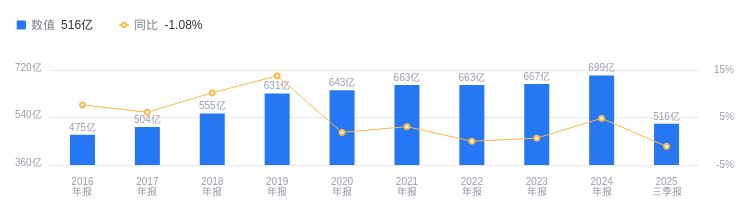
Core Insights - Beijing Bank reported a slight decline in operating income for the first three quarters of 2025, amounting to 51.588 billion yuan, a year-on-year decrease of 1.08% [1] - The net profit attributable to shareholders increased marginally by 0.26% to 21.064 billion yuan, indicating stable profitability [1] - The bank's return on equity (ROE) stood at 9.86%, reflecting a robust earnings level [1] Financial Performance - Total loan principal reached 2,373.046 billion yuan, showing a growth of 7.38% compared to the beginning of the year [1] - Loans accounted for 48.51% of total assets, indicating a significant portion of the bank's asset composition [1] - Specific loan categories demonstrated strong growth: technology finance loans increased by 20.16%, green finance loans by 26.20%, and inclusive micro-enterprise loans by 16.91% [1] Asset Quality - The non-performing loan (NPL) ratio was reported at 1.29%, a slight decrease of 0.02 percentage points from the beginning of the year, suggesting improved asset quality [1]