GAC GROUP(601238)

Search documents
汽车稳增长方案带来利好,汽车产业链股、港股整车股走强
Xin Jing Bao· 2025-09-15 14:46
Core Viewpoint - The Ministry of Industry and Information Technology (MIIT) has emphasized the importance of stabilizing growth in the automotive industry and regulating competition, leading to a significant rise in automotive stocks on September 15, 2023 [1][2]. Group 1: Policy Initiatives - The "Automotive Industry Stabilization Growth Work Plan (2025-2026)" was officially released on September 13, outlining 15 initiatives and 3 guarantee measures across four dimensions: expanding domestic consumption, improving supply quality, optimizing the development environment, and deepening open cooperation [2]. - The plan aims for approximately 32.3 million vehicle sales in 2025, a year-on-year increase of about 3%, with new energy vehicle sales targeted at around 15.5 million, reflecting a 20% growth [2]. Group 2: Industry Response - Following the MIIT's initiatives, the China Association of Automobile Manufacturers (CAAM) issued a payment standard for automotive suppliers, advocating for a 60-day payment term to stabilize the supply chain and reduce systemic risks [3]. - Major automotive companies, including FAW, Dongfeng, Changan, SAIC, and BYD, have committed to actively implementing the payment standards proposed by CAAM [2]. Group 3: Market Reaction - On September 15, automotive stocks surged, with notable increases in companies such as Jianghuai Automobile (up 6.68%) and BYD (up 2.63%), reflecting positive market sentiment towards the government's initiatives [1]. - Hong Kong-listed automotive stocks also experienced gains, with Li Auto rising by 4.56% and NIO by 3.53%, indicating a broader market response to the regulatory changes [1].




中德车企慕尼黑对弈
Zhong Guo Xin Wen Wang· 2025-09-15 13:28
Core Insights - Chinese electric vehicles (EVs) are making significant inroads into the European market, particularly highlighted at the Munich Auto Show where they became the focal point [1][2][4] Group 1: Market Presence - At the Munich Auto Show, Chinese brands like Xpeng, GAC, and BYD showcased new models and announced production plans in Europe, indicating a strong commitment to the market [2][4] - China had the largest number of exhibitors after Germany, accounting for nearly one-third of foreign participants, showcasing a systematic approach to entering the European market [4] Group 2: Strategic Shifts - Chinese automakers are shifting from a "domestic production + vehicle export" model to a localized strategy, emphasizing "in Europe, for Europe" to better integrate into the European market [6][7] - This shift mirrors the earlier strategies of German automakers in China, indicating a role reversal in the global automotive landscape [7] Group 3: Technological Advancements - Chinese companies are transitioning from competing on price to focusing on technology, with significant innovations in battery and smart driving technologies [8][9] - Many foreign exhibits at the Munich Auto Show utilized Chinese technology, highlighting China's emerging role as a technology exporter and standard setter in the automotive industry [10] Group 4: Investment Trends - A report from Rhodium Group indicates that in 2024, China's overseas investment in the EV sector is projected to reach $16 billion, surpassing domestic investments for the first time [12] - The growth in overseas investment is reflected in the establishment of factories globally by Chinese automakers, such as Chery in Spain and Great Wall in Brazil [13] - Battery manufacturers are leading the charge in overseas investments, accounting for 74% of the total, driven by companies like CATL and others expanding their global footprint [13] Group 5: Challenges and Future Outlook - Despite the progress, challenges remain in local adaptation, compliance management, and operational efficiency as Chinese companies navigate deeper into international markets [14] - The structural transformation driven by technology, capital, and branding is redefining the competitive landscape of the global automotive industry [14]



中汽协发布供应商账款支付倡议 17家车企表态落实
Zhong Guo Xin Wen Wang· 2025-09-15 13:17
Core Viewpoint - The China Automotive Industry Association (CAIA) has released a payment initiative for supplier accounts, which has been supported by 17 major automotive companies, aiming to promote high-quality development in the automotive industry [1][2]. Group 1: Initiative Details - The initiative outlines requirements for goods delivery acceptance, payment terms, reconciliation, and payment processes, specifying that the payment period for automotive companies (the buyer) should not exceed 60 calendar days from the date of delivery and acceptance by the buyer [1]. - The initiative is expected to alleviate financial pressure on suppliers, which is crucial for fostering innovation and building a robust supply chain in the automotive sector [1]. Group 2: Supporting Companies - The 17 automotive companies that have committed to this initiative include major players such as BYD, Xiaomi, Dongfeng Motor Group, and SAIC Motor Corporation, among others [2]. - These companies have previously made public commitments regarding the payment term of not exceeding 60 days [2]. Group 3: Industry Impact - If effectively implemented, the initiative could enhance cash flow efficiency within the industry, leading to improved production efficiency and overall competitiveness of the Chinese automotive sector [1].



中汽协推动“60天账期”承诺落地 17家车企响应
Xin Lang Cai Jing· 2025-09-15 12:26
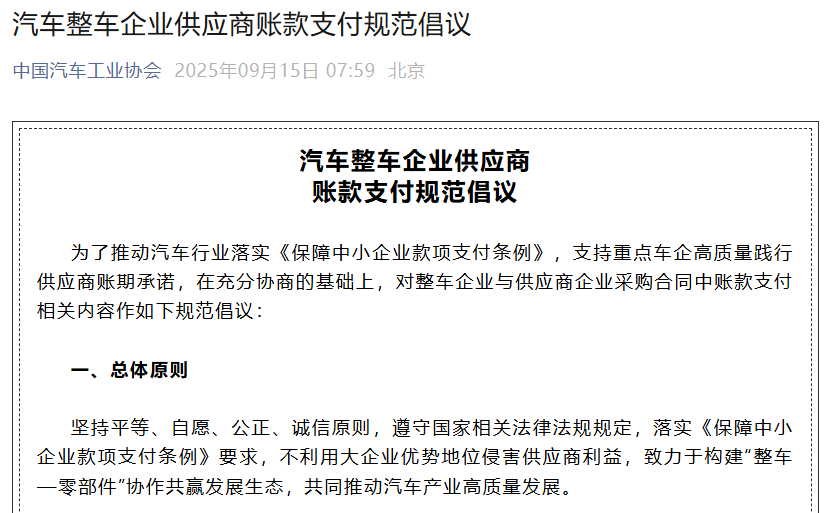
Core Viewpoint - The China Automotive Industry Association (CAAM) has issued a payment standard initiative for automotive manufacturers, establishing a maximum payment term of 60 days for suppliers, effective from the date of delivery acceptance [1][2]. Group 1: Initiative Details - The initiative specifies that the payment term starts from the date of delivery and acceptance, with a maximum of 60 calendar days [1]. - It outlines requirements for delivery acceptance, payment terms, reconciliation, and payment processes, including a principle that delivery acceptance should not exceed three working days [1]. - The initiative encourages stable cooperation between suppliers and manufacturers, with contracts having a minimum validity of one year [1]. Group 2: Industry Response - Seventeen major automotive companies, including FAW, Dongfeng, Changan, SAIC, and BYD, have committed to implementing the initiative, aiming to foster a collaborative ecosystem between vehicle manufacturers and parts suppliers [1][2]. - In August, these companies collectively sold approximately 2.6 million vehicles, accounting for over 90% of China's total automotive sales for that month, indicating strong industry support for the initiative [2]. Group 3: Market Impact - Following the announcement of the initiative, the A-share automotive sector saw a net inflow of 3.27 billion yuan, with a 1.1% increase in stock prices [2]. - Several listed parts suppliers, such as Wanxiang Qianchao and Zhejiang Shibao, experienced stock price surges, while vehicle manufacturers like Haima and Jinbei also saw significant gains [2]. Group 4: Regulatory Context - The initiative aligns with recent regulatory actions aimed at promoting the healthy development of the automotive industry, including a three-month special campaign to address online irregularities in the sector [2]. - The Ministry of Industry and Information Technology has also released a work plan for stabilizing growth in the automotive industry from 2025 to 2026, focusing on structural optimization and quality improvement [2]. Group 5: Historical Context - Prior to this initiative, CAAM had already advocated for fair competition and healthy industry development, with commitments from major companies to adhere to a 60-day payment term [3]. - Data from Wind indicates that the average payment cycle for major domestic automakers was 183 days in the first half of this year, an increase of about 7 days compared to the same period in 2024 [3].


中汽协明确“60天账期”支付规范,17家车企响应
Bei Ke Cai Jing· 2025-09-15 12:17
Core Viewpoint - The China Automobile Industry Association (CAAM) has launched an initiative to standardize payment terms for automotive suppliers, establishing a maximum payment period of 60 days from the date of delivery and acceptance of goods by the automaker [1][3]. Group 1: Initiative Details - The payment period starts from the date the supplier's goods are delivered and accepted by the automaker, with a maximum of 60 calendar days [1][3]. - Automakers are encouraged to establish long-term cooperative relationships with suppliers, with contracts having a minimum validity of one year [1]. - The initiative outlines key processes including order confirmation, delivery and acceptance, and payment and settlement [3]. Group 2: Industry Response - 17 automakers have publicly committed to implementing the payment initiative, including major companies like Dongfeng Motor, SAIC Group, and BYD [2][6]. - Automakers such as BYD emphasize the importance of adhering to the initiative to ensure supplier rights and stabilize supply chain expectations [6]. Group 3: Specific Policies from Automakers - Chery Group has introduced a four-pronged approach to standardize payment terms and reduce average payment periods for suppliers [7]. - Changan Automobile has implemented a payment scheme that starts counting from the delivery date, successfully fulfilling the 60-day payment commitment [7]. - Great Wall Motors has committed to using bank transfers and bank acceptance bills exclusively for payments, avoiding electronic vouchers [7].


赛力斯、蔚来、东风、长安、上汽齐齐发声,汽车产业链多股暴涨
Mei Ri Jing Ji Xin Wen· 2025-09-15 12:17
Core Viewpoint - The "60-day payment commitment" initiative among 17 automotive companies continues to evolve, with the China Automotive Industry Association releasing the "Payment Norms Initiative for Automotive OEMs and Suppliers" on September 15, which aims to standardize payment terms and enhance supplier rights [1][3]. Group 1: Initiative Details - The initiative specifies that payment terms should not exceed 60 calendar days from the date of delivery and acceptance by the OEM [3]. - It encourages cash payments or bank acceptance bills, especially for small and medium-sized enterprises, to alleviate financial pressure on suppliers [5][6]. - The initiative includes provisions for advance payments based on previous contract prices if pricing agreements are not reached [5]. Group 2: Industry Response - Major automotive companies such as Dongfeng, Changan, and SAIC have committed to implementing the initiative, ensuring supplier rights and stabilizing expectations within the supply chain [6][8]. - The Ministry of Industry and Information Technology emphasized the importance of this initiative for promoting healthy and sustainable development in the automotive industry [8]. Group 3: Market Impact - Following the announcement of the initiative, automotive stocks saw significant gains, with several companies reaching their daily price limits [3]. - In the Hong Kong market, shares of electric vehicle manufacturers like NIO and BYD also experienced notable increases [4]. Group 4: Historical Context and Future Outlook - Since the initial "60-day payment commitment" declaration in June, some companies have already begun to optimize their payment terms, with reports indicating that several firms have successfully implemented the 60-day payment policy [9]. - The Ministry of Industry and Information Technology has previously issued guidelines to regulate payment terms in the automotive sector, highlighting the ongoing challenges in achieving compliance across the industry [9][10].

东风、上汽、比亚迪等,集体声明→
中国基金报· 2025-09-15 11:27
Core Viewpoint - The China Automotive Industry Association has launched the "Supplier Payment Norms Initiative" to promote a collaborative and win-win ecosystem between vehicle manufacturers and suppliers, ensuring the protection of suppliers' interests and fostering high-quality development in the automotive industry [2][5][14]. Group 1: Initiative Details - The initiative aims to prevent large enterprises from exploiting their advantageous positions to harm suppliers and to establish a cooperative development ecosystem between vehicle manufacturers and parts suppliers [2][3]. - Key aspects of the initiative include confirming order details, payment terms, and establishing long-term cooperative relationships with contracts lasting no less than one year [4][5]. Group 2: Industry Response - Major automotive companies such as Dongfeng Motor Group, SAIC Motor Corporation, Chery Automobile, and BYD have publicly committed to implementing the initiative, focusing on key areas like order confirmation, delivery, payment, and contract duration [3][5][14]. - SAIC has standardized supplier payment terms to within 60 days and has committed to not using commercial bills to alleviate supplier financial pressure [6][14]. - Chery has implemented measures to shorten average payment periods for suppliers and has introduced a digital approval process to enhance efficiency [7][14]. Group 3: Long-term Goals - The initiative is part of a broader effort by national ministries to stabilize the supply chain and promote high-quality development in the automotive sector [6][9]. - Companies are encouraged to strengthen self-discipline and work together to enhance the resilience and competitiveness of the automotive industry [9][10].



汽车板块大涨,上汽、广汽、比亚迪、小米等集体表态
2 1 Shi Ji Jing Ji Bao Dao· 2025-09-15 10:59
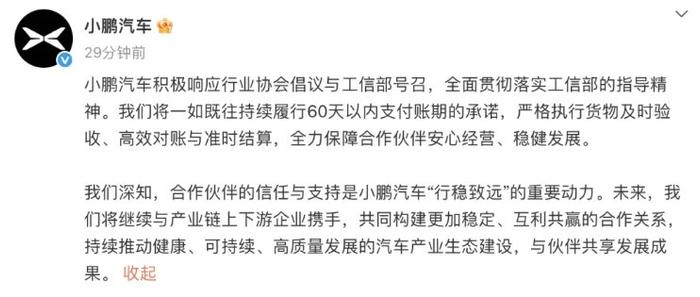
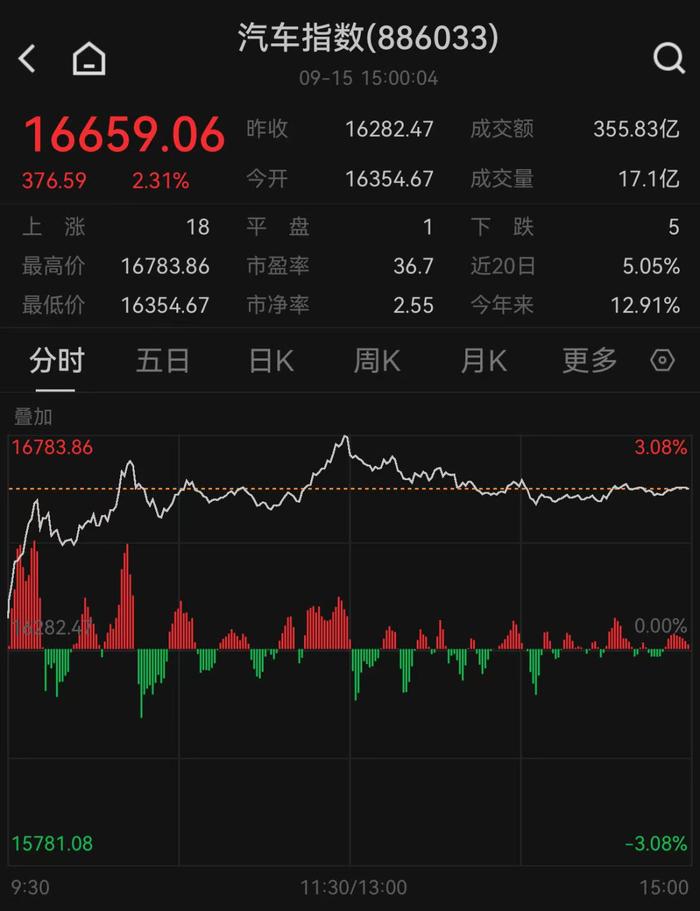
Core Viewpoint - The automotive industry is experiencing a strong performance, with several companies' stocks hitting the limit up, indicating positive market sentiment and potential growth opportunities [1]. Industry Summary - The automotive index closed at 16,659.06, with a trading volume of 17.1 billion and a turnover of 35.583 billion, reflecting a 2.31% increase [2]. - The China Automotive Industry Association has issued a payment standard initiative aimed at ensuring fair payment practices between vehicle manufacturers and suppliers, promoting a collaborative ecosystem [4]. - The initiative encourages long-term stable partnerships between manufacturers and suppliers, with contracts lasting no less than one year [4]. Company Responses - Chery Group has committed to adhering to the payment standards and ensuring compliance with the initiative [6]. - Li Auto has reaffirmed its commitment to a 60-day payment period for suppliers, emphasizing timely delivery and settlement [8]. - Seres has expressed support for the initiative, advocating for self-discipline among companies to foster high-quality industry development [10]. - Changan Automobile has successfully implemented the 60-day payment commitment and developed an efficient payment process for suppliers [12]. - GAC Group has pledged to uphold its commitments to suppliers and promote healthy development across the supply chain [14]. - BYD has committed to implementing the initiative and focusing on key contract elements to enhance collaboration with partners [16]. - NIO has expressed its dedication to building a mutually beneficial relationship with suppliers, emphasizing the importance of a healthy supply chain [18][19]. - Xiaomi Auto has reiterated its commitment to the 60-day payment period and aims to enhance supply chain resilience [21]. - SAIC Group has standardized its supplier payment period to 60 days and will avoid practices that increase financial pressure on suppliers [23][24]. - XPeng Motors has committed to maintaining the 60-day payment period and ensuring efficient operations with partners [26]. - Leap Motor has pledged to support the initiative and ensure supply chain stability [28][29]. - Geely Auto Group has expressed its commitment to implementing the initiative in key operational areas [31].

一汽、比亚迪、小米等17家车企集体表态:积极落实账款支付倡议
Xin Lang Cai Jing· 2025-09-15 09:52
Group 1 - The China Automotive Industry Association (CAAM) issued an initiative on September 15, 2023, regarding payment norms for suppliers, emphasizing the importance of timely payments in the automotive industry [1] - A total of 17 automotive companies, including major players like SAIC, Geely, BYD, and NIO, have publicly supported the initiative and committed to adhering to the payment norms [1][4] - The initiative encourages the use of cash or bank acceptance bills for payments, particularly for small and medium-sized enterprises (SMEs) [2] Group 2 - SAIC Group and Geely have explicitly stated they will not use commercial acceptance bills, which could increase financial pressure on suppliers, and will standardize payment terms to within 60 days [2] - Several companies, including Li Auto, Xiaomi, and Changan, have reiterated their commitment to a 60-day payment period and are working on optimizing their payment processes [3][4] - The Ministry of Industry and Information Technology (MIIT) has established a platform for SMEs to report issues regarding the adherence to payment commitments by key automotive companies [4][5]
上汽比亚迪等十余车企响应中汽协账款支付规范倡议
Cai Jing Wang· 2025-09-15 09:43
Core Viewpoint - The China Automotive Industry Association (CAIA) has issued a "Supplier Payment Norms Initiative" aimed at standardizing payment practices between automotive manufacturers and suppliers, which is expected to promote the healthy development of the automotive industry [1][2][3]. Group 1: Industry Response - Major automotive companies including SAIC, BYD, GAC, Changan, Dongfeng, Xiaomi, Li Auto, NIO, and Xpeng have collectively expressed their support for the CAIA's initiative [1][2][3]. - The initiative emphasizes key aspects such as order confirmation, delivery and acceptance, payment and settlement, and contract duration, with a recommendation that the acceptance of goods should not exceed three working days [1][2][3]. Group 2: Company Actions - SAIC Group has unified the payment period for suppliers to within 60 days and will not use commercial acceptance bills to alleviate supplier financial pressure [2]. - BYD is committed to implementing the initiative and enhancing collaboration with upstream and downstream partners through technological innovation and management optimization [3]. - GAC Group has pledged to support the initiative and promote healthy development across the industry chain [5]. - Changan has fully implemented the 60-day payment commitment and has developed an efficient payment process for suppliers [6]. - Dongfeng is actively working to ensure supplier rights and enhance industry chain resilience [9]. - Xiaomi has reiterated its commitment to timely payments and the importance of a healthy industry ecosystem [10]. - Li Auto and NIO have both confirmed their adherence to the 60-day payment period and the initiative's standards [11][13].