新能源汽车出海

Search documents
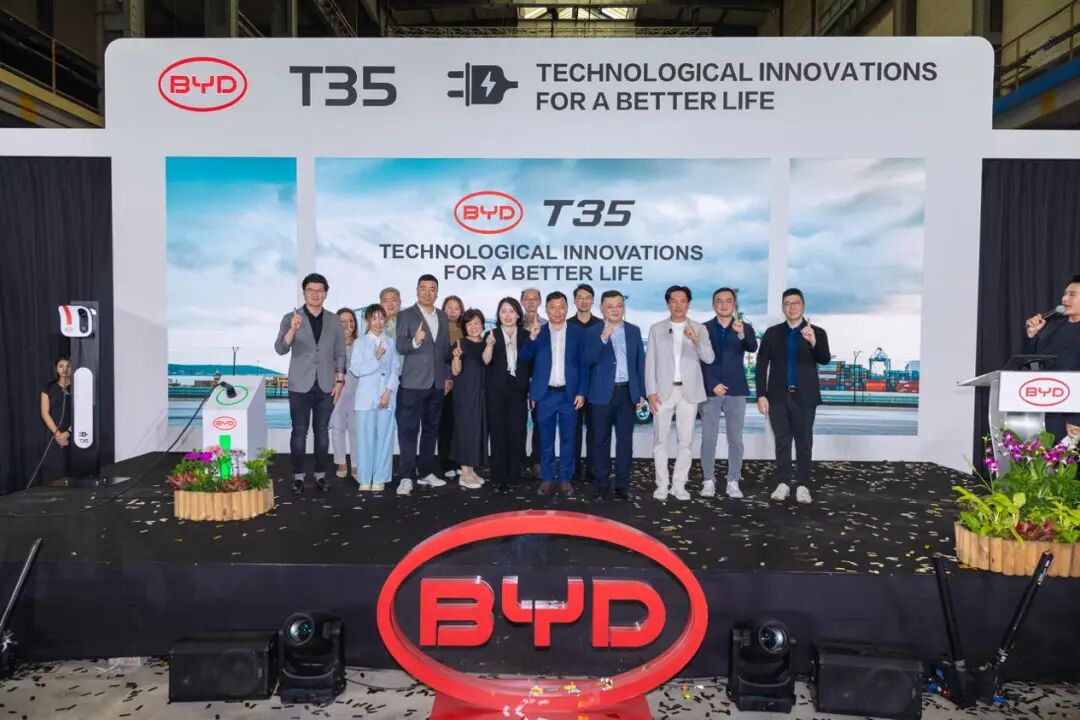
售价77万人民币!比亚迪T35登陆新加坡,田春龙揭秘“破局密码”
Xin Lang Cai Jing· 2026-03-30 06:43
Core Viewpoint - BYD has officially launched the T35 electric light truck in Singapore at a price of 143,000 SGD (approximately 770,000 RMB), marking another significant step in its global expansion after Japan, Wuhan, and Mexico [1][10]. Product Localization - The T35's specifications, including a payload capacity of 1,800 kg, were tailored to meet local regulations, specifically the weight limit for parking in Singapore's public housing [5][14]. - The vehicle is designed to ensure a practical range of over 300 km while incorporating lightweight and intelligent design features [5][14]. - The T35 has been optimized for Singapore's high-temperature and high-humidity climate, with enhancements in battery cooling systems, air conditioning efficiency, and chassis durability to handle frequent stops and urban road conditions [5][14]. Market Strategy - BYD's pricing strategy reflects the high-quality expectations of the Singapore market, where competition is based on quality rather than price [5][14]. - The company has established a comprehensive charging infrastructure, offering solutions from DC and AC charging to future fast-charging options, ensuring users receive charging support alongside vehicle purchases [7][16]. - A localized after-sales service system has been developed, including a 10-year maintenance service included in the T35's price, addressing the long usage cycles of commercial vehicles in Singapore [7][16]. Competitive Landscape - The primary competitors for electric trucks in Singapore are expected to be other Chinese brands, as evidenced by the recent procurement projects in the electric bus sector, all of which were awarded to Chinese companies [9][18]. - BYD has achieved over 60% market share in the electric bus sector and aims to replicate this success in the electric truck market [7][16]. - The company’s approach to product development is centered around local regulations, user habits, and infrastructure conditions, which has proven effective over its 12 years in Singapore [9][18].


终端探需-油价持续高位-海外新能源车需求有望超预期
2026-03-22 14:35
Summary of Conference Call Records Company: BYD (比亚迪) Key Points Industry Overview - The demand for new energy vehicles (NEVs) in overseas markets is expected to exceed expectations due to sustained high oil prices and geopolitical tensions [1][2] - The European market shows regional differences in NEV penetration, with Northern Europe exceeding 90% and Western Europe around 20-30% [2][3] BYD's Strategic Goals - BYD aims to achieve sales of over 400,000 units in Europe by 2026 and a global export target of 1.5 million units, with an expected achievement rate of 80% [1][17] - The company plans to increase its European sales network to 2,000 outlets by 2026, up from 1,000 by the end of 2025 [1][22] Product Strategy - BYD's main products in overseas markets include the Seal U and Dolphin models, which contribute over 30% of total sales [5] - The product strategy focuses on compact cars and SUVs, with plans for upgrades and the introduction of fast-charging technology [5][6] Market Dynamics - In Europe, the sales ratio of pure electric to plug-in hybrid vehicles is approximately 2:1, with a strong preference for pure electric in Northern and Western Europe [4][11] - The company is adapting its channel management by tightening control over distributors in large markets while maintaining a distributor model in smaller markets [7] Profitability and Risks - In Europe, dealer margins average around €3,000 per vehicle, with manufacturer margins estimated at 20% [14][15] - Risks include sensitivity to residual values of electric vehicles among B2B customers and potential impacts from geopolitical shipping disruptions [1][8] Regulatory Environment - The EU's IEA (Industrial Acceleration Act) may impose higher localization requirements, potentially increasing costs for Chinese automakers [9][10] - BYD is focusing on local production to mitigate tariff barriers and comply with EU regulations [9][10] Consumer Perception - European consumers' perceptions of Chinese brands have improved significantly, with BYD being viewed as a luxury brand in some markets [13] - The acceptance of plug-in hybrids varies by region, with Eastern Europe showing a preference due to infrastructure limitations [11][12] Future Outlook - BYD's sales in Europe are projected to grow from 60,000 units in 2024 to 160,000-180,000 units in 2025, with a target of 400,000 units by 2026 [14][17] - The company is also exploring opportunities in emerging markets like Southeast Asia and South America, with significant growth potential in countries like Albania and Israel [25][26] Inventory and Supply Chain - BYD's overseas inventory levels are currently stable at 1.0 to 1.2 months, with expectations to increase to 1.5 months as production ramps up [16] Additional Insights - The high oil price environment is beneficial for all electric vehicle brands, prompting domestic players to seek international markets [7] - The competitive landscape is expected to intensify as more Chinese automakers enter overseas markets [17] - The company is also considering the impact of local subsidies on the demand for its K-car model in Japan [18] This summary encapsulates the key insights and strategic directions discussed in the conference call regarding BYD's operations and the broader electric vehicle market dynamics.
营收持平,利润新高:威迈斯如何“卷”出39%增长?
市值风云· 2026-02-27 10:14
Core Viewpoint - The demand for vehicle power supplies is showing signs of slowing down in the fourth quarter, impacting the overall performance of the company [1]. Group 1: Company Performance - VMAX (威迈斯) reported an estimated revenue of 6.342 billion in 2025, a slight decline of 0.48% year-on-year, while net profit attributable to shareholders is expected to reach 557 million, reflecting a growth of 39.22% [4]. - The company has initiated a share buyback program with a total amount of 9.09 million, with share prices ranging between 32.38 and 33.20 per share, which is higher than the closing price on the first trading day after the earnings announcement [5]. - The company has achieved a historical high in profit growth despite a stable revenue outlook, with the vehicle power supply segment contributing 89% of its main business income in the first half of 2025 [15]. Group 2: Market Position and Product Development - VMAX is a leading player in the vehicle power supply market, holding approximately 16% market share in the domestic passenger vehicle onboard charger market, ranking second after BYD's Fudi Power [14]. - The company has successfully transitioned from general power supplies to automotive-grade power supplies, focusing on integrated vehicle power supply products, including onboard chargers and DC/DC converters [9]. - VMAX has entered mass production of 800V high-voltage platform SiC products, supplying to several high-end models from brands like Xiaopeng and Ideal [16]. Group 3: Industry Trends and Future Outlook - The vehicle power supply business saw a revenue growth of 3.5% in 2024, but the growth rate is expected to slow down in 2025, with a projected revenue of 5.107 billion [18]. - The electric drive system has shown remarkable growth, with a revenue increase of 418.39% in 2024, continuing to grow by 12.7% in the first half of 2025 [20]. - The company anticipates a decline in revenue for the fourth quarter of 2025, which is traditionally a peak season, indicating a potential downturn in demand [20]. - The company is also focusing on expanding its overseas market presence, with Stellantis becoming one of its top five clients, although overseas revenue saw a significant decline of 46.6% in the first half of 2025 [24][26].

申万宏源证券晨会报告-20260227
Shenwan Hongyuan Securities· 2026-02-27 00:25
Group 1: Media Industry Insights - The report highlights the breakthrough of ByteDance's Seedance 2.0, achieving dual advancements in technology and industry application [10] - The global AI video generation market is still in its early stages, with leading companies exhibiting differentiated competitive landscapes [10] - The importance of copyright services in the AIGC era is emphasized, particularly in the music sector, which is progressing faster in AI copyright collaboration due to established rights management systems [10] Group 2: Automotive Industry Insights - The new energy vehicle market in Southeast Asia is projected to grow steadily, with monthly sales increasing from 14,900 units to 23,400 units, and Chinese brands maintaining a market share of 72%-78% [9][13] - Consumer demand in Southeast Asia is shifting from technical experience to lifestyle needs, indicating that new energy vehicles are entering the mainstream consumer choice [13] - The report suggests that the certainty of Chinese automotive companies' overseas expansion is driven by product strength, reputation, and a positive product cycle, recommending companies like BYD, Geely, Xpeng, and Leap Motor for investment [9][13] Group 3: Aerospace and Energy Sector Insights - The report discusses the growth potential of Electric Power Blue Sky (688818), which is positioned as a leading enterprise in aerospace power systems, with significant revenue growth expected from satellite power systems [13] - The company is leveraging its core competencies in aerospace, special, and new energy sectors, with a focus on expanding its satellite power capacity [13] - The demand for special power supplies is expected to remain resilient due to increasing military budgets and the ongoing development of the new energy sector [13] Group 4: Battery and Energy Storage Insights - The report indicates that the battery industry is entering a supply-demand improvement cycle, with a projected increase in lithium battery shipments to 2.3 TWh in 2026, reflecting a growth rate of approximately 30% [16] - The company is expected to benefit from strong downstream demand in both the new energy vehicle and energy storage markets, with significant profit potential anticipated [16] - The report highlights the company's strategic partnerships with key clients, enhancing order visibility and production capacity [16] Group 5: Consumer Goods Insights - The report notes that Supor (002032) is experiencing stable growth in domestic sales, driven by continuous innovation and strong channel advantages [19] - The company is adjusting its profit forecasts for 2025-2027, reflecting a slight decrease in 2025 but an expected recovery in subsequent years [19] - The report emphasizes the importance of adapting to consumer trends, such as the rise of smaller households and the Gen Z demographic, to maintain competitive advantage in the market [19]
比亚迪1月份德国市场销量同比增超10倍 出口持续保持强势
Zheng Quan Ri Bao Wang· 2026-02-06 01:16
Core Insights - BYD is experiencing significant growth in overseas markets, particularly in Germany and the UK, with sales figures showing substantial year-on-year increases [1][2] - The company's overseas sales have become a crucial driver for its overall growth, with a notable shift from a domestic-focused strategy to a dual domestic and international approach [2][3] - BYD aims to sell 1.3 million vehicles overseas by 2026, supported by local production facilities in various countries [3] Group 1: Sales Performance - In January 2026, BYD sold 2,629 new cars in Germany, a 10.18-fold increase from 235 units in January 2025 [1] - In the UK, BYD registered 4,021 new energy vehicles in January 2026, marking a 149.13% increase year-on-year [1] - BYD's overseas sales for 2025 exceeded 1 million units, representing a growth of over 140% compared to the previous year [1] Group 2: Market Position and Strategy - BYD's overseas sales accounted for 22.81% of its total new energy vehicle sales in 2025, with 104.96 million units sold internationally [2] - In January 2026, 10.05 million units were exported, making up 47.84% of the total sales for that month [2] - The company is transitioning from a single domestic demand model to a dual-driven strategy, enhancing its global competitiveness [2] Group 3: Future Plans - BYD's goal for 2026 is to achieve overseas sales of 1.3 million vehicles, supported by local production in Thailand, Uzbekistan, Brazil, and Hungary [3] - The company plans to localize production in Brazil, aiming to source 50% of its components locally [3] - BYD is expected to leverage its scale, local production, and technology to transition from a domestic leader to a global automotive giant [3]
海南产经新观察:“全国百强县”澄迈深耕“五大出海场景”
Zhong Guo Xin Wen Wang· 2026-02-04 08:05
Core Viewpoint - Chengmai County in Hainan aims to deepen its engagement in five major overseas scenarios by 2026, enhancing its reputation as a city for international business and trade [1][4]. Economic Growth - During the 14th Five-Year Plan period, Chengmai's GDP increased from 34.836 billion to 55.992 billion, marking a continuous leap across two hundred billion levels, maintaining its position as the top county-level administrative region in Hainan [1]. Five Major Overseas Scenarios - The five major overseas scenarios include: - **Game Export**: Expansion of the game export commercialization process, with a target of over 150 game export service companies and 400 game titles, aiming for revenue of 4.5 billion [5]. - **Cross-Border E-Commerce**: Establishment of a cross-border e-commerce industrial park and a live streaming selection center, with a goal of attracting 50 cross-border e-commerce companies and nurturing at least one company with over 100 million in revenue [5]. - **Manufacturing Export**: Support for 12 manufacturing enterprises to engage in overseas markets and attract 15 manufacturing companies with export capabilities [5]. - **New Energy Vehicles**: Development of a comprehensive service base for new energy vehicles, with a focus on attracting a complete vehicle manufacturing project [5]. - **Digital Content Export**: Cultivation of over 2,000 digital content production talents and aiming for a revenue scale exceeding 1 billion [6]. Infrastructure and Support - Chengmai plans to build a full-chain overseas service system and enhance infrastructure for digital cultural exports, including the establishment of a digital cultural export industrial park and research institute [3][6].

未知机构:宇通客车1月淡季销量偏弱全年持续看好出海和出海新能源增长季-20260204
未知机构· 2026-02-04 02:10
Summary of Conference Call Notes Company Overview - **Company**: Yutong Bus - **Industry**: Bus Manufacturing Key Points Sales Performance - January sales were weak due to seasonal factors, with total bus sales at 1,728 units, representing a year-on-year decrease of 32.2% and a month-on-month decrease of 80.5% [1] - Among the total, sales of medium and large buses were 1,324 units, down 34.9% year-on-year and 82.3% month-on-month [1] Export Growth - Despite the overall decline, export volumes showed growth, with over 500 units exported in January, including 66 units of new energy buses [1] - The company anticipates a growth of over 10% in export and new energy bus sales by 2026 [1] Market Outlook - The company maintains a positive outlook for overseas expansion and growth in new energy segments, supported by a global and high-end strategy [1] - Domestic market demand for new energy buses is bolstered by vehicle replacement policies [1] Financial Highlights - The company has a strong dividend policy, with a projected total dividend of 3.32 billion yuan for 2024, translating to a dividend per share of 1.5 yuan (including tax) and a payout ratio of 80.7%, resulting in a dividend yield of 5% [2] - For the mid-term dividend in 2025, a distribution of 0.5 yuan per share is expected, with a payout ratio of approximately 57.2% [2] Profit Forecast - The company expects to exceed 5 billion yuan in net profit attributable to shareholders in 2025, with a price-to-earnings ratio of about 14 times [2] - Continued overseas expansion is projected to drive annual growth of over 15% in company performance [2] Additional Insights - Yutong Bus is recognized as a global leader in the bus industry, showcasing long-term growth potential and a strong capacity for high dividends, highlighting its investment value [1]

以生态出海筑全球化根基 广汽2026冲刺30万销量新目标
Xin Hua Wang· 2026-02-03 02:26
Core Viewpoint - In 2025, GAC Group's international business experienced significant growth, with a focus on expanding its global presence and establishing itself as a key player in the automotive industry's transformation, particularly in the electric vehicle sector [1][3]. Group 1: Overseas Performance - GAC Group's overseas sales reached over 130,000 units in 2025, marking a 47% year-on-year increase, positioning the company among the industry's leaders in growth [3]. - The company successfully introduced five new vehicle models in overseas markets, enhancing its product matrix and providing diverse options for global consumers [3]. - GAC expanded its market presence by entering 16 new markets, including Brazil and Australia, bringing its total coverage to 86 countries and regions [3]. Group 2: Localization and Production - GAC's localization efforts in Indonesia and Malaysia saw successful production launches in 2025, with ongoing projects in Europe, strengthening its global production and sales system [7]. - The company emphasizes a long-term strategy focused on building a globally trusted automotive brand rather than pursuing short-term scale expansion [7]. Group 3: Strategic Insights - GAC Group identified three key trends in the international expansion of Chinese electric vehicles: a shift from simple vehicle exports to a more systematic and localized approach, a transition from product competition to ecosystem competition, and a focus on quality over mere scale [8][9]. - The company aims to achieve sales targets of 250,000 to 300,000 units in 2026, with a strategic focus on new products, markets, networks, models, and marketing [10][12]. Group 4: Global Strategy and Ecosystem - GAC has developed a comprehensive global market layout and diverse localized production models, guided by its "1551" overseas strategy and "Panyu Action" plan [13]. - The company is committed to "ecological export," providing not just vehicles but a complete suite of low-carbon, green, and intelligent mobility solutions, establishing a strong competitive edge [15]. - GAC collaborates with local institutions to enhance industry standards and develop talent, while also building energy supply networks in various markets [15][16].


比亚迪“阳谋”押中欧盟考题
财富FORTUNE· 2026-01-17 13:13
Core Viewpoint - A significant breakthrough has been achieved in the trade dispute between the EU and China regarding electric vehicles, allowing Chinese automakers to submit a "price commitment" application to replace previously imposed high anti-subsidy taxes [1][3]. Group 1: EU-China Electric Vehicle Negotiations - The EU Commission initiated an anti-subsidy investigation into Chinese electric vehicles in the second half of 2023, leading to a consensus that Chinese exporters can apply for price commitments [1][3]. - The EU will issue guidelines for submitting price commitment applications, ensuring non-discriminatory treatment and adherence to WTO rules [3]. - The Chinese Chamber of Commerce for Import and Export of Machinery and Electronic Products described the negotiation outcome as a "soft landing" for the electric vehicle tariff dispute, but entering the European market remains challenging for Chinese automakers [3]. Group 2: BYD's Strategic Moves - BYD has shifted its focus overseas, increasing investments as the domestic electric vehicle market becomes saturated, leading to price cuts and declining domestic sales [4]. - BYD aims to surpass Volkswagen, Tesla, and Stellantis to become the largest electric vehicle seller in Europe by 2030, with plans for substantial investments in factories and distribution networks [5]. - Despite domestic sales pressures, BYD's pure electric vehicle sales are projected to exceed 2.257 million units in 2025, surpassing Tesla's 1.636 million units, making it the global sales leader [5]. Group 3: Local Production and Market Integration - BYD's early investments in Europe align with EU requirements, enhancing its ability to meet local market demands and regulations [6]. - The company plans to establish local production in Hungary, which will be the first passenger vehicle production base for a Chinese automaker in the EU, with production expected to start by the end of 2026 [6]. - BYD is negotiating with hundreds of European suppliers and aims to open over 1,000 stores across 32 European countries by the end of 2025 [6]. Group 4: Challenges and Market Dynamics - BYD faces challenges from external factors, including multiple recalls affecting over 200,000 vehicles due to battery issues, which could impact brand perception in overseas markets [7]. - The recent EU-China agreement is not a fixed standard, as geopolitical dynamics and tariff policies may change, requiring companies to adapt quickly to evolving rules [8]. - The current automotive landscape emphasizes rapid adaptation, with industry leaders needing to seize opportunities within the next three to five years to remain competitive [8].
乘用车2026 | 2025政策促需 2026高端发力+智能平权+出海提速
汽车琰究· 2026-01-13 00:05
Group 1 - The core viewpoint of the article emphasizes that the demand for automobiles is driven by the continuation of the trade-in policy, leading to an unexpected penetration of new energy vehicles (NEVs) and improved profitability through high-end products and overseas expansion [3][4][5][6][7][8] Group 2 - In 2025, the cumulative wholesale sales of passenger cars reached 24.119 million units, a year-on-year increase of 12.6%, with NEVs growing by 30.7% [3][8] - The penetration rate of NEVs in wholesale sales was 50.4%, up by 7.0 percentage points year-on-year, while the penetration rate for insurance reached 53.3%, an increase of 6.6 percentage points [3][46] - The share of domestic passenger cars in wholesale sales reached 69.3%, a year-on-year increase of 4.9 percentage points, with brands like Geely, Xiaomi, and Leap Motor showing significant growth [3][50] Group 3 - Looking ahead to 2026, the trade-in policy is expected to continue, supporting demand, with projected insurance sales of 22.32 million units, a decrease of 5.0% year-on-year, and wholesale sales of 30.10 million units, an increase of 1.0% [4][5] - The NEV insurance sales are expected to reach 13.8 million units, a year-on-year increase of 6.2%, while wholesale sales are projected to be 17.3 million units, up by 13.4% [4][15] Group 4 - The competitive landscape is shifting, with joint ventures declining and domestic brands accelerating their rise in the mid-to-high-end market [5][10] - In the 5-15 million price range, price-sensitive consumers are expected to drive competition, while brands like Geely, BYD, and Leap Motor are anticipated to gain higher sales growth due to their advantages in intelligence and cost-effectiveness [5][10] Group 5 - The article highlights the acceleration of intelligent driving technology, with major players like Huawei and BYD pushing for the democratization of advanced driving features [6][10] - The L3 commercial deployment is expected to gain momentum in 2026-2027, with various automakers launching new high-level driving systems and models [6][10] Group 6 - The export of passenger cars is projected to reach 6.64 million units in 2026, a year-on-year increase of 15.5%, driven by the technological advantages of domestic NEVs and the expansion of overseas manufacturing [7][11] - Companies like BYD and Geely are expected to increase their export efforts, with BYD establishing overseas factories and Geely accelerating NEV exports [7][11]