PICC(601319)
Search documents
金十图示:2025年07月28日(周一)富时中国A50指数成分股午盘收盘行情一览:银行股走势分化,石油、煤炭、电力股走低
news flash· 2025-07-28 03:38
Market Overview - The FTSE China A50 Index showed mixed performance among bank stocks, while oil, coal, and electric power stocks declined [1][6] Banking Sector - Everbright Bank had a market capitalization of 242.84 billion with a trading volume of 0.38 billion, closing at 4.11, up by 0.03 (0.74%) [3] Insurance Sector - China Life Insurance had a market capitalization of 382.10 billion, with a trading volume of 1.46 billion, closing at 59.62, up by 1.12 (2.99%) [3] - China Pacific Insurance had a market capitalization of 371.44 billion, with a trading volume of 1.02 billion, closing at 38.61, up by 1.54 (2.65%) [3] - Ping An Insurance had a market capitalization of 1,085.69 billion, with a trading volume of 5.02 billion, closing at 8.64, up by 0.17 (2.01%) [3] Alcohol Industry - Kweichow Moutai had a market capitalization of 1,806.43 billion, with a trading volume of 3.41 billion, closing at 122.78, down by 16.99 (-1.17%) [3] - Shanxi Fenjiu had a market capitalization of 221.85 billion, with a trading volume of 1.14 billion, closing at 1438.01, down by 3.73 (-2.01%) [3] - Wuliangye had a market capitalization of 476.58 billion, with a trading volume of 1.31 billion, closing at 181.85, down by 0.76 (-0.62%) [3] Technology Sector - Haiguang Information had a market capitalization of 246.59 billion, with a trading volume of 1.20 billion, closing at 341.73, down by 0.23 (-0.07%) [3] - Northern Huachuang had a market capitalization of 282.22 billion, with a trading volume of 4.45 billion, closing at 674.60, up by 1.30 (0.19%) [3] - Cambricon Technologies had a market capitalization of 32.38 billion, with a trading volume of 1.79 billion, closing at 139.31, down by 2.18 (-1.54%) [3] Energy Sector - Sinopec had a market capitalization of 269.58 billion, with a trading volume of 5.34 billion, closing at 5.88, down by 0.11 (-1.27%) [3] - PetroChina had a market capitalization of 1,566.66 billion, with a trading volume of 8.05 billion, closing at 8.56, down by 0.06 (-1.08%) [3] Automotive Sector - BYD had a market capitalization of 1,846.26 billion, with a trading volume of 5.87 billion, closing at 37.78, down by 0.47 (-2.26%) [3] Securities Sector - CITIC Securities had a market capitalization of 363.53 billion, with a trading volume of 32.66 billion, closing at 29.86, up by 0.41 (2.03%) [4] Consumer Electronics - Luxshare Precision had a market capitalization of 272.89 billion, with a trading volume of 23.13 billion, closing at 28.83, up by 0.17 (0.59%) [4] Home Appliances - Gree Electric had a market capitalization of 228.16 billion, with a trading volume of 10.44 billion, closing at 25.72, down by 0.09 (-0.19%) [4] Pharmaceutical Sector - Heng Rui Medicine had a market capitalization of 404.93 billion, with a trading volume of 4.53 billion, closing at 48.52, up by 4.61 (8.17%) [4]
中国人保:预计全年保费持续呈现负增长
Di Yi Cai Jing· 2025-07-28 03:02
Core Viewpoint - The company anticipates continued negative growth in premium income for the year, primarily due to ongoing risk exposure from specific projects and the clearing of existing business risks [1] Group 1: Financial Performance - In the first half of 2020, the company reported total premium income of 336.84 billion yuan, a year-on-year increase of 4.3% [1] - The net profit attributable to shareholders was 12.61 billion yuan, representing a year-on-year decline of 18.6% [1] - The credit guarantee insurance business generated revenue of 4.318 billion yuan, a significant year-on-year decrease of 58.6%, with a combined cost ratio of 138.6, up 40.6 percentage points [1] Group 2: Losses and Risk Management - The primary cause of losses in the first half was attributed to the guarantee insurance segment, particularly losses from financing-related credit insurance [1] - The company has been actively managing claims and recoveries, with expectations that the overall business loss in the second half will significantly narrow compared to the first half [1] - The claim payout ratio for credit guarantee insurance increased by 252.3% year-on-year [1] Group 3: Risk Exposure and Business Strategy - As of June 30, the risk exposure from financing-related credit insurance has significantly decreased, with a substantial reduction in the scale of online consumer finance assets [2] - The company has ceased high-risk online consumer finance projects and is working on risk mitigation strategies for controllable projects in collaboration with major internet platforms and licensed financial institutions [2] - The company aims to clear most of the risks from major loss projects by the end of this year, with a small portion extending into 2022 [2]
新能源车险盈利曙光已现
Zhong Guo Qi Che Bao Wang· 2025-07-28 02:23
Core Insights - The implementation of the "Guiding Opinions on Deepening Reform and Strengthening Regulation to Promote High-Quality Development of New Energy Vehicle Insurance" has led to significant changes in the new energy vehicle insurance market over the past six months [2][3] - The industry is moving towards standardization in claims and repair processes, which is expected to enhance profitability in the new energy vehicle insurance sector [2][4] Group 1: Market Changes - The "Car Insurance Easy to Insure" platform has been launched to address the issue of high-risk models being difficult to insure, successfully registering 676,200 users and providing insurance for 506,600 new energy vehicles, amounting to a total insurance coverage of 494.812 billion yuan [4] - Despite improvements in insurability, challenges remain regarding high premiums and repair costs, with some consumers reporting that premiums for certain models are disproportionately high compared to vehicle value [4][5] Group 2: Industry Collaboration - Major insurance companies are shifting from a cautious approach to actively engaging in the new energy vehicle insurance market, indicating a reassessment of profitability prospects [7][10] - Collaborative efforts between insurance companies and automotive manufacturers are being emphasized, with examples such as Ping An's insurance service station at Tesla delivery centers and People’s Insurance Company of China’s partnerships with BYD dealers to streamline claims processes [7][8] Group 3: Standardization and Innovation - The establishment of unified standards for battery insurance and repair processes is crucial for reducing disputes and enhancing efficiency in the new energy vehicle insurance market [13][14] - The introduction of dynamic pricing models based on battery performance metrics is being advocated to improve risk assessment and pricing accuracy [8][11] Group 4: Future Prospects - The increasing penetration of new energy vehicles in the market is expected to create significant growth opportunities for insurance companies, with a focus on enhancing service quality and customer experience [10][11] - The potential for new energy vehicle insurance services to expand internationally is being explored, with partnerships being formed to establish insurance frameworks in Southeast Asia [17][18]
保险基本面梳理108:定价利率下调,利差及扩表能力有望增强-20250728
Changjiang Securities· 2025-07-28 01:47
Investment Rating - The report maintains a "Positive" investment rating for the insurance industry [12]. Core Insights - The insurance industry is transitioning from a focus on "spread loss" to a growth mindset, with expectations of a sustained increase in interest spreads driving profitability [2][9]. - The adjustment of pricing rates is expected to alleviate spread loss risks, with major insurers announcing reductions in their pricing rates, which will lower new business liability costs [7][8]. - The competitive landscape is becoming more concentrated, favoring leading insurers who are better positioned to expand their balance sheets amid stricter regulations [8]. Summary by Sections Pricing Rate Adjustments - The insurance industry association has set the predetermined interest rate at 1.99%, with a mechanism in place for dynamic adjustments based on market conditions [6]. - Major insurers like China Life and Ping An have announced reductions in their pricing rates, which will benefit the industry by lowering liability costs [7]. Competitive Landscape - Regulatory measures are tightening, particularly around liability management, which is expected to favor compliant leading insurers [8]. - The anticipated reduction in predetermined rates will challenge smaller insurers that previously relied on aggressive pricing strategies to gain market share [8]. Profitability Outlook - The report suggests that the insurance industry's profitability is likely to improve as interest spreads are expected to rise in the medium to long term [2][9]. - Recommendations for individual stocks include New China Life, China Pacific Insurance, China Life, and Ping An, as they are expected to benefit from the evolving market dynamics [2][9].
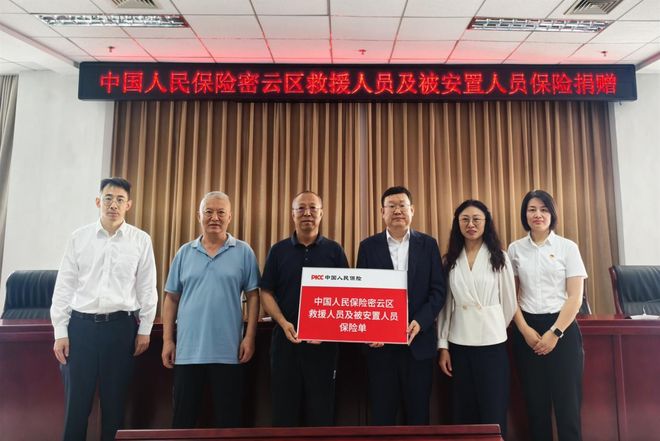
保险业快速应对北京密云、怀柔、延庆等地特大暴雨 已接报案200余笔 40分钟实现快赔
Xin Lang Cai Jing· 2025-07-27 11:13
Core Viewpoint - The article highlights the response of insurance companies in Beijing to severe flooding and natural disasters, emphasizing their proactive measures in disaster management and claims processing during the peak flood season. Group 1: Emergency Response Measures - Beijing's financial regulatory authority issued consumer alerts focusing on personal safety, property protection, and effective use of insurance services during the flood season [1] - Insurance companies, including PICC and Ping An, activated emergency response plans, mobilizing resources and personnel to assist in disaster relief and claims processing [2][3][4] - PICC Beijing reported over 200 claims related to the recent flooding, covering various insurance types such as auto, home, and agricultural insurance [1][2] Group 2: Claims Processing Efficiency - PICC Beijing completed a claims process for a damaged agricultural facility within 40 minutes, demonstrating rapid response capabilities [2] - Ping An established a 24-hour claims green channel to facilitate efficient claims processing and support for affected clients [3] - China Life Insurance implemented nine service measures to ensure timely claims processing and support for clients in disaster-affected areas [3] Group 3: Collaboration with Local Authorities - Insurance companies coordinated with local government agencies to ensure effective disaster response and resource allocation [2][4] - PICC engaged with local agricultural and forestry departments to assess damages and prepare for potential large-scale claims [2] - China Life Insurance formed a flood prevention task force to oversee disaster response efforts and resource management [3]
非银金融行业跟踪周报:预定利率下调利好保险负债成本下降,公募基金非银持仓显著提升-20250727
Soochow Securities· 2025-07-27 09:18
Investment Rating - The report maintains an "Increase" rating for the non-bank financial industry [1] Core Views - The non-bank financial sector has shown significant performance, with the securities and insurance sub-sectors outperforming the CSI 300 index recently. The securities sector rose by 4.90%, while the insurance sector increased by 1.81% [10][11] - The report highlights a substantial increase in trading volume in the securities market, with July's average daily trading volume reaching 18,191 billion yuan, a year-on-year increase of 139.92% [16][21] - The insurance sector is benefiting from a reduction in predetermined interest rates, leading to improved liability costs. The second quarter saw a strong growth in life insurance premiums, with a year-on-year increase of 15.2% [25][27] - The multi-financial sector is entering a stable transformation phase, with trust assets growing but profits declining significantly [31][32] Summary by Sections 1. Recent Performance of Non-Bank Financial Sub-Sectors - In the last five trading days, the non-bank financial sector overall rose by 3.65%, outperforming the CSI 300 index which increased by 1.69% [10] - Year-to-date, the insurance sector has shown the best performance with a 12.07% increase, followed by the multi-financial sector at 9.79% and the securities sector at 5.05% [11] 2. Non-Bank Financial Sub-Sector Insights 2.1 Securities - Trading volume has significantly increased, with a year-on-year rise of 139.92% in July [16] - The average margin balance reached 19,420 billion yuan, a year-on-year increase of 35.34% [16] - The average price-to-book (PB) ratio for the securities industry is projected at 1.4x for 2025 [21] 2.2 Insurance - The predetermined interest rate has been lowered to 1.99%, triggering a reduction in actual rates for various insurance products [22][23] - Life insurance premiums for the first half of 2025 reached 29,606 billion yuan, a year-on-year increase of 5.6% [25] - The insurance sector's valuation is currently between 0.61-0.94 times the expected present value (P/EV) for 2025, indicating a historical low [28] 2.3 Multi-Financial - The trust industry saw its asset scale reach 29.56 trillion yuan, a year-on-year growth of 23.58%, but profits fell by 45.5% [31] - The futures market experienced a trading volume of 740 million contracts in June, with a year-on-year increase of 28.91% [33] 3. Industry Ranking and Key Company Recommendations - The report ranks the insurance sector as the most favorable, followed by securities and other multi-financial services [27] - Recommended companies include China Ping An, New China Life, China Pacific Insurance, CITIC Securities, and Tonghuashun [27]
《人身保险业责任准备金评估利率专家咨询委员会2025年二季度例会》点评:预定利率非对称下调,分红险迎来发展窗口期
EBSCN· 2025-07-26 12:09
Investment Rating - The report maintains an "Accumulate" rating for the non-bank financial sector [1] Core Insights - The scheduled interest rate for traditional insurance products has been adjusted down to 2.0%, while the maximum scheduled interest rate for dividend insurance products is set at 1.75% [2][4] - The scheduled interest rate research value has decreased by 14 basis points to 1.99%, indicating a downward trend in the insurance sector's interest rates [3] - The adjustment mechanism for scheduled interest rates is triggered when the maximum scheduled interest rate for insurance products exceeds the research value by more than 25 basis points for two consecutive quarters [4] Summary by Sections Event Overview - On July 25, the China Insurance Industry Association held a meeting to discuss the scheduled interest rates for life insurance products, concluding that the current research value is 1.99% [2] - Major insurance companies announced adjustments to their scheduled interest rates, with traditional insurance products set at a maximum of 2.0% and dividend insurance products at 1.75% [2] Rate Adjustments - The scheduled interest rates for traditional, dividend, and universal insurance products have been reduced to 2.0%, 1.75%, and 1.0% respectively [4] - The adjustment mechanism is activated due to the current scheduled interest rates being significantly higher than the research value, necessitating a reduction [4] Market Implications - The reduction in scheduled interest rates is expected to create a favorable environment for the development of dividend insurance products, as the previous higher rates had led to a significant increase in their market share [5] - The adjustment may cause short-term disruptions in new policy growth, but long-term benefits are anticipated as the proportion of floating income products increases [9] - The report suggests that companies with strong investment capabilities and higher dividend levels will gain a competitive advantage in the evolving market [5]
多家险企部署下半年工作重点
news flash· 2025-07-26 09:29
Core Insights - Several insurance companies in China, including China Pacific Insurance, China Life Insurance Group, and China Insurance, held meetings to summarize their performance in the first half of 2025 and outline key priorities for the second half [1] Group 1: Performance Overview - In the first half of the year, multiple insurance companies reported growth in asset scale and premium income [1] Group 2: Strategic Focus for the Second Half - Key priorities for the second half include enhancing the quality and efficiency of financial services to the real economy, strengthening asset-liability linkage, and accelerating digital transformation [1]
-保险行业保险股PCE~ROCE估值体系探析:综合权益视角下的全面价值:新准则下保险股估值重构专题
ZHONGTAI SECURITIES· 2025-07-25 15:34
Investment Rating - The report maintains an "Accumulate" rating for the insurance sector [2]. Core Insights - The PCE-ROCE valuation system is introduced to better reflect the true value of insurance companies under new standards, addressing the limitations of the traditional P/EV system [6][47]. - The report identifies that companies like China Pacific Insurance and China Life Insurance are significantly undervalued in the A-share market, while in the H-share market, China Pacific, China Life, and Sunshine Insurance are also notably undervalued [6][6]. - The insurance sector is characterized by dual benefits: companies possess dividend advantages, and leading firms like Ping An have strategically invested in high-dividend assets, which positively impacts their performance [6]. Summary by Sections 1. Introduction - The P/EV valuation system is under scrutiny due to a prolonged low interest rate environment, leading to a decline in the valuation levels of listed insurance companies [16][16]. - As of July 23, 2025, major insurance companies are trading at historical low P/EV ratios, indicating a potential valuation trap [16][16]. 2. PCE-ROCE Valuation System - The PCE-ROCE system incorporates comprehensive equity (CE) and return on comprehensive equity (ROCE) to provide a more accurate valuation framework [47][48]. - The system aims to mitigate the volatility associated with traditional valuation methods by integrating net assets and contract service margins [6][47]. 3. Comparison with PIEV - The PCE-ROCE system is deemed more effective in reflecting the true value of insurance companies in a low interest rate environment compared to the PIEV system, which relies heavily on long-term investment return assumptions [8][8]. - The report highlights that the PCE-ROCE system offers a balanced valuation approach by considering both net assets and contract service margins [8][8]. 4. Profitability Analysis of Listed Insurance Companies - The report evaluates the profitability of insurance policies under the new standards, focusing on contract service margins (CSM) and new business contract service margins (NBCSM) [8][8]. - A scoring system is established to assess the performance of listed insurance companies based on various profitability indicators, with AIA, PICC, and CPIC scoring the highest [8][8]. 5. Main Conclusions and Investment Recommendations - The report concludes that the insurance sector presents significant investment opportunities, particularly in companies that are undervalued and have strong dividend policies [6][6]. - Recommended companies for investment include New China Life, Ping An, AIA, China Life, China Pacific, and China People’s Insurance [6][6].
新准则下保险股估值重构专题:保险股PCE-ROCE估值体系探析:综合权益视角下的全面价值
ZHONGTAI SECURITIES· 2025-07-25 11:32
Investment Rating - The report maintains an "Overweight" rating for the insurance sector [2]. Core Insights - The P/EV valuation system is facing challenges in a persistently low interest rate environment, leading to significant adjustments in risk discount rates and investment return assumptions, which have resulted in a decline in NBV and EV growth [5][9]. - The introduction of the PCE-ROCE valuation system aims to provide a more comprehensive reflection of the true value of insurance companies by incorporating comprehensive equity (CE) and return on comprehensive equity (ROCE) [31][43]. - The report identifies that A-share listed insurance companies, particularly China Pacific Insurance and China Life Insurance, are relatively undervalued according to the PCE-ROCE valuation system [5][29]. Summary by Sections 1. Introduction - The P/EV valuation system shows signs of "failure" as the valuation levels for A-share listed insurance companies continue to decline, with significant pressure on new business value growth due to macroeconomic factors [9][14]. 2. PCE-ROCE Valuation System Proposal - The PCE-ROCE system introduces comprehensive equity (CE) and ROCE to better reflect the value of insurance companies under new accounting standards [31][43]. - The system aims to address the limitations of the P/EV system by providing a more stable and predictable valuation framework [5][31]. 3. Comparison of Valuation Systems - The PCE-ROCE system is more effective in reflecting the true value of insurance companies in a low interest rate environment compared to the traditional P/EV system [5][31]. - The report highlights that the P/CE ratio provides a better fit and reflects the comprehensive value of insurance companies compared to P/B and P/EV ratios [5][31]. 4. Analysis of Insurance Companies' Policy Profitability - The report establishes a profitability evaluation system for listed insurance companies based on CSM and NBCSM, identifying key performance indicators to assess profitability [5][31]. - The scoring system ranks companies based on their CSM performance, with AIA, PICC, and CPIC scoring the highest [5][31]. 5. Main Conclusions and Investment Recommendations - The report concludes that several A-share and H-share listed insurance companies are undervalued, suggesting a focus on companies like New China Life, Ping An, AIA, China Life, CPIC, and PICC for potential investment opportunities [5][29].