PICC(601319)

Search documents
非银金融行业周报:重视保险公司举牌同业的信号意义-20250817
Shenwan Hongyuan Securities· 2025-08-17 14:41
Investment Rating - The report maintains a "Positive" outlook on the non-bank financial industry, indicating an expectation for the sector to outperform the overall market [3][6]. Core Insights - The insurance sector has shown a significant increase, with the Shenwan Insurance II Index rising by 3.20%, outperforming the CSI 300 Index by 0.83 percentage points. Notably, Ping An Insurance has increased its stake in China Pacific Insurance (H) and China Life Insurance (H), triggering regulatory notifications [3][6]. - The report highlights a resurgence in insurance companies' acquisitions of peers, with 32 announcements made in 2024, the highest since 2016. As of August 14, 2025, 14 insurance institutions have made 24 acquisition announcements, involving 20 listed companies [3][6]. - The report emphasizes the positive implications of declining long-term interest rates and the entry of long-term capital into the market, suggesting a favorable environment for insurance companies [3][6]. Summary by Sections Market Review - The CSI 300 Index closed at 4,202.35 with a weekly change of +2.4%, while the non-bank index closed at 2,079.34 with a change of +6.5%. The brokerage, insurance, and diversified financial sectors reported changes of +8.2%, +3.2%, and +4.5%, respectively [6][10]. Non-Bank Industry Insights - The report notes that as of August 15, 2025, the 10-year government bond yield was 1.75%, with a weekly increase of 2.62 basis points. The insurance sector's performance is closely tied to these interest rate movements [13][19]. - The report also mentions that the average daily trading volume in A-shares has increased significantly, indicating a robust market environment for brokers [19][39]. Investment Recommendations - For the insurance sector, the report recommends focusing on undervalued stocks, specifically China Life (H), China Pacific Insurance, New China Life, Ping An, China Property & Casualty, and China Re [3][6]. - In the brokerage sector, the report suggests three investment themes: strong comprehensive institutions benefiting from improved competition, brokers with significant earnings elasticity, and firms with strong international business capabilities [3][6].



非银金融行业跟踪周报:险资规模超36万亿,持续增配股票,市场交投活跃,8月日均超2万亿-20250817
Soochow Securities· 2025-08-17 11:02
Investment Rating - The report maintains an "Increase" rating for the non-bank financial industry [1] Core Insights - The non-bank financial sector has shown strong performance, with all sub-sectors outperforming the CSI 300 index in recent trading days [9][10] - The insurance sector's asset management balance has surpassed 36 trillion yuan, with a continued increase in stock allocation [21][27] - The securities industry has experienced a significant increase in trading volume, with a year-on-year rise of 212.23% in August [15][19] - The multi-financial sector is transitioning into a stable growth phase, with trust assets growing but profits declining [29][32] Summary by Sections Non-Bank Financial Sub-Sector Performance - In the recent five trading days (August 11-15, 2025), the non-bank financial sector outperformed the CSI 300 index, with the securities sector rising by 8.18%, multi-financial by 4.73%, and insurance by 3.28% [9][10] Non-Bank Financial Sub-Sector Insights Securities - Trading volume has significantly increased, with an average daily trading amount of 21,549 billion yuan in August, up 212.23% year-on-year [15][19] - The first unprofitable company under the "Science and Technology Innovation Board" has been approved for IPO, indicating a more inclusive policy for tech firms [19][20] Insurance - The insurance sector's asset management balance reached 36.23 trillion yuan, with a year-to-date increase of 8.9% [21][27] - The allocation to stocks has increased to 8.8%, while the bond allocation is at 51.9% [21][27] Multi-Financial - The trust industry saw its asset scale reach 29.56 trillion yuan, with a year-on-year profit decline of 45.5% [29][32] - The futures market experienced a trading volume of 10.59 billion contracts in July, with a year-on-year increase of 48.89% [33][40] Industry Ranking and Key Company Recommendations - The industry ranking is as follows: Insurance > Securities > Other Multi-Financial [45] - Recommended companies include China Ping An, New China Life, China Pacific Insurance, CITIC Securities, Tonghuashun, and Jiufang Zhitu Holdings [45]



2025Q2保险业资金运用数据点评:保险资金加速入市,上半年股票投资净增量超6400亿
CMS· 2025-08-17 04:34
Investment Rating - The report maintains a "Recommended" rating for the insurance industry, indicating a positive outlook for the sector's fundamentals and expected performance relative to market benchmarks [2][6][7]. Core Insights - The insurance industry's fund utilization scale surpassed 36 trillion yuan in Q2 2025, with a net increase of over 1.3 trillion yuan in the quarter, reflecting strong growth driven by premium income and asset value appreciation [5][7]. - The allocation structure of insurance funds has become more pronounced, with bond and stock proportions reaching new highs, indicating a shift towards a "barbell" investment strategy [5][7]. - Regulatory measures have accelerated the entry of insurance funds into the stock market, with the stock allocation reaching a record high of 8.8% by the end of Q2 2025, supported by policy adjustments aimed at promoting long-term investments [5][7]. Summary by Sections Industry Scale - As of Q2 2025, the total market capitalization of stocks held by insurance companies is approximately 670.62 billion yuan, with a circulating market value of about 641.38 billion yuan [2]. Fund Utilization - The total fund utilization balance for insurance companies reached 36.23 trillion yuan by the end of Q2 2025, marking an 8.9% increase year-to-date and a 3.7% increase from Q1 2025 [5][7]. - The bond allocation exceeded 51%, the highest level in recent years, while bank deposits and non-standard investments were reduced [5][7]. Equity Investment - The stock balance for life and property insurance companies reached 3.07 trillion yuan, with a net increase of 640.6 billion yuan in the first half of 2025, indicating a strong commitment to equity investments [5][7]. - The report highlights a resurgence in insurance companies' stake acquisitions in peer firms, with 27 instances recorded in 2025, reflecting confidence in the sector's recovery and long-term value [5][7]. Investment Recommendations - The report suggests individual stock recommendations including China Pacific Insurance, New China Life Insurance, and Ping An Insurance, while also advising attention to China Life Insurance, China Taiping Insurance, and China Property & Casualty Insurance for their long-term investment value [7].

入市加速,险资系私募证券基金增至7家
Zheng Quan Shi Bao· 2025-08-16 11:50
Group 1 - The core viewpoint of the news is the approval of China Pacific Insurance Asset Management Co., Ltd. to establish a private fund management company, marking progress in the long-term investment pilot program for insurance funds [1][2] - The pilot program allows insurance companies to invest in private securities funds primarily targeting the secondary market for stocks, with a focus on long-term holdings [2][3] - The establishment of the new private fund management company increases the total number of insurance-related private fund management companies to seven [4] Group 2 - The newly approved private fund management company, Renbao Qiyuan Huizhong, will issue funds to China Pacific Life Insurance to raise insurance capital for investment in the capital market [3][4] - The pilot program has seen a total of 6 insurance-related private securities investment funds enter the operational phase, with specific funds like the Honghu Fund series and Taikang Stable Fund already established [5][7] - The total amount approved for the long-term investment pilot program has reached 222 billion yuan, with various insurance companies participating, including China Life, Xinhua Insurance, and others [7]

险资系私募证券基金增至7家
Xin Lang Cai Jing· 2025-08-16 10:47
Group 1 - China Pacific Insurance Asset Management Co., Ltd. has recently received approval from the financial regulatory authority to establish a private fund management company named Puhua Qiyuan Huizhong (Beijing) [1] - With this approval, the total number of private securities fund companies established by insurance institutions has increased to seven [1]
入市加速!险资系私募证券基金增至7家
券商中国· 2025-08-16 10:29
Core Viewpoint - The recent approval of the establishment of the "Renbao Qiyuan Huizhong" private fund management company marks significant progress in the pilot program for long-term investment of insurance funds, increasing the total number of insurance-related private fund companies to seven [1][4]. Summary by Sections Progress of Long-term Investment Pilot - The pilot program allows insurance companies to establish private securities funds primarily investing in the stock market for long-term holding [3]. - The first batch of approvals in October 2023 included China Life and Xinhua Insurance, jointly investing 50 billion yuan to establish a company fund, which has been fully invested [2][3]. - The second batch includes several companies with varying investment amounts, such as 100 billion yuan from Renbao Insurance and its asset management [2][3]. Establishment of Private Fund Companies - The total number of insurance-related private fund management companies has reached seven, with the latest addition being "Renbao Qiyuan Huizhong" [4][5]. - Other companies include "Guofeng Xinghua," "Taikang Stable," "Taibao Zhiyuan," "Hengyi Chiying," and "Yangguang Hengyi" [4][5]. Operational Status of Funds - Six insurance-related private securities investment funds are currently operational, including various funds managed by Guofeng Xinghua and Taikang Stable [6][8]. - The first pilot fund, "Honghu Zhi Yuan," has a total scale of 500 billion yuan, which has been fully invested as of March 2024 [6][7]. Benefits of Long-term Investment Pilot - The pilot program is expected to enhance the efficiency of insurance fund utilization and improve asset-liability matching under new accounting standards, with a total pilot amount of 222 billion yuan across three batches [9].


数智驱动开放共赢 2025服贸会金融服务专题精彩抢先看
Zhong Guo Jing Ji Wang· 2025-08-15 13:17
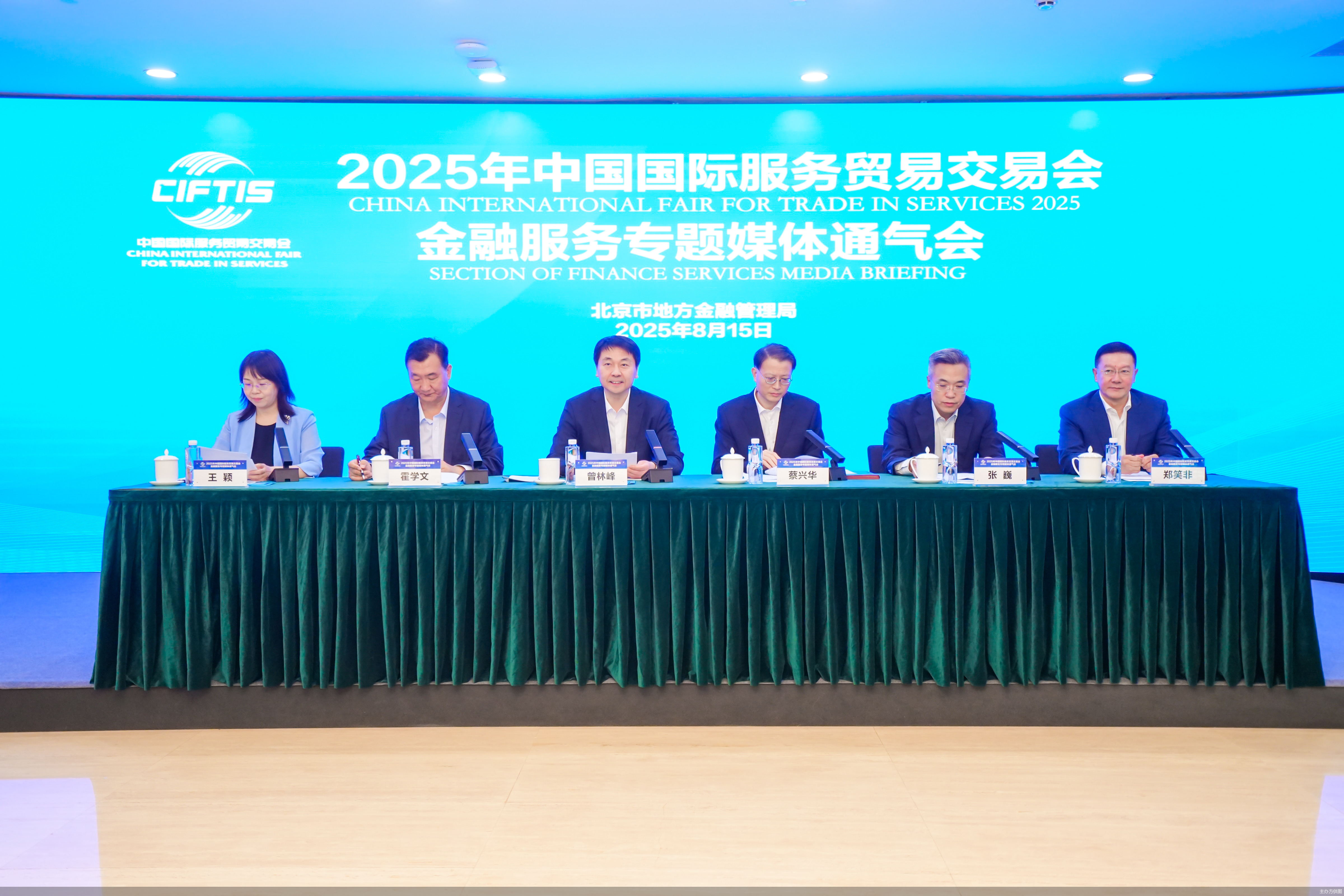
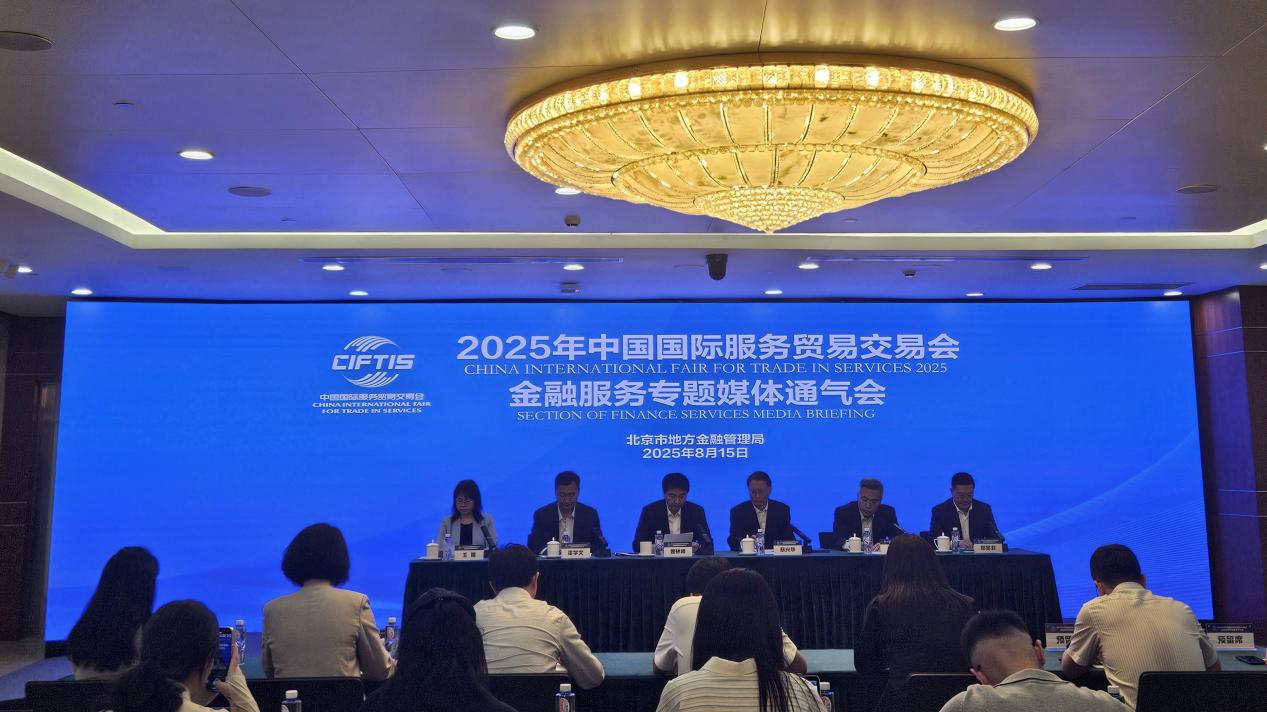
Core Viewpoint - The 2025 China International Service Trade Fair (CIFTIS) will feature a financial services section from September 10 to September 14 in Beijing, focusing on "Digital Intelligence Driving Open Win-Win" as its theme, aiming to showcase global financial innovation products and services, policy releases, and collaborative opportunities [3][4]. Group 1: Event Overview - The financial services section will include a large-scale exhibition with 92 domestic and foreign financial institutions participating, covering an area of 11,000 square meters [4]. - The exhibition will feature two main thematic areas: "Open Integration" showcasing various financial institutions and their contributions to the economy, and "Smart Sharing" focusing on the collaboration between financial institutions and leading technology companies [4]. Group 2: Participation and Innovation - Over 40 foreign financial institutions, including the Asian Infrastructure Investment Bank and HSBC, will present their innovative practices in cross-border financial services and fintech [5]. - The event will leverage AI technology to create an immersive exhibition experience, highlighting innovations in fintech from various institutions, such as the Agricultural Bank's VR property viewing service and the Industrial and Commercial Bank's large-scale financial model [6][7]. Group 3: Forums and Discussions - The event will host over 30 forums and discussions, attracting 3,000 to 4,000 participants, focusing on global financial trends and the integration of finance with the real economy [8][9]. - Key topics will include high-quality financial development, risk management, and green finance, with various financial institutions conducting specialized sessions [9]. Group 4: Beijing's Role and Innovations - Beijing will showcase its role as a national financial management center, highlighting innovative financial services and products that support urban development and national strategies [10]. - Notable innovations include the "Mifang Card" for foreign tourists and a commercial space insurance consortium led by China Insurance [10]. Group 5: Interactive Experiences - The event will emphasize interactive experiences, with various engaging activities planned by participating institutions to enhance public engagement with financial services [11]. - Activities will include creative displays and educational games focused on financial literacy and anti-money laundering [11].






中国人保(601319) - H股公告
2025-08-15 11:01
承董事會命 中國人民保險集團股份有限公司 香港交易及結算所有限公司及香港聯合交易所有限公司對本公告的內容概不負責,對其 準確性或完整性亦不發表任何聲明,並明確表示,概不對因本公告全部或任何部分內容 而產生或因倚賴該等內容而引致的任何損失承擔任何責任。 1339 董事會會議通知 中國人民保險集團股份有限公司(「本公司」)董事會(「董事會」)茲通告謹定於2025年8月27 日(星期三)舉行董事會會議,以審議及批准本公司及其附屬公司截至2025年6月30日止六 個月的中期業績及其刊發,考慮派付中期股息(如有),並處理任何其他事項。 丁向群 董事長 中國北京,2025年8月15日 於本公告日,本公司執行董事為丁向群女士、趙鵬先生及肖建友先生,非執行董事為王 少群先生、喻強先生及宋洪軍先生,獨立非執行董事為邵善波先生、徐麗娜女士、王鵬 程先生及高平陽先生。 ...
服贸会金融专题亮点抢看:AI 体验吸睛,首设专属会议区促交流
2 1 Shi Ji Jing Ji Bao Dao· 2025-08-15 10:57
Core Viewpoint - The 2025 China International Service Trade Fair's financial services section will take place from September 10 to September 14 at Shougang Park in Beijing, focusing on "Digital Intelligence Driven, Open and Win-Win" as its theme [1] Group 1: Event Overview - The financial services section will feature two main exhibition halls: Hall 5 for "Open Integration" showcasing banks, insurance, securities, funds, and payment institutions, and Hall 6 for "Intelligent Sharing" focusing on collaboration between financial institutions and leading tech companies [1] - A total of 92 companies will participate, including 68 from the Fortune Global 500 and industry leaders, highlighting the scale and international nature of the event [1] - The event will include over 30 parallel forums and a dedicated meeting area for high-level discussions, aiming to foster collaboration among domestic and international financial institutions [1][4] Group 2: Technological Innovations - Major banks such as ICBC, Bank of China, and Agricultural Bank of China will showcase innovative financial products utilizing AI technology to enhance interactive experiences [2] - ICBC will display a trillion-level financial model, while Agricultural Bank will introduce a VR-enabled service for online property viewing, enhancing transaction efficiency in the local tourism and homestay economy [2] - Other banks will present various technological advancements, including interactive digital robots and smart financial terminals, emphasizing the integration of technology in financial services [3] Group 3: Forums and Discussions - The event will host over 30 forums covering global financial hotspots and industry concerns, featuring high-level dialogues, policy interpretations, and project presentations [4][5] - Agricultural Bank will organize a meeting to support agricultural enterprises in expanding internationally, while Bank of China will focus on exchange rate risk management for outbound enterprises [5] - The event will also highlight innovative practices from financial institutions, including a unique service card for foreign visitors and advancements in commercial space insurance [5]

2025年服贸会金融服务专题要来了!近千平方米数币体验展区“存在感”拉满
Bei Jing Shang Bao· 2025-08-15 10:57
Group 1: Event Overview - The 2025 China International Service Trade Fair Financial Services Special Event will be held from September 10 to 14 in Beijing Shougang Park [1] - The theme for this year's financial services special event is "Digital Intelligence Driven, Open and Win-Win" [1] - The event aims to create four platforms: global financial innovation product and service display, important policy and industry rule release, partner negotiation, and cutting-edge financial experience [1] Group 2: Participation and Scale - A total of 92 domestic and foreign financial institutions will participate in the event, with 68 being Fortune 500 companies and industry leaders [4] - The exhibition area will cover 11,000 square meters, featuring two main halls with themes of "Open Integration" and "Intelligent Sharing" [4] - The internationalization rate of participating institutions is 45.7%, with 50 domestic institutions and 42 foreign institutions [1][4] Group 3: Innovative Financial Products and Services - Notable exhibits include the "Mifang Card," a three-in-one service product for foreign visitors, developed by Bank of China in collaboration with China Unicom and Beijing Yikatong [5] - China Insurance will showcase the first commercial aerospace insurance consortium in China and innovative technology insurance products [5] - Mastercard and UnionPay will present new products and services aimed at enhancing the payment experience for foreign visitors [5] Group 4: Technology Integration - The event will leverage AI technology to create an immersive exhibition experience, showcasing the deep integration of AI and the financial industry [6] - Agricultural Bank of China will feature VR technology for real estate viewing, enhancing customer engagement [6] - Beijing Bank will present an interactive digital robot to demonstrate various financial services [6] Group 5: Digital Currency and Interactive Activities - A 1,000 square meter immersive digital RMB experience area will be featured, enhancing visitor engagement through AI interactions [7] - Newcomer CCB Fund will utilize a "Wutong Bus" design for its booth, incorporating interactive elements to educate investors [7] - Various interactive activities will be organized to engage both professional and general audiences, including a financial empowerment event for professionals and fun activities for the general public [9]