
BANK COMM(601328)

Search documents
上半年19家大中型银行按揭贷款扫描:“提前还房贷”现象缓解 14家房贷余额上升
Xin Lang Cai Jing· 2025-09-04 13:58
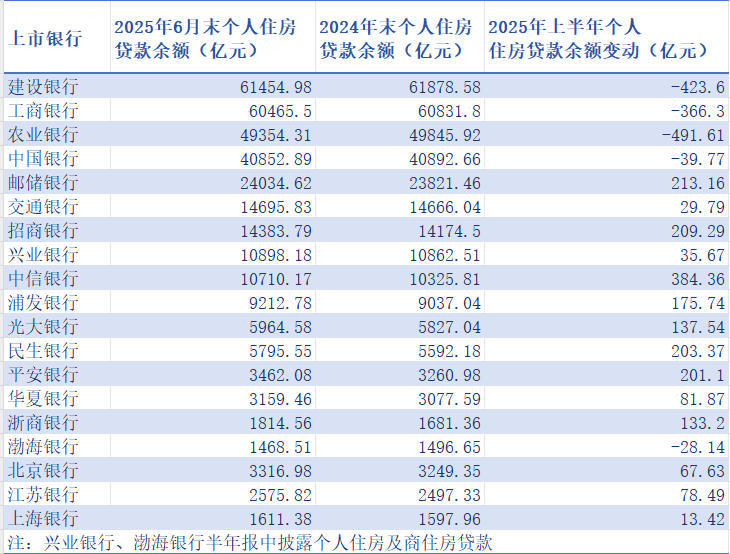
Core Insights - The phenomenon of early mortgage repayment among residents has shown signs of alleviation in the first half of this year [1] - Among 19 listed banks, 5 saw a decrease in personal housing loan balances compared to the end of last year, a significant improvement from 14 banks in the same period last year [1] - The asset quality of personal housing loans has shown mixed results, with 10 out of 14 banks reporting an increase in non-performing loan (NPL) ratios [1][4] Group 1: Loan Balances - The total personal housing loan balance of the six major state-owned banks decreased by over 107.8 billion yuan in the first half of this year, a significant reduction compared to 325.47 billion yuan in the same period last year [3] - The four major banks (ICBC, ABC, BOC, and CCB) collectively reduced their personal housing loans by 132.13 billion yuan, a decrease less than the 347.4 billion yuan drop in the previous year [3] - Among the 10 national joint-stock banks, CITIC Bank led with an increase of 38.436 billion yuan in personal housing loans, while other banks like China Merchants Bank and Minsheng Bank also saw increases exceeding 20 billion yuan [3] Group 2: Asset Quality - In the first half of 2025, the NPL ratios for major state-owned banks increased, with ICBC reporting the highest at 0.86%, while other banks had similar ratios [6] - Among the 11 banks that disclosed personal housing loan asset quality, 9 reported an increase in NPLs, contrasting with the collective increase seen in 2024 [4][6] - Two joint-stock banks, China Merchants Bank and Industrial Bank, achieved a dual decrease in their mortgage loan NPL ratios [6] Group 3: Market Trends - The growth in second-hand housing loans has been significant, with a reported increase of over 20% compared to the previous year, contributing positively to overall loan growth [4] - The overall loan acceptance and issuance volumes for housing loans have significantly improved compared to the same period last year, indicating a more favorable market environment [4]






规模大增!银行发力消费贷,存量客户也可享受贴息
Guo Ji Jin Rong Bao· 2025-09-04 13:21
Core Viewpoint - The personal consumption loan business is becoming a key focus for many banks as they aim to boost consumer spending, with significant growth observed in the first half of 2025, particularly among state-owned banks and city commercial banks [1][2][3]. Group 1: Growth in Personal Consumption Loans - Over half of the banks reported an increase in personal consumption loan amounts, with 25 out of 37 banks showing growth [2]. - Notably, 14 banks increased their consumption loan amounts by over 5 billion yuan, while 11 banks achieved double-digit growth compared to the beginning of the year [2]. - Major state-owned banks like China Construction Bank, Agricultural Bank of China, Bank of Communications, and Bank of China saw increases exceeding 50 billion yuan, with amounts of 862.99 billion yuan, 626.86 billion yuan, 555.38 billion yuan, and 508.67 billion yuan respectively [3]. Group 2: Policy Impact on Consumption Loans - The implementation of the personal consumption loan subsidy policy on September 1 has further stimulated consumer interest, with many banks quickly launching their first subsidy transactions [1][4]. - The process for applying for loan subsidies is straightforward, allowing new customers to complete applications online, and existing customers can also benefit from the subsidy [4]. - The subsidy policy is expected to lower effective interest rates on loans, thereby stimulating consumer demand and enhancing consumption willingness [4]. Group 3: Future Outlook - Experts predict that personal consumption loans and business loans will tap into potential credit demand from residents, supported by favorable fiscal policies [1][3]. - By the end of June 2025, the total personal consumption loan scale is estimated to be around 12.5 trillion yuan, with the potential to generate an additional 1 trillion yuan in credit demand annually [5]. - New policy financial tools are expected to be introduced in the second half of the year, potentially injecting 500 billion yuan to stimulate approximately 4 trillion yuan in credit growth [6].
交通银行:9月25日将召开2025年第三次临时股东大会
Zheng Quan Ri Bao Wang· 2025-09-04 13:17
Group 1 - The core announcement is that Bank of Communications (601328) will hold its third extraordinary general meeting of shareholders on September 25, 2025 [1] - The agenda for the meeting includes the proposal to amend the "Rules of Procedure for Shareholders' Meetings of Bank of Communications Co., Ltd." [1]
交通银行(03328) - 海外监管公告
2025-09-04 12:15
(於中華人民共和國註冊成立的股份有限公司) (股份代號:03328) 海外監管公告 本公告乃根據香港聯合交易所有限公司證券上市規則第13.10B條而作出。 香港交易及結算所有限公司及香港聯合交易所有限公司對本公告之內容概不負責,對其準確性 或完整性亦不發表任何聲明,並明確表示,概不就因本公告全部或任何部分內容而產生或因倚 賴該等內容而引致之任何損失承擔任何責任。 茲載列交通銀行股份有限公司於上海證券交易所網站刊登的《交通銀行股份有限 公司2025年第三次臨時股東大會資料》,謹供參閱。 承董事會命 交通銀行股份有限公司 何兆斌 公司秘書 中國上海 2025年9月4日 於本公告發佈之日,本行董事為任德奇先生、張寶江先生、殷久勇先生、 周萬阜先生、常保升先生*、廖宜建先生*、陳紹宗先生*、穆國新先生*、 艾棟先生*、羅小鵬先生*、石磊先生 # 、張向東先生 # 、李曉慧女士 # 、馬駿先生 # 、 王天澤先生 # 及肖偉先生 # 。 * 非執行董事 # 獨立非執行董事 交通银行股份有限公司 2025 年第三次临时股东大会 资 料 2025 年 9 月 | | | | 股东大会议程 | 2 | | --- | --- ...
交通银行(03328) - 海外监管公告
2025-09-04 12:10
香港交易及結算所有限公司及香港聯合交易所有限公司對本公告之內容概不負責,對其準確性 或完整性亦不發表任何聲明,並明確表示,概不就因本公告全部或任何部分內容而產生或因倚 賴該等內容而引致之任何損失承擔任何責任。 (於中華人民共和國註冊成立的股份有限公司) (股份代號:03328) 海外監管公告 本公告乃根據香港聯合交易所有限公司證券上市規則第13.10B條而作出。 茲載列交通銀行股份有限公司於上海證券交易所網站刊登的《交通銀行股份有限 公司關於召開2025年第三次臨時股東大會的通知》,謹供參閱。 承董事會命 交通銀行股份有限公司 何兆斌 公司秘書 中國上海 2025年9月4日 於本公告發佈之日,本行董事為任德奇先生、張寶江先生、殷久勇先生、 周萬阜先生、常保升先生*、廖宜建先生*、陳紹宗先生*、穆國新先生*、 艾棟先生*、羅小鵬先生*、石磊先生 # 、張向東先生 # 、李曉慧女士 # 、馬駿先生 # 、 王天澤先生 # 及肖偉先生 # 。 一、召开会议的基本情况 (一)股东大会类型和届次 2025 年第三次临时股东大会 * 非執行董事 # 獨立非執行董事 股票代码:601328 股票简称:交通银行 编号:临 2 ...
夯实高质量发展 做深金融“五篇大文章” 交通银行2025中期业绩彰显服务实体经济底色
Hua Xia Shi Bao· 2025-09-04 09:32
Core Viewpoint - The Bank of Communications reported a solid performance for the first half of 2025, emphasizing its role in supporting the real economy and aligning with national strategies, achieving stable growth in key financial metrics [2][10]. Financial Performance - Total assets reached 15.44 trillion yuan, a year-on-year increase of 3.59% [2]. - Operating income was 133.37 billion yuan, with a net profit attributable to shareholders of 46.02 billion yuan, reflecting year-on-year growth of 0.77% and 1.61% respectively [2]. Loan Growth and Support for the Real Economy - Customer loan balance reached 9 trillion yuan, up 443.4 billion yuan from the previous year, marking a growth rate of 5.18% [3]. - Corporate loans increased by 365.4 billion yuan, with a growth rate of 6.30%, and personal loans also saw significant growth [3][7]. Regional Loan Performance - Loans in the Yangtze River Delta region grew by 6.9%, accounting for nearly 30% of total loans, with significant growth in corporate credit [4]. Innovation and Digital Finance - The bank has been proactive in financial innovation, including the launch of various digital services and products, enhancing its digital finance capabilities [5][8]. - The balance of loans in the digital economy core industry exceeded 286 billion yuan, with internet loans growing by 8.52% [8]. Focus on Key Areas - The bank has increased support for strategic sectors such as manufacturing, small and micro enterprises, and green finance, with notable growth in relevant loan categories [6][7]. - The balance of green finance loans grew by 6.58%, and the bank issued 145 billion yuan in green financial bonds [6]. Customer Base and Capital Strength - The bank's customer base expanded, with a total of 2.95 million corporate clients and 202 million retail clients, reflecting growth rates of 3.75% and 1.30% respectively [10]. - The bank raised 120 billion yuan through the issuance of new shares, enhancing its core capital and operational stability [10].
交通银行(601328) - 交通银行关于召开2025年第三次临时股东大会的通知
2025-09-04 09:30
股票代码:601328 股票简称:交通银行 编号:临 2025-059 交通银行股份有限公司 关于召开2025年第三次临时股东大会的通知 交通银行股份有限公司(以下简称"交通银行"或"本公司")董事会及全体董事保证 本公告内容不存在任何虚假记载、误导性陈述或者重大遗漏,并对其内容的真实性、准确性 和完整性承担法律责任。 重要内容提示: 系统 一、召开会议的基本情况 (一)股东大会类型和届次 2025年第三次临时股东大会 (二)股东大会召集人:董事会 (三)投票方式:本次股东大会所采用的表决方式是现场投票和网络投票相 结合的方式(网络投票适用于 A 股股东) (四)现场会议召开的日期、时间和地点 时间:2025 年 9 月 25 日 9:30 (五)网络投票的系统、起止日期和投票时间。 网络投票系统:上海证券交易所股东大会网络投票系统 网络投票起止时间:自2025 年 9 月 25 日 至2025 年 9 月 25 日 采用上海证券交易所网络投票系统,通过交易系统投票平台的投票时间为股 东大会召开当日的交易时间段,即 9:15-9:25,9:30-11:30,13:00-15:00;通过 互联网投票平台的投票时 ...
交通银行(601328) - 交通银行第三次临时股东大会会议资料
2025-09-04 09:30
股东大会议程 交通银行股份有限公司 2025 年第三次临时股东大会 资 料 2025 年 9 月 | | | | 股东大会议程 | 2 | | --- | --- | | 股东大会议案 | 4 | | (一)关于修订《交通银行股份有限公司股东大会议事规则》的议案 | 4 | | (二)关于修订《交通银行股份有限公司董事会议事规则》的议案 | 33 | | (三)关于选举第十一届董事会执行董事和非执行董事(股权董事)的议案 46 | | | (四)关于选举第十一届董事会独立董事的议案(本议案实行累积投票制) 51 | | 1 现场会议开始时间:2025 年 9 月 25 日(星期四)9:30 现场会议地点:上海市银城中路 188 号交银金融大厦 网络投票(适用于 A 股):采用上海证券交易所股东大会网络 投票系统 召集人:交通银行股份有限公司董事会 会议议程: 一、大会主席宣布开会 二、审议各项议案 (一)关于修订《交通银行股份有限公司股东大会议事规则》的议案; (二)关于修订《交通银行股份有限公司董事会议事规则》的议案; (三)关于选举第十一届董事会执行董事和非执行董事(股权董事)的议案; (四)关于选举第十 ...
工行稳居上半年投资收益冠军 中行、交行、兴业等下降
2 1 Shi Ji Jing Ji Bao Dao· 2025-09-04 09:27
Core Viewpoint - In the first half of 2025, A-share listed banks reported significant investment income growth, with non-interest income becoming a crucial revenue pillar amid weak credit demand [2][3]. Investment Income Performance - 42 listed banks achieved substantial investment income, with 13 banks exceeding 10 billion yuan in investment income [2]. - The Industrial and Commercial Bank of China (ICBC), China Construction Bank (CCB), Agricultural Bank of China (ABC), and China Merchants Bank (CMB) each reported over 20 billion yuan in investment income [2][3]. - CCB led with a remarkable 217.29% year-on-year increase in investment income, reaching 27.912 billion yuan [3][9]. Growth Rates - Several banks exhibited impressive growth rates, with CCB at 217.29%, followed by Changsha Bank at 118.82%, and Zhengzhou Bank at 111.10% [3]. - Other banks with notable growth include Qingdao Bank (93.93%) and Zijin Bank (95.41%) [3]. Contribution to Revenue - Investment income's contribution to total revenue varies significantly, with large state-owned banks focusing more on lending, while smaller banks rely heavily on investment income [6]. - For instance, investment income accounted for 39.14% of Shanghai Bank's revenue, while state-owned banks like ICBC and CCB had lower ratios below 10% [6]. Market Conditions and Strategies - The investment income surge is partly attributed to favorable conditions in the bond market last year, with banks capitalizing on market opportunities [4][10]. - Despite the current challenges in the bond market, banks like CCB have increased their holdings in government bonds and green bonds, reflecting a strategic shift [5][10]. Future Outlook - The sustainability of high investment income growth is under scrutiny, as banks may face challenges in maintaining high yields amid a potential "asset shortage" [7]. - Industry experts suggest that while the bond market may present opportunities, the overall investment landscape is becoming increasingly difficult [11].
大行高歌猛进中小银行疲态尽显,零售银行二元分化格局已确认
Feng Huang Wang· 2025-09-04 09:03
Core Insights - The retail business has become a focal point for banks, with significant growth reported by the six major banks, while smaller banks show weaker performance in personal loans [1][4][5] - There is a divergence in opinions among banks regarding the risk trends in retail loans, with some believing the peak of bad loans has passed, while others see ongoing risk increases [1][2][7] Retail Business Performance - The six major banks have shown strong growth in retail business, with notable increases in personal consumption and operating loans, capturing a significant market share [1][4] - Specific growth figures include: - China Construction Bank's personal operating loans increased by 20.38% - Industrial and Commercial Bank of China’s personal consumption loans grew by 10.2% - Agricultural Bank of China’s personal operating loans rose by 17.2% [4] Divergence Among Banks - Smaller banks, including joint-stock and city commercial banks, have experienced sluggish growth in personal loans, with some reporting negative growth [1][5][6] - For instance, Ping An Bank's personal loan total decreased by 2.3%, while China Everbright Bank's retail loan growth was only 1.57% [5] Market Conditions and Future Outlook - The introduction of consumption loan subsidies is expected to create more variables in the retail market for the fourth quarter and next year [3] - Smaller banks are under pressure from larger banks and are focusing on improving their retail loan offerings, particularly in housing and consumption loans [3][8] Strategies for Growth - Major banks are expected to continue focusing on personal consumption and operating loans, leveraging central policies to support growth [8][9] - Smaller banks are looking to enhance their loan offerings by collaborating with local enterprises and improving loan approval processes to compete with larger banks [7][9]