BANK COMM(601328)

Search documents
国有大型银行板块11月26日跌1.67%,工商银行领跌,主力资金净流出12.44亿元
Zheng Xing Xing Ye Ri Bao· 2025-11-26 09:05
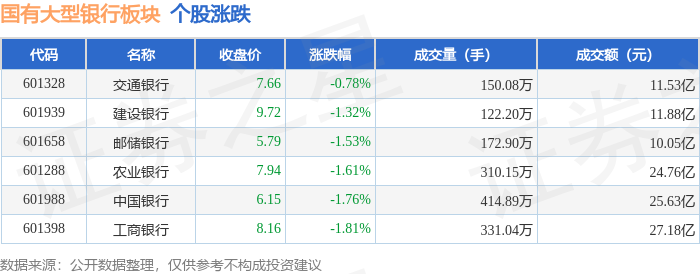
Core Points - The state-owned large bank sector experienced a decline of 1.67% on November 26, with Industrial and Commercial Bank of China (ICBC) leading the drop [1] - The Shanghai Composite Index closed at 3864.18, down 0.15%, while the Shenzhen Component Index rose by 1.02% to 12907.83 [1] Summary by Category Stock Performance - The closing prices and changes for major state-owned banks are as follows: - Bank of Communications: 7.66, down 0.78% - China Construction Bank: 9.72, down 1.32% - Postal Savings Bank: 5.79, down 1.53% - Agricultural Bank of China: 7.94, down 1.61% - Bank of China: 6.15, down 1.76% - Industrial and Commercial Bank of China: 8.16, down 1.81% [1] Capital Flow - The net capital flow for the state-owned large bank sector showed a net outflow of 1.244 billion yuan from major funds, while retail investors saw a net inflow of 611 million yuan [1] - The detailed capital flow for individual banks is as follows: - Bank of Communications: Major funds net outflow of 22.804 million yuan, retail net inflow of 440.06 thousand yuan - China Construction Bank: Major funds net outflow of 91.255 million yuan, retail net inflow of 28.205 million yuan - Postal Savings Bank: Major funds net outflow of 11.47 million yuan, retail net inflow of 45.654 million yuan - Industrial and Commercial Bank of China: Major funds net outflow of 208 million yuan, retail net inflow of 42.895 million yuan - Bank of China: Major funds net outflow of 267 million yuan, retail net inflow of 200 million yuan - Agricultural Bank of China: Major funds net outflow of 541.17 million yuan, retail net inflow of 299 million yuan [2]




外汇展业改革参与银行增至26家 三季度工行等4家入列
2 1 Shi Ji Jing Ji Bao Dao· 2025-11-26 07:00
Core Insights - The foreign exchange business reform has been positively received by commercial banks and the public, with 26 banks participating as of September 2025, covering various types of banks across the country [1][2] Group 1: Reform Implementation and Participation - As of September 2025, 26 banks are involved in the foreign exchange business reform, including 5 large banks, 9 joint-stock banks, 4 city commercial banks, and 8 foreign banks [1] - The newly added banks in the third quarter include Industrial and Commercial Bank of China, Deutsche Bank, Mizuho Bank, and Mitsubishi UFJ Financial Group [2] Group 2: Benefits of the Reform - The reform has reduced the burden on enterprises, allowing them to handle foreign exchange transactions more efficiently, with some businesses experiencing a significant reduction in processing time from days to minutes [3] - Banks have improved their customer identification and service capabilities, leading to a reduction in average processing time for transactions by over 50% [3] - The reform has enhanced regulatory quality, with banks establishing risk monitoring systems to better track cross-border transactions and identify abnormal activities early [3] Group 3: Future Directions - The State Administration of Foreign Exchange plans to further enhance the foreign exchange management system, focusing on convenience, openness, security, and intelligence [4] - Future efforts will include expanding the coverage of the reform to benefit more enterprises and integrating various facilitation policies [4] - The application of new technologies such as artificial intelligence and big data will be encouraged to improve efficiency in foreign exchange services [4]




第十九届金洽会“园区行”收官 推动金融服务精准直达
Xin Hua Cai Jing· 2025-11-26 05:00
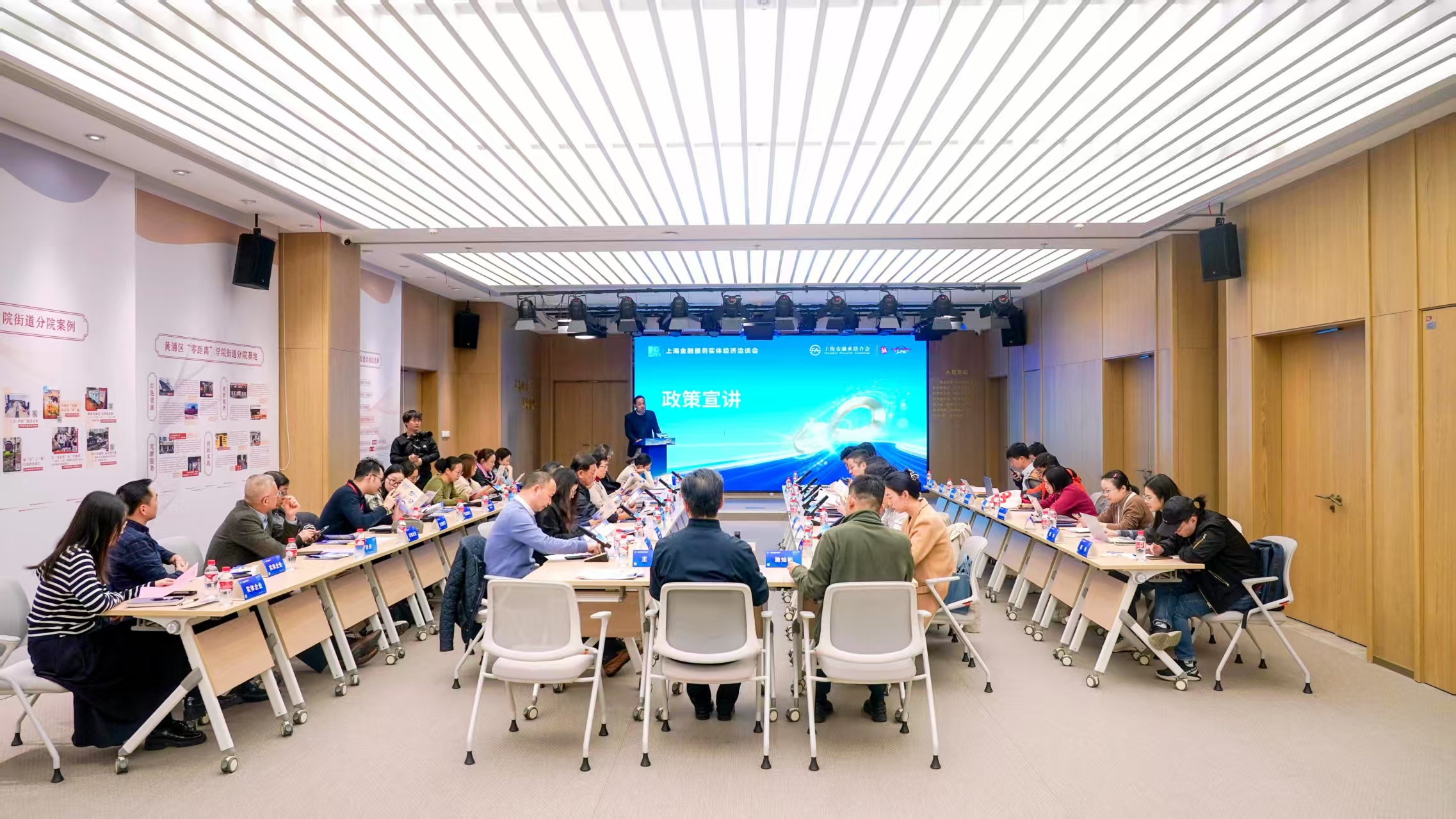
Core Insights - The 19th Golden Fair's "Park Tour" event in Huangpu's Wuliqiao Street aims to deliver financial services directly to enterprises, marking the conclusion of this year's series of activities [1] - The event highlights the importance of the Golden Fair as a platform for financial services to support the real economy in Shanghai, aligning with Huangpu District's goals of optimizing the business environment and promoting high-quality development [1] Group 1 - The event focused on addressing the financial needs of small and micro enterprises, which remain largely untapped, with discussions on optimizing financial costs for companies like Shanghai KooBan Biotechnology Co., Ltd. and Shanghai Wind Leader New Energy Co., Ltd. [1] - Financial consultants from various institutions provided insights on supporting small and micro enterprises through comprehensive financial solutions, including debt financing and policy-backed guarantees [2] - The Golden Fair has evolved its format to enhance the connection between financial institutions and real enterprises, emphasizing the commitment of Shanghai's financial sector to serve the real economy [2]

河南省委书记刘宁、省长王凯会见交通银行董事长任德奇
Ge Long Hui· 2025-11-26 04:42
Core Viewpoint - The meeting between Henan provincial leaders and the chairman of Bank of Communications emphasizes the importance of leveraging the bank's strengths for comprehensive financial cooperation in various sectors, including transportation infrastructure and rural revitalization [1] Group 1: Financial Cooperation - Henan provincial leaders expressed the hope that Bank of Communications will utilize its advantages as a large state-owned bank to engage in all-round financial cooperation [1] - The focus areas for cooperation include the construction of comprehensive transportation hubs, building a modern industrial system, and promoting rural revitalization [1] Group 2: Financial Ecosystem - The provincial government aims to continuously support the development of banks in Henan and optimize the financial ecosystem [1] - There is a commitment to creating a favorable business environment to enhance the accessibility and coverage of inclusive financial services [1]
易方达创业板50交易型开放式指数证券投资基金联接基金基金份额发售公告
Zhong Guo Zheng Quan Bao - Zhong Zheng Wang· 2025-11-26 04:22
Group 1 - The fund is named E Fund ChiNext 50 Exchange-Traded Open-Ended Index Fund Linked Fund, with A class code 026095 and C class code 026096 [20] - The fund is a contractual open-ended index fund and linked fund, with an indefinite duration [20] - The fund aims to closely track the performance benchmark, minimizing tracking deviation and tracking error [21] Group 2 - The initial fundraising cap for the fund is set at 8 billion RMB, excluding interest accrued during the fundraising period [2] - If the total valid subscription amount exceeds 8 billion RMB, the fund manager will implement a proportionate confirmation method to control the scale [2][3] - The calculation method for the proportionate confirmation on the last day is provided, ensuring that the total valid subscription amount is managed effectively [3] Group 3 - The fund will be publicly offered from December 1, 2025, to December 26, 2025, with the possibility of adjusting the fundraising period based on subscription conditions [4][23] - The minimum subscription amount for individual investors through non-direct sales institutions is set at 1 RMB, while the minimum for direct subscriptions is 50,000 RMB [5][6] Group 4 - The fund's investment target is to invest at least 90% of its net asset value in the target ETF [15] - The fund will not open conversion services between different share classes initially, but may do so in the future [2] Group 5 - The fund's underlying index is the ChiNext 50 Index, which consists of the top 50 stocks based on average daily trading volume over the last six months [9][10] - The index is calculated using a weighted method, ensuring real-time updates based on stock prices and weights [12]

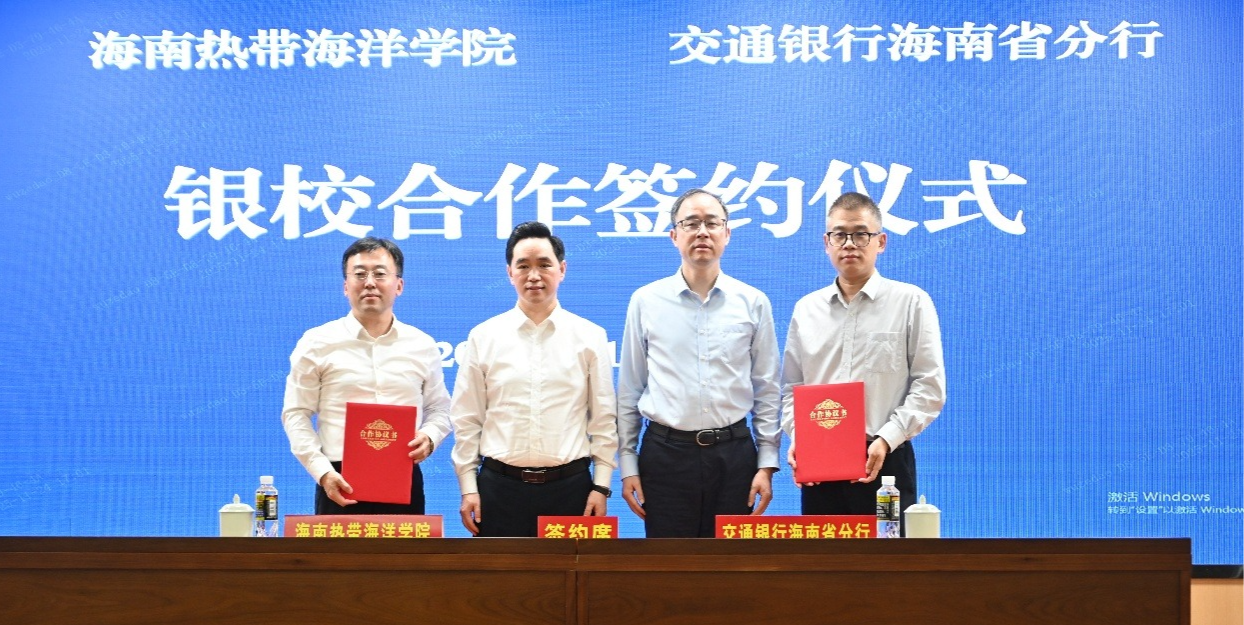
交通银行海南省分行与海南热带海洋学院签署银校合作协议
Zhong Guo Jin Rong Xin Xi Wang· 2025-11-26 03:23
Group 1 - The core viewpoint of the article is the collaboration between Bank of Communications Hainan Branch and Hainan Tropical Ocean University, focusing on financial support for educational and technological development [1][3] Group 2 - The agreement aims to leverage the bank's financial and digital service advantages to provide comprehensive financial support to the university [3] - The collaboration will emphasize the construction of a smart campus, integrating education, technology, and talent development [3] - Both parties will deepen cooperation in areas such as campus payment systems, financial support for marine industry innovation, and talent cultivation [3]
刘宁王凯会见交通银行董事长任德奇
He Nan Ri Bao· 2025-11-25 23:04
交通银行党委委员、副行长杨涛,交通银行公司与机构业务总监唐朔,省领导张敏、陈星参加会见。 (记者 刘婵 张笑闻) 责任编辑: 郭栩汝 11月25日,省委书记刘宁、省长王凯在郑州会见交通银行党委书记、董事长任德奇一行。 刘宁、王凯代表省委、省政府对任德奇一行表示欢迎,感谢交通银行给予河南发展的帮助支持。刘宁 说,当前,全省上下正在深入学习贯彻党的二十届四中全会精神和习近平总书记在河南考察时重要讲话 精神,聚焦"1+2+4+N"目标任务体系,着力稳就业、稳企业、稳市场、稳预期,全力打好经济发展冬春 季攻保战役。我们坚决贯彻习近平总书记关于金融工作的重要论述,认真落实党中央决策部署,扎实做 好金融"五篇大文章",统筹做好金融扩规模、调结构、降成本、防风险各项工作,金融服务实体经济质 效持续提升。长期以来,交通银行积极融入河南、服务河南、建设河南,在促进地方经济发展、服务保 障民生等方面作出了贡献。希望交通银行充分发挥国有大行规模庞大、业务全面等优势,在综合交通枢 纽项目建设、现代化产业体系构建、推进乡村全面振兴等方面开展全方位金融合作,完善科技金融服务 体系,提升普惠金融覆盖面和可及性,共同谋划好"十五五"时期河南 ...
构建场景生态 夯实行业根基 交通银行积极探索科技金融发展新路径
2 1 Shi Ji Jing Ji Bao Dao· 2025-11-25 16:16
使命所系,行动所向。近年来,交通银行将服务科技金融大文章置于战略核心,以扎实行动回应时代召 唤。 党的二十届四中全会提出"加快高水平科技自立自强,引领发展新质生产力",明确要加快建设金融强 国,大力发展金融"五篇大文章"。交通银行作为国有大型金融机构,扎实践行主力军压舱石职责,将做 好"科技金融"大文章视为践行金融工作政治性、人民性的重要举措,持续优化科技金融多层次服务体 系,共建金融服务场景生态,为科技型企业提供全周期、全链条、接力式金融服务。 拓宽朋友圈 护航创新主体 系,为金融服务提供专业支撑。 科技创新是一项系统工程,需要凝聚各方合力。交通银行积极构建开放、协同、互惠的产融生态,全面 提升金融服务质效。 2024年,交通银行与工信部火炬中心签署战略合作协议,共建"火炬交银联合创新实验室",围绕数据挖 掘利用、信贷产品创新、金融场景搭建及国家高新区服务等领域开展深度合作,持续加大对科技企业孵 化器、科创团队及产业园区的金融支持力度。2025年,双方联合启动"五个一"专项行动,以重点高新技 术园区为突破口,构建"政银园企"多方协同的创新服务平台,通过组织一次深度互访、举办一场银企对 接、开展一次融资路演, ...
打通金融惠企“最后一公里”,金洽会“园区行”深入黄浦把脉开方
Guo Ji Jin Rong Bao· 2025-11-25 13:59
Core Insights - The 19th Shanghai Financial Services for the Real Economy Conference (referred to as "Jinhui Conference") successfully held a special docking event in the Huangpu District, focusing on how financial services can empower the real economy [1] Group 1: Financial Support for SMEs - Representatives from companies such as Shanghai KooBan Biotechnology Co., Ltd. and Shanghai Wind Leading New Energy Co., Ltd. discussed challenges like high financing costs and difficulties in obtaining funds [3] - Financial advisors suggested that banks could provide comprehensive financial support for SMEs' debt financing needs before going public, including policy-backed guarantees and intellectual property pledge financing to reduce costs [3] - Online financing products with flexible repayment options can better match the cash flow needs of enterprises, enhancing capital efficiency [3] Group 2: Role of Insurance in Financing - Insurance companies can play a dual role in risk protection and credit enhancement, with research and development insurance creating a safety net for R&D investments [4] - Loan performance guarantee insurance can replace traditional collateral, effectively reducing banks' credit concerns and broadening financing channels for enterprises [4] Group 3: Integrated Financial Services Ecosystem - Financial institutions are leveraging diversified licenses to create an integrated service ecosystem, offering tailored financial services to SMEs [5] - The Shanghai Inclusive Finance Advisor system, launched in September 2022, aims to bridge the information gap between financial institutions and enterprises, providing professional consulting services [5] - The Jinhui Conference has been innovating its format and content to enhance the quality and effectiveness of financial services, reinforcing the commitment of Shanghai's financial sector to support the real economy [5]
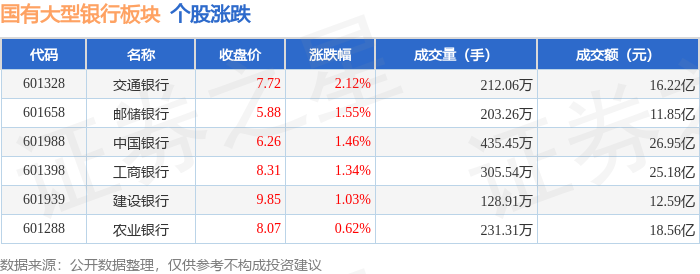
国有大型银行板块11月25日涨1.12%,交通银行领涨,主力资金净流入6.31亿元
Zheng Xing Xing Ye Ri Bao· 2025-11-25 09:09
证券之星消息,11月25日国有大型银行板块较上一交易日上涨1.12%,交通银行领涨。当日上证指数报 收于3870.02,上涨0.87%。深证成指报收于12777.31,上涨1.53%。国有大型银行板块个股涨跌见下表: | 代码 | 名称 | 主力净流入 (元) | 主力净占比 游资净流入 (元) | | 游资净占比 散户净流入 (元) | | 散户净占比 | | --- | --- | --- | --- | --- | --- | --- | --- | | 601988 中国银行 | | 2.18亿 | 8.09% | -1.16亿 | -4.31% | -1.02亿 | -3.79% | | 601398 工商银行 | | 1.82亿 | 7.25% | -1.41亿 | -5.60% | -4154.13万 | -1.65% | | 601328 交通银行 | | 1.08亿 | 6.65% | -6768.23万 | -4.17% | -4015.38万 | -2.48% | | 601288 农业银行 | | 1.05 Z | 5.68% | -6857.65万 | -3.69% | -3690. ...