
Hoymiles(688032)

Search documents
禾迈股份(688032.SH):港智投资及韩华龙拟合计减持不超过3%股份
Ge Long Hui A P P· 2025-11-25 10:20
格隆汇11月25日丨禾迈股份(688032.SH)公布,公司于近日收到股东港智投资及其一致行动人韩华龙出 具的《减持股份计划告知函》,因自身资金需求,港智投资及韩华龙计划在本减持计划披露之日起15个 交易日后的三个月内,即2025年12月17日至2026年3月16日,以集中竞价和大宗交易的方式合计减持不 超过372.22万股公司股票,合计减持比例不超过公司总股本的3%。其中港智投资已获得中国证券投资 基金业协会备案,符合《上市公司创业投资基金股东减持股份的特别规定》《上海证券交易所上市公司 创业投资基金股东减持股份实施细则(2020年修订)》关于创业投资基金股东的减持规定,在任意连续 30日内通过集中竞价减持股份的总数不超过公司股份总数的1%,在任意连续30日内通过大宗交易减持 股份的总数不超过公司股份总数的2%。 ...

科技行业重磅!国家大基金持仓+融资客大幅加仓的滞涨股出炉 仅12只
Zheng Quan Shi Bao Wang· 2025-11-22 05:56
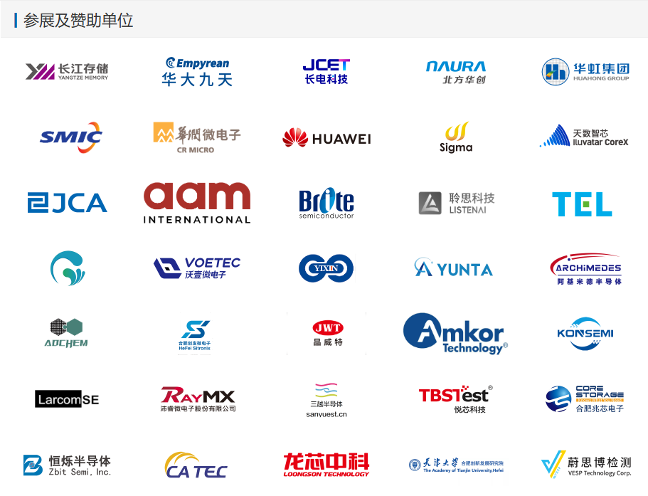
Core Viewpoint - The 22nd China International Semiconductor Expo (IC China 2025) will be held from November 23 to 25, 2025, at the National Convention Center in Beijing, showcasing advancements in the semiconductor industry, particularly in AI chips and advanced manufacturing processes [2][3]. Industry Overview - IC China has been a significant event in the semiconductor industry since 2003, establishing itself as a top-tier industry brand and benchmark [3]. - The expo will focus on the entire integrated circuit industry chain, highlighting the latest technologies, products, and applications, with a theme of "Gathering Strength in Chips, Driving the Future" [4]. Exhibition Details - The expo will feature seven major exhibition areas, including IC design, industry chain, innovative applications, and components, with over 600 exhibitors expected [5]. - Notable companies participating include Yangtze Memory Technologies, Huada Jiutian, and Tongfu Microelectronics, among others [5]. Market Trends - China's semiconductor industry is projected to exceed $180 billion in sales by 2024, with a significant portion of this growth driven by domestic innovation and reduced reliance on imports [6]. - In the first ten months of this year, China's integrated circuit exports reached approximately $161.7 billion, indicating a year-on-year increase of over 23% [6][7]. Growth Projections - The semiconductor industry is expected to experience a dual breakthrough in technology and scale, with a compound annual growth rate (CAGR) of 19.6% in chip design from 2006 to 2025 [13]. - By 2026, the semiconductor industry is anticipated to maintain a CAGR of over 10% [14]. R&D Investments - A-share semiconductor companies are projected to invest over $80 billion in R&D in 2024, with a research intensity exceeding 13% [15]. - The highest growth in revenue from 2021 to 2024 is expected in semiconductor equipment, integrated circuit manufacturing, and discrete devices [15]. Investment Insights - The National Integrated Circuit Industry Investment Fund has significant holdings in 32 companies within the semiconductor industry, with many experiencing substantial increases in financing [17]. - Companies like Shengke Communication and Jiangbolong have seen financing balances increase by over 400% and 350%, respectively, indicating strong investor interest [18]. Stock Performance - Among the 32 companies with National Fund holdings, 12 have seen stock price increases of less than 30% this year, despite significant increases in financing [19]. - Notable companies include Hu Silicon Industry and Tai Ling Microelectronics, with financing balances increasing by over 85% and 187%, respectively [19][20].





禾迈股份跌5.03% 2021年上市超募48亿中信证券保荐
Zhong Guo Jing Ji Wang· 2025-11-21 08:53
Group 1 - HeMai Co., Ltd. (688032.SH) closed at 100.28 yuan, with a decline of 5.03%, currently in a state of breaking issue [1] - HeMai Co., Ltd. was listed on the Shanghai Stock Exchange's Sci-Tech Innovation Board on December 20, 2021, with an issue price of 557.80 yuan per share and a total of 10 million shares issued [1] - The total amount of funds raised from the initial public offering (IPO) was 5.578 billion yuan, with a net amount of 5.406 billion yuan after deducting issuance costs, exceeding the original plan by 4.848 billion yuan [1] Group 2 - The funds raised are intended for the construction of HeMai Intelligent Manufacturing Base, the industrialization of energy storage inverters, the upgrade of intelligent complete electrical equipment, and to supplement working capital [1] - The total issuance costs for the IPO amounted to 172 million yuan, including underwriting and sponsorship fees of 142 million yuan [1] - On May 30, 2022, HeMai Co., Ltd. announced a dividend plan of 30 yuan (pre-tax) per 10 shares, with a bonus of 4 shares, with the ex-dividend date on June 7, 2022 [1] - On June 6, 2023, the company announced a dividend plan of 53 yuan (pre-tax) per 10 shares, with a bonus of 4.9 shares, with the ex-dividend date on June 13, 2023 [1] Group 3 - On June 13, 2024, HeMai Co., Ltd. announced a dividend plan of 36 yuan (pre-tax) per 10 shares, with a bonus of 4.9 shares, with the ex-dividend date on June 19, 2024 [2]

禾迈股份股价跌5%,富国基金旗下1只基金重仓,持有1025股浮亏损失5412元
Xin Lang Cai Jing· 2025-11-21 07:14
Core Viewpoint - HeMai Co., Ltd. has experienced a significant decline in stock price, dropping 5% on November 21, with a cumulative decline of 9.22% over four consecutive days, indicating potential concerns among investors [1][2]. Company Overview - HeMai Co., Ltd. is located in Hangzhou, Zhejiang Province, and was established on September 4, 2012. The company went public on December 20, 2021. Its main business involves the research, development, manufacturing, and sales of power conversion equipment, including photovoltaic inverters and energy storage inverters [1]. - The revenue composition of HeMai Co., Ltd. is as follows: micro-inverters and monitoring equipment account for 44.39%, photovoltaic power generation systems for 34.92%, energy storage systems for 18.70%, other products for 1.68%, and non-contractual income for 0.30% [1]. Fund Holdings - According to data, one fund under the management of Fortune Fund holds shares in HeMai Co., Ltd. The Fortune SSE STAR Market Composite Price ETF Link A (023737) held 1,025 shares in the third quarter, unchanged from the previous period, representing 0.05% of the fund's net value [2]. - The estimated floating loss for the fund today is approximately 5,412 yuan, with a total floating loss of 11,000 yuan during the four-day decline [2]. - The fund was established on April 9, 2025, with a current scale of 114 million yuan and has achieved a return of 31.48% since inception [2].
禾迈股份跌3.53% 2021年上市超募48亿中信证券保荐
Zhong Guo Jing Ji Wang· 2025-11-18 08:23
Core Viewpoint - HeMai Co., Ltd. (688032.SH) is currently experiencing a decline in stock price, with a market capitalization of 13.71 billion yuan, indicating a significant drop since its IPO [1] Group 1: Stock Performance - HeMai Co., Ltd. closed at 110.50 yuan, reflecting a decline of 3.53% [1] - The company is currently in a state of "broken issue" since its IPO price was 557.80 yuan per share [1] Group 2: IPO Details - HeMai Co., Ltd. was listed on the Shanghai Stock Exchange's Sci-Tech Innovation Board on December 20, 2021, with an issuance of 10 million shares [1] - The total funds raised from the IPO amounted to 5.578 billion yuan, with a net amount of 5.406 billion yuan after deducting issuance costs [1] - The final net fundraising amount exceeded the original plan by 4.848 billion yuan [1] Group 3: Fund Utilization - The funds raised are intended for the construction of an intelligent manufacturing base, industrialization of energy storage inverters, upgrading of intelligent complete electrical equipment, and supplementing working capital [1] Group 4: Dividend Announcements - On June 6, 2023, HeMai Co., Ltd. announced a dividend plan of 53 yuan (pre-tax) per 10 shares, along with a bonus issue of 4.9 shares [2] - A subsequent dividend plan was announced for June 13, 2024, with a payout of 36 yuan (pre-tax) per 10 shares and a bonus issue of 4.9 shares [2]
禾迈股份跌3.53%,成交额1.65亿元,今日主力净流入-1523.85万
Xin Lang Cai Jing· 2025-11-18 07:56
Core Viewpoint - The stock of Hema Technology Co., Ltd. experienced a decline of 3.53% on November 18, with a trading volume of 165 million yuan and a total market capitalization of 13.71 billion yuan [1] Company Overview - Hema Technology Co., Ltd. specializes in the research, manufacturing, and sales of photovoltaic inverters, energy storage products, and electrical equipment [2][7] - The company's main products include micro-inverters, monitoring equipment, distributed photovoltaic power generation systems, modular inverters, and energy storage systems [2][7] - The company has been recognized as a "specialized, refined, distinctive, and innovative" small giant enterprise, indicating its strong market position and innovation capabilities [2] Financial Performance - For the period from January to September 2025, Hema Technology reported a revenue of 1.323 billion yuan, representing a year-on-year growth of 4.57%, while the net profit attributable to shareholders was a loss of 59.115 million yuan, a decrease of 124.07% year-on-year [8] - As of September 30, the number of shareholders increased to 10,200, with an average of 12,134 circulating shares per person, a decrease of 3.68% from the previous period [8] Market Dynamics - The company benefits from a significant overseas revenue share of 64.25%, aided by the depreciation of the RMB [3] - On March 5, 2025, Hangkai Holdings Group announced plans to increase its stake in Hema Technology, with an investment ranging from 111.5 million yuan to 223 million yuan, supported by a special loan from China CITIC Bank [3] Technical Analysis - The average trading cost of Hema Technology's shares is 111.70 yuan, with the stock price currently near a support level of 107.60 yuan, indicating potential for a rebound if this level holds [6]
禾迈股份跌2.06%,成交额3024.31万元,主力资金净流出163.81万元
Xin Lang Cai Jing· 2025-11-18 02:02
Core Viewpoint - HeMai Co., Ltd. experienced a stock price decline of 2.06% on November 18, with a current price of 112.18 CNY per share and a total market capitalization of 13.919 billion CNY [1] Group 1: Stock Performance - Year-to-date, HeMai's stock price has increased by 2.48%, with a recent 5-day decline of 2.24% and a 20-day increase of 4.86% [2] - As of September 30, the number of shareholders increased by 3.82% to 10,200, with an average of 12,134 circulating shares per person, a decrease of 3.68% [2] Group 2: Financial Performance - For the period from January to September 2025, HeMai reported a revenue of 1.323 billion CNY, reflecting a year-on-year growth of 4.57%, while the net profit attributable to shareholders was a loss of 59.115 million CNY, a decrease of 124.07% year-on-year [2] - The company has distributed a total of 1.306 billion CNY in dividends since its A-share listing, with 1.186 billion CNY distributed over the past three years [3] Group 3: Business Overview - HeMai Co., Ltd. specializes in the research, development, manufacturing, and sales of power conversion equipment, including photovoltaic inverters and energy storage inverters [2] - The company's revenue composition includes micro-inverters and monitoring equipment (44.39%), photovoltaic power generation systems (34.92%), energy storage systems (18.70%), and other sources (1.68%) [2] - HeMai is categorized under the Shenwan industry classification of electric power equipment, specifically photovoltaic equipment and inverters, and is associated with concepts such as mid-cap, photovoltaic glass, energy storage, solar energy, and specialized new [2]
禾迈股份(688032):发货节奏和费用影响Q3业绩,微逆+储能双轮驱动可期
Changjiang Securities· 2025-11-17 23:30
Investment Rating - The investment rating for the company is "Buy" and is maintained [6]. Core Views - The company reported a revenue of 1.323 billion yuan for the first three quarters of 2025, representing a year-on-year increase of 4.57%. However, the net profit attributable to the parent company was -59 million yuan, a decline of 124.07% year-on-year. In Q3 2025, the revenue was 318 million yuan, down 11.18% year-on-year and 52.48% quarter-on-quarter, with a net profit of -75 million yuan, a decrease of 230.01% year-on-year and 383.1% quarter-on-quarter [2][4]. Summary by Sections Financial Performance - For Q3 2025, the company incurred operating expenses of 220 million yuan, which increased by 50 million yuan quarter-on-quarter, leading to a high expense ratio of 68% due to limited revenue. The increase in expenses was primarily due to higher foreign exchange losses and sustained high sales and R&D expenses aimed at enhancing the energy storage product lineup [9]. Inventory and Supply Chain - As of the end of Q3, the company's inventory stood at 1.06 billion yuan, an increase of 6.8% quarter-on-quarter. The inventory of micro-inverters is expected to decrease, while energy storage inventory has increased significantly, indicating a positive trend in energy storage operations [9]. Future Outlook - The company is transitioning from a single focus on micro-inverters to a dual focus on micro-inverters and energy storage. It is anticipated that energy storage revenues will surpass micro-inverter revenues, with significant growth expected in household storage, commercial storage, and large-scale storage in 2026. The overall business revenue from energy storage is expected to exceed that of micro-inverters, with an increase in overseas sales likely to improve gross margins [9].
禾迈股份跌1.52%,成交额1.99亿元,近3日主力净流入-1206.40万
Xin Lang Cai Jing· 2025-11-17 07:35
Core Viewpoint - The stock of Hemaik Electric Co., Ltd. experienced a decline of 1.52% on November 17, with a trading volume of 199 million yuan and a total market capitalization of 14.211 billion yuan [1] Company Overview - Hemaik Electric Co., Ltd. specializes in the research, manufacturing, and sales of photovoltaic inverters, energy storage products, and electrical equipment [2][7] - The company's main products include micro-inverters, monitoring devices, distributed photovoltaic power generation systems, modular inverters, and energy storage systems [2][7] - The company has been recognized as a "specialized, refined, distinctive, and innovative" small giant enterprise, indicating its strong market position and innovation capabilities [2] Financial Performance - For the period from January to September 2025, Hemaik achieved a revenue of 1.323 billion yuan, representing a year-on-year growth of 4.57%, while the net profit attributable to shareholders was -59.1154 million yuan, a decrease of 124.07% year-on-year [8] - As of September 30, the number of shareholders increased to 10,200, a rise of 3.82%, while the average circulating shares per person decreased by 3.68% [8] Market Position and Trends - The company benefits from a significant overseas revenue share of 64.25%, aided by the depreciation of the RMB [3] - Hemaik is set to receive an investment from Hangkai Holdings Group, with plans to increase its stake by no less than 111.5 million yuan and no more than 223 million yuan [3] Technical Analysis - The average trading cost of Hemaik's shares is 111.73 yuan, with the stock price approaching a resistance level of 115.47 yuan, indicating potential for upward movement if this level is surpassed [6]
禾迈股份跌2.11%,成交额5026.17万元,主力资金净流出140.16万元
Xin Lang Cai Jing· 2025-11-17 01:57
Core Viewpoint - HeMai Co., Ltd. experienced a stock price decline of 2.11% on November 17, with a current price of 113.86 CNY per share and a market capitalization of 14.127 billion CNY [1] Group 1: Stock Performance - Year-to-date, HeMai's stock price has increased by 4.01%, with a 2.12% rise over the last five trading days, 6.37% over the last 20 days, and 0.91% over the last 60 days [2] - As of September 30, the number of shareholders increased by 3.82% to 10,200, while the average circulating shares per person decreased by 3.68% to 12,134 shares [2] Group 2: Financial Performance - For the period from January to September 2025, HeMai reported revenue of 1.323 billion CNY, representing a year-on-year growth of 4.57%. However, the net profit attributable to shareholders was a loss of 59.1154 million CNY, a decrease of 124.07% compared to the previous year [2] Group 3: Business Overview - HeMai Co., Ltd. specializes in the research, development, manufacturing, and sales of power conversion equipment, including photovoltaic inverters and energy storage inverters. The revenue composition includes micro-inverters and monitoring equipment (44.39%), photovoltaic power generation systems (34.92%), energy storage systems (18.70%), and other sources (1.68%) [2] - The company is categorized under the Shenwan industry classification of electric power equipment, specifically photovoltaic equipment and inverters, and is associated with concepts such as mid-cap, photovoltaic glass, energy storage, specialized and innovative, and solar energy [2] Group 4: Dividend Information - Since its A-share listing, HeMai has distributed a total of 1.306 billion CNY in dividends, with 1.186 billion CNY distributed over the past three years [3]