
UIH(688271)

Search documents
商务部反倾销调查开启,中美印 CT 球管博弈升级
Guan Cha Zhe Wang· 2025-05-04 08:20
Core Viewpoint - The Ministry of Commerce of China has initiated an anti-dumping investigation into imported medical CT tubes from the United States and India, escalating the competition in the high-end medical equipment sector among China, the U.S., and India [1]. Industry Overview - CT tubes are critical components of CT devices, often referred to as the "heart" of the equipment, affecting image quality and device lifespan [2][3]. - The global market for CT tubes is valued at hundreds of billions, with a replacement demand of approximately 100,000 to 140,000 units globally. In China, the annual demand for new CT tubes is around 5,000 units, with a replacement demand exceeding 100,000 units due to an aging population and increasing health check needs [4]. Market Dynamics - The global CT tube market is dominated by major international players such as Siemens, GE, and Philips, which hold about 72% of the market share. Domestic manufacturers face challenges in performance and quality compared to foreign products, which have advanced technologies [4]. - The anti-dumping investigation presents both opportunities and challenges for domestic companies. High-end hospitals require high-performance CT tubes, while county-level hospitals prioritize cost-effectiveness [5]. Domestic Market Developments - Domestic manufacturers are making strides in the mid-to-low-end market, with companies like Wandong Medical and Kunshan Yiyuan achieving breakthroughs in key technologies. The government supports domestic CT tube development through policies that mandate a minimum percentage of domestic equipment in hospitals [6][7]. - The domestic CT tube market is expected to grow, with a projected increase in domestic production rates to over 40% by 2025. Currently, domestic CT tubes are priced 30%-50% lower than imports, with maintenance costs reduced by 60% [6]. Investment and Innovation - The CT tube sector has seen active financing activities since 2020, indicating a focus on overcoming key technological challenges. Emerging companies are developing advanced products, such as high-capacity tubes and liquid metal bearing tubes, to penetrate the high-end market [7][8].



联影医疗(688271):25Q1恢复增长 海外业务持续拓展
Xin Lang Cai Jing· 2025-05-04 00:32
Core Viewpoint - The company reported a decline in revenue and net profit for 2024, but showed growth in Q1 2025, indicating a potential recovery trend in the near future [1][2]. Group 1: Financial Performance - In 2024, the company achieved operating revenue of 10.3 billion yuan, a year-on-year decrease of 9.7%, and a net profit attributable to shareholders of 1.262 billion yuan, down 36.1% year-on-year [1]. - For Q1 2025, the company reported operating revenue of 2.478 billion yuan, a year-on-year increase of 5.4%, and a net profit attributable to shareholders of 370 million yuan, up 1.87% year-on-year [1]. Group 2: Business Segments - The company's equipment sales were affected by industry changes, with 2024 equipment revenue reaching 8.44 billion yuan, a year-on-year decrease of 14.93% [2]. - The CT business line generated 3.048 billion yuan, down 25.03% year-on-year, while the MR business line brought in 3.192 billion yuan, a decrease of 2.66% [2]. - The maintenance service revenue grew to 1.356 billion yuan in 2024, reflecting a year-on-year increase of 26.8% [2]. Group 3: R&D and International Expansion - The company maintained strong R&D investment of 2.261 billion yuan in 2024, accounting for 21.95% of revenue [3]. - The company launched several strategic innovative products in 2024, including the uLinac HalosTx precision radiotherapy system and the uMR Max next-generation 3.0T MRI [3]. - International revenue reached 2.22 billion yuan in 2024, a year-on-year increase of 33.81%, representing 22.46% of total revenue [3]. Group 4: Profit Forecast and Valuation - The company is a leader in the domestic medical imaging equipment sector, with ongoing R&D and technological innovation enhancing its global competitiveness [3]. - The net profit forecasts for 2025 and 2026 have been revised down to 1.966 billion yuan and 2.281 billion yuan, respectively, reflecting reductions of 33.9% and 39.5% from previous estimates [3]. - A new net profit forecast for 2027 is set at 2.817 billion yuan, with a "buy" rating maintained due to increasing installation volumes and a structured product pipeline [3].
联影医疗:海外业务快速拓展,静待市场需求释放-20250504
Huaan Securities· 2025-05-04 00:23
Investment Rating - The investment rating for the company is "Buy" (maintained) [2] Core Views - The company reported a revenue of 10.3 billion yuan in 2024, a year-over-year decrease of 9.73%, and a net profit attributable to shareholders of 1.262 billion yuan, down 36.09% year-over-year [2] - The company is actively expanding its overseas markets, having established sales networks in multiple countries, including the US, UK, Japan, and South Korea, with overseas revenue growing by 33.81% year-over-year to 2.22 billion yuan in 2024 [6][7] - The company has a strong focus on R&D, with an investment of 2.261 billion yuan in 2024, accounting for 21.95% of its revenue, and a patent application count exceeding 9,300 [7][8] Financial Performance Summary - In Q4 2024, the company achieved a revenue of 3.346 billion yuan, a decrease of 15.90% year-over-year, and a net profit of 591 million yuan, down 35.09% year-over-year [2] - For Q1 2025, the company reported a revenue of 2.478 billion yuan, an increase of 5.42% year-over-year, and a net profit of 370 million yuan, up 1.87% year-over-year [2] - The company expects revenues of 12.164 billion yuan, 14.488 billion yuan, and 17.612 billion yuan for 2025, 2026, and 2027 respectively, with corresponding net profits of 1.802 billion yuan, 2.408 billion yuan, and 3.259 billion yuan [9][11] Market Position and Competitive Advantage - The company is a leading domestic medical imaging equipment manufacturer with strong product competitiveness and high R&D barriers [9] - The company has achieved 100% self-research capability in core components across various business lines, including MR, CT, and MI, positioning itself as a global leader in technology [8][9]
联影医疗的至暗与转机
华尔街见闻· 2025-05-03 23:32
Core Viewpoint - The medical imaging equipment price war is intensifying, particularly affecting domestic manufacturers like United Imaging Healthcare and Wandong Medical, as evidenced by significant price drops in recent bidding events [1][4][5]. Group 1: Market Dynamics - In a recent procurement event in Fujian, Wandong Medical won a bid for 43 units of 1.5T MR equipment at a total of 118 million yuan, with the unit price dropping to 2 million yuan, a nearly 40% decrease from previous bids [2][3]. - The price competition is putting pressure on United Imaging Healthcare, which has seen its first annual revenue decline since its listing, with projected revenues and net profits for 2024 down 9.73% and 37.21% respectively [5]. - The CT market is also experiencing fierce competition, with significant price reductions observed in recent bids, such as the Insitum CT 568 being bid at 1.8 million yuan, down from previous prices [11][13][14]. Group 2: Future Outlook - The medical imaging sector may face a "bloodbath" in 2025 as procurement activities resume, potentially leading to shifts in market share [7]. - Despite the challenges, United Imaging Healthcare reported a slight recovery in early 2025, with revenues and net profits increasing by 5.42% and 1.87% year-on-year [6][28]. - The overall procurement scale for medical devices is expected to grow significantly, with a projected 49% increase in December 2024 compared to the previous year [27]. Group 3: Competitive Landscape - The MR market in China has significant growth potential, with a current penetration rate of only 12.4 units per million people, compared to 1/6 of the US and 1/4 of Japan [16]. - The competition in the 1.5T MR segment is intensifying, with Wandong Medical's recent bid breaking previous low-price records, indicating a trend towards lower pricing strategies [19][20]. - United Imaging Healthcare maintains a competitive edge in the high-end market, particularly with its exclusive position in the 5.0T MR segment [22][23]. Group 4: Strategic Responses - To counteract competitive pressures, United Imaging Healthcare is expanding its international presence, with overseas sales reaching 2.22 billion yuan, a year-on-year increase of over 30% [31]. - The company is also investing in local production capabilities in Southeast Asia and Latin America, aiming to build a robust overseas supply chain [33].
一场围绕医生“眼睛”的5000亿市场争夺战
虎嗅APP· 2025-05-03 02:44
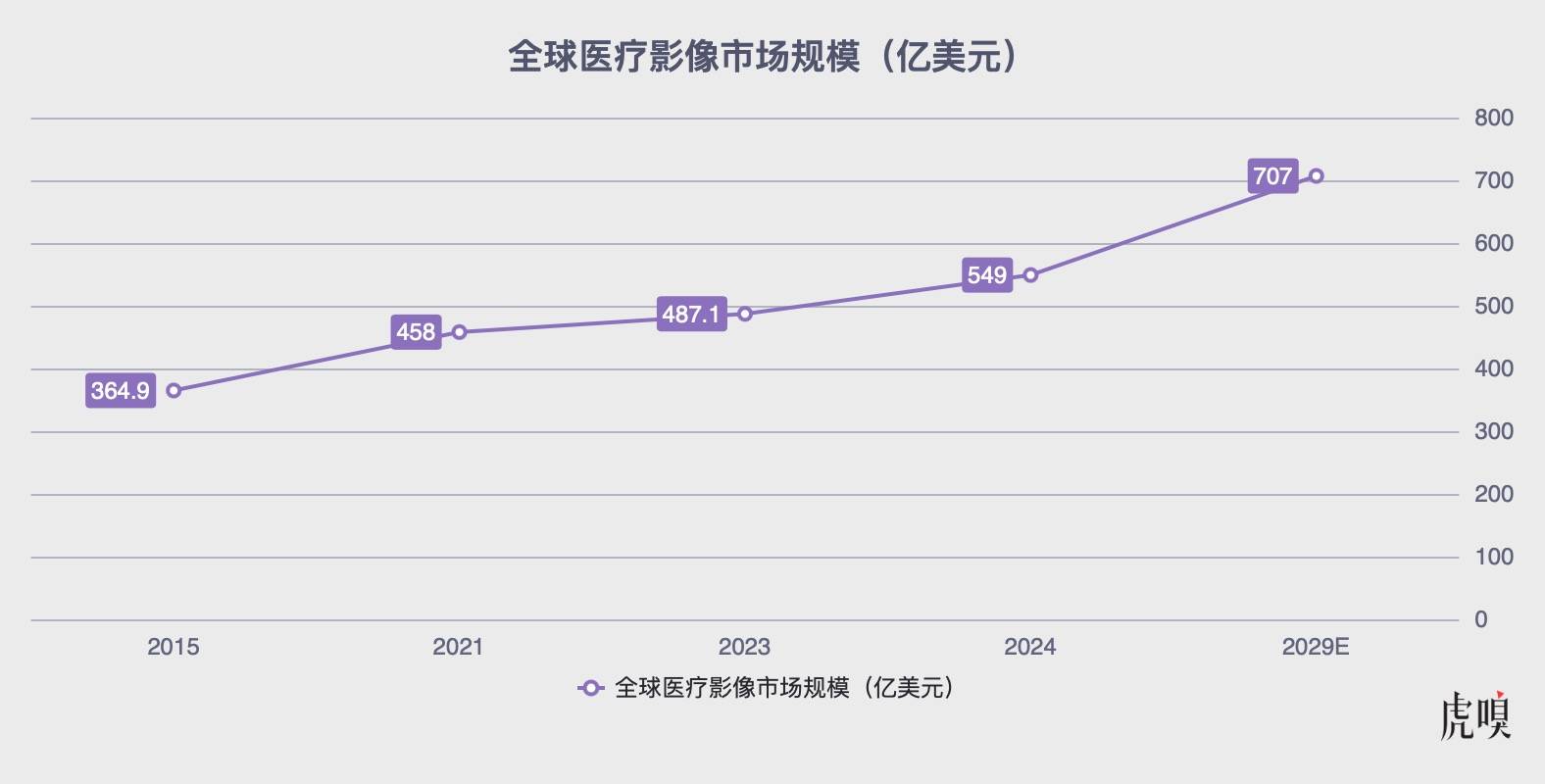
Core Viewpoint - The integration of AI in the medical imaging sector is transforming the industry, making AI an essential tool for clinical work and significantly enhancing diagnostic efficiency and capabilities [3][5][17]. Group 1: AI's Role in Medical Imaging - AI has become a necessity in the medical field, particularly in the 500 billion yuan medical imaging market, with over one-third of clinical staff in China using AI tools [3][5]. - The COVID-19 pandemic accelerated the adoption of AI in medical imaging, leading to a resurgence in AI product development and a significant increase in regulatory approvals for AI-related medical devices [5][10]. - Major medical device companies, such as United Imaging and GE Healthcare, are actively developing AI imaging products, indicating a shift towards an integrated ecosystem in medical AI [6][10]. Group 2: Market Dynamics and Growth - The global medical imaging market is projected to exceed 50 billion USD by 2024, with a compound annual growth rate (CAGR) of over 10% in China from 2019 to 2023 [10][12]. - Domestic brands are increasingly capturing market share in high-end medical imaging equipment, with significant advancements in technology leading to the introduction of innovative products [12][14]. - The competitive landscape is changing, with local companies like United Imaging achieving substantial market shares in various imaging modalities, challenging the dominance of established global players [12][14]. Group 3: Efficiency and Diagnostic Capabilities - AI has dramatically improved diagnostic efficiency, reducing the time required for procedures and enhancing the accuracy of diagnoses for complex conditions [17][18]. - The integration of AI allows for the use of less expensive imaging modalities, such as CT, to replace more costly procedures like PET, significantly lowering healthcare costs [18][20]. - The implementation of AI in imaging has improved the interoperability of medical data, facilitating better patient care and operational efficiency in hospitals [20][21]. Group 4: Future Trends and Challenges - The future of medical imaging is expected to focus on integrated diagnostic and therapeutic approaches, with AI playing a crucial role in personalized medicine [25][26]. - The healthcare sector is facing challenges such as regulatory hurdles, market competition, and the need for technological advancements to keep pace with AI developments [28][29]. - Despite the rapid growth of AI in healthcare, the industry must address issues related to data security, clinical applicability, and the integration of AI into existing workflows [28][29].

一场围绕医生“眼睛”的5000亿市场争夺战
Hu Xiu· 2025-05-02 23:01
Core Viewpoint - AI has become an essential tool in the medical imaging sector, significantly impacting the $500 billion market and transforming operational processes in hospitals [1][6]. Group 1: AI Integration in Medical Imaging - Over one-third of clinical healthcare workers in China are using AI tools, surpassing the global average of 26% [1]. - AI has been integrated into 9 out of 12 processes in radiation therapy at Sun Yat-sen University Cancer Center, with the remaining processes automated [1]. - The COVID-19 pandemic has accelerated the adoption of AI in medical imaging, leading to a resurgence in AI product development and potential insurance support [2]. Group 2: Market Dynamics and Growth - The global medical imaging market is projected to exceed $50 billion by 2024, with a compound annual growth rate (CAGR) of over 10% in China from 2019 to 2023, potentially reaching 130 billion yuan [6][8]. - As of 2024, over 160 AI products have received regulatory approval in China, primarily related to imaging examinations [3]. - Major medical device companies are increasingly entering the AI medical imaging space, with companies like United Imaging and GE Healthcare leading the charge [3][10]. Group 3: Competitive Landscape - The traditional market has been dominated by major players like GE, Philips, and Siemens, which hold 90% of the global market share [7]. - Domestic brands are making significant strides, with several achieving top positions in various imaging device categories, such as DR and CT machines [8][10]. - The competitive landscape is shifting as domestic companies innovate and introduce advanced imaging technologies, challenging the established giants [7][10]. Group 4: Technological Advancements and Efficiency - AI has drastically improved diagnostic efficiency, reducing the time for radiation therapy from weeks to just 24 minutes [13]. - AI-enabled devices can now diagnose conditions previously requiring more expensive imaging techniques, such as PET scans, using standard MRI machines [14][15]. - The integration of AI in imaging is enhancing the quality of diagnostics, allowing for clearer images with lower radiation doses [17]. Group 5: Future Trends and Opportunities - The trend towards integrated diagnostic and treatment solutions is emerging, with imaging becoming a critical component of therapeutic processes [23]. - The development of AI-driven medical models is expected to reshape healthcare delivery, making it more efficient and accessible [26]. - The push for data sharing and interoperability in medical imaging is likely to create new opportunities for domestic companies in the evolving landscape [27].
价格战风暴将至:联影医疗的至暗与转机
Hua Er Jie Jian Wen· 2025-05-02 16:33
Core Viewpoint - The medical imaging equipment price war is intensifying, with significant price drops observed in recent tenders, particularly affecting major players like United Imaging Healthcare and Wandong Medical [1][3][10]. Group 1: Price Trends and Market Dynamics - Wandong Medical won a tender for 1.5T MR equipment at a price of 2 million yuan, a nearly 40% decrease from previous winning bids [2][10]. - The CT market is experiencing fierce competition, with prices for Insitum CT 568 dropping to as low as 1.8 million yuan in recent tenders, reflecting a more than 25% year-on-year decline in CT revenue for 2024 [5][7][8]. - The average factory price for United Imaging's CT equipment is estimated at 2.18 million yuan, only a 3% decrease from 2023, indicating relative price stability compared to competitors [9][10]. Group 2: Company Performance and Projections - United Imaging Healthcare reported a decline in annual revenue for the first time since its listing, with projected revenues of 10.3 billion yuan and net profits of 1.262 billion yuan for 2024, down 9.73% and 37.21% year-on-year, respectively [4][14]. - Despite the challenges, there are signs of recovery in early 2025, with projected revenues and net profits showing slight increases [4][14]. - The overall procurement scale for medical equipment is expected to reach 25.3 billion yuan by December 2024, a 49% increase year-on-year, providing a potential recovery opportunity for companies like United Imaging [13][14]. Group 3: Competitive Landscape and Future Outlook - The competition in the 1.5T MR segment is intensifying, with multiple domestic manufacturers capable of mass production, leading to aggressive pricing strategies [10][11]. - The market for higher-end 3.0T MR equipment remains competitive, with Wandong Medical recently entering this segment, indicating potential shifts in market dynamics [11][12]. - United Imaging is expanding its international presence, with overseas sales reaching 2.22 billion yuan, a year-on-year increase of over 30%, and plans to establish production bases in Southeast Asia and Latin America [16][17].
重磅干货!科技自主可控50强来了,三大维度筛选,4只核心潜力股获机构重金抢筹
Zheng Quan Shi Bao Wang· 2025-05-02 12:02
Core Viewpoint - The article emphasizes that technological self-sufficiency is a key investment theme, particularly in the context of ongoing US-China trade tensions, which are seen as a competition in the technology sector [1][3]. Industry Insights - The concept of self-sufficiency refers to the ability to independently research, design, and control core technologies across the entire lifecycle of information systems, from hardware to software [2]. - The Chinese government has highlighted the importance of building self-sufficient industrial and supply chains, particularly in sectors such as integrated circuits, industrial mother machines, medical equipment, and advanced materials [2]. Investment Opportunities - Various institutions believe that technological self-sufficiency has become a reliable investment direction, with a focus on domestic demand in technology, particularly in areas like domestic computing power [4][5]. - Securities firms such as Everbright Securities and Huafu Securities are optimistic about investment opportunities in the semiconductor industry, recommending attention to wafer manufacturing and AI computing power chips [6]. Market Growth Projections - The China Investment Industry Research Institute projects that the market size of self-sufficient industries will reach 1.47 trillion yuan by 2027, indicating significant market potential [7]. - A selection of 50 potential stocks in the self-sufficient technology sector was made based on three criteria: research and development intensity, gross profit margin, and the ratio of contract liabilities to revenue [7]. Stock Performance and Predictions - Among the 50 identified stocks, 14 have seen upward adjustments in profit forecasts post-annual report releases, with two stocks, Foxit Software and Rainbow Technology, experiencing over 50% increases in 2025 profit predictions [9]. - Foxit Software's net profit forecast for 2025 was raised by 152.78% to 91 million yuan, reflecting strong recent performance [10]. - Rainbow Technology's net profit forecast for 2025 was increased by 58.27% to 220 million yuan, driven by its focus on technological innovation [10][11]. Institutional Interest - Six stocks from the identified 50 have received net purchases exceeding 100 million yuan from institutional investors, with Chip Origin Technology and China Software being notable examples [12]. - Chip Origin Technology has a range of self-sufficient processor IPs applicable in various fields, while China Software is recognized as a leading state-owned enterprise in software, benefiting from its strategic position and brand recognition [12][13].


联影医疗(688271):2024年报及2025年一季报点评:25Q1季报迎来拐点,期待逐季改善
Soochow Securities· 2025-05-01 03:10
Investment Rating - The investment rating for the company is "Buy" (maintained) [1] Core Views - The company has achieved a significant breakthrough in its globalization efforts, with high-end models signed in over 40 countries and nearly 300 units sold [7] - The domestic market share has further increased despite an overall slowdown in the industry, with a strong product mix enhancing competitive advantages [7] - The company's revenue for 2024 is projected to be 10.3 billion yuan, a decrease of 9.73% year-on-year, with a net profit of 1.262 billion yuan, down 36.08% year-on-year [7] - The first quarter of 2025 shows signs of recovery, with revenue of 2.478 billion yuan, an increase of 5.42% year-on-year, and a net profit of 370 million yuan, up 1.87% year-on-year [7] - The company maintains a strong competitive position due to high product barriers and is expected to benefit from a recovery in the domestic industry [7] Financial Summary - Total revenue for 2023 is 11.411 billion yuan, with a projected decline to 10.3 billion yuan in 2024, followed by a recovery to 11.599 billion yuan in 2025 [1][8] - The net profit for 2023 is 1.974 billion yuan, expected to drop to 1.262 billion yuan in 2024, and then rise to 1.587 billion yuan in 2025 [1][8] - The earnings per share (EPS) is projected to decrease from 2.40 yuan in 2023 to 1.53 yuan in 2024, before recovering to 1.93 yuan in 2025 [1][8] - The price-to-earnings (P/E) ratio is expected to be 86.80 in 2024, decreasing to 69.03 in 2025 and further to 51.20 in 2026 [1][8]
联影医疗:2024年报及2025年一季报点评:25Q1季报迎来拐点,期待逐季改善-20250501
Soochow Securities· 2025-05-01 02:23
Investment Rating - The investment rating for the company is "Buy" (maintained) [1] Core Views - The company has achieved a significant breakthrough in its globalization efforts, with high-end models signed in nearly 300 units across over 40 countries [7] - The domestic market share has further increased despite an overall slowdown in the industry, with a strong product mix enhancing competitive advantages [7] - The company's revenue for 2024 is projected to be 10.3 billion yuan, a decrease of 9.73% year-on-year, while the net profit attributable to shareholders is expected to be 1.262 billion yuan, down 36.08% year-on-year [7] - The first quarter of 2025 shows signs of recovery, with a revenue of 2.478 billion yuan, an increase of 5.42% year-on-year, and a net profit of 370 million yuan, up 1.87% year-on-year [7] - The company maintains a strong competitive position with high product barriers and is expected to benefit from a recovery in the domestic industry [7] Financial Summary - Total revenue for 2023 is 11.411 billion yuan, with a projected decline to 10.3 billion yuan in 2024, followed by a recovery to 11.599 billion yuan in 2025 [1][8] - The net profit attributable to shareholders is forecasted to decrease from 1.974 billion yuan in 2023 to 1.262 billion yuan in 2024, before increasing to 1.587 billion yuan in 2025 [1][8] - The earnings per share (EPS) is expected to decline from 2.40 yuan in 2023 to 1.53 yuan in 2024, with a recovery to 1.93 yuan in 2025 [1][8] - The price-to-earnings (P/E) ratio is projected to be 86.80 for 2024, decreasing to 69.03 in 2025 and further to 51.20 in 2026 [1][8]