JIANGSU GDK(688670)

Search documents
多地四价流感疫苗供应紧张
Xin Lang Cai Jing· 2025-11-07 08:08
Core Viewpoint - There is a temporary shortage of flu vaccines in several cities in China, including Guangzhou, Xi'an, Changzhou, and Jinan, due to increased demand as the flu season approaches [2][5][7]. Vaccine Supply Situation - Different community health centers report varying levels of vaccine availability, with some lacking the quadrivalent flu virus split vaccine and others the quadrivalent subunit vaccine [2][4]. - The quadrivalent split flu vaccine is experiencing supply tightness due to increased demand, while the quadrivalent subunit vaccine is also in short supply in certain areas [5][10]. - The overall supply of flu vaccines is expected to improve by mid to late November [5]. Manufacturer Insights - Hualan Biological Engineering, the largest flu vaccine producer in China, has an annual production capacity of 100 million doses and is increasing market supply and promotion efforts [5][6]. - Different regions are experiencing varying supply situations, influenced by local demand and inventory levels [6][10]. Demand Factors - The sudden increase in vaccine demand is attributed to the earlier onset of the flu season [7][10]. - The distribution of vaccines is managed by local disease control centers, which order from manufacturers based on local needs, leading to a mismatch in supply and demand timing [7]. Market Dynamics - The flu vaccine market experiences cyclical demand fluctuations, influenced by factors such as consumer willingness to vaccinate and the prevalence of flu strains [10]. - The annual demand for flu vaccines can vary significantly, with years of high demand followed by lower demand in subsequent years [10]. Vaccination Rates and Projections - China's flu vaccination rate remains low compared to the U.S., with only 3.8% during the 2022-2023 flu season, while the U.S. rate was 49.3% [13][14]. - The number of flu vaccine doses issued in China is projected to increase from 70.5 million in 2023 to over 150 million by 2029, with vaccination rates expected to rise to approximately 9% to 15.5% by 2033 [14].




大疆、影石还没争出第一,大批友商已经赶在路上|知料
3 6 Ke· 2025-11-07 02:05
Core Insights - The competition for market share in the panoramic camera sector has intensified, with conflicting reports on the market shares of companies like Insta360 and DJI, highlighting the volatility of the market [1][2][6] - The entry of new players, including hardware companies and internet giants, into the smart imaging sector is reshaping the landscape, with significant investments and innovations being made [4][12][20] - The global user base for vlogging and outdoor activities presents a substantial opportunity for growth in smart imaging devices, with current penetration rates being low [6][18] Market Share Discrepancies - A report from Jiucheng Consulting indicated that Insta360's market share dropped from 92% to 49%, while DJI captured 43% in the third quarter [1] - Conversely, Frost & Sullivan reported that Insta360 held a 75% market share compared to DJI's 17.1%, suggesting significant discrepancies in market analysis [1][2] Competitive Landscape - The launch of DJI's Osmo360 has disrupted Insta360's dominance, showcasing strong market performance within just 90 days of release [2] - New entrants are focusing on niche markets and differentiated product offerings to avoid direct competition with established players like DJI and Insta360 [7][10] Emerging Trends - Companies like Looki and XbotGo are innovating by targeting specific user needs, such as AI-driven features and sports event recording, which are not directly competing with traditional action cameras [9][10][11] - The rise of smartphone manufacturers entering the smart imaging space is seen as a defensive move to protect their market share against emerging competitors [12][19] Industry Dynamics - The smart imaging market is characterized by low barriers to entry, with many startups able to develop products quickly due to a robust supply chain in regions like the Pearl River Delta [21][23] - However, achieving brand recognition and competitive pricing on a global scale remains a challenge for new entrants, as established companies like DJI and Insta360 have significant advantages in technology and market presence [23][25]

生物制品板块11月5日跌0.96%,禾元生物领跌,主力资金净流出6.68亿元
Zheng Xing Xing Ye Ri Bao· 2025-11-05 08:42
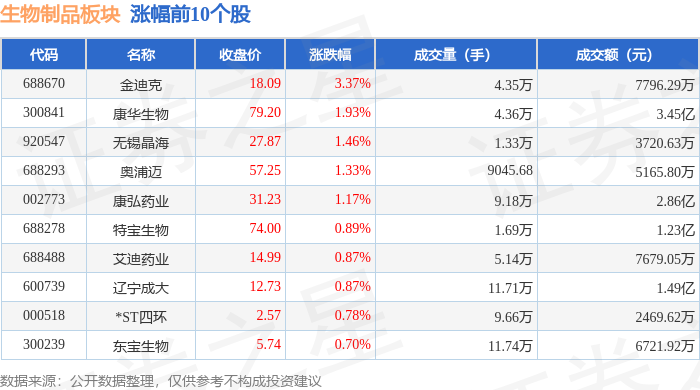
Market Overview - The biopharmaceutical sector experienced a decline of 0.96% on November 5, with He Yuan Bio leading the drop [1] - The Shanghai Composite Index closed at 3969.25, up 0.23%, while the Shenzhen Component Index closed at 13223.56, up 0.37% [1] Stock Performance - Notable gainers in the biopharmaceutical sector included: - Jinke (688670) with a closing price of 18.09, up 3.37% [1] - Kanghua Bio (300841) at 79.20, up 1.93% [1] - Wuxi Jinghai (920547) at 27.87, up 1.46% [1] - Significant decliners included: - Buyuan Bio (688765) at 112.00, down 12.55% [2] - SanSheng Guojian (688336) at 70.10, down 8.47% [2] - Rongchang Bio (688331) at 92.00, down 4.90% [2] Trading Volume and Capital Flow - The biopharmaceutical sector saw a net outflow of 668 million yuan from institutional investors, while retail investors contributed a net inflow of 380 million yuan [2] - The trading volume for key stocks included: - Kanghua Bio with a trading volume of 43,600 shares and a transaction value of 345 million yuan [1] - Buyuan Bio with a trading volume of 185,800 shares and a transaction value of 2.206 billion yuan [2] Capital Inflow Analysis - Major stocks with net inflows from institutional investors included: - Kanghua Bio with a net inflow of 40.48 million yuan, accounting for 11.72% of its trading volume [3] - Hualan Bio with a net inflow of 31.05 million yuan, accounting for 4.66% [3] - Conversely, stocks like Jinke experienced a net outflow of 13.56 million yuan from retail investors, representing 17.39% of its trading volume [3]
金迪克(688670) - 江苏金迪克生物技术股份有限公司2025年第一次临时股东大会会议资料
2025-11-04 08:15
江苏金迪克生物技术股份有限公司 2025 年第一次临时股东大会会议资料 证券代码:688670 证券简称:金迪克 江苏金迪克生物技术股份有限公司 2025 年第一次临时股东大会会议资料 二〇二五年十一月 1 | 2025 | 年第一次临时股东大会会议议程 6 | | --- | --- | | 2025 | 年第一次临时股东大会会议议案 8 | 江苏金迪克生物技术股份有限公司 2025 年第一次临时股东大会会议资料 江苏金迪克生物技术股份有限公司 2025 年第一次临时股东大会会议须知 为维护全体股东的合法权益,确保股东大会会议秩序和议事效率,保证股东 大会的顺利召开,根据《中华人民共和国公司法》(以下简称"《公司法》")、《中 华人民共和国证券法》(以下简称"《证券法》")、中国证监会《上市公司股东大 会规则》以及《江苏金迪克生物技术股份有限公司章程》(以下简称"《公司章程》") 和《江苏金迪克生物技术股份有限公司股东大会议事规则》等有关规定,特制定 江苏金迪克生物技术股份有限公司(以下简称"公司")2025 年第一次临时股东 大会会议须知: 一、为保证股东大会的严肃性和正常秩序,切实维护与会股东(或股东代 ...
金迪克跌2.14%,成交额1898.98万元,主力资金净流出264.02万元
Xin Lang Cai Jing· 2025-11-03 02:12
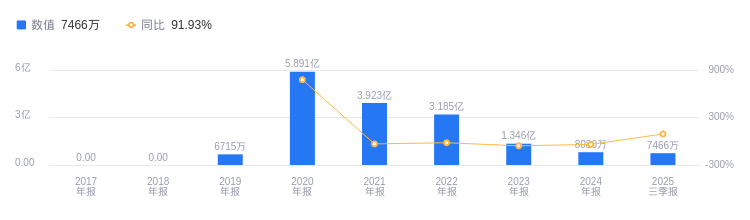
Core Viewpoint - The stock of Jindike experienced a decline of 2.14% on November 3, trading at 16.93 CNY per share, with a total market capitalization of 2.086 billion CNY. The company has seen a year-to-date stock price increase of 39.69% [1] Financial Performance - For the period from January to September 2025, Jindike achieved operating revenue of 74.6576 million CNY, representing a year-on-year growth of 91.93%. However, the net profit attributable to shareholders was -86.4706 million CNY, a decrease of 61.74% compared to the previous year [1] Stock Market Activity - As of November 3, the trading volume was 18.9898 million CNY, with a turnover rate of 0.90%. The net outflow of main funds was 2.6402 million CNY, with large single purchases accounting for 15.89% and sales for 29.79% of the total [1] Shareholder Information - As of September 30, the number of shareholders for Jindike was 4,319, a decrease of 4.55% from the previous period. The average circulating shares per person increased by 4.77% to 28,525 shares [1] Company Overview - Jindike, established on December 29, 2008, and listed on August 2, 2021, is a biopharmaceutical company based in Taizhou, Jiangsu Province, focusing on the research, production, and sales of human vaccines. The company's main business revenue is derived entirely from vaccine products [1] Dividend Information - Since its A-share listing, Jindike has distributed a total of 61.6 million CNY in dividends, with 17.6 million CNY distributed over the past three years [2]
APEC选择深圳 企业家看到未来
Nan Fang Du Shi Bao· 2025-11-02 13:31
Group 1 - The APEC meeting in 2026 will be held in Shenzhen, marking the third time China hosts this event, highlighting the city's role in innovation and globalization [1][2] - The event is seen as an opportunity for technology companies rooted in Shenzhen to showcase their growth and contributions to the global economy [2][4] - APEC's presence in Shenzhen is recognized as a validation of the city's innovative vitality and internationalization, providing a platform for global innovation exchange [2][4] Group 2 - Ying Shi Innovation, a technology company based in Shenzhen, views the APEC meeting as a chance to demonstrate the essence of "Made in China" and share experiences in technology innovation [2][4] - The company emphasizes the importance of technology as a cultural medium and communication tool, aiming to foster cooperation among Asia-Pacific nations [4] - The event is expected to enhance collaboration and consensus among Asia-Pacific partners, showcasing Shenzhen's dynamic innovation landscape [4] Group 3 - Zhou Ming Technology, a local enterprise in Shenzhen, highlights the city's transformation from manufacturing to intelligent manufacturing, affirming the significance of APEC's choice of location [7][10] - The company has developed a strategic ecosystem centered around "LED+AI," benefiting from Shenzhen's open and inclusive innovation environment [10] - Zhou Ming Technology anticipates the APEC meeting will provide a platform for exploring advanced development paths in LED and AI, sharing practical experiences with global partners [10]

金迪克的前世今生:2025年Q3营收7465.76万元远低于行业均值,净利润亏损8647.06万元排名靠后
Xin Lang Zheng Quan· 2025-10-31 02:32
Core Viewpoint - Jindike, a biopharmaceutical company focused on human vaccines, has shown strong R&D capabilities but faces challenges in revenue and profit compared to industry leaders [1][2]. Group 1: Business Performance - In Q3 2025, Jindike reported revenue of 74.66 million yuan, ranking 13th among 14 companies in the industry, significantly lower than the top competitor, Liaoning Chengda, which had 8.11 billion yuan [2]. - The company's net profit was -86.47 million yuan, placing it 10th in the industry, with the leading company, Liaoning Chengda, achieving a net profit of 1.45 billion yuan [2]. Group 2: Financial Ratios - Jindike's debt-to-asset ratio was 17.75% in Q3 2025, an increase from 15.44% year-on-year, but still below the industry average of 27.82%, indicating good solvency [3]. - The gross profit margin for Jindike was 65.31% in Q3 2025, slightly down from 65.36% year-on-year, yet higher than the industry average of 63.72%, reflecting strong profitability [3]. Group 3: Management and Shareholder Information - Chairman Yu Jun's compensation for 2024 was 1.24 million yuan, a decrease of 50,900 yuan from 2023 [4]. - As of September 30, 2025, the number of A-share shareholders decreased by 4.55% to 4,319, while the average number of circulating A-shares held per account increased by 4.77% to 28,500 [5].
百克生物销售副总辞职,存量竞争下疫苗行业销售高管变动频繁
Xin Lang Cai Jing· 2025-10-27 06:39
Core Viewpoint - The domestic vaccine industry is experiencing significant pressure due to economic downturns, declining birth rates, reduced vaccination willingness, and intensified market competition, leading to frequent executive changes among companies [1][3]. Group 1: Executive Changes - Sun Wanfeng has resigned from his position as employee representative director and vice president of Baike Bio, but will continue as assistant to the chairman [1]. - There are rumors of changes in the management of Kangtai Bio, but the company has confirmed that Vice President Yu Bing remains in his position [1]. - Frequent executive turnover is noted in the domestic vaccine industry, with several companies undergoing leadership changes since late 2024 [3]. Group 2: Financial Performance - In the first half of 2025, only 5 out of 10 listed vaccine companies in A-shares reported revenue growth, with only 3 achieving positive net profit growth [3]. - Baike Bio reported a revenue of 284.9 million yuan with a net loss of 73.57 million yuan, marking a year-on-year revenue decline of 53.93% and a net profit decline of 153.47% [4]. - Kangtai Bio's revenue was 1.392 billion yuan with a net profit of 37.53 million yuan, showing a revenue growth of 15.81% but a significant net profit decline of 77.30% [4]. Group 3: Market Competition - The HPV vaccine market is experiencing aggressive price competition, with prices for the bivalent HPV vaccine dropping below 100 yuan, and the lowest price recorded at 27.5 yuan per dose [5]. - The flu vaccine market is also seeing price reductions, with prices for quadrivalent flu vaccines dropping from 128 yuan to 88 yuan per dose [6]. - The pneumococcal vaccine market is highly competitive, with Pfizer withdrawing from the market due to intense competition from domestic products [6]. Group 4: Growth Opportunities - Despite the challenges, there are structural growth opportunities in the vaccine market, exemplified by Olin Bio's adsorbed tetanus vaccine, which achieved a revenue growth of 35.17% in the first half of 2025 [7].





流感季或将提前!三价疫苗政采价走低,流感疫苗市场如何变化?
财联社· 2025-10-26 05:52
Core Viewpoint - The upcoming flu season in 2025 is expected to be significant, with a different strain circulating compared to last year, leading to lower immunity among the public. Vaccination remains the most effective preventive measure, and there is a noticeable increase in vaccine demand across various regions [1][4][5]. Vaccine Supply and Demand - There is a surge in flu vaccine demand, particularly among parents for their children, leading to situations where appointments are available but vaccines are not [6][8]. - The government procurement price for trivalent vaccines has dropped to a historical low of 5.5 yuan per dose, while the price of quadrivalent vaccines has remained stable [2][12]. - Sanofi, a major overseas player, has resumed supply to the Chinese market after a 10-month hiatus, but this has not significantly impacted the market dynamics as domestic manufacturers continue to dominate [10][11]. Flu Activity and Trends - The flu season may start earlier than in previous years, with reports indicating an increase in flu cases, particularly in southern provinces [3][4]. - The predominant strain this year is H3N2, which poses a higher risk due to lower public immunity compared to last year's H1N1 strain [4][5]. Pricing Dynamics - The price of trivalent vaccines has decreased significantly, while quadrivalent vaccines have stabilized after a previous price war [12][13]. - The procurement prices for government-subsidized vaccines have varied, but the overall trend indicates a potential for future price adjustments due to market conditions [13][14]. Market Competition - The return of Sanofi to the Chinese market raises questions about competitive dynamics, but domestic manufacturers like Sinopharm, Beijing Kexing, and Hualan Biological remain the primary suppliers [10][11]. - The flu vaccine market is characterized as an incremental market with substantial demand, and companies do not view each other strictly as competitors [11]. Recommendations for Public Health - Health authorities continue to recommend annual flu vaccinations as the best preventive measure, alongside personal hygiene practices [5][6]. - Increased public awareness and education about the importance of flu vaccination are essential for improving vaccination rates [13].


流感“抬头” 疫苗、抗病毒药物需求升温
财联社· 2025-10-25 11:06
Core Viewpoint - The flu season in China is expected to arrive earlier this year, with a significant increase in infection rates anticipated due to the emergence of the H3N2 strain as the dominant virus, replacing last year's H1N1 strain [6][11][12]. Group 1: Flu Season and Virus Strain - The proportion of flu-like cases in emergency departments reached 3.3%, with a flu positivity rate of 5.8%, marking a 2.2% increase from the previous week [6][7]. - Experts predict that the flu season may start earlier this year, with the H3N2 strain expected to dominate, leading to a higher number of infections [6][12]. - The flu season's early onset is influenced by factors such as virus mutation, low immunity in the population against H3N2, and unusual climate conditions [12][13]. Group 2: Market Dynamics and Investment Opportunities - The early flu season signals a shift in market dynamics, prompting a surge in flu prevention-related stocks, with some stocks even hitting their daily limit [8]. - The flu vaccine market has seen a decline, with the market size dropping from 101 billion yuan in 2021 to an estimated 88 billion yuan in 2023, and further projected to decrease to 80 billion yuan in 2024 [14][24]. - In contrast, the antiviral drug market is expanding, with the market size nearing 20 billion yuan in 2023, driven by increased demand for antiviral treatments [14][25]. Group 3: Vaccine and Antiviral Drug Market - The penetration rate of flu vaccines in China is approximately 3%, significantly lower than the nearly 50% in Europe and the U.S., indicating a substantial growth opportunity in the vaccine market [22][24]. - The market for antiviral drugs, particularly neuraminidase inhibitors like Oseltamivir, is currently dominated by a few key players, with a notable increase in demand for new RNA polymerase inhibitors [25][26]. - The introduction of new RNA polymerase inhibitors, such as Marbofloxacin, is expected to reshape the market dynamics, enhancing patient willingness to use these medications due to their improved convenience and safety [26][28].