SMIC(688981)

Search documents
港股芯片股下挫,华虹半导体、上海复旦跌超4%,中芯国际、贝克微跟跌。
Xin Lang Cai Jing· 2025-11-21 02:09
港股芯片股下挫,华虹半导体、上海复旦跌超4%,中芯国际、贝克微跟跌。 ...

越跌越买!规模最大的恒生科技指数ETF、恒生互联网ETF连续16日获资金净申购
Ge Long Hui· 2025-11-21 01:56
Group 1 - The Hong Kong stock market opened lower today, with the Hang Seng Technology Index dropping by 2.21%, and the Hang Seng Internet ETF and Hang Seng Technology Index ETF falling by 2% and 1.6% respectively [1] - Despite the declines, there has been a net inflow of funds into the Hang Seng Technology Index ETF totaling 4.472 billion yuan over 16 trading days from October 30 to November 20, during which the index fell by 10.11% [1] - The Hang Seng Internet ETF also saw a net inflow of 2.518 billion yuan over the same period, despite a 10.24% decline [1] Group 2 - Recent adjustments in the Hong Kong stock market are attributed to factors such as the "AI bubble theory," tightening liquidity in the US market, and profit-taking by institutions after a more than 20% increase in the Hang Seng Technology Index this year [1] - The Hang Seng Technology Index has experienced a cumulative decline of over 18% since October 3, which may present a buying opportunity [1] - Positive factors include strong Q3 financial results and Q4 guidance from Nvidia, which may help alleviate concerns regarding the "AI bubble," along with Alibaba's upcoming financial report on November 25 [1] Group 3 - The Hang Seng Internet ETF has a weight of over 80% in leading internet stocks, with an AI content exceeding 90%, including major companies like Alibaba, Tencent, NetEase, JD.com, and Baidu [2]



芯片龙头ETF(516640)开盘跌2.18%,重仓股中芯国际跌2.50%,寒武纪跌2.42%
Xin Lang Cai Jing· 2025-11-21 01:42
Core Viewpoint - The semiconductor leader ETF (516640) opened down by 2.18% at 0.986 yuan, reflecting a broader decline in the semiconductor sector [1] Group 1: ETF Performance - The semiconductor leader ETF (516640) has a performance benchmark based on the CSI Semiconductor Industry Index return [1] - Since its establishment on August 19, 2021, the ETF has returned 0.82%, while its return over the past month is -3.38% [1] Group 2: Major Holdings Performance - Key holdings in the ETF include: - SMIC (中芯国际) down 2.50% - Cambricon (寒武纪) down 2.42% - Haiguang Information (海光信息) down 2.25% - Northern Huachuang (北方华创) down 2.40% - Lattice Semiconductor (澜起科技) down 2.66% - Zhaoyi Innovation (兆易创新) down 5.07% - Zhongwei Company (中微公司) down 2.90% - OmniVision (豪威集团) down 1.31% - Chipone (芯原股份) down 4.01% - Changdian Technology (长电科技) down 1.44% [1]


集成电路ETF(562820)开盘跌2.89%,重仓股寒武纪跌2.42%,中芯国际跌2.50%
Xin Lang Cai Jing· 2025-11-21 01:42
Core Viewpoint - The integrated circuit ETF (562820) opened with a decline of 2.89%, indicating a bearish trend in the sector [1] Group 1: ETF Performance - The integrated circuit ETF (562820) opened at 2.083 yuan [1] - Since its establishment on April 12, 2024, the fund has achieved a return of 114.57% [1] - The fund has experienced a return of -4.65% over the past month [1] Group 2: Major Holdings Performance - Major stocks within the ETF showed significant declines, including: - Cambrian (寒武纪) down 2.42% - SMIC (中芯国际) down 2.50% - Haiguang Information (海光信息) down 2.25% - Lattice Technology (澜起科技) down 2.66% - GigaDevice (兆易创新) down 5.07% - Haowei Group (豪威集团) down 1.31% - Chipone (芯原股份) down 4.01% - JCET (长电科技) down 1.44% - Unisoc (紫光国微) down 2.00% - Tongfu Microelectronics (通富微电) down 2.07% [1] Group 3: Management Information - The ETF is managed by Harvest Fund Management Co., Ltd. [1] - The fund manager is Tian Guangyuan [1] - The performance benchmark for the ETF is the CSI All-Share Integrated Circuit Index [1]

芯片ETF天弘(159310)开盘跌3.17%,重仓股中芯国际跌2.50%,寒武纪跌2.42%
Xin Lang Cai Jing· 2025-11-21 01:42
Core Viewpoint - The chip ETF Tianhong (159310) opened with a decline of 3.17%, indicating a bearish trend in the semiconductor sector [1] Group 1: ETF Performance - The Tianhong chip ETF (159310) opened at 1.896 yuan, reflecting a significant drop [1] - The fund's performance benchmark is the CSI Chip Industry Index return rate, managed by Tianhong Fund Management Co., Ltd. [1] - Since its establishment on April 18, 2024, the fund has achieved a return of 95.73%, while its return over the past month is -3.40% [1] Group 2: Major Holdings Performance - Key holdings in the Tianhong chip ETF experienced notable declines, including: - SMIC down 2.50% - Cambrian down 2.42% - Haiguang Information down 2.25% - Northern Huachuang down 2.40% - Lanke Technology down 2.66% - Zhaoyi Innovation down 5.07% - Zhongwei Company down 2.90% - OmniVision down 1.31% - Chipone down 4.01% - Changdian Technology down 1.44% [1]
先进制程扩产叠加国产化替代风口,半导体激光设备大有可为
半导体行业观察· 2025-11-21 00:58
Group 1: Overview of Semiconductor Laser Equipment - Laser technology is widely used in consumer electronics, automotive manufacturing, new energy, and semiconductor industries due to its high energy density and adaptability to materials [2] - The demand for semiconductor laser processing equipment is expected to grow as industries seek lightweight, precise, and intelligent solutions [2] - Domestic manufacturers are making technological breakthroughs and improving cost control, gradually closing the gap with international leaders [2] Group 2: Types of Semiconductor Laser Equipment - Semiconductor laser annealing equipment is crucial for repairing lattice damage in semiconductor wafers and enhancing device performance [3] - Laser material modification equipment alters the surface structure and properties of materials, with applications in 3D NAND chip manufacturing [4] - Laser scribing equipment is used to cut semiconductor chips from wafers, impacting packaging quality and production costs [7] - Laser debonding equipment enables low-stress separation processes without chemicals, crucial for advanced packaging applications [8] - Laser marking equipment is utilized for labeling silicon wafers and chips, facilitating tracking and identification [9] - Other laser processing equipment includes laser trimming, glue removal, and laser drilling, which are essential in various semiconductor manufacturing stages [10] Group 3: Semiconductor Market Situation - The global semiconductor market is projected to reach $627.2 billion in 2024, driven by AI computing demand and recovering memory chip prices [14] - The semiconductor manufacturing equipment market is expected to grow to $125.5 billion by 2025, with significant contributions from advanced logic and memory applications [16] - China's semiconductor market is anticipated to reach $186.5 billion in 2024, accounting for 31.9% of the global market, driven by domestic demand and policy support [21] Group 4: Domestic Semiconductor Equipment Market - The domestic semiconductor equipment market is expected to grow significantly, with a projected market size of approximately 289.9 billion yuan by 2025 [23] - The demand for laser equipment in wafer manufacturing is expected to rise due to the expansion of domestic production lines and the adoption of advanced processes [40] - The growth of AI applications is driving the demand for advanced packaging equipment in China, with the packaging equipment market expected to reach 17.396 billion yuan by 2025 [29] Group 5: Key Domestic Companies - LaiPu Technology focuses on semiconductor laser equipment and has a market share of 16% in laser thermal processing equipment, with over 90% in advanced 3D NAND and DRAM laser equipment [56] - Huagong Laser specializes in laser intelligent equipment and has developed solutions covering the entire semiconductor manufacturing process [57] - Shanghai Microelectronics is emerging in the laser annealing equipment market, particularly in ultra-thin silicon wafer applications [58] - Dazhong Laser has a strong presence in various semiconductor segments, including traditional packaging and advanced processes [59] - Beijing Huazhuo Precision Technology is recognized for its high-quality laser annealing equipment and precision control technology [60]


中芯国际(981.HK):供应链国产替代需求增长强劲 消费电子市场需求回暖
Ge Long Hui· 2025-11-20 11:55
Core Insights - The company reported Q3 2025 revenue of $2.38 billion, a year-on-year increase of 9.7% and a quarter-on-quarter increase of 7.8%, aligning closely with the consensus estimate of $2.35 billion [1] - The company’s production capacity increased by 32,000 wafers to 1.023 million equivalent 8-inch wafers, with a capacity utilization rate of 95.8%, up 3.3 percentage points from the previous quarter [1] - The average selling price (ASP) of wafers reached $913, down 5.5% year-on-year but up 4.4% quarter-on-quarter [1] Financial Performance - The gross margin for the quarter was 22.0%, an increase of 1.6 percentage points from the previous quarter [1] - Net profit attributable to shareholders grew by 28.9% year-on-year to $190 million, with earnings per share of $0.02 [1] - The company guided for Q4 2025 revenue growth of 0%-2%, projecting revenue between $2.38 billion and $2.43 billion, with a gross margin expected to be between 18%-20% [1] Market Demand and Trends - The consumer electronics market is showing signs of recovery, with AI demand expected to grow over 10% in FY 2025 [1] - Revenue from 8-inch and 12-inch wafers increased by 2.7% and 8.9% quarter-on-quarter, respectively, with total wafer shipments rising by 4.6% to 2.499 million wafers [1] - Consumer electronics revenue increased by 19.4% quarter-on-quarter, driven by increased market share from domestic customers and rising export demand [1] Capital Expenditure and Future Outlook - Q3 capital expenditure rose by 27.0% quarter-on-quarter to $2.39 billion, primarily due to the recovery of equipment shipments affected by geopolitical factors [2] - The company plans to gradually expand production capacity, adding an average of 50,000 pieces of 12-inch wafer monthly capacity each year, with demand driven by AI, automotive, and AloT products [2] - The target price is set at HKD 90.00, with a buy rating, reflecting a projected 21.63% upside from the current stock price [2]
存储周期下的晶圆代工:台积电狂赚 中芯国际和华虹半导体突围
Zhong Guo Jing Ying Bao· 2025-11-20 11:16
Core Insights - The global wafer foundry industry experienced significant growth in Q3 2025, with major players like SMIC and Hua Hong Semiconductor reporting record revenues, driven by high demand and capacity utilization [1][5][6] - TSMC remains the dominant player in the advanced process segment, while the market for mature processes is undergoing significant adjustments, with companies like UMC and TSMC adapting their strategies [1][3][4] Company Performance - SMIC reported Q3 2025 revenue of $2.382 billion, a 9.7% year-on-year increase, with a gross margin of 22% and capacity utilization rising to 95.8% [5] - Hua Hong Semiconductor achieved Q3 2025 revenue of $635 million, a 20.7% year-on-year increase, with a gross margin of 13.5% [6] - TSMC's Q3 2025 revenue reached $33.1 billion, with a gross margin of 59.5%, driven primarily by AI and high-performance computing (HPC) demand [4] Market Trends - The demand for mature process nodes (28nm and above) is increasing, with companies like UMC seeking price reductions from suppliers and TSMC planning to outsource certain orders [1][2] - The overall wafer foundry market is expected to maintain high capacity utilization rates, with some companies anticipating better performance in Q4 2025 compared to Q3 [3][7] - The storage chip market is experiencing significant price pressures due to supply constraints, with predictions of continued high prices as demand outstrips supply [6] Future Outlook - The global wafer foundry capacity is projected to grow at an annual rate of 4.3% from 2024 to 2030, with China expected to surpass Taiwan as the largest foundry market [8][9] - Industry experts highlight four key trends for the future: intensified competition in advanced processes, structural upgrades in mature processes, integrated business models, and differentiated capacity layouts [9]

较10月高点回撤超15%,恒生科技怎么了?资金为何逆势流入?
Xin Lang Cai Jing· 2025-11-20 09:09
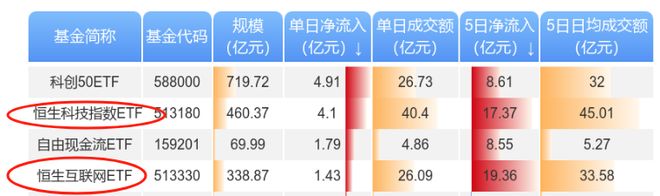
Core Insights - Since 2025, the Hong Kong stock market, led by technology and innovative pharmaceuticals, has been on the rise, with the Hang Seng Technology Index reaching a recent high of 6715.46 on October 2, and the Hang Seng Index showing a gain of over 30% [1][3] - However, in less than two months, the Hang Seng Technology Index has experienced a continuous adjustment, with a maximum drawdown exceeding 15%, and a recent five-day losing streak [1][3] - Despite the market pullback, southbound capital has accelerated its inflow, with a net purchase exceeding 1.3 trillion HKD this year, and cumulative net inflow surpassing 5 trillion HKD, setting a historical record [1][7] Market Dynamics - The recent pullback in the Hong Kong stock market's technology sector is attributed to multiple factors, including persistent concerns over an "AI bubble," a cooling concept of interest rate cuts by the Federal Reserve, and escalating tariff conflicts, which have led to a systematic devaluation of technology stocks [3][4] - Additionally, as the year-end approaches, there is a shift in investment focus towards dividend-paying assets like banks and non-bank financials, rather than high-volatility technology stocks [4] Financial Performance - Nvidia's strong Q3 earnings report, showing a revenue of 57 billion USD (up 62% year-on-year) and a Q4 revenue outlook of approximately 65 billion USD, may help alleviate market concerns regarding the "AI bubble" [5] - Major Hong Kong technology companies have also reported robust Q3 earnings, indicating resilience in the face of global economic disruptions, with highlights including Tencent's revenue of 192.9 billion CNY (up 15%) and Xiaomi's revenue of 113.12 billion CNY (up 22.3%) [6][5] Investment Outlook - Looking ahead to 2026, several institutions remain optimistic about the mid-to-long-term prospects of the Hong Kong technology and internet sectors, driven by the AI wave and supportive policies [7] - The inflow of southbound capital is unprecedented, with insurance and public funds driving a dual strategy of "technology growth + high dividend yield" [7][8] - The Hang Seng Technology Index is currently at a historical low valuation, with a PE ratio of 23.09, significantly lower than the Nasdaq's 42.5, indicating a strong value proposition for long-term investors [9][8] ETF Performance - The inflow of funds has led to a rise in the scale of related ETFs, with the Hang Seng Technology Index ETF exceeding 46 billion CNY and the Hang Seng Internet ETF nearing 34 billion CNY [8][9] - The current market environment, characterized by improving liquidity and low valuations, presents a favorable opportunity for long-term investment in Hong Kong's technology sector [10]


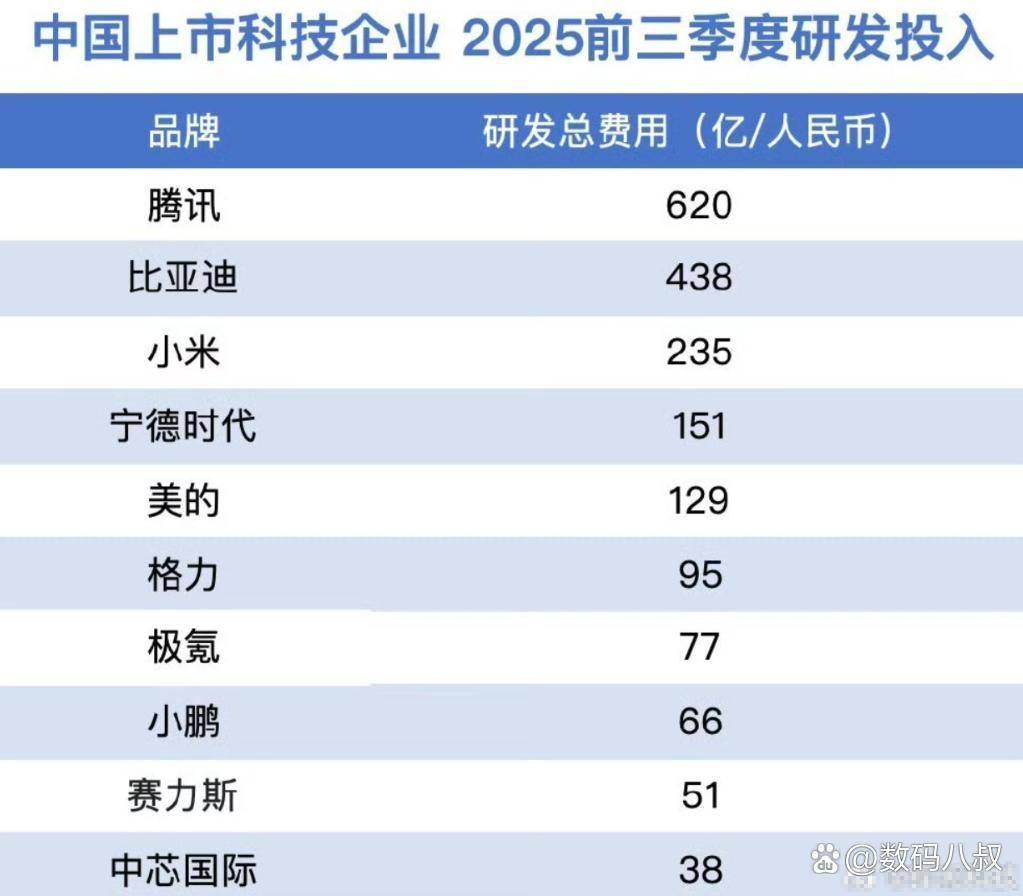
中国上市科技企业 2025前三季度研发投入前十的公司出炉,分别是:腾讯、比亚迪、小米、宁德时代、美的、格力、极氪、小鹏、赛力斯、中芯国际。所以,本人投资得多,收获就多,这个眼红不了的。
Sou Hu Cai Jing· 2025-11-20 04:31
Core Insights - The top ten Chinese listed technology companies in terms of R&D investment for the first three quarters of 2025 have been identified, highlighting significant players in the industry [1] Group 1: R&D Investment Rankings - Tencent leads the list with a total R&D expenditure of 62 billion RMB [2] - BYD follows with 43.8 billion RMB in R&D spending [2] - Xiaomi ranks third with 23.5 billion RMB allocated for R&D [2] - CATL (宁德时代) is fourth with 15.1 billion RMB in R&D investment [2] - Midea (美的) and Gree (格力) have R&D expenditures of 12.9 billion RMB and 9.5 billion RMB, respectively [2] - Zeekr (极氪) invests 7.7 billion RMB in R&D [2] - XPeng (小鹏) has an R&D budget of 6.6 billion RMB [2] - Seres (赛力斯) spends 5.1 billion RMB on R&D [2] - Semiconductor Manufacturing International Corporation (中芯国际) rounds out the list with 3.8 billion RMB in R&D investment [2]