
BERRY GENOMICS(000710)

Search documents
贝瑞基因(000710) - 2025年第一次临时股东大会决议公告
2025-12-26 11:00
证券代码:000710 证券简称:贝瑞基因 公告编号:2025-067 成都市贝瑞和康基因技术股份有限公司 2025年第一次临时股东大会决议公告 本公司及董事会全体成员保证信息披露的内容真实、准确、完整,没有虚假 记载、误导性陈述或重大遗漏。 一、会议召开和出席情况 1、会议时间: (1)现场会议召开时间:2025年12月26日(星期五)14:30 (2)网络投票时间:其中,通过深圳证券交易所交易系统进行网络投票的具体 时间为2025年12月26日9:15-9:25,9:30-11:30,13:00-15:00; 通过深圳证券交易所互联网投票系统投票的具体时间为:2025年12月26日9:15 —15:00。 2、会议地点:北京市昌平区生命园路4号院5号楼公司6层会议室 3、会议召开方式: 本次股东大会采用现场表决与网络投票相结合的方式。成都市贝瑞和康基因技 术股份有限公司(以下简称"公司")通过深圳证券交易所交易系统和互联网投票 系统(http://wltp.cninfo.com.cn)向全体股东提供网络形式的投票平台,股东在 网络投票时间内通过上述系统行使表决权。公司股东可以选择现场投票、网络投票 中的一 ...

贝瑞基因(000710) - 北京市金杜律师事务所关于贝瑞基因2025年第一次临时股东大会之法律意见书
2025-12-26 11:00
之法律意见书 致:成都市贝瑞和康基因技术股份有限公司 北京市金杜律师事务所(以下简称本所)接受成都市贝瑞和康基因技术股份 有限公司(以下简称公司)委托,根据《中华人民共和国证券法》(以下简称《证 券法》)、《中华人民共和国公司法》(以下简称《公司法》)、中国证券监督 管理委员会《上市公司股东会规则》(以下简称《股东会规则》)等中华人民共 和国境内(以下简称中国境内,为本法律意见书之目的,不包括中国香港特别行 政区、中国澳门特别行政区和中国台湾省)现行有效的法律、行政法规、规章和 规范性文件和现行有效的公司章程有关规定,指派律师现场出席了公司于 2025 年 12 月 26 日召开的 2025 年第一次临时年度股东大会(以下简称本次股东大会), 并就本次股东大会相关事项出具本法律意见书。 为出具本法律意见书,本所律师审查了公司提供的以下文件,包括但不限于: 1. 经公司 2023 年年度股东大会审议通过的《成都市贝瑞和康基因技术股份 有限公司章程》(以下简称《公司章程》); 北京市金杜律师事务所 关于成都市贝瑞和康基因技术股份有限公司 2025 年第一次临时股东大会 2. 公司 2025 年 12 月 10 日 ...
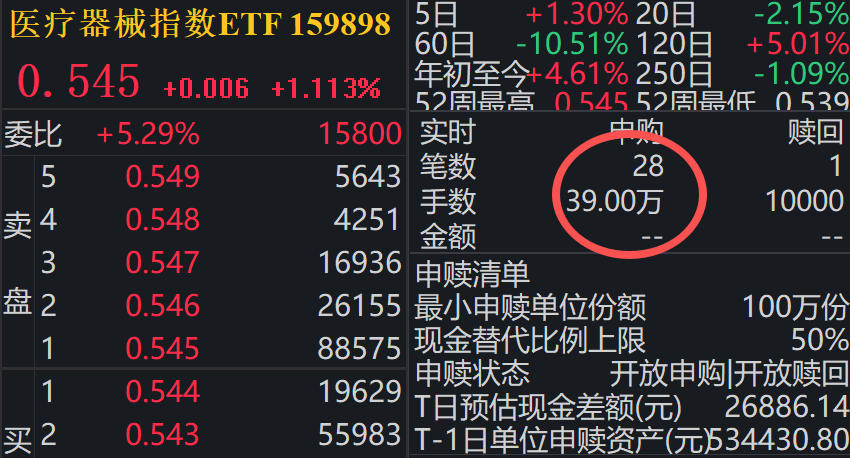
毫米级创伤!我国脑机接口里程碑式突破,医疗器械指数ETF(159898)逆势上涨1.11%
Jin Rong Jie· 2025-12-23 16:52
Core Viewpoint - The medical device sector is experiencing significant growth and investment opportunities, driven by recent regulatory approvals and technological advancements in brain-computer interface (BCI) technology [3][4][5]. Group 1: Market Performance - The medical device index ETF (159898) saw a 1.11% increase, with approximately 20 million yuan net inflow during trading [1]. - Key stocks in the medical device sector, such as Yirui Technology and Furu Medical, reported gains of 4.58% and 6.44% respectively, indicating strong market performance [1]. Group 2: Regulatory Developments - The National Medical Products Administration (NMPA) approved two high-value medical devices, enhancing clinical applications and technological development in the industry [3]. - Recent policies from major cities like Shanghai and Beijing aim to support the medical device industry, focusing on regulatory reforms and innovation [5]. Group 3: Technological Advancements - China has made significant progress in invasive brain-computer interface technology, becoming the second country after the U.S. to enter clinical trials [3]. - The global brain-computer interface market is projected to grow from approximately $2.62 billion in 2024 to $12.4 billion by 2034, with a compound annual growth rate of 17.35% [4]. Group 4: Investment Opportunities - Analysts suggest that the medical device sector may replicate the successful path of innovative pharmaceuticals, with a focus on innovation driving industry growth and global competitiveness [5]. - The medical device index ETF (159898) tracks a diverse range of leading companies in the sector, primarily focusing on A-share medical devices [7].





58起交易!一文看懂中国医疗器械BD的秋季节奏




思宇MedTech· 2025-12-15 08:59
Core Insights - The article highlights the acceleration of business development (BD) activities in the medical device sector from September to November 2025, with a total of 58 transactions identified across various subfields, including cardiovascular, nuclear medicine, and AI-enabled devices [2][3][4]. Group 1: Mergers and Acquisitions - Mergers and acquisitions have become a prominent form of BD, with companies leveraging capital control and product integration for rapid market positioning [7][8]. - Notable acquisitions include HeartLink's $680 million all-stock acquisition of Micro-Invasive Cardiology, enhancing its structural heart disease and rhythm management capabilities [7]. - Hua'an Zhonghui's acquisition of Bangni Medical marks its entry into the absorbable suture market, indicating a shift in surgical instrument competition towards material innovation [7]. Group 2: Strategic Collaborations - Strategic partnerships have been formed during the China International Import Expo, with companies like Shanghai Pharmaceuticals collaborating with international giants such as Boston Scientific and Medtronic to enhance their supply chain and academic promotion systems [7][8]. - The collaboration between GuoYao Medical and BDI Medical aims to deepen market penetration in the biomedicine and medical device sectors, focusing on compliance and distribution channel construction [13]. Group 3: Cross-Border Cooperation - Cross-border transactions have become more active, with foreign companies establishing local R&D and production systems in China, while domestic firms are exporting their solutions globally [9][10]. - The partnership between Trasis SA and Beijing Pait Biotechnology to establish a joint venture reflects a trend towards localized production and phased integration in the Chinese market [12]. Group 4: Ecosystem Building and Channel Expansion - The integration of supply chains and ecosystem building is a key theme, with companies focusing on collaborative agreements to enhance their market presence [11][15]. - The collaboration between Baxter and Neusoft Medical aims to create a comprehensive surgical solution by integrating their respective technologies [12]. Group 5: AI and Smart Healthcare - AI and data-driven approaches are becoming central to BD collaborations, with companies increasingly focusing on smart healthcare solutions [16][17]. - The partnership between Kefu Medical and Tencent Cloud to develop AI-powered hearing aids exemplifies the trend of integrating technology into healthcare products [21]. Group 6: Research and Diagnostic Synergy - The frequency of research-oriented collaborations is rising, indicating a shift from manufacturing-driven to research-driven industry dynamics [18][19]. - The collaboration between BGI and Infinera to enhance clinical applications of sequencing technology highlights the growing importance of research in driving innovation in the medical device sector [21].

研判2025!中国结直肠癌早筛行业发展背景、市场规模、技术现状及未来趋势分析:行业规模高速扩张,已有多款结直肠癌早筛基因甲基化产品获批上市[图]
Chan Ye Xin Xi Wang· 2025-12-15 01:28
Core Insights - Colorectal cancer is a common malignant tumor in China, posing a significant threat to public health, with 517,100 new cases and 240,000 deaths reported in 2022, accounting for 10.7% and 9.3% of all cancer cases respectively [1][6][12] - The incidence and mortality rates of colorectal cancer are on the rise, with current rates at 36.63 per 100,000 and 17.00 per 100,000 respectively, despite improvements in the five-year survival rate for patients [1][6] - Early detection and treatment can significantly improve the five-year survival rate, which can reach 80%-90% for early-stage cancers [2][6] Colorectal Cancer Screening Methods - Recommended screening methods include colonoscopy, fecal occult blood testing, sigmoidoscopy, CT colonography, and multi-target stool DNA testing, with colonoscopy being the first-line method [4][8] - For individuals who cannot tolerate or comply with the first-line methods, alternative methods such as immunochemical or chemical fecal occult blood tests, sigmoidoscopy, CT colonography, and multi-target stool DNA testing are available [4][8] Market Overview - The colorectal cancer early screening market in China is expanding rapidly, projected to reach 1.2 billion yuan in 2024, representing a 33.3% year-on-year growth, and further increasing to 1.5 billion yuan in 2025 [1][12] - The market is characterized by a growing awareness of cancer prevention and treatment, leading to an acceleration in early screening practices and an optimization of supply-demand structures [1][12] Genetic Methylation Technology - Genetic methylation technology is increasingly recognized for its diagnostic value in colorectal cancer, with several products already approved in China [13][14] - The Septin9 and SDC2 genes are commonly used in early screening, with Septin9 showing a sensitivity of 76.63% and specificity of 95.93% for detecting colorectal cancer [14] Industry Development Trends - The colorectal cancer early screening industry is still in its early stages in China, with low penetration rates among target populations, but is expected to grow due to government support and increased public awareness [15][16] - Price competitiveness will be crucial for early screening products, with companies that can offer high value at reasonable prices likely to capture larger market shares [15][16] - The integration of multi-omics technologies and artificial intelligence is anticipated to enhance early screening solutions, leveraging complex data for improved decision-making [15][16]

2025年中国肝癌早筛行业发展背景、市场现状及未来趋势分析:肝癌早筛市场呈快速增长态势,肝癌基因甲基化检测为研发热点之一[图]
Chan Ye Xin Xi Wang· 2025-12-12 01:09
Core Insights - Early screening for liver cancer is crucial for early detection and treatment, significantly improving cure rates, prognosis, and reducing treatment costs [1][2][3] Group 1: Importance of Early Screening - Early detection of liver cancer can greatly increase the cure rate through surgical removal and ablation treatments [2] - Patients diagnosed with early-stage liver cancer experience improved quality of life and survival rates [2] - Early treatment is less complex and more cost-effective, alleviating the financial burden on patients and families [2] Group 2: Current Status of Liver Cancer Screening - In 2022, China reported approximately 367,700 new liver cancer cases, with an incidence rate of 15.03 per 100,000 and a mortality rate of 12.59 per 100,000, ranking fourth and second among all cancers respectively [3] - 70% to 80% of liver cancer patients are diagnosed at advanced stages, with over 95% of symptomatic patients already in late stages [3] - The primary screening methods currently used include serum alpha-fetoprotein (AFP) testing and ultrasound, which have significant limitations [10] Group 3: Challenges in Early Diagnosis - Approximately 30% to 40% of early-stage liver cancer patients do not show elevated AFP levels, and ultrasound has difficulty identifying small lesions [10] - There is a pressing need for more sensitive detection methods to improve liver cancer prevention and treatment outcomes [10] Group 4: Development of Screening Technologies - Genetic methylation testing for liver cancer has shown high sensitivity and specificity and is recommended in multiple clinical guidelines for early screening and diagnosis [10][11] - Several companies, including Guangzhou Youze Biotechnology and Wuhan Aimesen Life Technology, have developed and received regulatory approval for liver cancer methylation detection products [11] Group 5: Market Growth and Future Trends - The liver cancer early screening market in China is projected to reach 197 million yuan in 2024, with a year-on-year growth of 38.1%, and is expected to grow to 291 million yuan in 2025 [8] - By 2030, the liver cancer early screening market could exceed 20 billion yuan, driven by increased public health awareness and advancements in screening technologies [12] - The integration of digital technologies in healthcare is anticipated to enhance the effectiveness of liver cancer early screening and enable precise management [12]

贝瑞基因(000710) - 重大信息内部报告制度
2025-12-09 12:33
成都市贝瑞和康基因技术股份有限公司 重大信息内部报告制度 第一章 总则 第一条 为规范成都市贝瑞和康基因技术股份有限公司(以下简称"公司") 重大信息内部报告工作,保证公司内部重大信息的快速传递、归集和有效管理, 及时、准确、全面、完整地披露信息,维护投资者的合法权益,根据《中华人民 共和国公司法》《中华人民共和国证券法》《上市公司信息披露管理办法》《深 圳证券交易所股票上市规则》(以下简称《股票上市规则》)、《深圳证券交易 所上市公司自律监管指引第 1 号——主板上市公司规范运作》等有关规定,结合 《成都市贝瑞和康基因技术股份有限公司章程》(以下简称《公司章程》)及公 司实际情况,制定本制度。 第二条 公司重大信息内部报告制度是指当出现、发生或即将发生可能对公 司股票及其衍生品种交易价格产生较大影响的情形或事件时,按照本制度规定负 有报告义务的有关人员和公司,应当在第一时间将相关信息向董事长和董事会秘 书报告的制度。 第三条 本制度所称"内部信息报告义务人"包括: (七)公司各部门和其他对公司重大事件可能知情的人士。 第四条 本制度适用于公司、全资子公司、控股子公司及公司能够对其实施 重大影响的参股公司。 ...
贝瑞基因(000710) - 内幕信息知情人管理制度
2025-12-09 12:33
第二条 本制度的适用范围:公司各机构、分公司、子公司(包括公司直接 或间接控股 50%以上的子公司、公司能够对其实施重大影响的参股公司和其他 纳入公司合并会计报表的子公司)。 第三条 公司董事会是内幕信息的管理机构。公司董事长为主要责任人,董 事会秘书组织具体工作的实施,证券投资部是公司信息披露管理、投资者关系 管理、内幕信息登记备案的日常办事机构,并负责公司内幕信息的监管工作。 董事会秘书和证券投资部负责证券监管机构、证券交易所、证券公司等机构及 新闻媒体、股东的接待、咨询(质询)、服务等工作。 第四条 未经董事会批准或授权,公司任何部门和个人不得向外界泄露、报 道、传送有关公司内幕信息及信息披露的内容。对外报道、传送的文件、移动 存储介质、录音(像)带及光盘等涉及内幕信息及信息披露的内容的资料,须 经董事会秘书审核同意(并视重要程度呈报董事会审核),方可对外报道、传 送。 第五条 公司董事、高级管理人员和公司各机构、分公司、子公司都应做好 内幕信息的保密工作。 第六条 公司董事、高级管理人员及内幕信息知情人不得泄露内幕信息,不 得进行内幕交易或配合他人操纵证券交易价格。 成都市贝瑞和康基因技术股份有限公司 ...
贝瑞基因(000710) - 总经理工作细则
2025-12-09 12:33
成都市贝瑞和康基因技术股份有限公司 总经理工作细则 第一章 总则 第一条 为进一步完善成都市贝瑞和康基因技术股份有限公司(以下简称 "公司")法人治理结构,明确总经理的职责,保障总经理行使职权,促进公司 稳定健康发展,根据《中华人民共和国公司法》《中华人民共和国证券法》《成 都市贝瑞和康基因技术股份有限公司章程》(以下简称《公司章程》)和其他有 关规定,制定本工作细则。 第二条 本工作细则对公司经理机构及相关人员(包括总经理、副总经理、 财务负责人)的职责权限、主要管理职能及工作内容进行明确规定。 第三条 经理机构人员行使职权除应遵守本工作细则的规定外,还应符合相 关法律、法规、规范性文件和《公司章程》的规定。 第二章 经理机构 第四条 公司设总经理 1 名,由董事长提名;副总经理若干名,由总经理提 名,均由董事会聘任或者解聘。公司总经理、副总经理、财务负责人、董事会 秘书为公司高级管理人员。 第五条 公司总经理及其他高级管理人员应当严格按照法律、行政法规、部 门规章、规范性文件和《公司章程》的规定,忠实、勤勉地履行职责,并负有 下述忠实义务: (一)不得侵占公司财产、挪用公司资金; (二)不得将公司资金以其 ...
贝瑞基因(000710) - 年报信息披露重大差错责任追究制度
2025-12-09 12:33
成都市贝瑞和康基因技术股份有限公司 年报信息披露重大差错责任追究制度 第一条 为了提高成都市贝瑞和康基因技术股份有限公司(以下简称"公 司")的规范运作水平,确保公司年度报告信息(以下简称"年报信息")披 露的真实性、准确性、完整性、及时性和公平性,加大对年报信息披露责任人 的问责力度,提高年报信息披露的质量和透明度,根据法律、法规、规范性文 件和《成都市贝瑞和康基因技术股份有限公司章程》(以下简称《公司章程》) 的有关规定,结合公司实际情况,特制定本制度。 第二条 本制度所称的年报信息披露责任人包括公司董事、高级管理人员、 各子公司(分公司)负责人、控股股东、实际控制人以及与年报信息披露工作 有关的其他人员。 第三条 本制度所指的责任追究,是指年报信息披露工作中有关人员未按规 定履行职责、义务,导致公司年报信息披露出现重大差错,造成公司经济损失 或重大不良社会影响的追究与处理机制。 第四条 公司实行年报信息披露差错责任追究机制遵循实事求是、客观公正、 有错必究、过错与责任相适应、责任与权利相对等的原则。 第五条 董事会秘书负责向董事会报告年报信息披露重大差错情况并提出相 关处理方案,待董事会批准后执行。 第 ...