
BOE(000725)

Search documents
北京东方中科集成科技股份有限公司 2025年度业绩预告
Zheng Quan Ri Bao· 2026-01-30 22:45
Core Viewpoint - Beijing Oriental Zhongke Integrated Technology Co., Ltd. is facing challenges related to the performance compensation obligations of former shareholders of Wanlihong, which may impact its financial results for 2025 [2][5][7]. Group 1: Performance Forecast - The company has announced a negative net profit forecast for the period from January 1, 2025, to December 31, 2025 [3][4]. - The performance forecast data has not been audited by the accounting firm, but preliminary discussions have indicated no discrepancies between the company and the auditors regarding the forecast [4][8]. Group 2: Reasons for Performance Changes - The company is focusing on innovation, quality improvement, and cost control, which has led to an overall improvement in profitability, although losses in the digital security and smart application sectors continue to narrow [5]. - A goodwill impairment of 77.55 million yuan was recorded in 2024, with an expected impairment of approximately 30 million to 50 million yuan in 2025, which will affect the net profit attributable to shareholders [5]. Group 3: Arbitration and Compensation Obligations - The company has initiated arbitration with the China International Economic and Trade Arbitration Commission regarding the performance compensation obligations of 14 former shareholders of Wanlihong, which remain unfulfilled [2][7]. - The arbitration case has been accepted, and the court hearings have concluded, but no ruling has been issued yet [2][7]. - The potential impact of the arbitration outcome on the financial statements could be significant, particularly if a ruling is made before the approval date of the 2025 financial report [2][6][7].


LCD行业月报:1月电视面板价格环比上行-20260130
Guoxin Securities· 2026-01-30 12:50
Investment Rating - The report maintains an "Outperform" rating for the LCD industry [2] Core Viewpoints - The LCD industry is experiencing a stabilization in capacity, with a concentration of market share expected due to the shutdown and sale of production lines by overseas manufacturers. This is anticipated to enhance the pricing power of LCD TV panel producers, leading to improved profitability [6] - The report highlights the growth potential of leading domestic panel manufacturers like BOE Technology Group, which is well-positioned to benefit from China's consumption upgrade and localization trends [6] Market Performance Review - From December 2025 to January 2026, the panel index increased by 11.55%, outperforming major indices such as the Shanghai Composite and Shenzhen Component by 5.76 percentage points and 2.53 percentage points, respectively [4] - As of January 20, 2026, the total market capitalization of the A-share panel industry was 604.92 billion yuan, with an overall price-to-book ratio of 1.71x, positioned at the 82.5 percentile of the past five years [4][12] Price & Cost Analysis - In January 2026, the prices of various sizes of LCD TV panels increased, with 32, 43, 50, 55, and 65-inch panels priced at $34, $61, $92, $115, and $163 respectively, reflecting increases of 3.0%, 1.7%, 1.1%, 0.9%, and 0.6% month-over-month [19] - Omdia forecasts further price increases for February 2026, with expected prices of $36, $63, $94, $117, and $165 for the same sizes, indicating month-over-month increases of 5.9%, 3.3%, 2.2%, 1.7%, and 1.2% [19] Supply & Demand Dynamics - In December 2025, the global shipment area for large-sized LCD panels grew by 8.82% year-over-year, with notable increases in shipments for TVs (8.74%), monitors (4.44%), notebooks (13.27%), and tablets (21.30%) [5][27] - The report anticipates a 2.31% increase in global large-sized LCD capacity area in 2024 compared to 2023, with a slight growth forecast for 2025 [5] Performance Review - The global revenue for large-sized LCD panels in December 2025 reached $6.423 billion, marking a month-over-month increase of 15.52% and a year-over-year increase of 4.71% [57] - The report notes that BOE, TCL, and Huike experienced varying revenue growth rates in December 2025, with BOE's revenue at $1.6 billion, reflecting a month-over-month increase of 8.11% [60]


京东方取得驱动基板、发光装置及其制备方法专利
Sou Hu Cai Jing· 2026-01-30 10:16
Group 1 - BOE Technology Group Co., Ltd. has obtained a patent titled "Driving Substrate, Light Emitting Device and Its Preparation Method," with authorization announcement number CN119923979B, and the application date is May 2023 [1] - BOE Technology Group Co., Ltd. was established in 1993 and is located in Beijing, primarily engaged in the manufacturing of computers, communications, and other electronic devices. The registered capital is approximately 37.41 billion RMB [1] - The company has invested in 73 enterprises, participated in 303 bidding projects, and holds 5,000 patent information records, along with 775 trademark information records and 47 administrative licenses [1] Group 2 - BOE Chip Technology Co., Ltd. was established in 2020 and is also located in Beijing, focusing on the manufacturing of computers, communications, and other electronic devices. The registered capital is approximately 257.35 million RMB [1] - The company has invested in 3 enterprises, participated in 315 bidding projects, and holds 423 patent information records, along with 2 administrative licenses [1] Group 3 - Beijing BOE Technology Development Co., Ltd. was established in 2016 and is located in Beijing, primarily engaged in the manufacturing of computers, communications, and other electronic devices. The registered capital is approximately 38 million RMB [2] - The company has invested in 1 enterprise, participated in 92 bidding projects, and holds 3,900 patent information records, along with 4 administrative licenses [2]
京东方取得显示基板专利实现窄边框设计
Sou Hu Cai Jing· 2026-01-30 09:02
Group 1 - The core point of the article is that BOE Technology Group Co., Ltd. has obtained a patent for "display substrate," with the authorization announcement number CN116864507B and an application date of March 2022 [1] - BOE Technology Group Co., Ltd. was established in 1993 and is located in Beijing, primarily engaged in the manufacturing of computers, communications, and other electronic devices. The registered capital is approximately 37.41 billion RMB [1] - The company has made investments in 73 enterprises and participated in 303 bidding projects, with 775 trademark records and 5000 patent records, in addition to holding 47 administrative licenses [1] Group 2 - Chengdu BOE Optoelectronics Technology Co., Ltd. was established in 2007 and is located in Chengdu, primarily engaged in the manufacturing of instruments and meters. The registered capital is approximately 2.5 billion RMB [1] - Chengdu BOE Optoelectronics Technology Co., Ltd. has participated in 922 bidding projects and holds 5000 patent records, along with 522 administrative licenses [1]
京东方取得行驱动缓冲器及显示面板驱动控制专利
Sou Hu Cai Jing· 2026-01-30 08:33
Group 1 - The State Intellectual Property Office of China has granted a patent titled "Driving Buffer, Display Panel, Driving and Control Method, and Display Device" to BOE Technology Group Co., Ltd., Yunnan Chuangshijie Optoelectronics Technology Co., Ltd., and Beijing BOE Technology Development Co., Ltd. The patent announcement number is CN119832828B, with an application date of January 2025 [1] - BOE Technology Group Co., Ltd. was established in 1993 and is based in Beijing. It primarily engages in the manufacturing of computers, communications, and other electronic devices. The company has a registered capital of 37,413.880464 million RMB. It has invested in 73 companies, participated in 303 bidding projects, and holds 775 trademark records and 5,000 patent records, along with 47 administrative licenses [1] - Yunnan Chuangshijie Optoelectronics Technology Co., Ltd. was founded in 2017 and is located in Kunming. It focuses on software and information technology services. The company has a registered capital of 30,400 million RMB. It has participated in 276 bidding projects, holds 477 patent records, and has 8 administrative licenses [1] Group 2 - Beijing BOE Technology Development Co., Ltd. was established in 2016 and is also based in Beijing. It primarily operates in the manufacturing of computers, communications, and other electronic devices. The company has a registered capital of 38 million RMB. It has invested in 1 company, participated in 92 bidding projects, holds 3,900 patent records, and has 4 administrative licenses [2]
京东方取得显示面板专利提升色纯度
Sou Hu Cai Jing· 2026-01-30 08:16
Group 1 - BOE Technology Group Co., Ltd. has obtained a patent for "display panel" with authorization announcement number CN114038893B, applied on November 2021 [1] - BOE Technology Group, established in 1993 and located in Beijing, primarily engages in the manufacturing of computers, communications, and other electronic devices, with a registered capital of 37,413.880464 million RMB [1] - The company has invested in 73 enterprises, participated in 303 bidding projects, and holds 775 trademark records and 5,000 patent records, along with 47 administrative licenses [1] Group 2 - Chengdu BOE Optoelectronics Technology Co., Ltd., established in 2007 and located in Chengdu, focuses on the manufacturing of instruments and meters, with a registered capital of 2,500 million RMB [1] - Chengdu BOE has participated in 922 bidding projects, holds 5,000 patent records, and possesses 522 administrative licenses [1]
京东方取得驱动基板及显示面板专利提升显示性能
Sou Hu Cai Jing· 2026-01-30 06:36
Group 1 - BOE Technology Group Co., Ltd. has obtained a patent titled "Driving Substrate, Display Panel, and Display Device," with authorization announcement number CN119832861B, and the application date is December 2024 [1] - BOE Technology Group, established in 1993 and located in Beijing, primarily engages in the manufacturing of computers, communications, and other electronic devices, with a registered capital of 37,413.88 million RMB [1] - The company has invested in 73 enterprises, participated in 303 bidding projects, holds 775 trademark records, and has 5,000 patent records, along with 47 administrative licenses [1] Group 2 - Yunnan Chuangshijie Optoelectronic Technology Co., Ltd., established in 2017 and located in Kunming, focuses on software and information technology services, with a registered capital of 30,400 million RMB [1] - The company has participated in 276 bidding projects, holds 477 patent records, and has 8 administrative licenses [1] - Beijing BOE Technology Development Co., Ltd., established in 2016 and located in Beijing, primarily engages in the manufacturing of computers, communications, and other electronic devices, with a registered capital of 38 million RMB [2] - The company has invested in 1 enterprise, participated in 92 bidding projects, holds 3,900 patent records, and has 4 administrative licenses [2]
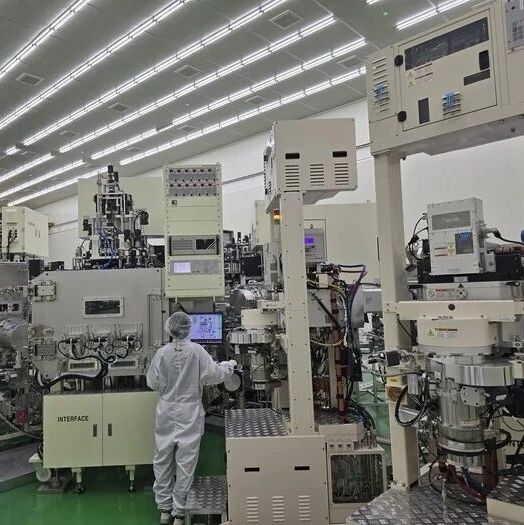
传韩国设备企业获京东方B16项目全部蒸镀机订单
WitsView睿智显示· 2026-01-30 05:35
Core Viewpoint - Sunic System has successfully secured all four orders for evaporation machines needed for BOE's 8.6-generation OLED panel production line (B16), indicating a strong partnership and potential revenue growth for Sunic System from this collaboration [1][2]. Group 1: Partnership and Production Capacity - By the end of 2025, BOE will have installed two Sunic System evaporation machines, establishing a production line with a monthly capacity of approximately 15,000 substrates [2]. - BOE plans to receive two additional evaporation machines in late 2026 and the first half of 2027, which will increase the monthly capacity to about 30,000 substrates, completing the investment in the B16 factory [2]. Group 2: Market Influence and Financial Implications - BOE's choice of Sunic System as a supplier was influenced by LG Display's financial struggles, which led to LGD abandoning its investment plans for the 8.6-generation line [2]. - Sunic System is expected to generate nearly 1 trillion KRW (approximately 4.872 billion RMB) in sales revenue from BOE, with the price of a single 8.6-generation OLED evaporation machine estimated between 200 billion to 300 billion KRW (approximately 974 million to 1.461 billion RMB) [2][3]. - Following this collaboration, Sunic System plans to market its equipment to other Chinese display manufacturers, such as TCL Huaxing [3].

京东方取得移位寄存器专利可缩窄显示产品边框宽度
Sou Hu Cai Jing· 2026-01-30 03:50
Group 1 - The core point of the article is that BOE Technology Group Co., Ltd. has obtained a patent for a "shift register, gate driver circuit, and display device," with the authorization announcement number CN119479558B, and the application date is October 2024 [1] - BOE Technology Group Co., Ltd. was established in 1993 and is located in Beijing, primarily engaged in the manufacturing of computers, communications, and other electronic devices. The registered capital of the company is approximately 37.41 billion RMB [1] - The company has invested in 73 enterprises and participated in 303 bidding projects, with 775 trademark information entries and 5,000 patent information entries, in addition to holding 47 administrative licenses [1] Group 2 - Chengdu BOE Optoelectronics Technology Co., Ltd. was established in 2007 and is located in Chengdu, primarily engaged in the manufacturing of instruments and meters. The registered capital of this company is approximately 2.5 billion RMB [1] - Chengdu BOE Optoelectronics Technology Co., Ltd. has participated in 922 bidding projects and holds 5,000 patent information entries, along with 522 administrative licenses [1]
京东方取得显示面板及显示模组防异物搭接专利
Sou Hu Cai Jing· 2026-01-30 03:45
Group 1 - BOE Technology Group Co., Ltd. has obtained a patent titled "A Display Panel and Display Module," with authorization announcement number CN116249372B, and the application date is January 2023 [1] - BOE Technology Group, established in 1993 and located in Beijing, primarily engages in the manufacturing of computers, communications, and other electronic devices, with a registered capital of 37,413.88 million RMB [1] - The company has invested in 73 enterprises, participated in 303 bidding projects, and holds 775 trademark records and 5,000 patent records, along with 47 administrative licenses [1] Group 2 - Chengdu BOE Optoelectronics Technology Co., Ltd., established in 2007 and located in Chengdu, focuses on the manufacturing of instruments and meters, with a registered capital of 25,000 million RMB [1] - Chengdu BOE has participated in 922 bidding projects, holds 5,000 patent records, and possesses 522 administrative licenses [1]