SIASUN(300024)

Search documents
阿童木机器人港股IPO:新业务已商业化但毛利率极低 研发费用大幅缩减且远低于营销投入
Xin Lang Cai Jing· 2026-02-09 07:04
Core Viewpoint - Tianjin Atongmu Robot Co., Ltd. has submitted an application for listing on the main board of the Stock Exchange, but it faces challenges regarding its recognition of controlling shareholders and its financial performance, particularly its weak profitability despite revenue growth [1][17]. Financial Performance - The company reported revenues of 0.93 billion, 1.35 billion, and 1.57 billion yuan for the years 2023, 2024, and the first three quarters of 2025, respectively, with net profits of -0.39 billion, -0.47 billion, and 0.01 billion yuan [23][24]. - In the first three quarters of 2025, the company achieved a profit margin of only 0.60%, indicating limited improvement in profitability, while its operating cash flow remained negative, with net outflows increasing 2.5 times year-on-year [1][23]. Revenue and Market Position - The company has experienced rapid revenue growth, but its profitability remains weak, with a significant portion of its income derived from parallel robots, which accounted for 0.6 billion, 0.7 billion, and 0.82 billion yuan in revenue [25][28]. - The average selling prices of its products have decreased significantly, with parallel robots dropping from 73,200 yuan to 70,000 yuan, and high-speed SCARA robots from 56,500 yuan to 22,300 yuan, reflecting a strategy to increase market share through price reductions [24][25]. Research and Development - R&D expenses have decreased significantly, with a reduction of 21.98% year-on-year in the first three quarters of 2025, leading to a decline in the R&D expense ratio by 11.1 percentage points [13][29]. - The company’s expense structure shows a focus on marketing over R&D, with sales expenses growing by 26.39% year-on-year, contrasting sharply with the decline in R&D spending [15][31]. Competitive Landscape - The global industrial robot market is dominated by foreign giants such as Stäubli and ABB, which possess significant advantages in technology and brand recognition [24][23]. - Domestic competitors, including Yifei Intelligent and Ruishun Technology, are rapidly expanding in the industrial robot sector, intensifying competition for Atongmu Robot [24][32]. Shareholder Structure - Liu Songtao and his concerted actions control over 30% of the voting rights but have not been recognized as controlling shareholders, raising questions about compliance with listing regulations [1][19]. - The company’s board consists of seven members, with Liu Songtao holding significant influence over board decisions, which may indicate a need for clearer recognition of controlling shareholders [20][21].


小米发布具身智能触觉抓取模型TacRefineNet,机器人ETF(562500)高位震荡,固高科技领涨
Mei Ri Jing Ji Xin Wen· 2026-02-09 06:47
截至今日14点30分,机器人ETF(562500)午后维持早盘态势,持续高位震荡,最新价报1.068元,较 开盘价上涨1.521%。持仓层面,该ETF跟踪的66只成分股55只个股上涨,固高科技大涨超8%,瑞松科 技、云天励飞、大族激光涨幅居前,形成强劲的核心跟涨梯队,成为盘面拉升的主要动力,板块内做多 情绪浓厚,无明显下跌标的形成拖累。流动性方面,该ETF成交额达7.44亿元,换手率2.99%,资金交 投节奏平稳,成交活跃度维持适中水平,场内做多资金逐步释放。 机器人ETF(562500)是全市场唯一规模超两百亿的机器人主题ETF,成分股覆盖人形机器人、工业机 器人、服务机器人等多个细分领域,帮助投资者一键布局机器人上中下游产业链。 随着成分股调整落地,机器人ETF(562500)跟踪的中证机器人指数人形机器人含量提升至近70%;此 次调仓精准剔除近期走势疲软的个股,纳入表现尚可的优质标的,成功实现"去弱留强"。 (文章来源:每日经济新闻) 消息方面,小米机器人团队发布具身智能领域研究成果——触觉驱动的机器人精细抓取微调模型 TacRefineNet。该模型为通用框架,仅依靠触觉即可实现毫米级位姿微调,无需视 ...
AIGC概念股早盘活跃,人形机器人将登春晚舞台,7只业绩预增股获融资客青睐
Sou Hu Cai Jing· 2026-02-09 06:34
Group 1 - The A-share market is experiencing a dual mainline trend driven by AI and robotics, with AIGC concept stocks and embodied intelligent robots showing strong performance [1] - On February 9, the ChiNext Index rose over 3%, with stocks like Zhongwen Online and Haikan Co. hitting the daily limit, indicating a collective surge in the sector [1] - The core catalyst for this rally is ByteDance's release of the Seedance 2.0 model, an AI video generation tool that can produce movie-quality content, expected to reduce content production costs by over 60% [1] Group 2 - The robotics industry is witnessing significant events, with over five embodied intelligent companies confirmed to participate in the 2026 Spring Festival Gala, marking a transition to large-scale commercial use [1] - Market research predicts optimistic growth for the embodied intelligent robot sector, with user spending expected to surge from $1.4 billion in 2025 to $77 billion by 2030, reflecting a compound annual growth rate of 94% [2] - Morgan Stanley forecasts that the shipment of humanoid robots in China will reach 14,000 units by 2026 and exceed one million units by 2034, indicating a market potential that may surpass that of the new energy vehicle industry [2] Group 3 - Performance data supports the expectation of an industry explosion, with 35 humanoid robot concept stocks forecasting significant profit growth for 2025 [4] - Companies like Liyade have turned losses into profits through an "AI + display + cultural tourism" ecosystem, while Xinzhi Group anticipates a net profit increase of over 500% [4] - Institutional investors are showing clear signs of increased investment, with seven out of 35 pre-profit growth stocks receiving over 100 million yuan in net purchases since January [4]




订单火爆、一机难求!有的机器人“一天干了八个活”
Yang Shi Xin Wen· 2026-02-09 06:23
在北京一家新开业的智能餐厅里,机器人们往来穿梭,有的忙着送餐,有的忙着给顾客送祝福。 在上海,一家刚开业的便利店前,机器人"小智"用欢快流畅的街舞表演,吸引了大量市民驻足围观,为开业聚集了不少人 气。 临近春节,记者在走访节日市场时发现,一种新的服务——机器人租赁正在悄然流行,市场也迎来了爆发式增长。 一机难求 机器人租赁市场有点"燃" 现场工作人员告诉记者,人形机器人已成为消费市场上的人气小明星,它们具备天然的话题性和吸客能力,能够带来稳定 人流、社交关注和消费活力。 据上海某机器人租赁公司负责人王玉霞介绍,门店开业、景区展览、家庭服务最近需求比较大,订单比往常要增长两倍到 三倍。 随着市场的火热,机器人租赁正从单纯的设备出租迈向专业服务。用户选择应用场景,平台提供全套解决方案和服务。 这种新的服务模式一经推出便迅速火起来。相关机器人租赁平台投入2000多台机器人,服务覆盖全国200个城市。目前,整 体订单量已经排到了2月底。尤其是春节期间的订单火爆,出现了"一机难求"的现象。对此,企业正全力协同制造端加快生 产,预计到2月底投放市场的机器人将达4000多台。 机器人租赁 私人定制化需求升温 这波火热的订单 ...

大行评级丨花旗:理想汽车正积极扩展至机器人领域,港股目标价上调至72.7港元
Ge Long Hui· 2026-02-09 05:51
花旗发表研报指出,理想汽车正积极扩展至机器人领域,将其战略重心重新定位于具身智能,并计划发 展人形机器人及专用人工智能驱动硬件。为恰当地反映机器人业务的估值,该行转变估计计算模式,由 单纯市销率改为SOTP,将美股目标价由18.5美元上调至18.9美元,港股目标价由71.1港元上调至72.7港 元。此外,该行对近期原材料成本上涨的敏感性分析表明,在2026年第一季度这个充满不确定性的汽车 销售淡季,高单价电动车型对成本上涨的抵御能力略显韧性,这可能解释了理想汽车和赛力斯近期股价 表现优于小鹏汽车和比亚迪的原因,维持对理想汽车"中性"评级。 ...
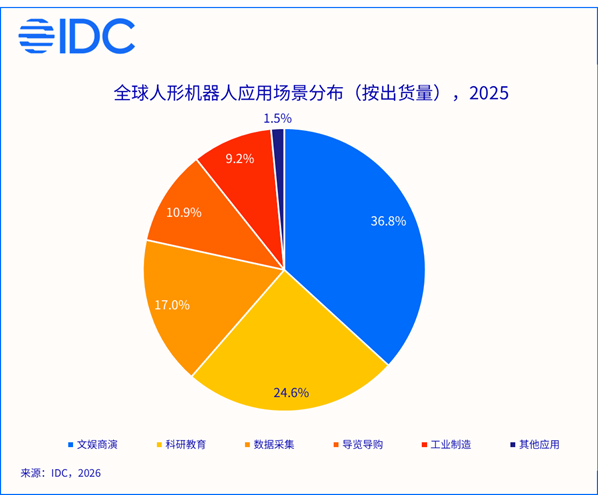
IDC:2025年全球人形机器人出货量接近1.8万台 同比增长约508%
Zhi Tong Cai Jing· 2026-02-09 05:50
Core Insights - The global humanoid robot market is set to reach a significant scale in 2025, with an expected shipment of nearly 18,000 units, representing a year-on-year growth of approximately 508%, and sales revenue projected at around $440 million [1] - Chinese manufacturers are leading the market with a robust manufacturing system, rapid iteration capabilities, and cost advantages, establishing a dominant position globally [2] - The market is primarily driven by bipedal humanoid robots, which contribute 66.3% of the total sales revenue, with full-sized bipedal robots accounting for 41.6% of the sales [3] Market Dynamics - In 2025, the demand for humanoid robots is mainly driven by applications in entertainment, education, and data collection, emphasizing display effects and interactive experiences [4] - The industry is transitioning from one-time hardware sales to a model that includes Robot as a Service (RaaS), operational services, and a platform ecosystem, creating conditions for scalable applications and sustained revenue [6] Technological Advancements - Humanoid robots are advancing towards engineering and scalable applications, with a focus on enhancing intelligent collaboration capabilities [7] - The integration of upper limb dexterity and the fusion of cognitive models are key breakthroughs that will enhance autonomous operations and human-robot collaboration [7]

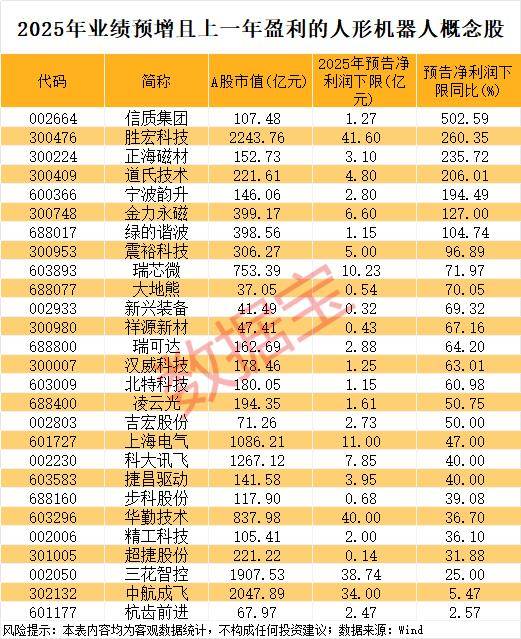
人形机器人将集中亮相马年春晚,融资客抢筹7只业绩增长股
Xin Lang Cai Jing· 2026-02-09 05:24
Core Insights - The humanoid robot industry is expected to open up a market space broader than that of automobiles, with significant investment opportunities emerging as the industry transitions from technology validation to large-scale commercialization [1][7]. Industry Development - Multiple robotics companies are set to showcase their products at the 2026 Spring Festival Gala, marking a significant step in the commercialization of the robotics industry in China [1][7]. - The humanoid robotics sector is moving from isolated breakthroughs to broader industry solutions, entering a phase of value validation and mass production [1][7]. Market Projections - According to IDC, user spending on embodied intelligent robots in China is projected to exceed $1.4 billion in 2025 and soar to $77 billion by 2030, with a compound annual growth rate of 94% [2][8]. - Morgan Stanley forecasts that 14,000 humanoid robots will be shipped in China in 2026, with annual shipments expected to double in the following years, potentially reaching 30 million units by 2041, rivaling the passenger car market [2][8]. Company Performance - A total of 35 humanoid robot concept stocks are expected to see net profit growth in 2025, including eight companies that are projected to turn losses into profits [3][9][10]. - Liard is expected to achieve a net profit of between 300 million and 380 million yuan in 2025, marking a turnaround from previous losses [10]. - Xinzhi Group anticipates a net profit of 12.7 million to 15.1 million yuan in 2025, representing a year-on-year growth of 502.59% to 616.94% [10]. Investment Trends - As of February 6, seven stocks among the 35 with expected profit growth have seen net purchases exceeding 100 million yuan since January, with iFlytek leading at 826 million yuan [5][12]. - Zhenyu Technology and Chaojie Technology have also attracted significant investment, with net purchases of 304 million yuan and 280 million yuan, respectively [12].


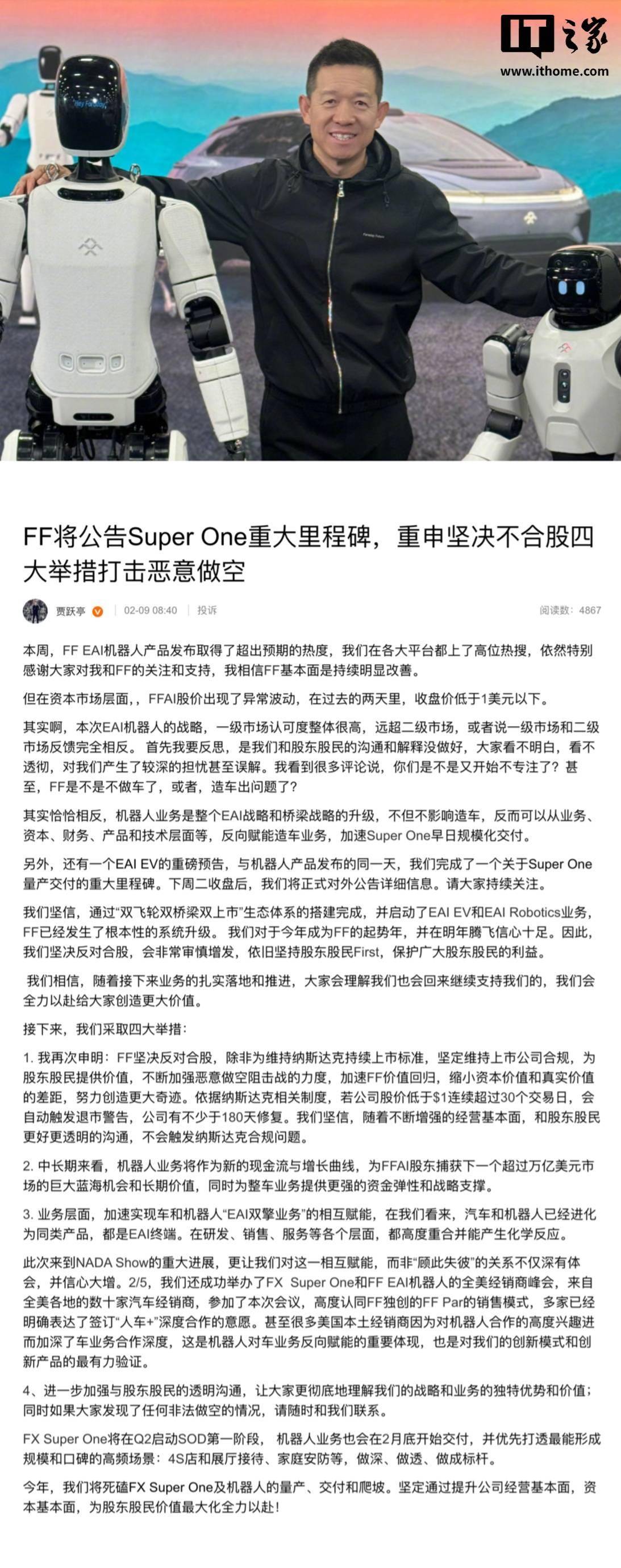
贾跃亭:FF今年将死磕FX Super One及机器人量产、交付和爬坡
Sou Hu Cai Jing· 2026-02-09 05:19
IT之家 2 月 9 日消息,今天上午,FF 创始人兼 Co-CEO 贾跃亭在微博发文,称法拉第未来将公告 Super One 的"重大里程碑",并重申坚决不合股,以四大 举措打击恶意做空。 贾跃亭披露,近期在资本市场层面,FFAI 股价出现了异常波动,在过去的两天里,收盘价低于 1 美元(IT之家注:现汇率约合 6.9 元人民币)以下。"其实 啊,本次 EAI 机器人的战略,一级市场认可度整体很高,远超二级市场,或者说一级市场和二级市场反馈完全相反。" 对于"FF 是否不造车"或"造车出问题"的质疑,贾跃亭表示,其实恰恰相反,机器人业务是整个 EAI 战略和桥梁战略的升级,不但不影响造车,反而可以从 业务、资本、财务、产品和技术层面等,反向赋能造车业务,加速 Super One 早日规模化交付。 贾跃亭表示,FF 坚决反对合股,中长期来看,机器人业务将作为新的现金流与增长曲线,为 FFAI 股东捕获下一个超过万亿美元市场的巨大蓝海机会和长 期价值,同时为整车业务提供更强的资金弹性和战略支撑。同时,他还宣布:"我们将死磕 FX Super One 及机器人的量产、交付和爬坡。坚定通过提升公 司经营基本面、资本 ...
2025年全球人形机器人出货量近1.8万台 智元、宇树等中企产品占据主导
Feng Huang Wang· 2026-02-09 04:50
Core Insights - The global humanoid robot shipment is projected to reach nearly 18,000 units by 2025, representing a year-on-year growth of approximately 508%, with a market size of around $440 million [1] - Cumulative order volume is expected to exceed 35,000 units during the same period [1] Company Landscape - Chinese companies dominate the shipment volume, with Zhiyuan Robotics and Yuzhu Technology each shipping around 5,000 units [1] - Other companies such as Leju Robotics, Accelerated Evolution, and Songyan Power shipped approximately 1,000 units each [1] - Companies like Galaxy General, UBTECH, Zhongqing Robotics, and Stardust Intelligence shipped between 400 to 1,000 units [1] - Emerging companies including Xingdong Jiyuan, Magic Atom, Beijing Humanoid Robot Innovation Center, Xinghai Map, Mojia Zhichuang, and Zhujiji Power achieved shipments of over 100 units [1] - In contrast, international firms like Apptronik and Figure AI are still in pilot testing phases, with shipment volumes in the tens [1] - Tesla's humanoid robot is expected to begin large-scale production in 2026 [1] Product Form Factor - Bipedal robots (including full-size and small-to-medium size) contribute to 66.3% of market sales [1] - Full-size humanoid robots account for the highest sales proportion at 41.6%, with Zhiyuan Robotics leading in this segment [1] Industry Analysis - IDC analysis indicates that Chinese manufacturers hold a first-mover advantage in the current stage of humanoid robot commercialization due to a complete industrial chain, rapid iteration capabilities, and cost advantages [1] - Future industry competition is expected to shift from hardware sales to dimensions such as technical services and ecosystem development [1]

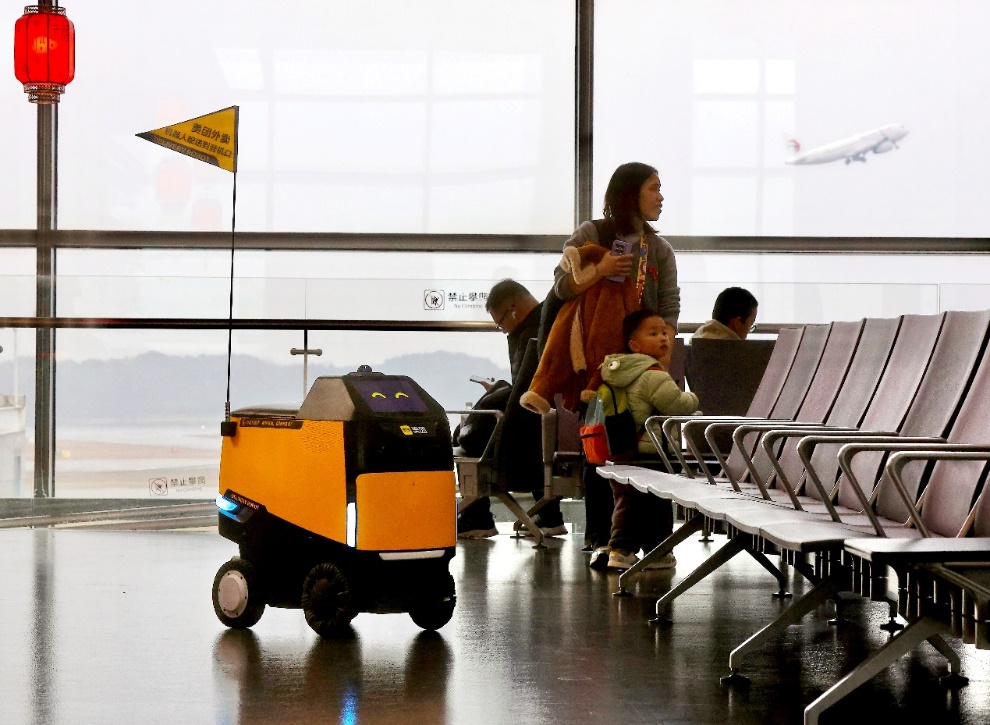
华东首家!美团“AI智能体+机器人”上岗南京机场,春运旅客在登机口也能“点外卖”
Jin Rong Jie· 2026-02-09 04:11
Core Viewpoint - The introduction of Meituan's "Little Bumblebee" robots at Nanjing Lukou International Airport marks a significant advancement in smart airport services, enhancing passenger convenience during the busy Spring Festival travel period [1][2][10]. Group 1: Introduction of Smart Delivery Robots - Nanjing Airport has officially launched smart delivery robot services, making it the first airport in the region to implement such technology [2]. - The "Little Bumblebee" robots are designed for both indoor and outdoor use, integrating indoor positioning with instant delivery systems [4]. - This initiative represents a breakthrough in the construction of "smart airports," particularly in the last-mile delivery service [2][10]. Group 2: Passenger Experience Enhancement - Passengers can now order food from vendors like KFC and Starbucks directly to their boarding gates using their mobile devices, significantly reducing the time spent retrieving meals [2][4]. - The average time saved for passengers using the robot service is nearly 20 minutes, transforming the process from "finding food" to "food finding people" [4]. - The service is particularly beneficial for travelers with children, large luggage, or those in a hurry, making the travel experience more comfortable and less stressful [11]. Group 3: Technological Integration and AI Collaboration - The service features collaboration between Meituan's AI assistant "Xiao Mei" and the delivery robots, allowing passengers to place orders verbally while en route to the airport [8]. - This integration provides a seamless experience where the AI can accurately predict delivery times and manage orders, enhancing the overall convenience for travelers [8]. Group 4: Safety and Operational Challenges - Operating in an airport environment poses unique challenges due to high security, large crowds, and strict operational standards, which the robots must navigate effectively [9][10]. - The successful deployment of the "Little Bumblebee" robots at Nanjing Airport follows previous implementations in two airports in Southern China, indicating a milestone in the maturity and safety of unmanned delivery technology [10]. Group 5: Future Prospects and Innovations - Nanjing Airport plans to deepen its collaboration with Meituan, aiming to introduce more vendors and explore diverse service scenarios to further enhance passenger experiences [11]. - The initiative reflects a commitment to leveraging technology to create a more personalized and caring travel environment for passengers during the Spring Festival [11].