
TacRefineNet

Search documents
小米集团-W:行业环境波动,持续高端化探索-20260304
GOLDEN SUN SECURITIES· 2026-03-04 00:24
Investment Rating - The report maintains a "Buy" rating for Xiaomi Group [3][5] Core Views - The report highlights that Xiaomi's smartphone shipments in Q4 2025 were approximately 37.8 million units, a year-on-year decline of 11.4%, with a market share of 11.2%, placing it among the top three globally [1] - Xiaomi's high-end product strategy is expected to mitigate the pressure from rising storage costs, with the Xiaomi 17 series achieving strong sales [1] - The automotive segment is projected to deliver over 410,000 units in 2025, with a target of 550,000 units for 2026, indicating a positive growth trajectory [2] - The report anticipates Xiaomi's revenue for 2025-2027 to be 457.8 billion, 541.8 billion, and 644.4 billion CNY respectively, with non-GAAP net profits of approximately 38.6 billion, 37 billion, and 45 billion CNY [3][4] Financial Summary - Revenue for 2023 is projected at 270.97 billion CNY, with a year-on-year growth rate of -3%, followed by 365.91 billion CNY in 2024, representing a 35% increase [4][12] - Non-GAAP net profit is expected to rise from 19.27 billion CNY in 2023 to 38.58 billion CNY in 2025, reflecting a growth rate of 42% [4][12] - The gross margin is forecasted to be 21.2% in 2023, slightly decreasing to 20.5% by 2027 [12][11] - The report projects a decline in smartphone gross margin to over 8% in Q4 2025 due to increased storage costs [1] Market Position - Xiaomi's market share in the Chinese smartphone market is 13.2%, ranking it among the top five [1] - The company is focusing on high-end market penetration, with the Xiaomi 17 Pro Max achieving significant sales within the premium segment [1] - The automotive and AI innovation sectors are expected to contribute positively to Xiaomi's profitability as delivery volumes increase [2]

小米集团-W(01810):行业环境波动,持续高端化探索
GOLDEN SUN SECURITIES· 2026-03-03 13:40
Investment Rating - The report maintains a "Buy" rating for Xiaomi Group [3][5] Core Views - The report highlights that Xiaomi's smartphone shipments in Q4 2025 were approximately 37.8 million units, a year-on-year decline of 11.4%, with a market share of 11.2%, placing it among the top three globally [1] - Xiaomi's high-end product strategy is expected to mitigate the pressure from rising storage costs, with the Xiaomi 17 series achieving strong sales [1] - The automotive segment is projected to deliver over 410,000 units in 2025, with a target of 550,000 units for 2026, indicating a positive growth trajectory [2] - The report anticipates Xiaomi's revenue for 2025-2027 to be 457.8 billion, 541.8 billion, and 644.4 billion CNY respectively, with non-GAAP net profits of approximately 38.6 billion, 37 billion, and 45 billion CNY [3][4] Financial Summary - Revenue for 2023 is projected at 270.97 billion CNY, with a year-on-year growth rate of -3%, followed by 365.91 billion CNY in 2024, representing a 35% increase [4][12] - Non-GAAP net profit is expected to rise from 19.27 billion CNY in 2023 to 38.58 billion CNY in 2025, reflecting a growth rate of 42% [4][12] - The report forecasts a decline in smartphone gross margin to over 8% in Q4 2025 due to increased storage costs, despite an overall positive contribution from product structure optimization [1][3] Market Position - Xiaomi's market share in the Chinese smartphone market is reported at 13.2%, ranking it among the top five [1] - The company is recognized as a leader in the industry, with a strong focus on high-end product offerings, which is expected to enhance its competitive position in the long term [3]
小米的首代机器人VLA大模型来了,丝滑赛德芙,推理延迟仅80ms
3 6 Ke· 2026-02-13 00:58
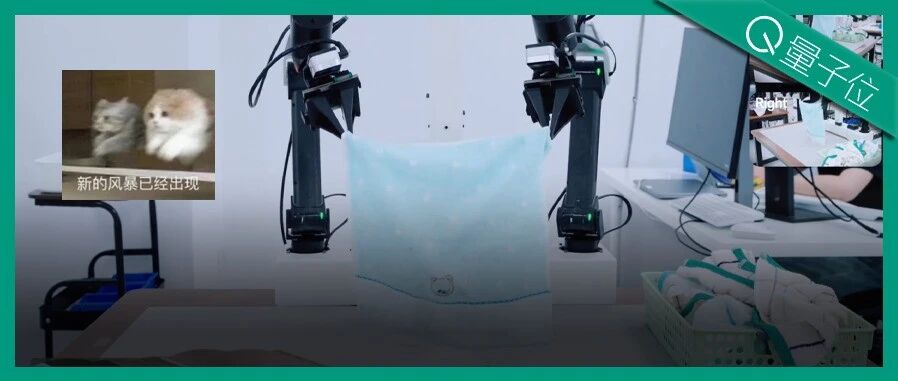
Core Insights - The article discusses the rising prominence of embodied robots, highlighting their potential to revolutionize industries and the ongoing technological advancements in this field [2][3][36]. Industry Overview - The embodied robotics sector is experiencing significant interest from both large and small companies, with capital investment and media attention driving the narrative [2]. - There is a dual perspective within the industry: one that celebrates the impressive visual demonstrations of robots and another that seeks to understand their practical applications in real-world settings [3]. Technological Innovations - Xiaomi's embodied VLA model, Xiaomi-Robotics-0, addresses the issue of robots frequently pausing during tasks, achieving a 80ms inference delay and a 30Hz real-time control frequency on consumer-grade hardware [4][14]. - The model incorporates three core technological innovations: a dual-brain architecture, a two-stage pre-training strategy, and an improved asynchronous mechanism [6][22][36]. Dual-Brain Architecture - The architecture separates the model into a "brain" (VLM) for understanding and decision-making and a "small brain" (DiT) for generating continuous action blocks, enhancing the precision and fluidity of movements [8][10][14]. Two-Stage Pre-Training - The pre-training process ensures that the model retains its visual understanding capabilities while learning to execute actions, preventing a decline in its cognitive abilities [16][19]. Improved Asynchronous Mechanism - The introduction of a Lambda-shaped attention mechanism allows the model to maintain smooth action transitions while adapting to real-time visual feedback, addressing the issue of action inertia [22][24]. Performance Metrics - Xiaomi-Robotics-0 has demonstrated superior performance in various benchmarks, surpassing approximately 30 existing models in environments like LIBERO and CALVIN [27][28]. - The model achieved a 100% success rate in the Libero-Object task and maintained high throughput in real-world tasks such as towel folding and LEGO disassembly [34][30]. Strategic Direction - Xiaomi's approach in the embodied robotics field appears to focus on practical applications, aiming to address complex industrial challenges rather than merely showcasing advanced hardware capabilities [36][39]. - The company has also committed to open-sourcing its technologies, allowing broader access for developers and fostering innovation within the industry [5][41][42].



小米的首代机器人VLA大模型来了!丝滑赛德芙,推理延迟仅80ms丨全面开源
量子位· 2026-02-12 12:42
Core Insights - The article discusses the rising prominence of embodied intelligence and robotics, highlighting the increasing interest from both large and small companies, as well as capital investment and media coverage [2][3] - There is a growing expectation for embodied robots to transition from being merely demonstrative to becoming practical tools that enhance productivity in real-world applications [3][4] - Xiaomi's new embodied VLA model, Xiaomi-Robotics-0, addresses critical issues such as the frequent pauses and slow corrections in robotic execution, aiming for greater autonomy and efficiency [7][8] Group 1: Industry Trends - The embodied robotics sector is at a pivotal point, characterized by impressive demonstrations of capabilities while also facing scrutiny regarding their actual value in industrial settings [3][4] - The industry is experiencing a paradigm shift where the focus is on the autonomy of robots, moving beyond human-assisted operations to fully autonomous systems [4][6] Group 2: Xiaomi-Robotics-0 Innovations - Xiaomi-Robotics-0 features three core technological innovations: architecture design, pre-training strategies, and post-training mechanisms, all aimed at enabling robots to understand complex environments and execute actions continuously and accurately [12][13] - The model employs a dual-brain architecture, separating the "brain" for decision-making and the "small brain" for generating continuous action blocks, which enhances the smoothness and precision of robotic movements [16][21] - A two-phase pre-training approach is utilized to maintain the model's visual understanding while training it to perform actions, ensuring that the robot can interpret complex instructions and plan continuous movements [24][30] Group 3: Performance Metrics - Xiaomi-Robotics-0 has achieved outstanding results in various benchmarks, surpassing approximately 30 existing models in environments like LIBERO, CALVIN, and SimplerEnv [44][45] - The model demonstrated a 100% success rate in the Libero-Object task and maintained high throughput in real-world tasks such as towel folding and LEGO disassembly, showcasing its practical capabilities [47][54][57] - The model's performance indicates that it does not sacrifice understanding capabilities for control abilities, maintaining high scores across multiple evaluation metrics [49][58] Group 4: Strategic Direction - Xiaomi's approach in the embodied intelligence field appears to focus on practical applications rather than merely showcasing advanced technology, aiming to address real-world industrial challenges [61][65] - The company has recently open-sourced its models, including TacRefineNet, which enhances fine-grained control without relying on visual input, indicating a commitment to transparency and collaboration within the industry [74][76] - This open-source strategy lowers barriers for smaller developers, allowing them to build upon Xiaomi's foundational work and contribute to the development of specialized applications in robotics [78][79]
中泰国际:美股方面,美国1月非农就业人数增加13.5%
ZHONGTAI INTERNATIONAL SECURITIES· 2026-02-12 01:40
Market Overview - On February 11, Hong Kong stocks opened higher and expanded gains, with the Hang Seng Index closing up 83 points (0.3%) at 27,266 points[1] - The Hang Seng Tech Index rose by 48 points (0.9%) to close at 5,499 points, with total market turnover reaching HKD 217.2 billion[1] - Southbound capital saw a net inflow of HKD 4.82 billion, compared to a previous day's net inflow of HKD 84.66 million[1] Key Stock Movements - Semiconductor company SMIC reported a 61% year-on-year increase in Q4 net profit, but its Q1 gross margin guidance fell short of expectations, leading to a 2.1% drop in its stock price[1] - Precious metal stocks saw gains, with Zijin Mining up 2.8%, Shandong Gold up 4.4%, and Zijin Gold International up 9.1%[1] - Xiaomi's stock rose 4.3% after it invested in a humanoid robot parts supplier, while other automotive stocks like BYD and Geely also saw increases of 2.7% to 3.9%[4] Economic Indicators - In the U.S., January non-farm payrolls increased by 130,000, significantly above the expected 65,000, with the unemployment rate dropping to 4.3% from 4.4% in December[2] - China's January PPI fell by 1.4% year-on-year, slightly better than the expected 1.5% decline, while CPI rose by 0.2% year-on-year, below the expected 0.4%[3] Sector Performance - The healthcare sector saw a 0.7% increase in the Hang Seng Healthcare Index, with WuXi Biologics forecasting a 16.7% revenue growth to HKD 21.79 billion for 2025[4] - The renewable energy and utilities sector generally rose, with Huaneng International and Datang Power increasing by 1.7% to 2.4%[5]
北水动向|北水成交净卖出18.87亿 北水加仓科网及芯片股 抛售盈富基金(02800)超45亿港元
智通财经网· 2026-02-09 09:59
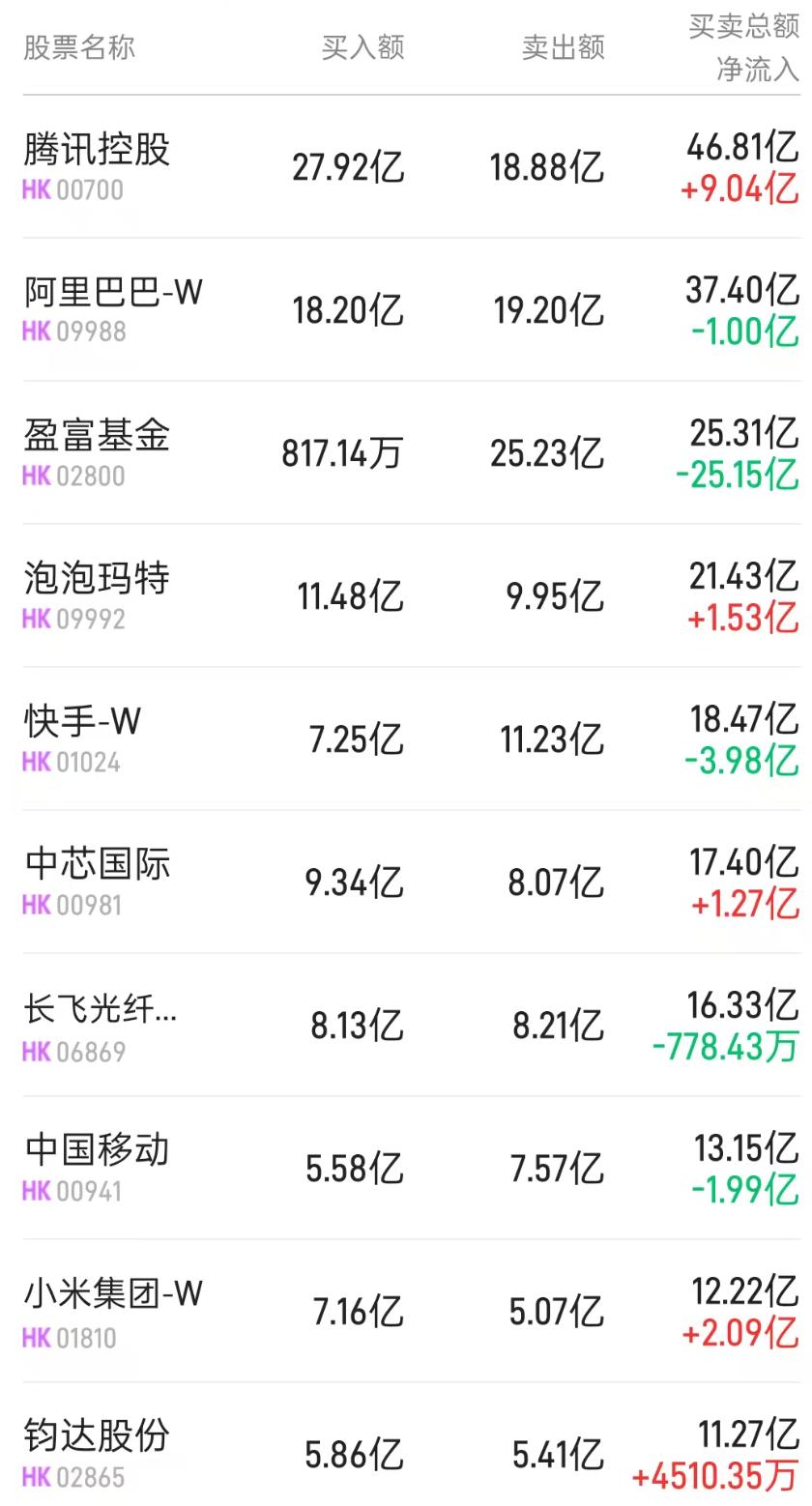
Core Viewpoint - The Hong Kong stock market experienced significant net selling from northbound capital, totaling HKD 18.87 billion, with notable net selling in major stocks like the Tracker Fund and China Mobile, while Tencent and Xiaomi saw net buying [1][5]. Group 1: Northbound Capital Flow - Northbound capital recorded a net selling of HKD 18.87 billion, with HKD 16.44 billion from the Shanghai Stock Connect and HKD 2.42 billion from the Shenzhen Stock Connect [1]. - The most bought stocks included Tencent (00700), Southern Hang Seng Technology (03033), and Xiaomi Group-W (01810) [1]. - The most sold stocks were Tracker Fund (02800), Hang Seng China Enterprises (02828), and China Mobile (00941) [1]. Group 2: Stock Performance - Tencent Holdings saw a net inflow of HKD 9.04 billion, with total trading volume of HKD 46.81 billion [2]. - Alibaba-W had a net outflow of HKD 1 billion, with total trading volume of HKD 37.40 billion [2]. - Southern Hang Seng Technology (03033) received a net inflow of HKD 6.39 billion, while Tracker Fund (02800) and Hang Seng China Enterprises (02828) faced net outflows of HKD 45.54 billion and HKD 10 billion, respectively [5]. Group 3: Sector Insights - The fiber optic cable sector is experiencing a price increase due to supply-demand dynamics, with Longi Fiber Optic (06869) receiving a net inflow of HKD 1.68 billion [6]. - Semiconductor stocks, including Huahong Semiconductor (01347) and SMIC (00981), saw net inflows of HKD 1.49 billion and HKD 1.47 billion, respectively, driven by rising AI computing demand [7]. - The overall market sentiment remains cautious, with expectations of continued volatility influenced by overseas risks and domestic AI developments [5].


小米发布具身智能触觉抓取模型TacRefineNet,机器人ETF(562500)高位震荡,固高科技领涨
Mei Ri Jing Ji Xin Wen· 2026-02-09 06:47
Group 1 - The core viewpoint of the news highlights the strong performance of the Robot ETF (562500), which is currently experiencing a high-level fluctuation with a price increase of 1.521% from the opening price, supported by a majority of its constituent stocks showing positive gains [1][2] - The ETF tracks 66 constituent stocks, with 55 stocks rising, including significant gains from companies like Solid High-Tech, Ruisheng Technology, Yuntian Lifefly, and Dazhu Laser, indicating a robust core rallying team driving the market upward [1] - The trading volume of the ETF reached 744 million yuan, with a turnover rate of 2.99%, reflecting a stable trading rhythm and active market participation, as funds gradually release into the market [1] Group 2 - According to Guotai Haitong Securities, the industrial robot sector benefits from highly standardized scenarios, enabling the use of position control technology for high-precision tracking [2] - The Robot ETF (562500) is the only robot-themed ETF in the market with a scale exceeding 20 billion yuan, covering various segments such as humanoid robots, industrial robots, and service robots, allowing investors to easily access the entire robot industry chain [2] - Recent adjustments to the ETF's constituent stocks have increased the humanoid robot content to nearly 70%, successfully removing underperforming stocks and incorporating quality stocks, achieving a "retain the strong, eliminate the weak" strategy [2]
追觅CEO称每天研发投入4000万;泡泡玛特王宁:LABUBU去年全球销量超1亿只;OpenAI首款硬件命名曝光丨邦早报
创业邦· 2026-02-08 01:08
Group 1 - OpenAI's first hardware product is named Dime, resembling Apple's AirPods, and is expected to be released this year. The company has shifted its strategy from developing a high-end device to focusing on a simpler AI audio headset due to high hardware costs and component price increases caused by a shortage of storage chips [2] - Bubble Mart's founder Wang Ning announced that LABUBU's global sales exceeded 100 million units last year, with plans for the company to have over 10,000 employees and 100 million registered members by 2025 [3] - Tesla plans to increase investments in AI hardware and software, as well as energy sectors in China, with a projected capital expenditure exceeding $20 billion globally in 2026 [8] Group 2 - Amazon will change its policy on sharing reviews among product variants starting February 12, 2026, to improve customer trust and reduce return rates [8] - The German industrial output declined by 1.1% in 2025, marking the fourth consecutive year of decline, primarily due to weak automotive production [14] - The second-hand car market in China is projected to see a cumulative transaction volume of 20.11 million units in 2025, with a year-on-year increase of 2.5% [14]




小米推出触觉驱动的机器人精细抓取微调模型TacRefineNet
Xin Lang Cai Jing· 2026-02-07 11:28
Core Insights - The core focus of the article is on the advancements made by Xiaomi's robotics team in the field of embodied intelligence, specifically through the introduction of TacRefineNet, a framework that enables precise adjustments in object positioning without relying on visual input or 3D models [1] Group 1: Technology Development - Xiaomi's robotics team has announced a significant research achievement in embodied intelligence with the development of TacRefineNet [1] - TacRefineNet can achieve millimeter-level adjustments in positioning, which is crucial for tasks in various automotive manufacturing environments [1] - The technology allows for rapid iteration in reducing average positional error to millimeter levels after adjustments are made for imprecise grabs [1] Group 2: Future Prospects - The team has made technical details and experimental videos available to the public, indicating a commitment to transparency and ongoing development [1] - Further advancements and updates related to TacRefineNet are expected to be released soon, suggesting a proactive approach to innovation in robotics [1]