
Zhejiang Huace Film and TV (300133)

Search documents
华策影视:初步确定询价转让价格为7.42元/股
2 1 Shi Ji Jing Ji Bao Dao· 2025-09-29 08:36
Core Viewpoint - Huace Film & TV announced a preliminary inquiry transfer price of 7.42 yuan per share based on the inquiry subscription situation as of September 29, 2025 [1] Group 1: Inquiry Transfer Details - The inquiry transfer is a non-public transfer involving 24 institutional investors participating in the inquiry [1] - The total number of shares to be transferred is 67.4706 million shares [1] - The transfer will not result in a change of control of the company, nor will it affect the company's governance structure and ongoing operations [1] Group 2: Transfer Restrictions - The transferee is prohibited from transferring the acquired shares within six months after the transfer [1]

华策影视(300133) - 股东询价转让定价情况提示性公告
2025-09-29 08:26
证券代码:300133 证券简称:华策影视 公告编号:2025-075 浙江华策影视股份有限公司 股东询价转让定价情况提示性公告 股东傅梅城和杭州大策投资有限公司保证向浙江华策影视股份有限公司(以 下简称"华策影视"、"公司")提供的信息内容不存在任何虚假记载、误导性 陈述或者重大遗漏,并对其真实性、准确性和完整性依法承担法律责任。 本公司及其董事会全体成员保证公告内容真实、准确和完整,没有虚假记载、 误导性陈述或重大遗漏。 特别提示: 1、根据2025年9月29日询价申购情况,初步确定的本次询价转让价格为7.42 元/股。 2、本次询价转让为非公开转让,不会通过集中竞价交易方式进行。受让方 通过询价转让受让的股份,在受让后6个月内不得转让。 一、本次询价转让初步定价 (一)经向机构投资者询价后,初步确定的转让价格为 7.42 元/股。 (二)参与本次询价转让报价的机构投资者家数为 24 家,涵盖了基金管理 公司、合格境外机构投资者、证券公司、保险公司、私募基金管理人等专业机构 投资者。 (三)本次询价转让拟转让股份已获全额认购,初步确定受让方为 24 家投 资者,拟受让股份总数为 67,470,585 股。 ...
华策影视实控人拟询价转让 傅梅城两月前套现1.48亿元
Zhong Guo Jing Ji Wang· 2025-09-29 03:29
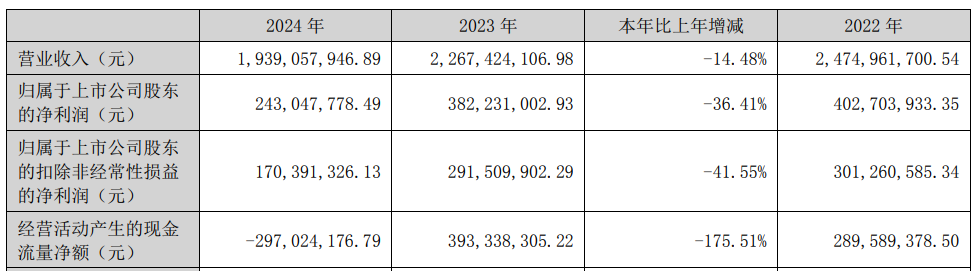
Core Viewpoint - Huace Film & TV (300133.SZ) announced a share transfer plan involving shareholders Fu Meicheng and Hangzhou Dace Investment Co., Ltd., intending to transfer a total of 67,470,585 shares, representing 3.60% of the company's equity, due to personal funding needs [1][2]. Share Transfer Details - The share transfer will be conducted through a non-public method, and the transferee will be institutional investors with appropriate pricing and risk-bearing capabilities [1]. - The shares transferred will be restricted from being sold for six months post-transfer [1]. Shareholding Structure - As of September 26, 2025, Fu Meicheng holds 328,544,543 shares (17.54% of total equity), while Dace Investment holds 325,481,020 shares (17.37% of total equity) [1][2]. - Fu Meicheng is the actual controller and co-chairman of Huace Film & TV, with Dace Investment being the controlling shareholder [2]. Control Rights - The share transfer does not involve any circumstances that could lead to a change in the company's control [3]. Financial Performance - In 2024, Huace Film & TV reported revenue of 1.94 billion yuan, a decrease of 14.48% year-on-year, and a net profit of 243 million yuan, down 36.41% [5][6]. - The company experienced a significant decline in cash flow, with a net cash flow from operating activities of -297 million yuan, compared to 393 million yuan in the previous year [5][6]. Recent Performance Trends - For the first half of 2025, the company achieved revenue of 790 million yuan, a year-on-year increase of 114.94%, and a net profit of 118 million yuan, up 65.05% [6][7]. - Despite the positive growth in the first half of 2025, the operating cash flow remained negative at -154 million yuan, although it improved from -99 million yuan in the same period last year [7].

国庆档新片预售票房已突破7000万元
Zheng Quan Ri Bao· 2025-09-28 16:04
Core Insights - The total box office for the "2025 National Day Holiday New Film Box Office List" has exceeded 700 million yuan as of September 28, with the film "Thunderous" leading with a pre-sale box office of 206.6 million yuan [1] - The diversity in film genres and overall quality remains strong, catering to various audience preferences [1] - The National Day holiday box office is expected to reach 2.4 billion yuan, supported by historical narrative themes and an extended consumption window due to the holiday [1] Film Performance - Eleven new films are scheduled for release during the National Day and Mid-Autumn Festival, with "Thunderous," "Assassination of the Novelist 2," and "The Volunteer Army: Blood and Peace" competing for the top box office spot [2] - "Thunderous" has eight production companies involved, including three listed companies, while "Assassination of the Novelist 2" has five production companies, including three listed ones [2] - The trend of sequels, series, and IP-based films is prominent this year, indicating a maturation and industrialization of the Chinese film industry [2] Market Dynamics - The current market is characterized by content supply driving box office elasticity, with a stable daily average box office expected around 300 million yuan, consistent with last year's performance [2]


华策影视(300133):全年影视项目储备丰富,关注国庆档影片表现
China Post Securities· 2025-09-28 06:04
Investment Rating - The report maintains a "Buy" rating for the company, expecting a relative increase in stock price of over 20% compared to the benchmark index within the next six months [9][15]. Core Insights - The company has a rich reserve of film and television projects, with a focus on the performance of films during the National Day holiday period. The first half of 2025 saw significant revenue growth, with a 114.95% year-on-year increase in operating income and a 65.06% increase in net profit attributable to shareholders [4][9]. - Despite a slowdown in revenue growth in Q2 2025 due to fewer releases, the company is expected to recover as it has a robust pipeline of projects, including several anticipated films and series [5][6]. Company Overview - The latest closing price of the company's stock is 9.27 yuan, with a total market capitalization of 176 billion yuan and a circulating market value of 151 billion yuan. The company has a debt-to-asset ratio of 28.0% and a price-to-earnings ratio of 71.31 [3][4]. Financial Performance - In the first half of 2025, the company achieved operating income of 790 million yuan, with a net profit of 118 million yuan. The second quarter saw a revenue of 204 million yuan, reflecting a 6.80% year-on-year growth, although net profit decreased by 38.31% [4][5]. - The company’s gross margin in Q2 2025 was 43.25%, down 12.79 percentage points year-on-year, while the expense ratio increased due to pre-launch promotional costs for key projects [5]. Business Development - The company is actively expanding into new business areas such as short dramas and animation, with a monthly production capacity of 20 short dramas as of the first half of 2025. It is also exploring international markets, achieving a 28.48% year-on-year increase in overseas revenue [6][7]. - The company is enhancing its AI service capabilities, with software and hardware developments expected to contribute to revenue growth in the future. In the first half of 2025, it generated 57 million yuan from its AI services [7][9]. Earnings Forecast - The company’s projected operating revenues for 2025, 2026, and 2027 are 3 billion yuan, 3.3 billion yuan, and 3.7 billion yuan, respectively. The net profit attributable to shareholders is expected to be 449 million yuan, 504 million yuan, and 565 million yuan for the same years [11][14].
9月26日这些公告有看头


Di Yi Cai Jing Zi Xun· 2025-09-26 14:32
Group 1 - Baiyun Airport announces joint investment with China Duty Free Group to establish a duty-free company with a registered capital of 45 million yuan, where China Duty Free Group holds 51% [3] - Dongxing Medical plans to acquire 90% stake in Wuhan Yijiaobao, a high-tech company focused on orthopedic and biomedical materials [4] - Fosun Pharma's subsidiary plans to transfer 100% stake in Shanghai Clone to enhance asset operation efficiency, with a transaction value of up to 1.256 billion yuan [5] Group 2 - Hengxing Technology's subsidiary is awaiting approval for the extension of mining license for Longtoushan Gold Mine, with exploration activities ongoing [6] - New Sai Co. announces resignation of its general manager Chen Jianjiang due to work adjustments [7] - Hailiang Co. is planning to issue H-shares and list on the Hong Kong Stock Exchange, with details yet to be finalized [8] Group 3 - Zhejiang University Network plans to sell 48.6 million shares of Wanliyang, expecting a transaction amount of 475 million yuan [9] - Huazhong Precision terminates the issuance of A-shares to specific targets, affecting a control acquisition [10] - Jiaze New Energy states that its green chemical business is not yet commercially viable, with no significant impact on revenue or profit in the short term [11] Group 4 - Hailan Home plans to issue H-shares and list on the Hong Kong Stock Exchange, with discussions ongoing with intermediaries [12] - Hongfuhang intends to invest up to 1.128 billion yuan in a joint venture to build a photovoltaic energy storage project in Congo [13] - Zhongchuang Zhiling plans to invest 5 billion yuan in a new energy vehicle parts industrial base and R&D center [14] Group 5 - Haitai Development's subsidiary signs a property sale contract worth 440 million yuan, expected to increase profits by approximately 62.86 million yuan in 2025 [15] - Dongjie Intelligent's overseas subsidiary secures a procurement order worth approximately 180 million yuan, representing 22.3% of its audited revenue for 2024 [17] - Zhiguang Electric's subsidiary signs a procurement contract worth 164 million yuan for energy storage systems [18] Group 6 - ST Songfa's subsidiary signs a shipbuilding contract for four VLCCs, with a contract value between 400 million to 600 million USD [19] - Huaguang Huaneng signs a sales contract for waste heat boilers worth 160 million yuan for a power plant project in Cambodia [20] - Yousheng Co. receives a project notification from a German automaker, with total sales expected to reach approximately 2.3 billion yuan [24] Group 7 - Zai Sheng Technology's controlling shareholder plans to reduce holdings by up to 3% [25] - Compton plans to reduce holdings of repurchased shares by up to 1% [26] - Aored plans to reduce holdings of repurchased shares by up to 1.29% [27] Group 8 - Xianhe Co. plans to raise up to 3 billion yuan through a private placement for a new materials project [34] - Guanshi Technology plans to raise up to 700 million yuan for photomask manufacturing and other projects [33] - Beilu Pharmaceutical plans to raise up to 300 million yuan for production facility upgrades and working capital [34]
9月26日这些公告有看头
第一财经· 2025-09-26 13:28
Major Events - Baiyun Airport announced a joint investment with China Duty Free Group to establish a duty-free company at Guangzhou Baiyun Airport with a registered capital of 45 million yuan, where China Duty Free will contribute 22.95 million yuan for a 51% stake [4] - Dongxing Medical plans to acquire 90% of Wuhan Yijiaobao's equity for cash, which is expected to constitute a major asset restructuring [5] - Fosun Pharma's subsidiary is planning to transfer 100% of Shanghai Clon to enhance asset operation efficiency, with a transaction value of up to 1.256 billion yuan [7] - Hengxing Technology's subsidiary is undergoing a review for the extension of mining license for Longtoushan Gold Mine, with exploration activities ongoing [8] - New Sai Co.'s general manager Chen Jianjiang resigned due to work adjustments [9] - Hailiang Co. is planning to issue H-shares and list on the Hong Kong Stock Exchange, with details yet to be finalized [10] - Zhejiang University Net announced plans to sell 48.6 million shares of Wanliyang, expecting a transaction amount of 475 million yuan [11] - Huazhong Precision terminated its plan to issue A-shares to specific investors, which also halts the acquisition of control by a third party [12] - Jiazhe New Energy stated that its green chemical business is not yet commercially viable [13] Significant Contracts - Haitai Development's subsidiary signed a property sale contract worth 440 million yuan, expected to increase profits by approximately 62.86 million yuan in 2025 [18] - Dongjie Intelligent's overseas subsidiary received a procurement order worth approximately 180 million yuan, accounting for 22.3% of the company's audited revenue for 2024 [19][20] - Zhiguang Electric's subsidiary signed a procurement contract worth 164 million yuan for energy storage systems [21] - ST Songfa's subsidiary signed contracts for building four oil tankers, with a total value between 400 million to 600 million USD [22] - Huaguang Huaneng signed a sales contract for waste heat boilers worth 160 million yuan for a power plant project in Cambodia [23] - Keda Intelligent plans to issue H-shares and list on the Hong Kong Stock Exchange, with details still under discussion [24] Shareholding Changes - Zai Sheng Technology's controlling shareholder plans to reduce holdings by up to 3% [28] - Compton plans to reduce up to 1% of its repurchased shares [29] - Aorede plans to reduce up to 1.29% of its shares from the repurchased stock [30] - Yidian Tianxia's controlling shareholder plans to reduce up to 3% of its shares [31] - Huace Film's shareholders plan to transfer 3.6% of the company's shares through an inquiry transfer [32] Buybacks and Financing - Qibin Group obtained a special financing support of up to 90 million yuan for share repurchase [33] - CanSino plans to cancel 406,100 repurchased shares and reduce registered capital accordingly [35] Fundraising Initiatives - Xianhe Co. plans to raise up to 3 billion yuan through a private placement for a high-performance paper-based new materials project [36] - Guanshi Technology plans to raise up to 700 million yuan for photomask manufacturing and other projects [37] - Beilu Pharmaceutical plans to raise up to 300 million yuan for production line upgrades and working capital [38]

华策影视:股东拟询价转让公司3.6%股份
Zheng Quan Shi Bao Wang· 2025-09-26 10:25
Core Viewpoint - Huace Film & TV (300133) announced on September 26 that shareholders Fu Meicheng and Hangzhou Dace Investment Co., Ltd. plan to transfer 67.4706 million shares through a pricing inquiry, representing 3.6% of the company's total equity [1] Summary by Category - **Share Transfer Details** - The transfer involves 67.4706 million shares [1] - This represents 3.6% of the total share capital of Huace Film & TV [1]
华策影视股东傅梅城、大策投资拟询价转让3.6%股份
智通财经网· 2025-09-26 10:21
智通财经APP讯,华策影视(300133.SZ)公告,公司股东傅梅城和杭州大策投资有限公司(简称"大策投 资")拟参与华策影视首发前股东询价转让。出让方拟转让股份的总数为6747.06万股,占公司股本比例 为3.60%。 ...
华策影视(300133.SZ)股东傅梅城、大策投资拟询价转让3.6%股份
智通财经网· 2025-09-26 10:21
智通财经APP讯,华策影视(300133.SZ)公告,公司股东傅梅城和杭州大策投资有限公司(简称"大策投 资")拟参与华策影视首发前股东询价转让。出让方拟转让股份的总数为6747.06万股,占公司股本比例 为3.60%。 ...