
数字金融服务

Search documents
CCB(00939) - 2025 Q4 - Earnings Call Transcript
2026-03-27 10:32
Financial Data and Key Indicators Changes - In 2025, the company reported a net profit increase of 1.04% to RMB 339 billion, with operating income rising by 1.69% quarter-on-quarter [5][6] - The net interest margin (NIM) stood at 1.34%, return on assets (ROA) at 0.79%, return on equity (ROE) at 10.04%, and capital adequacy ratio at 19.69% [5][6] - The non-performing loan (NPL) ratio was reported at 1.31%, with a provision coverage ratio of 233.15% [6][7] Business Line Data and Key Indicators Changes - Total assets increased by 12% to RMB 45.363 trillion, while gross loans to customers rose by 7.47% to RMB 27.77 trillion [7] - Financial investments grew by 12.9% to RMB 12.9 trillion, and deposits increased by 7% [7] - Technology finance loans exceeded RMB 5 trillion, with green finance loans reaching RMB 6 trillion, marking a 20.54% increase [9][10] Market Data and Key Indicators Changes - The company reported a significant increase in loans to key sectors, with double-digit growth in technology, green finance, and inclusive finance [9][42] - Loans in key regions such as Beijing, Tianjin, Hebei, and the Greater Bay Area maintained steady growth, outperforming the bank-wide average [11][43] - The retail finance sector showed strong competitiveness, with domestic loans exceeding RMB 9 trillion, accounting for 32% of total loans [43] Company Strategy and Development Direction - The company aims to support the national strategy and enhance its role as a leading financial institution in China, focusing on the Five Priorities of finance business [18][19] - Plans for 2026 include expanding financial services for infrastructure projects and enhancing financial services based on local conditions [19][20] - The company is committed to high-quality development, integrating commercial and retail banking, and enhancing customer service capabilities [20][21] Management's Comments on Operating Environment and Future Outlook - Management expressed confidence in maintaining steady growth and improving asset quality, emphasizing the importance of risk management [72][73] - The company plans to adapt to macroeconomic changes and enhance its risk control measures, particularly in retail loans [72][73] - The outlook for NIM in 2026 is cautiously optimistic, with expectations of a slower decline due to improved asset-liability management [49][54] Other Important Information - The company dispatched a total dividend of RMB 106 billion, with an interim dividend of RMB 1.858 per 10 shares and a final dividend of RMB 2 per 10 shares [8] - The company has made significant advancements in digital finance, with mobile banking users reaching 546 million and digital economy loans growing by 18.7% to RMB 891 billion [10] Q&A Session All Questions and Answers Question: What are the core drivers behind the good performance in 2025? - Management attributed the success to stable NIM structure, comprehensive services, cost management, and enhanced risk management capabilities [26][27][30][31] Question: What is the new arrangement in terms of regional disbursement and sectors for 2026? - The company plans to support modern industrial clusters, enhance competitiveness in the real estate sector, and focus on consumer financing [40][45][46] Question: Can you introduce the NIM influences in terms of supply and demand sides? - The NIM narrowed by two basis points in 2025, influenced by savings deposit repricing and proactive management strategies [49][50][54] Question: What are the key initiatives that CCB has with respect to AI technology? - The company is implementing AI across all business segments, enhancing computational power, and improving service efficiency through smart applications [76][80]
CCB(00939) - 2025 Q4 - Earnings Call Transcript
2026-03-27 10:30
Financial Data and Key Indicators Changes - In 2025, the company reported a net profit increase of 1.04% to CNY 339 billion, with operating income rising by 1.69% quarter-on-quarter [4][23] - Profit before provision increased by 1.7% year-on-year, with a net interest margin (NIM) of 1.34%, return on assets (ROA) at 0.79%, and return on equity (ROE) at 10.04% [4][24] - The capital adequacy ratio stood at 19.69%, cost-to-income ratio at 29.44%, and non-performing loan (NPL) ratio at 1.31%, reflecting strong risk control [4][12] Business Line Data and Key Indicators Changes - Total assets increased by 12% to CNY 45.363 trillion, with gross loans to customers rising by 7.47% to CNY 27.77 trillion [5] - Financial investments grew by 12.9% to CNY 12.9 trillion, while deposits increased by 7% [5] - Technology finance loans exceeded CNY 5 trillion, green finance reached CNY 6 trillion, and inclusive finance loans totaled CNY 3.83 trillion [7][39] Market Data and Key Indicators Changes - The company reported strong growth in key regions such as Beijing-Tianjin-Hebei, Yangtze River Delta, and Greater Bay Area, with domestic loans exceeding CNY 9 trillion [9][40] - The retail finance sector showed competitiveness, with personal consumption loans growing by 29.41% [8][40] - The international business loan balance reached CNY 1.5 trillion, with cross-border RMB settlement at CNY 6.5 trillion [10] Company Strategy and Development Direction - The company aims to support national strategies and enhance its role as a leading financial institution, focusing on the Five Priorities of finance business [16][17] - Plans for 2026 include expanding financial services for infrastructure projects and enhancing county-level financial services [17][18] - The company is committed to high-quality development, integrating commercial and retail banking, and enhancing customer service capabilities [19][33] Management's Comments on Operating Environment and Future Outlook - Management highlighted a stable and positive recovery trend in profit growth, attributing success to optimized asset quality and diversified income structure [23][24] - The outlook for 2026 includes a focus on supporting modern industrial clusters and responding to domestic demand [41][42] - Management emphasized the importance of risk management, particularly in retail loans, to maintain quality business [64][65] Other Important Information - The provision coverage ratio is 233.15%, indicating strong risk management capabilities [5][29] - The company has developed 12 enterprise-level models across ecosystems to enhance customer service and operational efficiency [11] - AI technology is being integrated across various business segments to improve service quality and operational efficiency [66][67] Q&A Session Summary Question: What are the core drivers behind the good performance in 2025? - Management attributed the performance to stabilized NIM structure, diversified income sources, and effective cost management [24][25] Question: Can you introduce the NIM influences in terms of supply and demand sides? - The CFO explained that NIM narrowed to 1.34% due to changes in savings deposits and proactive management strategies [44][46] Question: What measures have you adopted in terms of risk management? - Management emphasized a focus on high-quality development and effective risk control measures to maintain a low NPL ratio [62][63]
渤海银行积极开展2026年“3·15”金融消费者权益保护教育宣传活动
Xin Lang Cai Jing· 2026-03-10 12:22
Core Viewpoint - The article discusses the 2026 "3·15" Financial Consumer Rights Protection Education Campaign initiated by Bohai Bank, aimed at enhancing public financial literacy and protecting consumer rights in the financial sector [3][14]. Group 1: Campaign Theme and Objectives - The campaign focuses on protecting financial rights through positive publicity and risk warnings, creating a clear and orderly financial market environment [4][15]. - It aims to promote Chinese financial culture and showcase how the financial industry uses digital and technological means to meet diverse public needs, while also addressing financial network issues [4][15]. Group 2: Campaign Details - The campaign slogan is "Clear Financial Network, Protect Peaceful Consumption," and it will run from March 9 to March 15, 2026 [5][17]. - Activities will include promoting the achievements of digital financial services in safeguarding livelihoods and boosting consumption through various media [5][17]. Group 3: Consumer Protection Measures - The campaign will reveal harmful financial marketing tactics such as unauthorized lead generation, risk concealment, and misleading high-yield promises, helping consumers to build a financial safety net [6][18]. - It will also provide channels for consumer feedback and promote dispute resolution methods to enhance public understanding and trust in financial services [6][18]. Group 4: Key Activity Arrangements - The campaign will feature offline educational activities to promote Bohai Bank's digital financial initiatives and highlight successful case studies [8][19]. - It will target specific groups, collaborating with local governments and organizations to raise awareness of financial risks and provide practical financial knowledge [9][20]. - The campaign will strengthen public education on financial network issues through engaging content and various platforms [10][21]. - Training will be provided to employees and partner organizations to ensure compliance with consumer protection regulations [11][22].


冬海集团:整合阶段
citic securities· 2026-02-13 08:07
Investment Rating - The report aligns with the views of CITIC Lyon Research, indicating a focus on GMV growth rather than short-term profitability for Donghai Group [5][6]. Core Insights - Donghai Group is prioritizing GMV growth to expand its ecosystem, which helps mitigate competition from emerging players like Coupang and narrows the gap with established competitors like MercadoLibre [5][6]. - Despite the competitive landscape, Shopee maintains a strong competitive advantage, with user growth and high-value product categories supporting GMV expansion [7]. - The gaming segment, particularly Garena, faces challenges in 2026 due to high base effects from previous successful collaborations, leading to expectations of flat pre-revenue income [8]. Summary by Sections Company Overview - Donghai Group is an internet company that integrates online gaming, e-commerce retail, and digital financial services, with Shopee being its largest business segment covering ASEAN, Taiwan, and Brazil markets [11]. Revenue Breakdown - E-commerce contributes 68.9% to revenue, digital entertainment accounts for 16.6%, and digital financial services make up 13.5% [12]. Market Performance - As of February 11, 2026, the stock price is $114.52, with a market consensus target price of $190.40, and a market capitalization of $67.8 billion [15].

冬海集团:管理层会议纪要
citic securities· 2026-02-12 07:57
Investment Rating - The report does not explicitly provide an investment rating for the company [5]. Core Insights - The report highlights that Sea Group (冬海集团) has significant growth potential in online penetration in Brazil and Southeast Asia, supported by current market trends [5]. - The company is increasing its investment in AI and prioritizing the growth of Gross Merchandise Volume (GMV) to expand its ecosystem and mitigate threats from competitors like Coupang [5]. - Management believes they can narrow the gap with existing competitors such as MercadoLibre in terms of product offerings [5]. - The gaming segment, Garena, may face short-term pressure on deferred revenue due to a high base effect in 2025, while the financial services segment shows significant growth potential [5][7]. Summary by Sections Growth Opportunities - Online consumption in key markets like Brazil and Southeast Asia has substantial growth potential, with Shopee prioritizing GMV growth and ecosystem expansion [5]. - Shopee plans to enhance average order value in Brazil by introducing high-priced products and establishing a fulfillment network [6]. - Management believes that new competitors like Temu and Shein will face challenges in scaling in the Brazilian market [6]. AI and Logistics Investment - Shopee will accelerate AI investments to improve platform efficiency and optimize logistics infrastructure to attract premium brands [5][6]. Market Dynamics - In Indonesia, e-commerce is evolving, with more brands expected to enter through online channels rather than offline [6]. - Shopee's logistics capabilities provide a competitive edge over TikTok, which relies on third-party logistics [6]. Financial Services - The financial services segment has significant growth potential, with plans to utilize AI for credit risk assessment, fraud detection, and loan approvals [5][6]. Key Catalysts - A clear game development roadmap and healthy operations will be crucial for the growth of the gaming segment, potentially leading to a revaluation of the company's multiples [8]. - Further consolidation in the e-commerce industry and news of new competitors exiting the market could benefit Shopee [8].
广东数字金融创新产业园金融城园区挂牌运营
Zhong Guo Xin Wen Wang· 2026-02-04 14:10
Core Viewpoint - The Guangdong Digital Financial Innovation Industrial Park has officially commenced operations, aiming to support Guangdong in becoming a digital financial hub and nurturing a technology finance ecosystem [1] Group 1: Overview of the Financial City Park - The Financial City Park is located in Guangzhou International Financial City and covers an area of 50,000 square meters [1] - It is part of the Guangdong Digital Financial Innovation Industrial Park, which is the first provincial-level digital financial park in China [1] - The park's launch signifies a significant step in integrating digital finance with technology finance, contributing to the development of the Greater Bay Area as an international financial hub [1] Group 2: Future Development and Ecosystem - The Financial City Park aims to deepen the innovation service ecosystem focusing on "data, algorithms, computing power, and scenarios" to foster the growth of fintech companies in Guangzhou [1] - It will leverage the Zhongda Bay Valley Risk Management Technology Laboratory as a "R&D engine" and the local financial digital infrastructure platform as a "digital foundation" [1] - The park will promote a collaborative operational system integrating "finance + technology + industry + ecology + talent" through deep cooperation among government, industry, academia, research, and application [1]

金融机构发力数字化转型 | 财金纵横
Xin Lang Cai Jing· 2026-01-30 04:12
Core Viewpoint - The National Financial Regulatory Administration has released the "Implementation Plan for High-Quality Development of Digital Finance in the Banking and Insurance Industries," aiming to guide financial institutions in their digital transformation and enhance the quality of digital financial services [1][2]. Policy Guidance - Digital finance is a key focus of the central financial work conference, emphasizing its importance in enhancing the competitiveness of the financial sector and improving service efficiency for the real economy [2]. - The "Implementation Plan" builds on previous guidelines from 2022 and aims to provide specific measures for quality improvement in digital finance, complementing earlier strategic frameworks [2]. Data Utilization - The plan emphasizes the high-level application of financial data, advocating for improved data integration, management, and application capabilities across various business functions [4]. - Financial institutions are encouraged to leverage data for customer profiling, decision-making, and risk control, enhancing the effectiveness of digital financial services [4][7]. Innovation in Financial Services - Large commercial banks are accelerating the use of digital financial technologies to address financing challenges faced by technology enterprises, utilizing big data for credit scoring and improving financing accessibility [5]. - Small and medium-sized banks are innovating digital services to meet diverse financing needs, integrating customer data into intelligent systems for targeted financial services [6]. Risk Management - The digital transformation of financial institutions has amplified the complexity and potential spread of financial risks, necessitating a strategic focus on risk management [8]. - Effective management of algorithmic model risks and data security is crucial for identifying and mitigating potential credit risks [9]. Collaboration and Ecosystem Development - The plan encourages collaboration among financial institutions, technology companies, and industry stakeholders to foster innovation and embed financial services into various sectors, including manufacturing and agriculture [3]. - A digital financial ecosystem is to be cultivated, integrating technological advancements with industry upgrades to promote high-quality development [3].

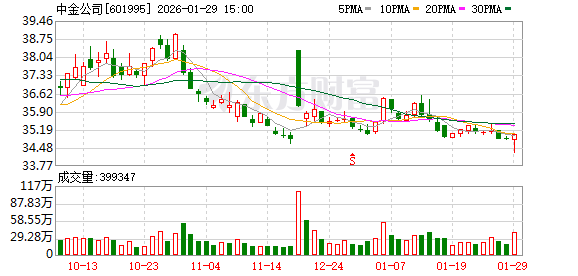
华为与中金公司签署战略合作协议
Di Yi Cai Jing· 2026-01-29 09:31
Core Viewpoint - China International Capital Corporation (CICC) and Huawei Technologies Co., Ltd. have signed a strategic cooperation agreement to enhance collaboration in various sectors, focusing on digital finance and technology empowerment in finance [2] Group 1: Strategic Cooperation Areas - The agreement emphasizes collaboration in digital infrastructure construction, digital travel services, intelligent transformation, artificial intelligence applications, and the native Harmony ecosystem [2] - Both companies aim to engage in joint innovation, talent development, brand building, and ecosystem expansion [2] Group 2: Focus on Digital Finance - The partnership will specifically target advancements in digital finance, leveraging technology to enhance financial services [2] - There is a strong emphasis on deepening cooperation in the realm of digital financial solutions [2]

河南省银行业保险业加力服务实体经济
Sou Hu Cai Jing· 2026-01-05 00:55
Group 1 - The banking and insurance sectors in Henan have shown significant growth during the "14th Five-Year Plan" period, with total assets reaching nearly 15 trillion yuan and total liabilities at 14.85 trillion yuan, marking a 50% increase compared to the end of the "13th Five-Year Plan" [1] - The balance of deposits in the banking sector increased from 7.76 trillion yuan to 11.79 trillion yuan, a growth of 52.07%, while the loan balance rose from 6.41 trillion yuan to 9.27 trillion yuan, reflecting a 44.58% increase [1] - The insurance industry also experienced robust growth, with the insurance depth and density at 4.25% and 2761.43 yuan per person respectively by the end of 2024, with the insurance density increasing by 9.49% compared to the end of the "13th Five-Year Plan" [1] Group 2 - The financial sectors are focusing on five key areas: technology finance, green finance, inclusive finance, pension finance, and digital finance, which are crucial for high-quality development in serving the real economy [2] - The loan balance in these five areas reached nearly 3.13 trillion yuan, showing a growth of 13.8% compared to the same period in 2024 [2] - The number of inclusive small and micro credit clients reached 2.311 million, with a loan balance of 1.311046 trillion yuan, representing an increase of over 70% since the beginning of the "14th Five-Year Plan" [2]
国有大行新年寄语:锚定价值新坐标 拓展服务新格局
Shang Hai Zheng Quan Bao· 2026-01-04 20:27
Core Viewpoint - The New Year messages from major state-owned banks emphasize their roles as the "main force" and "leading geese" in the financial industry, focusing on risk prevention, strong regulation, and promoting high-quality development while addressing both macroeconomic stability and micro-level public needs [1][2]. Group 1: National Responsibility and Public Service - Major banks highlight their commitment to national priorities and public welfare, with ICBC pledging to support employment and market stability through increased lending and bond investments [1] - Agricultural Bank of China emphasizes its mission in rural development, achieving over 1 trillion yuan in county loans for four consecutive years and a loan balance of 1.8 trillion yuan for farmers [1] - Banks are actively addressing public needs, with initiatives like Bank of China’s tea garden project generating over 100 million yuan in value and Agricultural Bank providing over 1 million home services for the elderly [2] Group 2: Financial Innovation and Globalization - The "Five Major Articles" of financial services—technology finance, green finance, inclusive finance, pension finance, and digital finance—are integrated into the development strategies of major banks, with ICBC leading in manufacturing and green loans [3] - Agricultural Bank has launched an AI innovation framework to enhance customer service and risk management, while ICBC has achieved full coverage of its smart risk control centers [3] - Chinese banks are expanding their global service capabilities, exemplified by Bank of China’s issuance of 4 billion euros in sovereign bonds in Luxembourg and participation in cross-border payment projects [4][5] Group 3: Stability and Long-term Vision - State-owned banks emphasize a focus on stable operations and long-term strategies, with China Bank highlighting the importance of maintaining strategic determination amid market volatility [5][6] - Agricultural Bank stresses the need for a correct performance outlook and the importance of addressing challenges while ensuring high-quality development and risk management [6] - The commitment to employee recognition and appreciation is evident, with banks acknowledging the contributions of their staff in supporting major national events and initiatives [7]





