Citi(C)

Search documents
中信建投:美国银行板块的历史归因是估值驱动还是基本面驱动?
智通财经网· 2025-12-07 10:01
Core Viewpoint - The price movement of U.S. banks is driven more by valuation than by performance, indicating that valuation has a greater direct elasticity on stock prices compared to fundamentals. Valuation determines whether prices rise and the absolute returns, while fundamentals dictate how much prices rise and the relative returns [1][5]. Summary by Stages Stage 1: Dual Decline of Valuation and Fundamentals - This stage occurs during systemic crises, such as the subprime mortgage crisis and global pandemic, where stability is key. Banks with stronger fundamentals experience smaller price declines, while those with similar fundamentals but lower valuations also see less decline [2][9]. Stage 2: Dual Rise of Valuation and Fundamentals - This stage typically follows systemic crises, characterized by significant recovery in both valuation and fundamentals. Banks with substantial positive improvements in fundamentals and lower valuations see greater price increases. Smaller banks perform better when either fundamentals or valuations dominate [3][17]. Stage 3: Improvement in Fundamentals without Valuation Increase - This stage occurs when supportive policies are in place, but market expectations about the economy remain divided. While fundamentals improve across the board, valuations do not rise, making the ability to increase valuation crucial for individual stocks. The two main sources for valuation increases are positive fundamental trends and event-driven catalysts [4][24]. Stage 4: Valuation Increase without Improvement in Fundamentals - This stage generally happens when economic expectations are clear, but monetary policy and operating environments do not favor banks. In this phase, strong fundamentals are the primary driver of excess returns, while low valuations serve as a secondary factor. The best-performing banks are those that achieve a combination of good fundamentals and low valuations [28][30]. Future Outlook - Currently, the U.S. banking sector is in a phase of valuation increase with stable fundamentals. The macroeconomic environment shows no signs of significant recession, with inflation gradually decreasing and expectations for a controlled interest rate environment. The banking sector's return on tangible equity (ROTE) is stabilizing at high levels, supported by a favorable capital market and low credit costs [35][39].



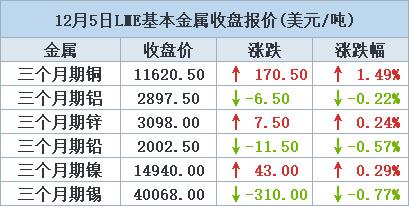
金属涨跌互现 期铜创历史新高,之前花旗上调价格预期【12月5日LME收盘】
Wen Hua Cai Jing· 2025-12-07 00:38
Core Viewpoint - LME copper prices surged to record highs, driven by Citigroup's upward price forecast and a weakening dollar ahead of anticipated Federal Reserve rate cuts [1] Group 1: Copper Market Insights - On December 5, LME three-month copper closed at $11,620.50 per ton, up $170.50 or 1.49%, with an intraday peak of $11,705 [1][2] - Copper prices have increased approximately 3.9% this week and have risen over 30% year-to-date [3] - Citigroup forecasts copper prices to continue rising, with an average price of $13,000 in Q2 2025, up from a previous estimate of $12,000, and a bullish scenario predicting $15,000 [3] Group 2: Market Dynamics and Supply Factors - Analysts suggest that the rise in copper prices is a gradual process, with funds beginning to favor copper due to anticipated shortages from supply constraints at major mines [3] - The arbitrage between Comex and LME is expected to lead to increased copper flows to the U.S., exacerbating supply tightness in the LME market [3] - Despite the upward trend, LME spot copper's premium over three-month contracts has decreased from approximately $88 per ton to $33, indicating a lack of urgent demand for the metal [3] Group 3: Other Base Metals Performance - Other base metals showed mixed performance, with three-month zinc rising 0.24% to $3,098 per ton, previously reaching a near one-year high of $3,125 [2][3] - LME spot zinc's premium over three-month contracts has narrowed but remains around $145 per ton [3]
花旗:未来6-12个月铜价将升至每吨1.3万美元
Wen Hua Cai Jing· 2025-12-07 00:38
Core Viewpoint - Citigroup is bullish on copper prices, expecting them to reach $13,000 per ton in the next 6-12 months, indicating a potential increase of approximately 15% [1] Group 1: Copper and Aluminum Price Predictions - Citigroup forecasts aluminum prices to reach $3,500 per ton by 2027, suggesting a potential increase of around 20% [1] - The company anticipates tin prices will hit $45,000 per ton next year, projecting a rise of 15% [1]
Banks Split On Copper Outlook As Citi, JPMorgan Turn Bullish And Goldman Counters - United States Copper Index Fund ETV (ARCA:CPER)
Benzinga· 2025-12-06 16:16
Core Viewpoint - Copper prices have surged, with benchmark futures exceeding $11,700 a ton, marking the strongest rally since last summer, driven by expectations of phased copper tariffs starting in 2027 [1] Supply Dynamics - Tightening supply and dislocated inventories are contributing factors, with traders front-loading shipments to the US to take advantage of higher domestic prices and hedge against future import levies, leading to increased price volatility [2] Market Predictions - Citigroup projects a target price of $13,000 a ton by Q2 2026, citing a structural deficit due to a mismatch between new supply and rising demand from sectors like grid upgrades and energy transition [3][4] - JP Morgan aligns with a bullish outlook, forecasting a refined copper deficit of approximately 330,000 tons in 2026 and prices reaching around $12,500 a ton in Q2 2026, averaging just over $12,000 for the entire year [5] Contrarian Views - Goldman Sachs presents a contrasting perspective, arguing that current price levels exceed fundamentals and that sufficient metal is available to meet demand [5][6] Inventory Movements - Mercuria has withdrawn about $500 million worth of copper from LME warehouses, significantly tightening available exchange stocks, with recent inventory cancellations being among the largest in over a decade [7] - The situation has led to a paradox where headline stocks are rising while deliverable metal outside the US is decreasing, highlighting a critical feature of the current market cycle [7] Future Concerns - Mercuria's Global Head of Metals & Minerals warns of potential critical shortages of copper cathodes outside the US as early as Q1, emphasizing the likelihood of tightness and higher prices if current trends continue [8][9]


花旗,或于2026年初裁员,期望每位新晋MD创造2000万美元收入
Xin Lang Cai Jing· 2025-12-06 09:31
来源:瑞恩资本RyanbenCapital 本周,花旗晋升了276名董事总经理(MD),为最近四年来规模最小。 据多方消息称,花旗正准备在2026年初进行新一轮裁员。预计此次裁员将遍及全公司,涵盖市场、银行 和财富管理等业务部门。 来源 | efinancialcareers 更多香港上市、美国上市等境外IPO资讯可供搜索、查阅,敬请浏览: www.ryanbencapital.com 内部人士透露,业绩不佳的董事总经理将首当其冲地受到影响。 有传言称,花旗银行业务主管Vis Raghavan(Head of Banking and Executive Vice Chair)希望每位现有董事 总经理创造1000万美元的收入,而本周新晋升的董事总经理则需要每人创造2000万美元的收入。 2024年1月,花旗集团曾宣布计划在两年内裁员2万人。今年早些时候,该行仍有1万人待裁。然而,其 并未为2025年最后一个季度预留任何遣散费支出。 花旗拒绝置评。 版权声明:所有瑞恩资本Ryanben Capital的原创文章,转载须联系授权,并在文首/文末注明来源、作 者、微信ID,否则瑞恩将向其追究法律责任。部分文章推送时未 ...
花旗集团市净率7年来首次达到1
Ge Long Hui A P P· 2025-12-06 03:31
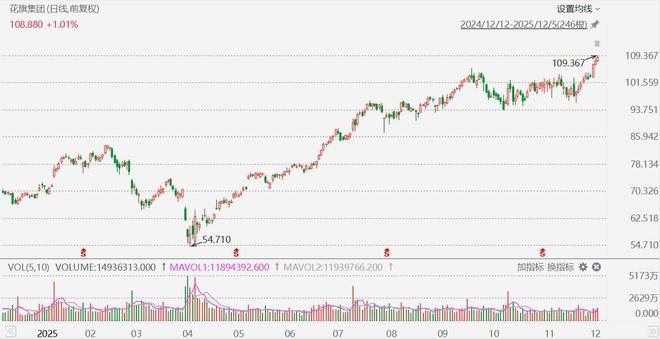
Core Viewpoint - Citigroup's price-to-book ratio has reached 1 for the first time since September 2018, indicating that its market value is at least equal to its net asset value, reflecting significant progress in CEO Jane Fraser's transformation plan [1] Group 1: Company Performance - Under Jane Fraser's leadership, Citigroup has implemented measures such as upgrading back-end operations, layoffs, and exiting international retail business [1] - Analysts view the achievement of a price-to-book ratio of 1 as a critical milestone in the transition from "value destruction" to "value creation" for the company [1] - Citigroup's stock price has increased by 58% this year, outperforming all Wall Street peers [1]
12月6日隔夜要闻:SpaceX估值升至8000亿美元 奈飞收购华纳兄弟探索公司 经济学家料美...
Xin Lang Cai Jing· 2025-12-05 23:03
Company - Netflix is acquiring assets from Warner Bros. Discovery, which has raised concerns about potential antitrust issues, as highlighted by Senator Warren who described the deal as an "antitrust nightmare" [3] - SpaceX is in talks to sell shares, with its valuation rising to $800 billion, indicating strong investor interest and confidence in the company's future prospects [2] - Meta is planning to cut spending on the metaverse, with Reality Labs potentially facing layoffs as early as January, reflecting a shift in focus and resource allocation [3] - Citigroup's price-to-book ratio has reached 1 for the first time in seven years, narrowing the gap with other major Wall Street banks, suggesting improved market confidence in the bank's valuation [3] - SoftBank is negotiating to acquire DigitalBridge, a data center investment company, which could enhance its portfolio in the technology infrastructure sector [3] Industry - The U.S. Treasury Secretary praised the Dell family for their support of the "Trump account" plan, indicating potential implications for the tech industry and its relationship with government policies [3] - The Swiss government is considering easing some capital regulations for UBS, which may impact the banking sector's operational flexibility and capital management strategies [3] - The U.S. is relaxing fuel economy standards for automobiles, receiving support from traditional automakers like Ford, which could influence the automotive industry's regulatory landscape and competitive dynamics [3]



花旗集团市净率七年来首次升至1 拉近与其他华尔街大行距离
Xin Lang Cai Jing· 2025-12-05 22:17
Group 1 - Investors believe for the first time since September 2018 that Citigroup's trading value is at least equal to the total value of its individual assets [1] - The market capitalization to asset value ratio (price-to-book ratio) for Citigroup has returned to parity, indicating the bank is gradually overcoming its lagging position [1] - The price-to-book ratio is a key valuation metric that investors in the banking sector closely monitor, providing a more stable reference compared to other metrics like price-to-earnings ratio due to the regulatory focus on book value and the potential for earnings volatility in banking [1]
Citi Is Worth the Sum of Its Parts for First Time in Seven Years
MINT· 2025-12-05 21:39
Core Viewpoint - For the first time since September 2018, investors view Citigroup Inc. as worth at least the sum of its parts, indicating a potential turnaround under CEO Jane Fraser's leadership [1]. Group 1: Valuation Metrics - The price-to-book ratio, a key valuation metric for banks, has equalized, suggesting a recovery from Citigroup's previous underperformance [1][2]. - A price-to-book ratio of 1 or higher signifies a transition from value destruction to value creation, according to Wells Fargo analyst Mike Mayo, who considers Citigroup his top pick for 2026 [3]. Group 2: Stock Performance - Citigroup's stock has outperformed its Wall Street peers this year, gaining 55%, compared to Goldman Sachs' 49% and Bank of America's 23% [4]. Group 3: Challenges and Improvements - The bank has faced numerous challenges since the financial crisis, including data management issues and regulatory penalties, with over $130 million in fines last year for slow progress on risk controls [5]. - Under CEO Jane Fraser, who became CEO in March 2021, Citigroup is implementing a turnaround plan that includes upgrading back-office operations, reducing headcount, and exiting international retail [6]. Group 4: Leadership Changes - In October, Citigroup appointed Jane Fraser as chair of the board, making her the first leader since before the 2008 financial crisis to hold both CEO and chair positions [6]. Group 5: Comparison with Peers - Citigroup was the only major bank trading below its book value, with its price-to-book ratio still significantly lower than peers like Morgan Stanley, JPMorgan Chase, and Goldman Sachs, which all have ratios above 2 [7].

铜价再创新高,下一站花旗看涨至13000美元
美股IPO· 2025-12-05 16:03
Core Viewpoint - Citi predicts that copper prices will average $13,000 per ton in Q2 of next year due to supply shortages caused by U.S. stockpiling, with multiple bullish factors supporting the upward trend until 2026 [1][4]. Group 1: Price Predictions - Citi's analysts forecast a 2.5% increase in global copper end-use consumption next year [4]. - Currently, copper prices have risen by 1.97% to $11,675 per ton, surpassing earlier highs this week [2]. - The copper market is expected to enter a structural shortage next year, with a significant supply gap projected over the next decade due to strong demand and limited supply [6]. Group 2: Market Dynamics - The expectation of U.S. import tariffs is causing metal flows to the U.S., leading to inventory depletion in other major regions [6]. - Global exchange copper inventories have surged to over 656,000 tons, the highest level since 2018, with about 60% stored in U.S. warehouses, indicating regional imbalances in the market [9]. - JPMorgan describes the current situation as a "more volatile and urgent bullish mid-stage" for copper prices, driven by the U.S. siphoning effect [9]. Group 3: Long-term Outlook - Citi emphasizes that macroeconomic and fundamental improvements will support its confidence in rising copper prices, driven by lower interest rates, U.S. fiscal expansion, European military restructuring, and energy transition [10]. - Goldman Sachs shares a long-term bullish stance based on structural factors, including strong demand in power infrastructure, AI, and defense sectors, alongside constrained mining supply [10].