
CTG DUTY-FREE(CTGCY)

Search documents
中国中免(601888):收购DFS大中华区业务,携手LVMH开启新篇章
Guolian Minsheng Securities· 2026-01-21 11:05
Investment Rating - The report maintains a "Buy" rating for China Duty Free Group (601888.SH) [2] Core Views - The acquisition of DFS's Greater China business marks a new chapter for China Duty Free Group, enhancing its position in the tourism retail market [8] - The transaction involves a cash purchase of up to $395 million for DFS's assets and equity in the Greater China region, which is expected to strengthen the company's service network in Hong Kong and Macau [8] - The partnership with LVMH is anticipated to optimize product structure and service levels, further enhancing the company's competitive edge [8] Financial Forecasts - Projected revenue for 2024 is 56.47 billion yuan, with a decline of 16.4%, followed by a slight decrease to 54.52 billion yuan in 2025, and growth to 62.18 billion yuan in 2026 and 69.63 billion yuan in 2027 [2][9] - Net profit attributable to shareholders is expected to be 4.27 billion yuan in 2024, decreasing by 36.4%, then recovering to 3.88 billion yuan in 2025, and increasing to 5.18 billion yuan in 2026 and 5.82 billion yuan in 2027 [2][9] - Earnings per share (EPS) are forecasted to be 2.06 yuan in 2024, 1.88 yuan in 2025, 2.50 yuan in 2026, and 2.81 yuan in 2027 [2][9] Valuation Metrics - The price-to-earnings (P/E) ratio is projected to be 46 in 2024, increasing to 51 in 2025, and then decreasing to 38 in 2026 and 34 in 2027 [2][9] - The price-to-book (P/B) ratio is expected to be 3.6 in 2024, slightly decreasing to 3.5 in 2025, and further to 3.3 in 2026 and 3.1 in 2027 [2][9]

中国中免收购DFS大中华区旅游零售业务 加速国际化布局
Nan Fang Du Shi Bao· 2026-01-21 09:56
Group 1 - The core point of the news is that China Duty Free Group (CDFG) announced the acquisition of DFS Group's travel retail business in Greater China for up to $395 million in cash, which includes various assets and equity related to DFS's operations in Hong Kong and Macau [2][5] - The acquisition will allow CDFG to hold 100% of DFS Cotai Limitada and acquire assets from two DFS stores in Hong Kong, as well as nine travel retail stores in Hong Kong and Macau [5][6] - CDFG has also signed a subscription agreement with LVMH Group and other entities, planning to issue up to 1.2 million H-shares at a price of HKD 77.21 per share, raising approximately HKD 924 million [6] Group 2 - CDFG's recent financial performance shows a decline in revenue and net profit, with a 7.34% decrease in revenue to CNY 39.86 billion and a 22.13% drop in net profit to CNY 3.05 billion for the first three quarters of 2025 [8] - The Hainan offshore duty-free market is under pressure, with a 9.2% decrease in shopping amount to CNY 16.76 billion in the first half of 2025, although the average spending per person increased by 23% [8][9] - Despite short-term demand weakness, there are still policy benefits and trends in consumption upgrades, with expectations of growth in the Hainan market following the full closure of the island in late 2025 [9]

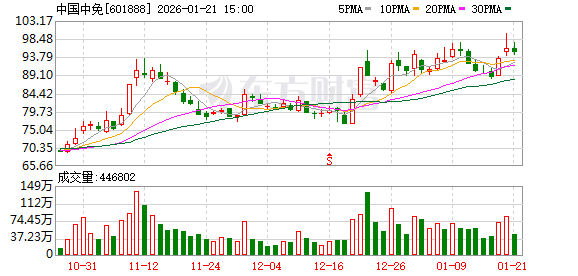
旅游零售板块1月21日跌1.04%,中国中免领跌,主力资金净流出4146.46万元
Zheng Xing Xing Ye Ri Bao· 2026-01-21 08:54
Group 1 - The tourism retail sector experienced a decline of 1.04% on January 21, with China Duty Free Group leading the drop [1] - The Shanghai Composite Index closed at 4116.94, up 0.08%, while the Shenzhen Component Index closed at 14255.12, up 0.7% [1] - China Duty Free Group's closing price was 60.56, reflecting a decrease of 1.04%, with a trading volume of 446,800 shares and a transaction value of 4.258 billion yuan [1] Group 2 - The tourism retail sector saw a net outflow of 41.464 million yuan from institutional investors, while retail investors experienced a net outflow of 32.2948 million yuan [1] - Conversely, speculative funds recorded a net inflow of 73.7594 million yuan into the tourism retail sector [1] - The net inflow and outflow percentages for China Duty Free Group were -0.97% for institutional investors and -0.76% for retail investors, with a net inflow of 1.73% from speculative funds [1]

花旗:料中国中免收购DFS大中华业务可巩固市场领导地位
Zhi Tong Cai Jing· 2026-01-21 07:09
Core Viewpoint - Citigroup maintains a "Buy" rating for China Duty Free Group (601888) with a target price of HKD 100 for H-shares and CNY 106 for A-shares, anticipating strong sales in Hainan's duty-free market to act as a short-term catalyst [1] Group 1: Acquisition Details - China Duty Free Group announced the acquisition of DFS's retail business in Greater China for up to USD 395 million, which includes nine travel retail stores in Hong Kong and Macau along with intangible assets [1] - The company plans to issue up to approximately 11.9675 million new H-shares at HKD 77 per share to LVMH's Delphine SAS and the Miller family, representing about 0.57% of the total share capital, aiming to raise no more than HKD 924 million [1] Group 2: Strategic Implications - The acquisition is viewed as strategically significant for China Duty Free Group, helping to solidify its market leadership in Greater China, enhance retail capabilities, and promote domestic brands internationally [1] - The introduction of LVMH as a shareholder and strategic partner is expected to strengthen China Duty Free Group's advantages in luxury goods supply [1] Group 3: Financial Impact - The financial impact of the acquisition on China Duty Free Group is anticipated to be limited in the short term [1]
花旗:料中国中免(01880)收购DFS大中华业务可巩固市场领导地位
智通财经网· 2026-01-21 07:05
Core Viewpoint - Citigroup maintains a "Buy" rating for China Duty Free Group (H-shares: 01880) with a target price of HKD 100 and for A-shares (601888.SH) with a target price of RMB 106, anticipating strong sales in Hainan's duty-free market to act as a short-term catalyst [1] Group 1 - China Duty Free Group announced the acquisition of DFS's retail business in Greater China for up to USD 395 million, which includes nine travel retail stores in Hong Kong and Macau along with intangible assets [1] - The company plans to issue up to approximately 11.9675 million new H-shares at HKD 77 per share to LVMH's Delphine SAS and the Miller family, representing about 0.57% of the total share capital, aiming to raise no more than HKD 924 million [1] - Citigroup views this acquisition as strategically significant for China Duty Free Group, helping to solidify its market leadership in Greater China, enhance retail capabilities, and promote domestic brands internationally, while expecting limited short-term financial impact [1] Group 2 - The introduction of LVMH as a shareholder and strategic partner is expected to strengthen China Duty Free Group's advantages in luxury goods supply [1]
大行评级|瑞银:预计今年海南离岛免税销售额按年增逾25%,予中国中免“买入”评级
Ge Long Hui· 2026-01-21 03:08
Core Viewpoint - UBS report indicates that Hainan's offshore duty-free sales have significantly increased, reflecting strong consumer demand and growth potential in the sector [1] Sales Performance - From December 18 to January 17, Hainan's offshore duty-free sales rose by 47% year-on-year to 4.86 billion yuan [1] - The number of duty-free shoppers increased by 30.2%, while the average spending per shopper grew by 12.7% [1] Regional Breakdown - Sanya's offshore duty-free sales surged by 47% to approximately 3.36 billion yuan, accounting for about 69% of Hainan's total sales [1] - Haikou's offshore duty-free sales grew by 46% year-on-year to 1.5 billion yuan [1] Future Outlook - UBS forecasts that Hainan's offshore duty-free sales will increase by over 25% year-on-year this year [1] - The company favors China Duty Free Group's A-shares and Hong Kong stocks, maintaining a "buy" rating for both [1]
中国中免20260120
2026-01-21 02:57
Summary of China Duty Free Group Conference Call Company Overview - **Company**: China Duty Free Group (中国中免) - **Industry**: Duty-Free Retail Key Points Financial Performance and Revenue Sources - **Gross Margin Potential**: Significant potential for gross margin improvement due to factors such as economies of scale, the proportion of high-margin products (gold, mobile phones), the ratio of duty-free channels, RMB exchange rate, and discount levels. Recent reductions in discounts have led to a 2-3 percentage point recovery in gross margins for duty-free products [2][4] - **Revenue Breakdown**: In 2024, the revenue sources are as follows: - Duty-Free Sales from Hainan: 41% (largest source, but net profit contribution has declined due to sales drop and high fixed costs) - Taxable Sales: 30% (low gross margin of approximately 13%, limited contribution to net profit) - Port Duty-Free Sales: 28% (important profit source despite high rental costs) [6][9] Profitability Insights - **Net Profit Contribution**: The net profit contribution from Hainan duty-free sales has decreased due to sales decline and high fixed costs. Historical data shows potential for recovery in profitability [6][9] - **Port Duty-Free Sales**: Shanghai Duty-Free (51% owned by China Duty Free) is projected to generate revenue of 16 billion RMB in 2024, with taxable sales contributing 10 billion and airport sales 6 billion, resulting in a net profit margin of about 5% [6][9] Future Growth Projections - **2024-2026 Revenue Forecast**: - 2024 revenue is expected to be around 10 billion RMB, with a slight decrease in 2025. By 2026, revenue may decline due to business transfers, but the impact on overall performance is expected to be limited due to low profit margins from taxable sales [9][10] - **New Projects**: The Haikou International Duty-Free City is expected to reach 5.6 billion RMB in revenue in 2024 and is in a growth phase, anticipated to become a key driver of performance in 2025-2026 [7][9] Cost Management and Currency Impact - **Cost Reduction Potential**: Reducing labor and operational costs by 1% could increase net profit by several hundred million RMB. Effective cost management is crucial for improving profitability [3][15] - **Currency Appreciation**: A 1% appreciation of the RMB is expected to increase net profit by 110 million RMB. If the RMB appreciates by 2% in 2026, it could add 200 million RMB to profits [3][16] Product Category Analysis - **High-Margin Products**: The increase in the proportion of high-margin products like gold and mobile phones is expected to positively impact gross margins. For instance, a significant increase in gold jewelry sales could enhance net profit by 400 million RMB [14] - **Low-Margin Products**: Mobile phone sales, despite high growth rates, have a limited impact on overall performance due to their lower margins [14] Strategic Acquisitions - **M&A Activities**: The company is optimizing procurement resources through acquisitions, such as the DFS projects in Hong Kong and Macau, which are expected to enhance overall performance elasticity [5] Regional Performance - **Hainan Subsidiaries**: The performance of subsidiaries in Hainan, including Sanya International Duty-Free City and Haikou International Duty-Free City, indicates significant growth potential for the region [8] Operational Challenges - **Sales Decline**: The Shanghai Duty-Free operations are facing revenue shrinkage due to supply chain changes, with Hainan taxable sales expected to grow only by 1-2 billion RMB annually [11] Internal Supply Chain - **Role of CDF International**: CDF International acts as an internal supplier, responsible for procurement and internal pricing, with a commission rate of approximately 5% [12] Conclusion China Duty Free Group is positioned for potential growth through strategic management of its revenue sources, cost control, and product mix. The company faces challenges from sales declines in certain areas but has opportunities for recovery and growth through new projects and acquisitions.
大行评级|花旗:维持中国中免“买入”评级,海南离岛免税销售强劲将成短期催化剂
Ge Long Hui· 2026-01-21 02:17
Group 1 - The core viewpoint of the article is that China Duty Free Group (CDFG) announced the acquisition of DFS's retail business in Greater China for up to $395 million, which includes nine duty-free stores in Hong Kong and Macau, along with intangible assets [1] - The company plans to issue up to approximately 11.9675 million new H-shares at a price of HKD 77 per share to LVMH's Delphine SAS and the Miller family, representing about 0.57% of the total share capital, raising a net amount of no more than HKD 924 million [1] - The acquisition is seen as strategically significant for CDFG, as it will help solidify its market leadership in Greater China, enhance retail capabilities, and promote domestic brands internationally, with limited short-term financial impact [1] Group 2 - The report anticipates that the introduction of LVMH as a shareholder and strategic partner will strengthen CDFG's advantages in luxury goods supply [1] - The firm maintains a "Buy" rating for CDFG, setting a target price of HKD 100 for H-shares and CNY 106 for A-shares, with strong sales in Hainan's duty-free market expected to act as a short-term catalyst [1]
收购DFS大中华业务、引入LVMH战投,中国中免全球布局再进阶
Ge Long Hui· 2026-01-21 00:57
Core Viewpoint - The announcement of a strategic partnership between China Duty Free Group (CDFG) and DFS marks a significant shift for CDFG, transitioning from a domestic duty-free giant to a global luxury consumption platform, with a focus on acquiring global retail assets and enhancing operational capabilities [1][6]. Group 1: Transaction Overview - CDFG will acquire DFS's retail stores in Hong Kong and Macau for up to $395 million, along with exclusive rights to various brands and intellectual properties in Greater China [1]. - The acquisition includes strategically located luxury retail stores that serve as key nodes for high-value consumer traffic, enhancing CDFG's presence in the Guangdong-Hong Kong-Macau Greater Bay Area [3]. - The deal is expected to provide immediate revenue and profit contributions due to the high customer spending associated with these established retail locations [3]. Group 2: Intangible Assets and Strategic Capital - CDFG will gain exclusive rights to DFS's brand IP in Greater China, leveraging DFS's extensive experience and high-net-worth customer base to enhance its customer management capabilities [4]. - The involvement of LVMH and the Miller family in subscribing to CDFG's new H-shares signifies a strong endorsement of CDFG's operational capabilities and future prospects, establishing a dual connection of equity and business collaboration [5]. Group 3: Market Implications and Growth Narrative - This transaction is seen as a pivotal moment for CDFG, potentially redefining its growth narrative away from reliance on duty-free policies to a focus on global retail asset acquisition and international brand operations [6][8]. - The partnership with LVMH is expected to elevate CDFG's competitive position, transforming it into a strategic partner for luxury brands, thereby enhancing its market barriers and operational synergies [9]. - The integration of DFS's profitable operations is anticipated to improve CDFG's overall profitability and operational efficiency, leading to a potential increase in long-term return on equity (ROE) [10]. Group 4: Strategic Positioning and Future Outlook - The acquisition of DFS is viewed as a critical move in CDFG's globalization strategy, providing a ready-made platform for international expansion and reducing the costs associated with entering new markets [10]. - The successful introduction of LVMH as an investor is expected to enhance market confidence and liquidity in CDFG's H-share platform, opening avenues for future capital operations such as overseas acquisitions and bond issuances [10]. - As CDFG's business model aligns more closely with global luxury retail platforms, it is positioned to achieve higher valuation premiums and potential re-evaluation in the market [11].
收购DFS大中华业务、引入LVMH战投,中国中免(601888.SH/01880.HK)全球布局再进阶
Ge Long Hui· 2026-01-21 00:57
Core Viewpoint - The announcement of a strategic partnership between China Duty Free Group (CDF) and DFS marks a significant shift for CDF, transitioning from a domestic duty-free giant to a global luxury consumption platform, with a focus on acquiring global retail assets and enhancing operational capabilities [1][6]. Group 1: Transaction Overview - CDF will acquire DFS's retail stores in Hong Kong and Macau for up to $395 million, along with exclusive rights to various brands and intellectual properties in Greater China [1]. - The acquisition includes strategically located luxury retail stores that serve as key nodes for high-value consumer traffic, enhancing CDF's presence in the Guangdong-Hong Kong-Macao Greater Bay Area [3]. - The deal will also integrate DFS's extensive high-net-worth customer base and operational expertise with CDF's existing digital platform, improving customer management and brand premium capabilities [4]. Group 2: Strategic Capital Involvement - The participation of LVMH and the Miller family in CDF's capital increase signifies a rare strategic investment from a leading luxury goods group, enhancing CDF's credibility and operational potential [5]. - This partnership is expected to facilitate exceptional collaboration in product offerings, supply chain management, and customer experience, creating a robust luxury retail ecosystem [9]. Group 3: Market Implications - The transaction is seen as a pivotal moment for CDF, potentially redefining its growth narrative by shifting focus from policy-driven growth to market-driven asset acquisition and international brand operations [6][8]. - The collaboration with LVMH is anticipated to strengthen CDF's competitive barriers, transforming it into a strategic partner for luxury brands, which is a significant advantage in the luxury retail sector [9]. - The integration of DFS's profitable operations is expected to enhance CDF's overall revenue quality and customer spending, leading to improved financial metrics such as return on equity (ROE) [10]. Group 4: Future Outlook - The acquisition is viewed as a critical move in CDF's globalization strategy, providing a platform for expansion into Asia-Pacific and beyond, while reducing the costs and time associated with entering new markets [10]. - The involvement of a top-tier investor like LVMH is likely to boost confidence in CDF's H-share market, enhancing liquidity and shareholder structure, and opening avenues for future capital operations [10]. - As CDF aligns its business model with global luxury retail platforms, it is positioned to achieve higher valuation premiums and potential re-evaluation in the market [11].