Alphabet(GOOG)

Search documents
CERAWEEK US needs more energy development to power AI, Google president says
Reuters· 2026-03-23 15:20
Group 1 - The U.S. may not be scaling electricity production quickly enough to support the expansion of artificial intelligence, as highlighted by Google's President and Chief Investment Officer Ruth Porat [1][2] - Porat expressed concerns about the current pace of energy development, indicating that it is not sufficient for the demands of AI data centers [2] - The remarks were made during the CERAWeek conference, emphasizing the need for increased energy resources to meet future technological demands [1][2]



Alphabet's Wing to start drone delivery in San Francisco Bay Area
Reuters· 2026-03-23 14:40
Core Viewpoint - Alphabet's Wing is set to expand its drone delivery service to the San Francisco Bay Area, marking a significant step in its logistics network aimed at last-mile delivery solutions [1][4]. Group 1: Company Overview - Wing, a subsidiary of Alphabet, was founded in 2012 in the Bay Area and is part of Alphabet's X, known as the "Moonshot Factory" [2][3]. - The company has successfully completed over 750,000 deliveries and serves more than two million customers across various parts of the U.S. [4]. Group 2: Service Expansion - The upcoming rollout in the Bay Area is part of Wing's strategy to enhance its logistics network focused on small and local deliveries [4]. - Wing has partnered with Walmart to provide grocery and household item deliveries in under 30 minutes in certain U.S. states, and collaborates with DoorDash for rapid food delivery from popular restaurant chains [3]. Group 3: Innovative Solutions - Wing is addressing challenges in last-mile delivery by utilizing lightweight, automated drones designed for direct delivery to homes in densely populated areas [2]. - A pilot program with Serve Robotics was initiated in October 2024, where ground robots transport food from restaurants to Wing drones for aerial delivery [5].

Meta和苹果都来“借兵”,谷歌Gemini怎么就成了硅谷“托底王”?
虎嗅APP· 2026-03-23 13:56
本文来自微信公众号: 字母AI ,作者:毕安娣,题图来自:视觉中国 实在搞不定,就借借谷歌的兵。 最近Meta不顺,最典型的就是新模型"牛油果"项目推迟。 新模型推迟的原因很简单,效果不及预期,比得上去年3月的Gemini 2.5,但是比不上去年11月的 Gemini 3.0。 以下文章来源于字母AI ,作者毕安娣 字母AI . 聚焦前沿科技,抢先看到未来。 在相关爆料中,有一个容易被忽略的细节是,相关人士称,Meta高层曾讨论在"牛油果"能支棱之 前,暂时使用Gemini顶上。 就在今年1月,苹果宣布和谷歌达成合作,下一代Siri和Apple智能核心将基于Gemini模型和谷歌云技 术。 巨头之间的AI竞争有多激烈,已不必多费口舌去描述。在如此激烈的竞争中,谷歌Gemini却默默混 成了硅谷"托底王"。 谷歌帮帮忙 如果只看表面,Gemini成为业内的"托底王"多少有些反常。 毕竟无论是Meta还是苹果,过去几年都在把人工智能能力视为自己的核心战场,按常理说,真到关 键时候,最不愿意依赖的恰恰应该是竞争对手的模型。 但今年以来接连出现的两个案例,却把同一个事实摆到了台面上: 当自家路线暂时撑不住,或者核 心 ...


龙虾热后,我们认真聊一次AI出海|线下沙龙报名
量子位· 2026-03-23 12:46
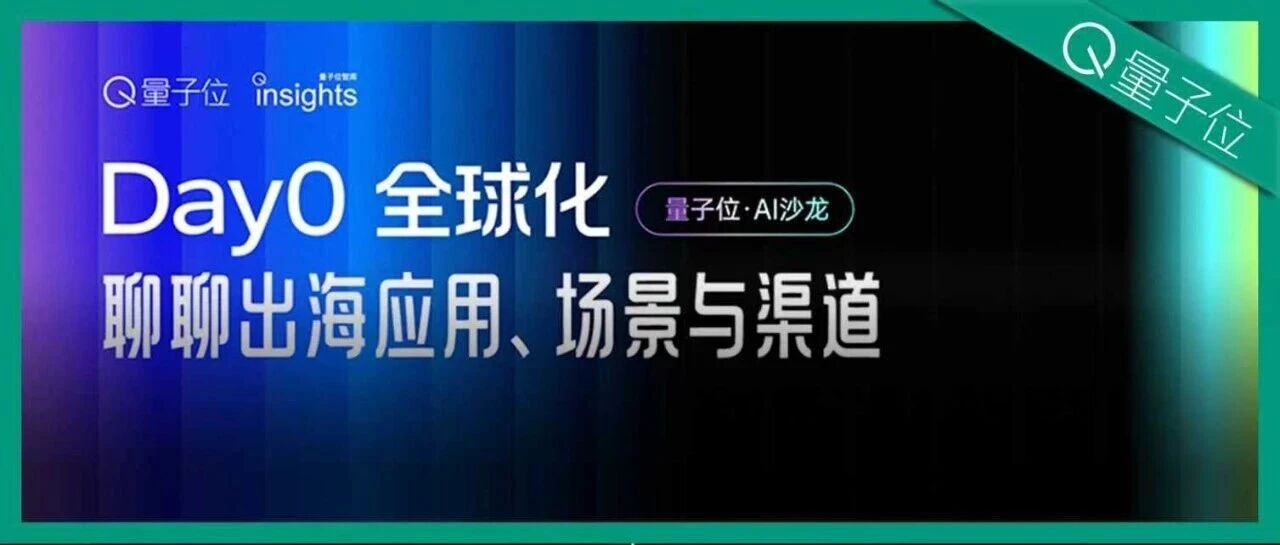
Core Insights - The article discusses the potential of AI startups in the context of globalization, emphasizing the need for these companies to target global markets from their inception [1][2]. Group 1: Event Overview - A salon event is organized featuring industry leaders from companies like Xiaoying Technology, FluxA, Google, JD, Agora, and Meshy, who will share reusable experiences in global expansion [4]. - The event aims to provide insights into the application, scenarios, and channels for AI startups looking to expand internationally [6][9]. Group 2: Guest Profiles - Lin Xiaodong, Vice President of Xiaoying Technology, has led the development of video editing tools and AI music applications that have achieved top rankings in various markets [12]. - Qiu Honglin, CTO of FluxA, is a co-founder with a background in architecture from Ant Group and Alibaba [13]. - Han Yuan, a Solutions Architect at Google Cloud, focuses on cloud solutions for AI applications [15]. - Li Jieyu, Product Head at JD, is working on AI-driven innovations in e-commerce [17]. - Yang Fan, AI Product Growth Lead at Agora, has extensive experience in the audio-visual and mobile internet sectors [18]. - Xu Shumu, responsible for 3D art at Meshy, has over 10 years of experience in the gaming and film industries, focusing on AI applications in these fields [19].


云计算进入分水岭:AWS重新加速,Azure掉队,阿里云的窗口期来了
美股研究社· 2026-03-23 12:32
Core Insights - The article emphasizes a shift in the cloud computing narrative from "scale" to "transformation," focusing on the ability to convert AI computing power into sustainable cash flow by Q4 2025 [1][2]. Group 1: Market Dynamics - By Q4 2025, the financial reports of the four major cloud providers will reveal significant differentiation, with some companies generating profits through technological barriers while others are burning cash to maintain ecosystems [2]. - The cloud computing industry is transitioning from an "infrastructure era" to an "intelligent era," indicating a fundamental change in competitive dynamics [2]. Group 2: Performance Analysis - AWS reported a 24% revenue growth, Google Cloud led with a 48% increase, and Azure maintained a 39% growth, but these figures mask deeper structural changes in profitability and capacity allocation [5]. - AWS's cloud revenue, while only 17% of total revenue, contributes over 50% of operating profit, showcasing its control over underlying computing costs through proprietary chips [5]. - Google Cloud's growth is driven by a high adoption rate of AI products, with 70% of customers using AI-related services, indicating a strong demand [6]. Group 3: Capital Expenditure Trends - Capital expenditures for cloud providers are projected to reach unprecedented levels, with AWS expected to spend $200 billion by 2026, Google between $175 billion and $185 billion, and Microsoft reporting $37.5 billion in a single quarter [8][9]. - The competition has shifted to controlling energy and computing power, with AWS planning to double its power capacity by 2027 [9]. Group 4: Strategic Approaches - AWS adopts an "extreme external supply model," focusing on selling AI computing power directly to customers, which ensures strong cash flow but carries risks of asset underutilization [10]. - Microsoft prioritizes internal needs for its AI products, which may limit the growth of its cloud business and raise questions about its profitability [10]. - Google emphasizes a "technology-driven model," focusing on proprietary TPU systems, but may face challenges in monetization speed [10]. Group 5: Alibaba Cloud's Position - Alibaba Cloud is taking a more restrained approach, with a 36% revenue growth and a focus on ROI, avoiding the heavy capital expenditures seen in Western counterparts [12][13]. - The Chinese market presents significant growth opportunities, allowing Alibaba Cloud to focus on emerging demand rather than competing for existing market share [13]. - Alibaba Cloud's shift towards "Model as a Service" (MaaS) indicates a strategic pivot to participate in value distribution rather than just infrastructure leasing [13][14]. Group 6: Future Outlook - The future winners in cloud computing will be those who can efficiently convert AI capabilities into profits, rather than merely possessing the most computing power [15][16]. - The industry may evolve into a dichotomy between "heavy asset computing empires" and "light model + application ecosystems," with the latter potentially offering better risk management and value realization [16].




国内云厂商涨价潮背后:有人提价,有人降价,各有盘算
雷峰网· 2026-03-23 10:06
Core Viewpoint - The article discusses the recent price increases in the cloud computing industry, driven by rising costs and unprecedented demand for computing power due to AI applications. This marks a significant shift from previous price wars to a systematic transmission of cost pressures to the market [2][3]. Group 1: Price Increase Dynamics - On March 18, 2023, Alibaba Cloud announced a price increase, signaling a broader trend among cloud providers to pass on cost pressures after years of price competition [2][4]. - The surge in AI applications has led to an exponential increase in computing power demand, while supply constraints in GPU capacity, data centers, and electricity have made it difficult to keep up [3][11]. - Major cloud providers, including AWS and Google Cloud, have already raised prices, with AWS increasing prices for certain GPU services by 15% earlier in January 2023 [12][13]. Group 2: Different Strategies Among Cloud Providers - Cloud providers are adopting different strategies in response to the same cost pressures: some are selectively raising prices on AI-related services, while others are implementing broad price increases or maintaining current pricing to capture market share [4][16]. - The "Precision Pricing" group, represented by Alibaba Cloud, Tencent Cloud, and Baidu Cloud, focuses on raising prices for AI training products while keeping basic services stable to avoid losing customers [18][21]. - The "Comprehensive Pricing" group, exemplified by UCloud, has opted for widespread price increases across core products, reflecting a more aggressive approach to profit recovery [26][28]. - Some providers, like JD Cloud, have chosen not to raise prices, instead offering discounts to attract cost-sensitive customers, indicating a strategic decision to differentiate themselves in a competitive market [30][31]. Group 3: Market Implications - The article highlights that the cloud market is experiencing a strategic shift, where price increases are not uniform but rather reflect individual company strategies based on their market position and customer base [17][31]. - The timing of price adjustments, such as Alibaba Cloud's decision to implement changes after a specific date, is designed to encourage customers to place orders before the increase takes effect, potentially boosting short-term revenue [22][23]. - The competitive landscape is evolving, with companies needing to balance profitability with market share, as any misstep in pricing strategy could lead to customer attrition to competitors [16][21].




欧洲股市、美股股指期货全线跳水,超微电脑盘前跌超5%,科技巨头、芯片股普跌
21世纪经济报道· 2026-03-23 09:15
Market Overview - The Asia-Pacific stock market experienced a significant decline on March 23, with European markets also opening lower. The Euro Stoxx 50 index fell nearly 1.7%, while the German DAX index dropped close to 2%. The European Stoxx 600 index decreased by 1.6%, marking an 11% decline from its February peak [1][2]. U.S. Market Performance - U.S. stock index futures saw a collective drop, with the Dow Jones futures down by 0.61%, the S&P 500 futures down by 0.73%, and the Nasdaq 100 futures down by 0.82% [2]. Technology and Semiconductor Sector - Major U.S. tech and semiconductor stocks faced pre-market declines. Micron Technology fell over 3.5%, TSMC dropped more than 2%, and AMD decreased nearly 2%. Other notable declines included Facebook, Google, and Amazon, each down over 1%. Additionally, Advanced Micro Devices saw a pre-market drop exceeding 5%, following a significant decline of over 33% in the previous week [4][5]. Gold and Mining Stocks - The international gold and silver markets experienced a sharp decline, with spot gold falling below $4100 per ounce and spot silver dropping below $61 per ounce. This volatility also impacted U.S. gold mining stocks, with significant pre-market losses reported: Sibanye Stillwater down 9.7%, Newmont down 7%, and Barrick Gold down nearly 6% [6][9].


Warren Buffett's Successor, Greg Abel, Has $64 Billion of Berkshire Hathaway's Assets Invested in 3 Unstoppable AI Stocks
The Motley Fool· 2026-03-23 09:06
Core Insights - Warren Buffett retired as CEO of Berkshire Hathaway after nearly 60 years, overseeing a remarkable gain of over 6,000,000% in Class A shares [1] - His successor, Greg Abel, now manages a portfolio of $313 billion, with significant investments in AI-related stocks, including $64 billion in Apple, Alphabet, and Amazon [2] Company Summaries Apple - Berkshire Hathaway has invested $57.9 billion in Apple, which is viewed as a consumer goods company, primarily generating revenue from physical devices [3] - Apple introduced Apple Intelligence, a generative AI system integrated into its devices, allowing users to perform tasks like object removal in photos and text summarization [4] - CEO Tim Cook is focusing on subscription services to enhance margins and customer loyalty, mitigating revenue fluctuations from iPhone sales [5] Alphabet - Berkshire Hathaway's investment in Alphabet has grown from $4.3 billion to $5.5 billion [7] - Alphabet's future growth is driven by its Google Cloud platform, which has seen a 48% sales growth in the last quarter, benefiting from generative AI integration [8] - The company has executed a significant share repurchase program, buying back $346 billion of its stock since 2016, second only to Apple's $841 billion [9] Amazon - Despite Warren Buffett reducing Berkshire's stake in Amazon by 77%, the company still holds a $490 million investment [10] - Amazon is a leader in both e-commerce and cloud services, with AWS accounting for nearly a third of global cloud infrastructure spending, achieving 24% sales growth in the last quarter [11] - Amazon's stock is currently trading at a median of 9.9 times forecast cash flow for 2027, significantly lower than the 30 times cash flow seen in the 2010s [12]


AI芯片十年路线图:英伟达和谷歌等联手撰文
欧米伽未来研究所2025· 2026-03-23 08:07
Core Viewpoint - The article emphasizes the urgent need for a unified long-term strategy to coordinate the development of AI and hardware, highlighting the challenges posed by the rapid evolution of AI models and the limitations of existing hardware architectures [3][4][16]. Group 1: AI and Hardware Development - AI and hardware are evolving at an unprecedented pace, with the growth of large AI models demanding more powerful and efficient hardware [3][4]. - The current lack of a cohesive strategy in the global research community is hindering the development of sustainable and adaptive AI systems [4][16]. - The energy consumption of AI has reached unsustainable levels, necessitating a focus on efficiency alongside scale [4][16]. Group 2: Ten-Year Roadmap - The proposed ten-year roadmap includes a collaborative design and development approach for AI and hardware, focusing on energy efficiency, system integration, and cross-layer optimization [4][5]. - Key challenges identified include the gap between training and inference, infrastructure limitations, and equitable access to advanced hardware [4][5]. - Future success is defined by a 1000-fold increase in AI training and inference efficiency, the creation of energy-efficient systems, and the integration of human-centered principles into AI design [4][5]. Group 3: Key Insights and Innovations - Achieving a 1000-fold efficiency increase requires deep collaboration between AI models and hardware architectures, addressing data transfer bottlenecks through memory-centric computing [7][24]. - The integration of AI into every stage of design is essential to bridge the gap between AI innovation and hardware development [8][26]. - Reliable AI systems must balance accuracy, robustness, and efficiency, necessitating formal verification and runtime monitoring [9][10]. Group 4: Future Trends and Applications - The next leap in AI innovation will combine data-driven learning with physical laws, enhancing applications in scientific discovery and robotics [10][11]. - Compact, energy-efficient models are crucial for performance parity with leading models while operating efficiently on edge and embedded platforms [11][12]. - The development of AI-driven design automation tools is vital for exploring vast design spaces and optimizing trade-offs across layers [44]. Group 5: Collaborative Efforts and Partnerships - A call for coordinated national initiatives is made to share infrastructure, cultivate talent, and strengthen cross-sector collaboration [5][14]. - The academic community plays a critical role in building a sustainable and competitive AI ecosystem, complementing industry advancements [12][13]. - Bridging the gap between exploratory academic research and industry-driven goals is essential for effective AI and hardware innovation [14][13].


喝点VC|a16z发布消费级AI应用百强榜单,想知道AI的未来,去看看十几岁的女孩在玩什么
Z Potentials· 2026-03-23 02:20
Core Insights - The report "Top 100 Gen AI Consumer Apps" highlights significant growth in AI applications, particularly with ChatGPT being the largest AI product globally, yet only 10% of the population uses it weekly, indicating substantial future growth potential [3][4] - The competition for consumer attention among AI platforms is intensifying, with companies like ChatGPT, Gemini, and Claude focusing on their ideal customer profiles to gain a competitive edge [4][5] - The report includes non-native AI products that are now primarily driven by AI, such as Canva and Notion, showcasing the expanding application of AI beyond traditional platforms [4][5] Market Dynamics - ChatGPT has a user base that is 2.7 times larger than Gemini on the web and 2.5 times larger on mobile, while Claude's user base is significantly smaller, indicating a clear market leader [6][9] - The differentiation in product offerings is evident, with Claude focusing on professional consumers and high-end data sources, while ChatGPT targets broader consumer markets [9][10] - The emergence of application stores for AI products is changing the landscape, with ChatGPT aiming to monetize through ads and subscriptions, while Claude relies solely on subscription models [13][14] Global AI Trends - The report identifies unique trends in AI adoption in countries like Russia and China, where the usage of ChatGPT and Gemini is notably low, with only 15% adoption, as local alternatives dominate [22][23] - A heatmap in the report shows Singapore leading in per capita AI adoption, while the U.S. ranks 20th, highlighting cultural differences in AI acceptance and usage [23][26] - The report notes that smaller countries with tech-savvy populations tend to have higher AI adoption rates compared to larger markets like the U.S., where skepticism about AI is prevalent [26][27] Evolution of Creative Tools - The evolution of creative tools in AI has shifted, with fewer standalone image generators as core models like ChatGPT and Gemini become proficient in generating basic images [28][29] - Music, voice, and video are emerging as areas where independent companies are gaining traction, with products like Suno and Eleven Labs rising in popularity [30][31] - The report discusses the potential for AI tools to drive cultural changes, as different regions develop unique creative applications based on local preferences [27][28] Agent Development - The report emphasizes the rapid development of AI agents, with products like Manus showing significant growth and the ability to operate across multiple platforms [44][45] - The integration of AI agents into consumer applications is expected to expand, allowing for more complex tasks to be automated and enhancing user experience [51][52] - The future of AI products is likely to focus on delivering outcomes rather than just inputs, positioning agents as a key component in the evolution of AI technology [51][52] Desktop AI Products and Browsers - The rise of desktop AI applications is noted, with products like Granola and Cowork becoming increasingly important, although tracking their usage remains challenging [46][47] - AI-native browsers are emerging, with products like Perplexity leading the way, but the transition for consumers to switch browsers remains a significant hurdle [47][48] - The report suggests that the development of AI applications will continue to evolve, with a focus on integrating AI into everyday tools and workflows [46][48]