Intuitive(ISRG)

Search documents
药闻 | 深耕创新沃土,布局未来医疗——专访直观医疗全球董事会主席古迦睿
Zhong Guo Jin Rong Xin Xi Wang· 2025-10-14 11:27
Core Insights - The 37th Shanghai International Entrepreneurs Consultation Meeting was held on October 12, where Gary Guthart, Chairman of Intuitive Surgical, emphasized the company's commitment to Shanghai and its role in the digital transformation of healthcare [1][3] - Intuitive Surgical is the largest surgical robotics company globally, with over 16.94 million surgeries performed, including over 2.68 million in 2024 alone [3] - Guthart highlighted the importance of a robust medical technology ecosystem in China, particularly in Shanghai, which aligns with the company's goals of providing high-quality medical experiences and reducing overall treatment costs [3][4] Company Strategy - Intuitive Surgical's localization efforts in China began in 2006, with a significant partnership established in 2017 with Fosun Pharma, marking a key milestone in its local development [5] - The company has invested approximately 700 million RMB in a new integrated R&D, production, training, and service center in Shanghai, further solidifying its local presence [5][6] - Intuitive Surgical has established seven regional training centers in China, with plans for further expansion, and has served over 800,000 patients with its surgical robots [6] Technological Innovation - The company is focusing on integrating AI and cloud computing into its surgical systems, predicting a "breakthrough" in medical technology over the next 30 years [10][11] - The latest generation of the da Vinci surgical system boasts 10,000 times the computing power of previous models, enhancing data analysis and surgical performance [10] - Intuitive Surgical aims to develop more AI tools in collaboration with other companies in the ecosystem, emphasizing the importance of human-machine collaboration in achieving high-quality medical outcomes [11][12] Industry Outlook - The future competition in the surgical robotics industry will focus on the entire ecosystem, including technology, training, and service support, rather than just product comparisons [12] - The company believes that successful healthcare outcomes will stem from the collaboration of skilled professionals and advanced technologies, rather than automation replacing human roles [11][12]



Why Congress Is Buying Intuitive Surgical Ahead of Earnings
MarketBeat· 2025-10-14 11:08
Core Insights - Intuitive Surgical is poised for a potential breakout as it approaches its earnings report on October 21, 2025, driven by recent developments that enhance its growth outlook [1][2][3] Regulatory Developments - Recent FDA approvals and European expansion have significantly broadened Intuitive Surgical's addressable market, likely leading to increased adoption of its systems in the U.S. and internationally [2][5] - Speculation around key regulatory clearances, coupled with buying activity from U.S. Congress members, has led to a premium valuation for the company, indicating heightened growth expectations [3][8] Technological Advancements - The company is advancing artificial intelligence-driven robotics for surgical procedures, which allows for remote operations with high precision, creating competitive advantages that are difficult to breach [4][5] - The Ion endoluminal system trials have been cleared in both Europe and the U.S., involving over 2,000 subjects, which is expected to diversify and accelerate revenue growth [6] Market Sentiment - Intuitive Surgical's stock is currently trading at 70% of its 52-week high, presenting an attractive risk-to-reward ratio for investors [7] - Recent purchases by congressional members suggest insider confidence in the company's future prospects, particularly in light of upcoming earnings reports [8] Financial Performance - The company reported net earnings per share (EPS) of $2.19, exceeding the MarketBeat consensus of $1.93 by 13%, indicating strong financial performance [11] - Analyst consensus price target for the stock is $589.43, suggesting a 37.2% upside potential from the current trading price [10] Sector Performance - The Healthcare Select Sector SPDR Fund has underperformed the S&P 500 by approximately 22% over the past year, indicating a potential recovery opportunity for healthcare stocks, including Intuitive Surgical [12]

The Ithaka Group Q3 2025 Commentary
Seeking Alpha· 2025-10-14 03:55
Market Overview - U.S. equity markets continued to rise in Q3, with the Russell 1000 Growth Index increasing by 10.5% and achieving 24 new all-time highs [3] - The S&P 500 rose by 8.1%, the Nasdaq 100 advanced by 11.2%, and the Dow Jones Industrial Average increased by 5.2% [3] - The rally was largely driven by significant infrastructure investments in the AI sector, including a $90 billion plan announced by President Trump and various multi-billion dollar partnerships among major AI companies [3] Economic Impact - Deutsche Bank estimates that tech spending, primarily in AI, will contribute approximately 1-1.5 percentage points to U.S. GDP growth in 2025 [3] - The U.S. government has been running around $2 trillion in fiscal deficits for the first 11 months of FY-2025, which, along with easing monetary policy, has supported equity market performance [3][6] Monetary Policy - The Federal Reserve cut the Federal Funds rate by 25 basis points to a range of 4.00%-4.25% in mid-September, with a more accommodative policy outlook for the coming years [6] - The Fed's median projection for the fed funds rate in 2025 has decreased to 3.6% from 3.9% [6] Sector Performance - Ithaka's portfolio underperformed the Russell 1000 Growth Index by 940 basis points in Q3, with stock selection and sector allocation negatively impacting performance [8] - Positive relative returns were generated in the Financial Services sector, while Technology and Consumer Discretionary sectors were the largest sources of underperformance [9] Key Contributors and Detractors - Top contributors included NVIDIA (18.0% return impact), Robinhood Markets (52.9%), and Shopify (28.8%) [10] - Major detractors were ServiceNow (-10.5%), Chipotle Mexican Grill (-24.6%), and Intuitive Surgical (-17.7%) [10] AI Investment Landscape - The AI infrastructure buildout is projected to reach $400 billion to $600 billion in 2025, with U.S. hyperscalers expected to account for $300 billion to $350 billion of this total [18] - The current wave of AI-driven capital expenditures is compared to historical infrastructure projects, indicating a significant shift in technology investment [18] Future Outlook - The ongoing AI buildout may redefine human interaction across various sectors, with companies viewing this as a once-in-a-generation opportunity [18][21] - Early productivity gains from AI implementations have shown efficiency improvements of 20%-50% in key business operations [20]






撕开铁幕裂缝:国产手术机器人的千亿逆袭
Tai Mei Ti A P P· 2025-10-12 10:47
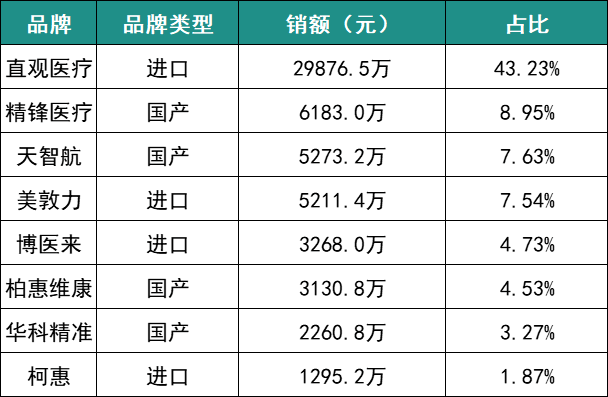
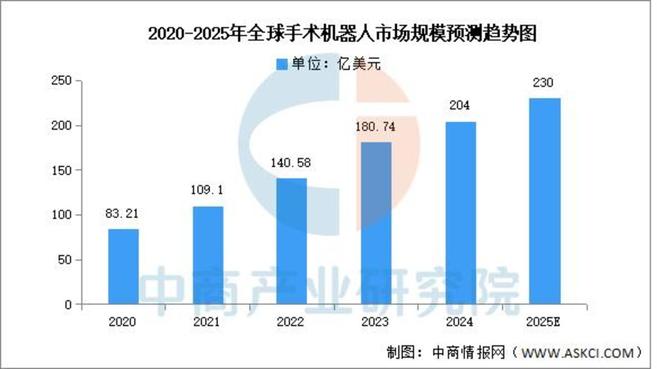
Core Insights - The article discusses the shift in the surgical robot market in China from being dominated by foreign brands to a more competitive landscape with domestic companies making significant advancements in technology and clinical applications [1][2][3]. Market Overview - The global surgical robot market is projected to grow from approximately $18.074 billion in 2023 to $20.4 billion in 2024, with a compound annual growth rate (CAGR) of 23.75% over the next five years [1]. - The Chinese surgical robot market is expected to reach approximately 9.59 billion yuan in 2024, with a CAGR of 34.5%, and is projected to grow to 11.03 billion yuan by 2025 [2]. Competitive Landscape - Currently, the domestic surgical robot market is characterized by a "foreign dominance, domestic pursuit" trend, with the top eight brands in sales being evenly split between imported and domestic brands [3]. - As of 2025, the market share of domestic brands in the surgical robot sector is approximately 29.82%, while imported brands hold 70.18% [4]. Brand Performance - Intuitive Surgical's Da Vinci system maintains a leading position in the laparoscopic surgical robot market with a market share of 53.8% as of Q2 2025, generating revenue of $2.44 billion (approximately 17.5 billion yuan) with a year-on-year growth of 21.4% [5][7]. - Domestic brands are gaining traction, with a significant increase in the number of Da Vinci robots installed in China, rising from a 42% market share to 62% [7]. Growth of Domestic Brands - From January to May 2025, the number of domestic surgical robots awarded contracts increased by 82.9%, indicating a strong competitive push against foreign brands [9]. - The domestic market for laparoscopic surgical robots has seen a domesticization rate of approximately 44.4% in Q1 2025, meaning nearly 4.5 out of every 10 new installations are from domestic brands [9]. Pricing Dynamics - Domestic surgical robots are priced significantly lower than their foreign counterparts, with prices for domestic laparoscopic robots typically ranging from 12 million to 18 million yuan, compared to the Da Vinci system's price range of 14.99 million to 24.92 million yuan [13][14]. - The price competition has intensified, with some domestic brands offering robots at prices as low as 5.38 million yuan, while the Da Vinci system averages around 23 million yuan [25]. Challenges and Opportunities - Despite rapid growth, domestic surgical robot manufacturers face challenges such as reliance on imported core components, which account for 70-80% of the total cost [17]. - The technological gap between domestic brands and international leaders like Intuitive Surgical remains significant, with the latter holding over 700 patents that create a strong barrier to entry [20]. Future Directions - To succeed, domestic surgical robot companies must innovate through technology upgrades and business model transformations, such as integrating 5G and AI technologies to enhance operational efficiency and reduce costs [38][40]. - The Chinese government has introduced supportive policies, including insurance coverage for surgical robots, which could facilitate market penetration and adoption [44][45]. Conclusion - The future of domestic surgical robots hinges on achieving technological independence, leveraging AI and 5G, and establishing sustainable business models to transition from merely entering the operating room to securing a stable presence within it [46].


欧莱雅董事长建议上海打造科创与消费“双核驱动飞轮”|第37次上海市咨会
Xin Lang Cai Jing· 2025-10-12 09:53
Group 1 - The Shanghai International Entrepreneur Consultation Conference gathered 40 global business leaders to provide insights for Shanghai's high-quality development [1] - The conference is the 37th of its kind, with 24 member companies listed in the 2025 Fortune Global 500 and 7 in the Forbes 2000, collectively valued over $3.5 trillion and contributing over 35 billion RMB in annual taxes [1] - L'Oréal's chairman proposed a "dual-core driving flywheel" model for Shanghai, emphasizing the synergy between technological innovation and consumer demand [1][3] Group 2 - L'Oréal's sales in China saw a year-on-year increase of approximately 3% in Q2, indicating a significant recovery in the market [3] - Schneider Electric's chairman suggested optimizing industrial policies to attract high-end manufacturing headquarters and promote digital and green transformations [4] - Schneider Electric's EcoFit low-voltage distribution innovation center was established in Shanghai, providing end-to-end services for low-voltage component adaptation [5] Group 3 - Intuitive Surgical's chairman highlighted the need for Shanghai to balance innovation, product quality, and patient safety in the biomedicine sector [5] - Intuitive Surgical has been involved in over 800,000 surgeries in China since 2006 and has established seven regional training centers, training over 15,000 doctors [5] - The company aims to continue its growth in China, aligning with the "Healthy China 2030" vision and contributing to the local medical technology ecosystem [6]

华平投资纪杰、高瓴张磊……近40位全球顶尖企业家,最新发声!
证券时报· 2025-10-12 09:23
Core Viewpoint - The article emphasizes the importance of systematic planning for AI development in Shanghai, highlighting its potential to significantly contribute to global GDP and transform various industries through innovation and collaboration [3][4]. Group 1: AI Development and Economic Impact - AI is viewed as a transformative force comparable to the industrial revolution, with the potential to contribute up to 15% to global GDP over the next decade [3]. - Shanghai is encouraged to adopt a city-level planning approach for AI development, integrating it as infrastructure rather than limited pilot projects, and fostering cross-industry collaboration [3]. - The success of AI in Shanghai relies on three key elements: talent, data, and computing power, necessitating efforts to attract and retain top global talent [3][4]. Group 2: Data Sharing and Privacy - The rapid advancement of AI raises concerns regarding data privacy and sharing, which need to be addressed to build a trustworthy ecosystem [6][7]. - Cross-border data sharing is deemed essential for maximizing the value of data, with suggestions to simplify compliance processes and foster an open innovation ecosystem [7][8]. Group 3: Capital Allocation and Financial Systems - There is a call for improving capital allocation efficiency within Shanghai's financial system, directing savings towards innovation and small to medium enterprises [9][10]. - The insurance industry is highlighted as a crucial driver for growth and resilience, with recommendations to leverage Shanghai's insurance capabilities to create a comprehensive risk protection system [10].



(投资中国)直观医疗全球董事会主席盖瑞·古萨特:与中国共创医疗科技新机遇
Zhong Guo Xin Wen Wang· 2025-10-12 07:07
Core Insights - The global leader in surgical robotics, Intuitive Surgical, emphasizes China's vast market potential and its ability to drive breakthroughs in medical technology [1][3]. Company Developments - Intuitive Surgical established a joint venture with Fosun Pharma in 2017, marking a significant step in aligning technology with local resources [3]. - The new headquarters and industrial base in Pudong, Shanghai, with an investment of approximately 700 million RMB, is set to become the largest integrated center for R&D, production, training, and service in the Asia-Pacific region [3][4]. - The fourth-generation Da Vinci surgical robot received regulatory approval in June 2023, achieving mass production within the same year [3][4]. Industry Trends - The Shanghai government has launched an action plan to promote the development of high-end medical device industries, with a focus on laparoscopic surgical robots, aligning with Intuitive Surgical's product development [5]. - The surgical robotics industry is at a "technological convergence inflection point," with expectations for a "doubling breakthrough" in medical technology over the next 30 years, driven by advancements in precision surgical tools, AI, and cloud computing [5][6]. Strategic Recommendations - Intuitive Surgical suggests policy trials for digital surgical technologies to enhance the integration of data, AI, and surgical robots [6]. - The company advocates for Shanghai to become an international center of excellence for surgical robotics, fostering collaboration between domestic and foreign enterprises [6]. - The focus is on achieving human-machine collaborative precision medicine, leveraging AI to reduce healthcare burdens and improve treatment outcomes [6][7].

美股市场速览:贸易冲突再起,全风格恐慌下跌
Guoxin Securities· 2025-10-12 05:14
Investment Rating - The report maintains a "Weaker than Market" rating for the U.S. stock market [1] Core Insights - The report highlights a significant market downturn due to renewed trade conflicts, with the S&P 500 dropping by 2.4% and the Nasdaq by 2.5% [3] - Only three sectors experienced gains, while 21 sectors saw declines, indicating widespread market fear [3] - The semiconductor sector attracted substantial capital inflows, contrasting with the overall outflow from the market [4] Summary by Sections Price Trends - The S&P 500 fell by 2.4%, and the Nasdaq decreased by 2.5% due to trade tensions [3] - The performance of sectors varied, with the Food, Beverage & Tobacco sector increasing by 1.7%, while Durable Goods & Apparel dropped by 8.4% [3] Capital Flows - The estimated capital flow for S&P 500 components was -$40.6 billion, indicating a significant outflow compared to the previous week [4] - The semiconductor products and equipment sector saw a capital inflow of $83.2 million, while the automotive sector experienced a $25.7 million outflow [4] Earnings Forecast - The report indicates a 0.3% upward adjustment in the earnings per share (EPS) forecast for S&P 500 components, with 21 sectors seeing an increase in earnings expectations [5] - The materials sector led the upward revisions with a 1.0% increase, while the energy sector faced a downward adjustment of 0.5% [5]



What Is One of the Best Healthcare Stocks to Buy Right Now? (Hint: It's a Robotics Company)
The Motley Fool· 2025-10-11 12:03
Company Overview - Intuitive Surgical specializes in robotic surgery equipment, with over 16 million procedures performed and more than 9,900 machines installed globally across 72 countries [2] - The company has averaged annual gains of nearly 24% over the past decade, indicating strong historical performance [2] Financial Performance - In the second quarter, Intuitive Surgical's procedure volume grew by 17% year over year, while revenue increased by 21% [3] - A significant portion of revenue, 84%, comes from servicing, supplies, and accessories rather than the systems themselves, suggesting a stable revenue stream [3] Market Challenges - The stock is currently down 15.5% year to date, attributed to uncertainties from tariffs imposed by the Trump administration and competition from Medtronic's new robotic urologic surgery system [4] - Despite the current stock price decline, the forward-looking price-to-earnings (P/E) ratio of 48 is below its five-year average of 56, indicating potential for future growth [5]

千亿手术市场,正在“换刀”
Hu Xiu· 2025-10-10 14:04
Core Insights - The dominance of Intuitive Surgical's da Vinci surgical robot system in the U.S. market is being challenged by the rise of domestic surgical robot companies in China, leading to a more competitive landscape [1][2] - The market share of domestic laparoscopic surgical robots in China is projected to grow significantly, indicating a shift from foreign dominance to a more balanced competition [4][5] Market Overview - The global surgical robot market is expected to reach approximately $18.074 billion in 2023 and $20.4 billion in 2024, with a compound annual growth rate (CAGR) of 23.75% over the next five years [6] - The Chinese surgical robot market is anticipated to grow to approximately 9.59 billion yuan in 2024, with a CAGR of 34.5%, reaching 11.03 billion yuan by 2025 [8] Competitive Landscape - By the first quarter of 2025, the number of imported and domestic brands in the top eight sales positions in China is expected to be equal, with two out of the top three brands being domestic [9] - Despite the increasing presence of domestic brands, imported brands still hold a significant market share, with 70.18% compared to 29.82% for domestic brands [10] Technological Advancements - Domestic surgical robot companies are making strides in technology, with a notable increase in the number of approved products and market entries [41][42] - The introduction of AI and remote surgical technologies is expected to enhance the capabilities of domestic surgical robots, potentially increasing market penetration [60][63] Financial Performance - Domestic companies like Tianzhihang have reported significant revenue growth, with a 114.89% increase in revenue in the first half of 2025 compared to the previous year [32][33] - However, many domestic companies are still operating at a loss, indicating challenges in achieving sustainable profitability [46][50] Challenges and Opportunities - The reliance on imported core components poses a significant challenge for domestic surgical robot manufacturers, as these components account for 70%-80% of the total cost [35] - The ongoing U.S.-China trade tensions have created opportunities for domestic brands to capture market share by offering more cost-effective alternatives to imported systems [24][26] Policy Support - Recent government policies have begun to support the integration of surgical robots into healthcare systems, with reimbursement rates for surgical robot procedures being established in various provinces [73][74] - The promotion of a "product + service" model by local governments aims to enhance the competitiveness of domestic surgical robot companies [68] Conclusion - The future of domestic surgical robots in China will depend on technological advancements, innovative business models, and effective policy support to transition from merely entering the market to establishing a strong foothold [75]