Workflow
JD(JD)
icon
Search documents
年货消费“变天”了!AI正在改写电商的底层逻辑
Xin Jing Bao· 2026-01-22 03:12
Core Insights - The 2026 "New Year Goods Festival" e-commerce competition has intensified, with AI technology becoming a core variable, shifting the industry focus from scale expansion to efficiency improvement [1] - Major e-commerce platforms like Taobao, JD.com, and Douyin are leveraging AI to enhance their operations, while small and medium-sized businesses are utilizing lightweight tools to navigate the competitive landscape [1][2] - The integration of policy support and technological advancements is creating a unique environment for this year's festival, with the Ministry of Commerce leading the "Buy in China" initiative and additional financial incentives boosting consumer spending [1][7] Group 1: AI Integration in E-commerce - Major platforms are using AI to enhance supply chain efficiency and customer experience, with JD.com launching the "AI New Year Map" to predict regional demand variations [3] - AI tools are helping merchants identify commercial hotspots and match products with target users, significantly improving operational conversion rates [2][5] - The application of AI in e-commerce is shifting from traditional recommendation systems to generative models, enhancing user interaction and experience [7][8] Group 2: Consumer Experience and Market Trends - Consumer behavior is evolving with AI-driven instant retail, allowing for quick delivery and personalized recommendations, as evidenced by the sales of imported cherries and strawberries [4][5] - The AI-driven approach is leading to a significant increase in sales for certain product categories, with food sales expected to see double-digit growth this year [2][4] - The trend of "instant gratification" in consumer purchasing is becoming more pronounced, with AI facilitating a more seamless shopping experience [4][5] Group 3: Challenges for Small and Medium-sized Businesses - While AI presents opportunities for cost reduction and efficiency, small and medium-sized businesses face challenges in effectively utilizing these tools, including high understanding costs and the need for time to adapt [8] - Some small merchants have experienced difficulties due to over-reliance on AI for product selection, highlighting the need for a balance between AI insights and human judgment [3][8] - The current landscape indicates that while larger businesses benefit significantly from AI, smaller players must navigate various obstacles to fully leverage these technologies [8]
布局中国互联网・头部 AI 应用追踪:2026 年六大核心 AI 主题;聚焦 AI 技术、AI 助手与芯片供应-Navigating China Internet_ Top AI_apps tracker_ Laying out six key AI themes for 2026; focuses on AI adtech, AI assistants & chip supply
2026-01-22 02:44
Summary of Key Points from the Conference Call Industry Overview - The focus is on the **China Internet** sector, particularly regarding **AI applications** and **advertising technology** (adtech) as key themes for 2026 [1][2]. Core Themes for 2026 1. **AI/Adtech Evolution**: - Shift towards ROI-based advertising and new marketing strategies like Answer & Generative Engine Optimization (AEO/GEO) [1][19]. 2. **AI Model Breakthroughs**: - Focus on long-context, multi-modal models, and cost-efficient architectures [1][22]. 3. **Proliferation of To-C Assistants**: - Emergence of AI super entry-points, impacting traditional search markets and app user traffic [1][23]. 4. **Chip Supply Dynamics**: - Access to next-generation chips will determine the competitive gap between Chinese and US AI models [1][24]. 5. **Global Market Inroads**: - Increased monetization through a mix of open and closed-source models, with a focus on subscription and API revenue streams [1][26]. 6. **AI Inference Demand**: - Continued growth in AI inference demand will drive cloud revenue and data center demand [1][27]. Company Insights - **Alibaba** and **Tencent** are identified as the best-positioned mega-cap stocks in the China internet sector for the long term [2]. - **PDD** is highlighted as a Buy idea due to its valuation discount and strong user engagement [2]. Engagement Metrics - Overall time spent on the top 400 mobile apps increased by **7% YoY** in December 2025, with notable growth in **Douyin** (+19% YoY) and **eCommerce** engagement (+10% YoY) [3][8]. - **Weixin** and **Weibo** both saw a **5% YoY** increase in time spent [8]. Sector Performance - **Cloud & Data Centers** ranked as the top sub-sector, followed by **Games & Entertainment** and **AI Models** [2][14]. - **JD** and **Taobao** showed strong growth in eCommerce time spent, with increases of **38%** and **9% YoY**, respectively [8]. Notable Trends - **AI Engagement**: Domestic AIGC application engagement rose by **16% MoM**, driven by apps like **Doubao** and **Qwen** [8]. - **Recruitment Platforms**: **Boss Zhipin** maintained leadership in time spent share at **64%** in December [12]. - **Real Estate**: **Beike Zhaofang** saw a **9% YoY** increase in MAUs [12]. Challenges and Regulatory Environment - Cross-border eCommerce faces increasing regulatory pressure, with the EU imposing a **€3 customs duty** on low-value parcels starting July 2026 [8]. Conclusion - The China Internet sector is poised for significant transformation driven by AI advancements, with key players like Alibaba and Tencent leading the charge. The focus on ROI-based advertising, AI model breakthroughs, and global market expansion will shape the competitive landscape in the coming years.
英特尔涨11.7%,AMD涨7.1%,美光科技涨6.6%,英伟达涨2.9%
财联社· 2026-01-22 00:39
Core Viewpoint - The U.S. stock market experienced a significant rebound following President Trump's cancellation of new tariffs on European countries and his announcement of a "framework agreement" regarding Greenland [1][3]. Market Performance - The Dow Jones Industrial Average rose by 1.21%, closing at 49,077.23 points; the S&P 500 increased by 1.16%, ending at 6,875.62 points; and the Nasdaq Composite gained 1.18%, finishing at 23,224.82 points [2]. Political Developments - Trump stated at the World Economic Forum in Davos that he would not use military force to acquire Greenland, which positively influenced the stock market. He mentioned a productive discussion with NATO Secretary General Mark Rutte, leading to a future agreement framework concerning Greenland and the Arctic region [3]. - Trump had previously announced a 10% tariff on goods from Denmark, Norway, Sweden, France, Germany, the UK, the Netherlands, and Finland, set to take effect on February 1, with a potential increase to 25% by June 1 if an agreement on Greenland was not reached [4]. Market Reactions - The stock market had previously declined sharply due to Trump's escalation of tariff threats and the possibility of military action regarding Greenland, marking the worst single-day performance since October 10 [6]. - The market's reaction to Trump's tariff cancellation reflects a trend where investors no longer assume his statements will be executed, indicating a level of unpredictability in his administration's policies [7]. Stock Performance - Major technology stocks mostly rose, with Nvidia up 2.95%, Apple up 0.39%, Microsoft down 2.29%, Google up 1.98%, Amazon up 0.13%, Meta up 1.46%, Tesla up 2.91%, Broadcom down 1.14%, Oracle down 3.36%, Netflix down 2.18%, Micron Technology up 6.61%, AMD up 7.11%, and Intel up 11.72% [7]. - Chinese concept stocks also saw gains, with the Nasdaq Golden Dragon China Index rising 2.21%, Alibaba up 3.87%, JD.com up 2.43%, Pinduoduo up 1.40%, NIO up 2.41%, Xpeng up 1.70%, Li Auto up 2.48%, Bilibili up 5.65%, Baidu up 8.17%, while NetEase fell 4.07%, Tencent Music down 0.80%, and Pony.ai up 2.55% [7].
京东服饰“超级面料”选购指南发布
Sou Hu Cai Jing· 2026-01-21 23:16
Core Insights - The report titled "2025 Super Fabric Consumption Observation" was jointly released by JD Consumer and Industry Development Research Institute and five major brands, indicating a shift towards quality apparel through clear performance standards and transparent guidelines [1][2] Group 1: Market Trends - JD's data shows that the search volume for "four-season wool" has increased by over 20 times year-on-year, reflecting a strong consumer demand for versatile basic items that can be used in multiple scenarios [3][4] - Traditional views that wool is only for autumn and winter are being challenged, as consumers are increasingly looking for clothing that meets diverse needs [4] Group 2: Brand Performance - The sales revenue of the Qi Dai brand's Xiangyun silk clothing has grown by over 130% year-on-year, driven by three key consumption trends: younger design, diverse scenarios, and technological craftsmanship [3][4] - JD Fashion aims to continue providing high-quality and diverse trendy apparel, collaborating with more brand partners to enhance clothing quality assurance and improve the shopping experience for consumers [3][4]
JD.com, Inc. (JD) Outpaces Stock Market Gains: What You Should Know
ZACKS· 2026-01-21 22:45
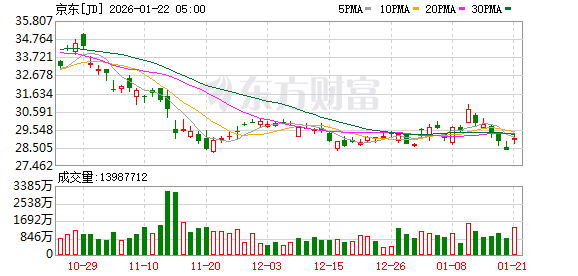
Core Viewpoint - JD.com, Inc. is facing significant challenges with a projected earnings per share (EPS) decline of 93.14% year-over-year, while revenue is expected to show a modest increase of 6.68% [2] Company Performance - JD.com closed at $29.07, reflecting a daily increase of 2.43%, outperforming the S&P 500's gain of 1.16% [1] - Prior to this trading day, JD.com shares had decreased by 2.41%, underperforming the Retail-Wholesale sector's gain of 3.08% [1] Earnings Forecast - The upcoming earnings report is expected to show an EPS of $0.07, a significant drop from the previous year [2] - For the entire year, the Zacks Consensus Estimates forecast an EPS of $2.5, indicating a decline of 41.31% compared to the previous year, with revenue expected to remain flat at $186.6 billion [3] Analyst Revisions - Recent revisions to analyst forecasts for JD.com are crucial as they reflect changes in short-term business dynamics [4] - Positive revisions in estimates are seen as indicators of analysts' confidence in the company's performance [4] Valuation Metrics - JD.com has a Forward P/E ratio of 9.76, which is below the industry average of 16.81, indicating a potential undervaluation [7] - The company’s PEG ratio stands at 5.22, significantly higher than the industry average of 1.08, suggesting that the stock may be overvalued relative to its expected earnings growth [7] Industry Context - JD.com operates within the Internet - Commerce industry, which is currently ranked 190 out of over 250 industries, placing it in the bottom 23% [8] - The Zacks Industry Rank indicates that the top 50% of rated industries outperform the bottom half by a factor of 2 to 1 [8]
美股异动 | 热门中概股上扬 哔哩哔哩(BILI.US)涨超7%
智通财经网· 2026-01-21 15:08
Group 1 - The Nasdaq China Golden Dragon Index rose by 2%, with popular Chinese stocks experiencing significant gains, including Bilibili (BILI.US) up over 7%, Baidu (BIDU.US) up over 6%, Pinduoduo (PDD.US) up over 3%, and Alibaba (BABA.US) and JD.com (JD.US) both up over 2% [1] - The Hang Seng Tech Index also rebounded, increasing by over 1% during the day [1] - Bridgewater Associates expressed optimism about Chinese stocks for the year, indicating that they remain attractive to some extent as corporate earnings expectations improve, following a significant rise in 2025 [1]
热门中概股上扬 哔哩哔哩(BILI.US)涨超7%
Zhi Tong Cai Jing· 2026-01-21 15:05
Core Viewpoint - The Nasdaq China Golden Dragon Index experienced a significant increase of 2%, with major Chinese concept stocks rising, indicating a positive sentiment towards Chinese equities [1] Group 1: Stock Performance - Bilibili (BILI.US) surged over 7%, Baidu (BIDU.US) increased by more than 6%, and Pinduoduo (PDD.US) rose over 3% [1] - Alibaba (BABA.US) and JD.com (JD.US) both saw gains exceeding 2% [1] - The Hang Seng Tech Index also rebounded, rising by more than 1% during the day [1] Group 2: Investment Sentiment - Bridgewater Associates expressed a continued positive outlook on Chinese stocks for this year [1] - The firm indicated that Chinese equities remain attractive to some extent, particularly following a significant rise expected in 2025, driven by improving corporate earnings expectations [1]
京东发布JoyInside软硬一体化方案 已接入超40家头部硬件品牌
Group 1 - JD held an AI toy conference in Suqian, Jiangsu, where it launched the JoyInside integrated solution for smart hardware, emphasizing high compatibility across various hardware, scenarios, and sizes [1] - JD signed an agreement with the Suqiu District People's Government to establish an AI toy industrial belt in Suqian, aiming to create a regional benchmark for AI toy innovation and development [1] - The core of the JoyInside solution lies in its flexible and diverse integrated capabilities, with multiple mass-produced hardware cores covering a wide range of scenarios from plush toys to smart home devices [1] Group 2 - JD's newly launched second batch of self-developed AI toys targets not only children but also young adults and seniors, achieving coverage for users of all ages [2] - The average dialogue rounds for smart hardware connected to JoyInside have increased by over 120%, with many products selling out immediately and experiencing very low return rates [2] - As of now, JoyInside has integrated with over 40 leading hardware brands, covering various categories such as robots, robotic dogs, and AI toys, forming a comprehensive ecosystem from technology empowerment to product co-creation and channel collaboration [2] - During the 2025 "11.11" shopping festival, the sales revenue of products connected to JoyInside increased by over 20 times compared to the "618" event [2]
AI玩具的竞合博弈
Bei Jing Shang Bao· 2026-01-21 13:53
Core Insights - The AI toy market in China is rapidly growing, projected to reach 24.6 billion yuan in 2024 and 29 billion yuan in 2025, doubling the growth rate of traditional toys [1] - Major tech companies and IP giants are entering the AI toy sector, creating a multi-dimensional competitive landscape [3][4] - The emotional value of AI toys is becoming a key factor in consumer decision-making, shifting focus from mere functionality to emotional companionship [6][12] Market Dynamics - The AI toy market is characterized by a significant influx of major players, including internet giants and consumer electronics companies, leading to intense competition [3][4] - The market is currently in a "startup phase" with a focus on emotional connection and user experience, rather than just technological advancement [12][15] - The global AI toy market is expected to grow at a compound annual growth rate of approximately 14%-16% over the next decade, potentially exceeding $60 billion by 2034 [7] Product Development and Innovation - Companies are focusing on creating AI toys that cater to various age groups and needs, from children's education to elderly companionship [4][5] - Startups are leveraging emotional connections and niche market demands to differentiate themselves from larger competitors [5][10] - The integration of advanced AI technologies, such as natural language processing and emotional recognition, is crucial for product development [4][11] Ethical and Safety Concerns - The rise of AI toys raises significant ethical questions regarding data privacy, emotional dependency, and the potential impact on children's social skills [12][13][14] - Companies are urged to implement strict safety measures and ethical guidelines to protect user data and ensure the well-being of children [14][15] - The industry faces challenges related to content safety and the risk of harmful interactions, necessitating robust content filtering and security protocols [13][14] Future Outlook - The AI toy industry is expected to undergo a significant transformation, with a focus on value-driven competition rather than price wars [12][15] - Companies that can effectively balance technological innovation with emotional engagement and ethical considerations are likely to succeed in this evolving market [11][15] - The concept of "emotional economy" is becoming central to the development of AI toys, indicating a shift in consumer preferences towards products that offer companionship and emotional support [12][15]
以爱之名,AI玩具的竞合博弈
Bei Jing Shang Bao· 2026-01-21 11:52
Core Insights - The AI toy market in China is rapidly growing, with projections indicating a market size of 246 billion yuan in 2024 and an expected increase to 290 billion yuan in 2025, which is double the growth rate of traditional toys [3][8] - Major tech companies and IP giants are entering the AI toy sector, creating a multi-dimensional competitive landscape, while traditional toy manufacturers and startups are adapting by leveraging their strengths [3][8] - The emotional connection and understanding of user needs are becoming the core value propositions of AI toys, shifting the focus from mere functionality to companionship [11][12] Market Dynamics - The AI toy market is characterized by significant participation from internet giants and leading consumer electronics companies, indicating a shift towards AI toys as the next generation of human-computer interaction and family data gateways [8][9] - Sales data shows a booming market, with products like "显眼包" achieving over 1.2 billion yuan in GMV within 48 hours of launch, and AI toys integrated with JoyInside seeing a 20-fold increase in sales during the "双11" shopping festival compared to earlier periods [14][16] - The market is still in its early stages, with a projected compound annual growth rate of 14%-16% over the next decade, potentially exceeding 60 billion USD by 2034 [13][22] Competitive Landscape - The entry of major players has created a protective barrier in the AI toy market, compelling traditional manufacturers and startups to innovate and differentiate themselves [9][18] - Different companies are focusing on various aspects of the market: internet giants on data and AI capabilities, consumer electronics firms on supply chain management, and IP companies on emotional connections and content creation [18][21] - The competition is expected to evolve into a differentiation strategy rather than a price war, with companies focusing on unique emotional and technological offerings [21][22] Consumer Trends - The AI toy market caters to a wide range of age groups, with children aged 3-12 making up 62% of the market, while the Z generation (ages 18-35) shows a 45% repurchase rate driven by emotional needs [22] - The demand for AI toys is fueled by the increasing need for companionship among various demographics, including children, young adults, and the elderly [22][25] - The emotional value of AI toys is becoming a key selling point, with consumers seeking products that provide companionship rather than just functionality [12][22] Ethical and Safety Concerns - The rapid growth of the AI toy market raises concerns about data privacy, as these toys collect sensitive information from users, particularly children [23][27] - There are worries about the potential negative impact of AI toys on children's social skills and emotional development, as reliance on these products may hinder real-life interactions [25][27] - Industry experts emphasize the need for strict content filtering and data protection measures to ensure the safety and ethical use of AI toys [27][28]