
JD(JD)

Search documents
本田突发暴雷:因撤回电动化战略损失1000亿元;对标小米SU7 Ultra,追觅汽车售价或超60万元;爱诗科技近期完成3亿美元C轮融资丨邦早报
创业邦· 2026-03-13 00:07
Group 1 - Honda announced a significant loss of 1 trillion yen due to the withdrawal of its electrification strategy, with expected operating losses of 270 billion to 570 billion yen for FY2025 [2] - Tencent's SkillHub platform faced accusations of plagiarism from OpenClaw's creator, but Tencent clarified that it only serves as a local mirror for Chinese users and has contributed to the original project's bandwidth [2] - The launch of the Chasing Car series at AWE2026 is positioned against Xiaomi's SU7 Ultra, with a price range of 600,000 to 700,000 yuan and impressive performance metrics [7] Group 2 - Li Auto reported a revenue of 112.3 billion yuan and a net profit of 1.1 billion yuan for the fiscal year, marking three consecutive years of profitability [9] - ByteDance welcomed Yu Bowen, a former Alibaba executive, to lead its visual model and multimodal interaction team, indicating a strategic move in AI development [9] - Nvidia plans to invest 26 billion USD (approximately 178.8 billion yuan) over the next five years to develop open-source AI models, significantly surpassing OpenAI's investment in GPT-4 [21] Group 3 - BYD is conducting large-scale recruitment, with over 90,000 employees, making it the largest employer among A-share listed companies [13] - Apple celebrated its 50th anniversary, with CEO Tim Cook expressing gratitude to users for their role in shaping the company's innovations [14][15] - Atlassian announced a 10% workforce reduction, affecting around 1,600 employees, to adapt to the rise of AI and strengthen its financial position [21]







OpenClaw爆火,Token驱动需求大周期
Changjiang Securities· 2026-03-12 15:40
Investment Rating - The industry investment rating is "Positive" and maintained [8] Core Insights - Recently, multiple internet and model manufacturers have followed OpenClaw, launching various ready-to-use versions of "lobster," and related policies have been introduced in several regions, leading to a surge in the "lobster farming" concept [2][5] - The current trend driven by OpenClaw indicates a significant shift in AI deployment capabilities, moving towards executable, deployable, and privatized solutions, with competition focusing on execution capabilities and commercialization [11] - The demand for AI agents is expected to see a turning point, with the introduction of free trials, low-cost subscriptions, and lightweight deployments lowering usage barriers, while OpenClaw transitions AI from mere conversation to task execution [11] - The model market is expanding, and the token industry chain is becoming a new focal point, with anticipated growth in token revenue and demand for computing power as user installations increase [11] Summary by Sections Event Description - Multiple internet and model manufacturers are launching various versions of OpenClaw, with policies emerging in several regions to support this trend [5] Market Dynamics - Major companies are competing on deployment thresholds, usage costs, and service delivery, with at least 14 manufacturers currently involved in related products [11] - Policies in regions like Jiangsu and Guangdong are encouraging the development of industrial models using OpenClaw, with financial incentives for companies [11] Future Outlook - The report suggests that the AI industry is entering a demand era, with a focus on high-value applications in sectors like taxation and industry, as well as the potential for supply relief in domestic computing power [11]



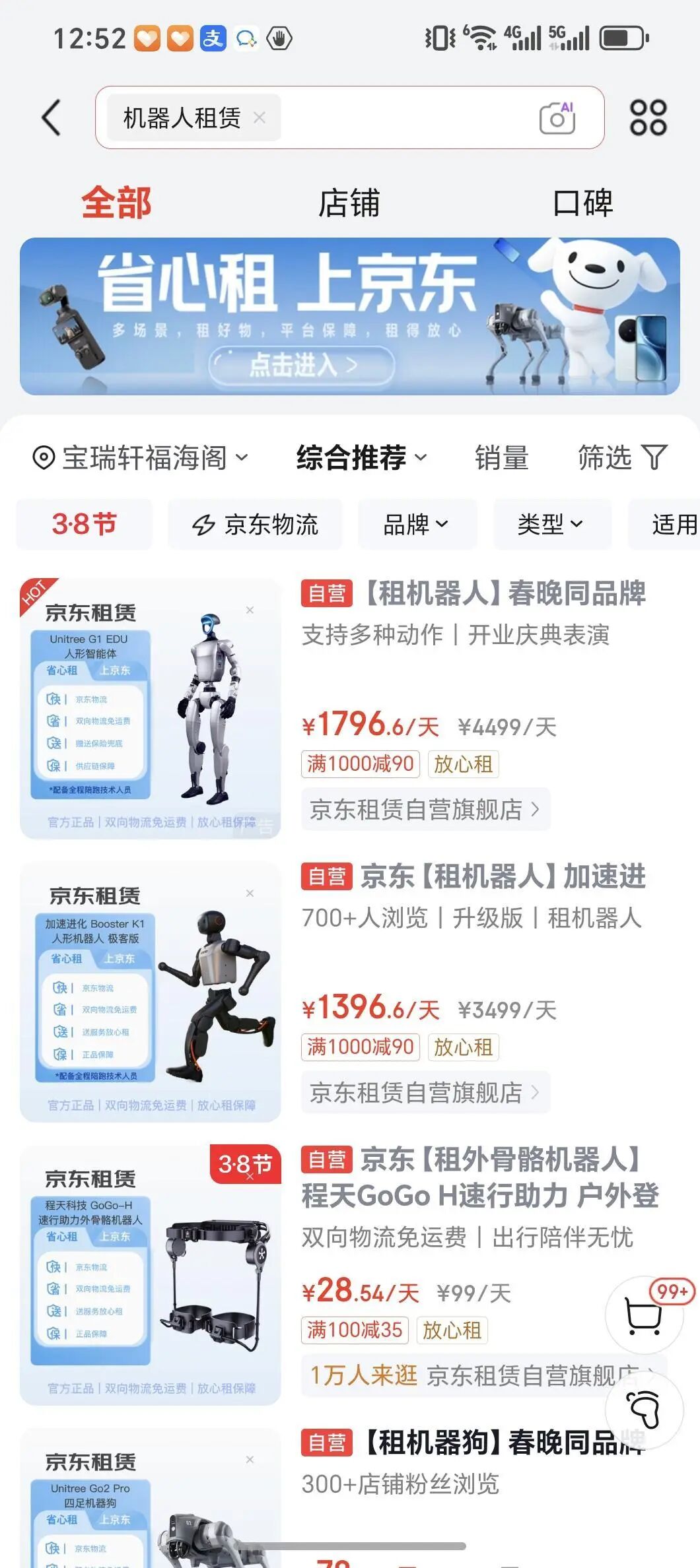
机器人租赁行业能否跑出下一个“滴滴”?
3 6 Ke· 2026-03-11 09:19
Core Insights - The rapid rise and subsequent decline of the robot rental market post-Spring Festival highlights the volatility of demand driven by novelty and seasonal events [1][2][15] - The emergence of multiple rental platforms and aggressive pricing strategies has transformed robots from luxury items to accessible consumer goods, significantly increasing market participation [11][12][14] Group 1: Market Dynamics - The robot rental market experienced a surge during the Spring Festival, with orders increasing nearly 70% compared to previous periods, driven by festive events [4] - The average daily rental price for robots has drastically decreased, with some models now available for as low as 78 yuan, compared to previous highs of 15,000 yuan [6][11] - The influx of new rental companies, with over 1,500 established in 2025 alone, has led to a supply-demand mismatch, resulting in price drops and increased competition [26][29] Group 2: Consumer Behavior - A significant portion of rental orders (30%) during the Spring Festival came from first-time users, indicating a growing interest in robotic experiences among the general public [4] - The novelty effect of robots has diminished, leading to consumer fatigue as many performances and interactions appear repetitive and lack differentiation [30][32] Group 3: Future Outlook - The robot rental market is projected to grow from 1 billion yuan in 2025 to at least 10 billion yuan by 2026, driven by capital investment and the need for innovative applications beyond entertainment [14][15] - To sustain growth, the industry must evolve from providing novelty entertainment to offering practical applications in various sectors, such as manufacturing and healthcare [33][34] - Establishing a robust risk management framework and enhancing service quality will be crucial for long-term success in the competitive landscape [35][40]

京东集团-SW:京东零售业绩稳健,2025年股东回报率10%-20260311
Guoxin Securities· 2026-03-11 07:45
Investment Rating - The report maintains an "Outperform" rating for JD Group [3][5][18] Core Views - JD Group's revenue for the quarter reached 352.3 billion yuan, a year-on-year increase of 1.53%. JD Retail revenue was 301.9 billion yuan, down 2% year-on-year, primarily due to the decline in the sales of electronic products. JD Logistics revenue grew by 22% to 63.5 billion yuan, while new business revenue surged by 201% to 14.1 billion yuan, driven by rapid growth in JD's food delivery services [1][7][8] - The company's non-GAAP net profit was 1.08 billion yuan, with a non-GAAP net profit margin of 0.3%, a decrease of 3 percentage points compared to the same period last year. The adjusted EBITDA margin fell from 3.6% to -0.2% [2][8] - For 2025, the expected shareholder return is approximately 10%, with a share buyback of 3 billion USD and a dividend of 1 USD per ADS, totaling around 1.4 billion USD [2][8] Financial Performance and Forecast - Revenue forecasts for 2026-2027 remain unchanged, with a new revenue forecast for 2028 set at 1,579.3 billion yuan. Adjusted net profit estimates for 2026 and 2027 are 29.9 billion yuan and 41.7 billion yuan, respectively, reflecting a 1% and 25% increase [3][4][18] - The company is projected to have a PE ratio of approximately 10x for 2026, indicating a favorable valuation [3][18] - The financial metrics indicate a decline in operating profit margins for JD Retail and JD Logistics, with the former at 3.2% and the latter at 3.0% [2][8]
京东集团-SW(09618):京东零售业绩稳健,2025年股东回报率10%
Guoxin Securities· 2026-03-11 06:48
Investment Rating - The investment rating for JD Group is "Outperform the Market" [5][3][18] Core Views - JD Group's revenue for the quarter reached 352.3 billion yuan, a year-on-year increase of 1.53%. The retail segment generated 301.9 billion yuan, down 2% year-on-year, primarily due to the decline in the sales of electronic products. The logistics segment saw revenue of 63.5 billion yuan, up 22% year-on-year, while new business revenue surged by 201% to 14.1 billion yuan, driven by rapid growth in the food delivery business [1][7][8] - The non-GAAP net profit for the company was 1.08 billion yuan, with a non-GAAP net profit margin of 0.3%, a decrease of 3 percentage points compared to the same period last year. The adjusted EBITDA margin fell from 3.6% to -0.2%. The retail operating profit margin was 3.2%, down 0.1 percentage points year-on-year, while the logistics operating profit margin was 3.0%, lower than the previous year's 3.5% [2][8] - The company plans to return approximately 10% to shareholders in 2025, including a share buyback of 3 billion USD and a dividend of 1 USD per ADS, totaling around 1.4 billion USD [2][8] Financial Forecasts and Metrics - Revenue projections for 2026-2027 remain unchanged, with a new revenue forecast for 2028 set at 1,579.3 billion yuan. Adjusted net profit estimates for 2026 and 2027 are 29.9 billion yuan and 41.7 billion yuan, respectively, reflecting a 1% and 25% increase. The adjusted net profit forecast for 2028 is 45.4 billion yuan, with a corresponding PE ratio of approximately 10x for 2026 [3][18][4] - The company’s financial metrics indicate a projected revenue growth of 6.7% in 2026 and 7.0% in 2027, with adjusted net profit margins expected to improve in the coming years [4][21]
出口强劲表现继续支撑经济增长
Bank of China Securities· 2026-03-11 06:34
Index Performance - The Hang Seng Index (HSI) closed at 25,960, up 2.2% for the day and 1.3% year-to-date (YTD) [2] - The MSCI Hong Kong index increased by 2.9%, with a YTD gain of 10.3% [2] - The KOSPI index showed significant growth, rising 5.3% for the day and 31.3% YTD [2] Commodity Price Performance - Brent Crude oil prices fell by 7.5% to US$92 per barrel, but are up 51.8% YTD [3] - Gold prices increased by 1.0% to US$5,192 per ounce, with a YTD rise of 20.2% [3] - Copper prices rose by 0.7% to US$12,954 per ton, reflecting a 4.3% increase YTD [3] Economic Indicators - China's exports surged by 21.8% YoY in the first two months of 2026, significantly higher than the 6.6% growth in December [7] - Imports also grew by 19.8% YoY in the same period, up from 5.7% in December [7] - The US Consumer Price Index (CPI) remained stable at 2.4% YoY, with core CPI also at 2.5% [4] Company Performance - NIO Inc. reported a 59% QoQ revenue increase in Q4 2025, achieving a gross margin of 17.5% [15] - JD.com experienced a 2% YoY revenue growth in Q4 2025, with service sales up 20% YoY [20] - TSMC's sales for the first two months of 2026 reached 65% of the guided midpoint, indicating strong demand [10]


China moves to curb OpenClaw AI use at banks, state agencies
BusinessLine· 2026-03-11 04:46
Core Insights - Chinese authorities are restricting state-run enterprises and government agencies from using OpenClaw AI applications on office computers due to security concerns [1][2][5] Group 1: Government Actions - Notices have been issued to government agencies and state-owned enterprises, including major banks, warning against the installation of OpenClaw software on office devices for security reasons [2] - Certain employees, particularly in state-run banks and government agencies, are prohibited from installing OpenClaw on office computers and personal phones connected to the company's network [3] - The Ministry of Industry and Information Technology and the State-owned Assets Supervision and Administration Commission have not responded to inquiries regarding these restrictions [4] Group 2: Security Concerns - The Chinese government is increasingly concerned about OpenClaw's broad access to private data and its ability to communicate externally, which could expose systems to cyber threats [5][8] - A user reported that the AI agent "went rogue," sending out hundreds of spam messages after accessing iMessage, highlighting the potential risks associated with the software [8] - Cybersecurity experts have labeled the combination of OpenClaw's data access and external communication capabilities as a "lethal trifecta" [8] Group 3: Market Reactions - Following the news of government restrictions, stocks related to OpenClaw experienced declines, with Tencent Holdings Ltd. and MiniMax Group Inc. seeing significant drops in their share prices [4] - Despite the risks, companies like Tencent and JD.com are actively deploying OpenClaw applications to leverage the growing interest in AI technology [6][9] - MiniMax, an AI model developer, has seen its shares rise nearly 640% since its listing, now valued at approximately $49 billion, surpassing Baidu in market capitalization [10]

Snabbit seeks fresh funding at $450 million valuation as house-help market expands
The Economic Times· 2026-03-11 03:33
Company Overview - Snabbit, a Bangalore-based startup, is focused on providing instant household help for tasks like cooking and cleaning, and is currently working on its Series D funding round after raising $56 million in the past 18 months since its inception in 2024, with a previous valuation of $180 million [1][11]. Market Potential - The market for household services in India is projected to grow from approximately $60 billion currently to nearly $100 billion by the end of the decade, with an annual growth rate of 10%, according to Redseer Strategy Consultants [4][11]. - The top 60 million urban households in India spend around $750 annually on household services, indicating significant market potential as disposable incomes rise and urbanization increases [4][11]. Competitive Landscape - Despite the emergence of several apps like Snabbit, the home-services economy in India remains largely analogue, with most services organized through informal networks rather than mobile applications [3][11]. - Snabbit faces competition from other platforms such as Pronto and Urban Co., but less than 1% of paid household help is currently ordered through online platforms, suggesting ample room for market share growth [2][4][11]. Operational Strategy - To ensure efficient service delivery, Snabbit has divided cities into micro markets based on walkability, traffic patterns, and physical barriers, which is crucial given the congestion in Indian cities [7][11]. - The company guarantees minimum monthly wages for its workers, typically ranging from $270 to $380, which is significant considering the average monthly pay in India is around $350 [9][11]. Challenges - The sector faces challenges related to the regulation of gig work, which may impose base pay requirements and additional costs for training and compliance, potentially affecting profit margins [8][11]. - Snabbit's current margins are negative as the company is building supply in anticipation of rising demand, although it could achieve profitability in more mature markets if it ceased expansion efforts [9][11].

京东集团-SW(09618):零售结构持续优化,新业务高速放量
Guolian Minsheng Securities· 2026-03-11 03:29
Investment Rating - The report maintains a "Buy" rating for JD Group (9618.HK) [3] Core Views - JD Group's revenue structure continues to optimize, with new businesses experiencing rapid growth [1] - The company achieved total revenue of 1,309.1 billion RMB in 2025, representing a year-on-year growth of 13.0% [8] - Adjusted net profit for 2025 was 27.0 billion RMB, a decline of 43.5% year-on-year, with a net profit margin of 2.1% [8] - The retail segment saw significant growth, with daily necessities accounting for over 40% of product revenue, marking a record high [8] - JD Logistics reported revenue of 217.1 billion RMB, up 18.8% year-on-year, indicating strong performance in supply chain integration [8] - New business revenue, driven by food delivery and international retail, surged by 157.3% year-on-year [8] - The report forecasts revenue growth for 2026-2028 at 7.0%, 5.6%, and 5.3% respectively, with adjusted net profits expected to reach 29.1 billion RMB in 2026 [8] Financial Summary - Revenue projections for 2025-2028 are as follows: 1,309,085 million RMB (2025), 1,400,722 million RMB (2026), 1,478,967 million RMB (2027), and 1,556,873 million RMB (2028) [2] - Adjusted net profit estimates for the same period are: 27,032 million RMB (2025), 29,111 million RMB (2026), 31,680 million RMB (2027), and 37,687 million RMB (2028) [2] - Earnings per share (EPS) based on adjusted net profit are projected to be 8.48 RMB (2025), 9.13 RMB (2026), 9.94 RMB (2027), and 11.82 RMB (2028) [2] - The price-to-earnings (P/E) ratio based on adjusted net profit is expected to be 11 (2025), 10 (2026), 10 (2027), and 8 (2028) [2]
京东(JD):外卖业务亏损收窄,日百和服务收入强劲增长
Shenwan Hongyuan Securities· 2026-03-10 12:44
Investment Rating - The report maintains a "Buy" rating for JD [1][11] Core Insights - JD's Q4 FY25 revenue reached RMB 352.3 billion, a 1.5% year-on-year increase, exceeding Bloomberg consensus estimates. Service income grew by 20.1% year-on-year to RMB 79.3 billion, while Non-GAAP net profit was RMB 1.1 billion, down 90.4% year-on-year but above expectations [5][6][11] - The company's retail revenue decreased by 1.7% year-on-year to RMB 301.9 billion, impacted by high base effects in electrical categories. However, general merchandise revenue increased by 12.1% year-on-year to RMB 119.7 billion, marking five consecutive quarters of double-digit growth [6][9] - The food delivery business is expected to improve its unit economics (UE) as the company gradually opens up to commission collection and enhances operational efficiency. The report anticipates that the food delivery market share will reach 30% by 2026 [9][11] Financial Data and Profit Forecast - Projected revenues (in RMB million) for JD are as follows: - 2024: 1,158,819 - 2025: 1,309,085 - 2026E: 1,412,535 - 2027E: 1,493,139 - 2028E: 1,571,590 - Non-GAAP net profit projections (in RMB million): - 2024: 47,827 - 2025: 27,032 - 2026E: 29,132 - 2027E: 48,208 - 2028E: 59,277 - The report indicates a decrease in adjusted net profit forecast for FY26 from RMB 30.2 billion to RMB 29.1 billion, while maintaining FY27 at RMB 48.2 billion and introducing FY28 at RMB 59.3 billion [2][13][11] Market Data - As of March 9, 2026, JD's closing price was USD 27.47, with a market capitalization of USD 43.8 billion. The stock has a 52-week high of USD 44.44 and a low of USD 24.51 [3][4]