
Lilly(LLY)

Search documents
速递|礼来:响应特朗普,英国地区替尔泊肽涨价170%
GLP1减重宝典· 2025-08-16 03:04
Core Viewpoint - Eli Lilly (LLY.N) announced a significant price increase for its weight loss drug Mounjaro in the UK, with a maximum increase of 170%, coinciding with the White House's push for pharmaceutical companies to raise prices in Europe to facilitate price reductions in the US [2][6]. Pricing Strategy - The new pricing also applies to the version of Mounjaro for type 2 diabetes, with the highest dosage monthly cost rising from £122 to £330 [3]. - This price increase only affects self-paying patients, as those receiving prescriptions through the National Health Service (NHS) in the UK are not impacted due to separate agreements covering costs [4]. - Eli Lilly stated that the initial pricing of Mounjaro in the UK was "significantly lower" than in three other European markets to avoid delays in entering the NHS channel, and the current adjustment aims to align UK pricing more closely with Europe [5]. Market Context - The decision highlights the pressure on global drug pricing, with the US being the largest pharmaceutical market where prescription drug costs are significantly higher than in other developed countries [6]. - The former administration under Trump aimed to reduce drug prices in the US while encouraging pharmaceutical companies to increase prices abroad [6]. - Eli Lilly's CEO, David Ricks, mentioned that narrowing the price gap between the US and Europe is a long-term goal, but European governments remain reluctant to accept higher drug prices [6]. Competitive Landscape - Mounjaro was launched in the UK in February 2024, while competitor Novo Nordisk's weight loss drug Wegovy entered the UK market in September 2023 [7].


Novo Nordisk's Lead Fades, Eli Lilly Holds Course For Outsized Gains, Says Analyst
Benzinga· 2025-08-15 17:54
Core Viewpoint - Eli Lilly plans to significantly increase the list price of its weight-loss and type 2 diabetes drug Mounjaro in the UK, reflecting heightened competition in the obesity drug market, particularly with Novo Nordisk [1][2]. Pricing Strategy - Starting in September, the highest monthly dose of Mounjaro will see a price increase from £122 to £330, marking a 170% rise to align with prices in other European markets [1]. - Bank of America Securities reported that Eli Lilly intends to double GLP-1 drug prices in the UK, although the specific customers affected remain unclear [2]. Market Context - Similar price adjustments are anticipated in other European markets, where GLP-1 manufacturers typically lack formal pricing agreements with governments, resulting in out-of-pocket costs for patients [3]. - The pricing strategy aligns with a "most favored nation" (MFN) pricing concept discussed recently, aiming to raise drug prices outside the U.S. while lowering them domestically [3][4]. Company Initiatives - Eli Lilly has initiated pricing strategies, including the "Lilly Direct" direct-to-consumer channel for Zepbound and other medications, which aims to bypass pharmacy benefit managers [5]. - While direct-to-consumer initiatives may enhance access, they are expected to have minimal impact on profit and loss, particularly for obesity drugs [6]. Investor Sentiment - Investors in the obesity sector are increasingly anxious due to the competitive landscape, with Novo Nordisk's lead diminishing and Eli Lilly's stock volatility [7]. - Bank of America maintains a Buy rating for Eli Lilly, projecting a price target of $900, citing strong growth potential at a reasonable valuation [7]. Stock Performance - Eli Lilly's stock was trading higher by 0.85% at $690.27 as of the last check [8].
礼来13亿美元投资了背靠英伟达的AI制药商
第一财经· 2025-08-15 08:28
Core Insights - Eli Lilly announced a $1.3 billion deal with AI pharmaceutical company Superluminal to accelerate AI drug development, particularly for small molecule drugs targeting obesity and other cardiometabolic diseases [3] - The partnership will allow Eli Lilly to utilize Superluminal's AI-driven drug discovery platform, focusing on G protein-coupled receptor (GPCR) drug development, which plays a crucial role in various physiological processes [3] - The obesity treatment market is projected to reach $150 billion over the next decade, with major pharmaceutical companies like Eli Lilly and Novo Nordisk enhancing their positions through drug development and acquisitions [3] Group 1 - Superluminal is a Boston-based AI pharmaceutical startup that has received investments from companies including NVIDIA [3] - GPCRs are identified as significant targets in cardiometabolic diseases, yet many potential drug targets remain unexplored [4] - Eli Lilly's collaboration with Chinese company Lykai Pharmaceuticals aims to develop next-generation weight loss drugs that help patients lose weight while preserving muscle [3] Group 2 - Novo Nordisk is also targeting GPCR small molecule drugs, having entered a $2.2 billion deal with Septerna to develop oral therapies for obesity and other cardiometabolic diseases [4] - In June, Novo Nordisk partnered with Deep Apple for over $800 million to co-develop and commercialize GPCR small molecule drugs [4] - GPCRs represent the largest and most diverse family of cell membrane receptors, with hundreds of types regulating physiological mechanisms across nearly all organ systems [4] Group 3 - AI pharmaceutical technology has significant potential in drug discovery, capable of screening billions of candidate molecules [4] - GPCRs account for approximately one-third of all FDA-approved drugs, yet about 75% of GPCR therapeutic targets remain undeveloped, indicating substantial future drug discovery potential [4]
美股异动|礼来盘前续涨超1.2% 大幅上调减肥药Mounjaro在英国售价
Ge Long Hui· 2025-08-15 08:16
礼来(LLY.US)盘前续涨超1.2%,报691.4美元;该股周四收涨超3.6%。 消息面上,礼来将从9月起大幅上调减肥药Mounjaro在英国售价,旨在解决美国与其他发达国家定价不 一致的问题。此次价格调整涉及不同剂量的全线产品,其中最高剂量药物的月供应价格将从122英镑上 涨至330英镑,涨幅达170%;较低剂量的涨幅则在45%至138%之间。同时,礼来承诺不会上调向英国国 家医疗服务体系(NHS)的供应价格,以确保药物的持续供应。(格隆汇) ...
礼来13亿美元投资了背靠英伟达的AI制药商
Di Yi Cai Jing· 2025-08-15 07:13
Group 1 - Eli Lilly announced a $1.3 billion deal with AI pharmaceutical company Superluminal to accelerate AI drug development, particularly for small molecule drugs targeting obesity and other cardiometabolic diseases [1] - Superluminal's AI-driven drug discovery platform will be utilized by Eli Lilly to develop drugs targeting G protein-coupled receptors (GPCRs), which play a significant role in various physiological processes [1] - The obesity treatment market, where Eli Lilly currently holds a dominant position, is projected to reach a value of $150 billion over the next decade [1] Group 2 - Novo Nordisk is also focusing on GPCR small molecule drug development, having signed a deal worth up to $2.2 billion with Septerna to develop oral small molecule therapies targeting specific GPCRs for obesity and other cardiometabolic diseases [2] - In June, Novo Nordisk entered into a collaboration valued at over $800 million with Deep Apple to jointly develop and commercialize GPCR small molecule drugs [2] - GPCRs represent the largest and most diverse family of cell membrane receptors, with hundreds of different GPCRs regulating physiological mechanisms across nearly all organ systems in the human body [2]


礼来上调英国售价高达170%,只因特朗普抱怨“伦敦减肥药比美国便宜的多”
美股IPO· 2025-08-15 04:03
礼来大幅上调减肥药Mounjaro在英国售价,最高剂量的月供应价格将从122英镑上涨至330英镑,涨幅达170%;较低剂量的涨幅则在45%至138%之 间。此举直接回应特朗普的抱怨和政治压力,特朗普曾在演讲中明确表达了对价格差异的不满,称其伦敦朋友购买"减肥针剂"的价格远低于美国市场。 美国制药巨头礼来公司大幅上调其热门减肥药物Mounjaro在英国的售价,最高涨幅达170%,此举直接回应了特朗普政府对"外国搭便车者"依赖美国承 担更高药品成本的抱怨。 最高剂量药物的月供应价格将从122英镑上涨至330英镑,涨幅达170%;较低剂量的涨幅则在45%至138%之间 。 分析指出,这一激进的涨价策略直接回应了特朗普政府的政治压力。特朗普在演讲中明确表达了对价格差异的不满,称其伦敦朋友购买"减肥针剂"的价 格远低于美国市场。 礼来在声明中表示,英国是其首批推出Mounjaro的国家之一,公司当时的优先考虑是尽快为糖尿病患者提供药物供应。 "在推出时,礼来同意了一个显著低于欧洲平均水平的英国标价,以防止NHS供应延迟。" 尽管大幅涨价,礼来强调不会提高向NHS的供应价格,以确保药物供应的连续性。公司表示正与私人医疗提 ...
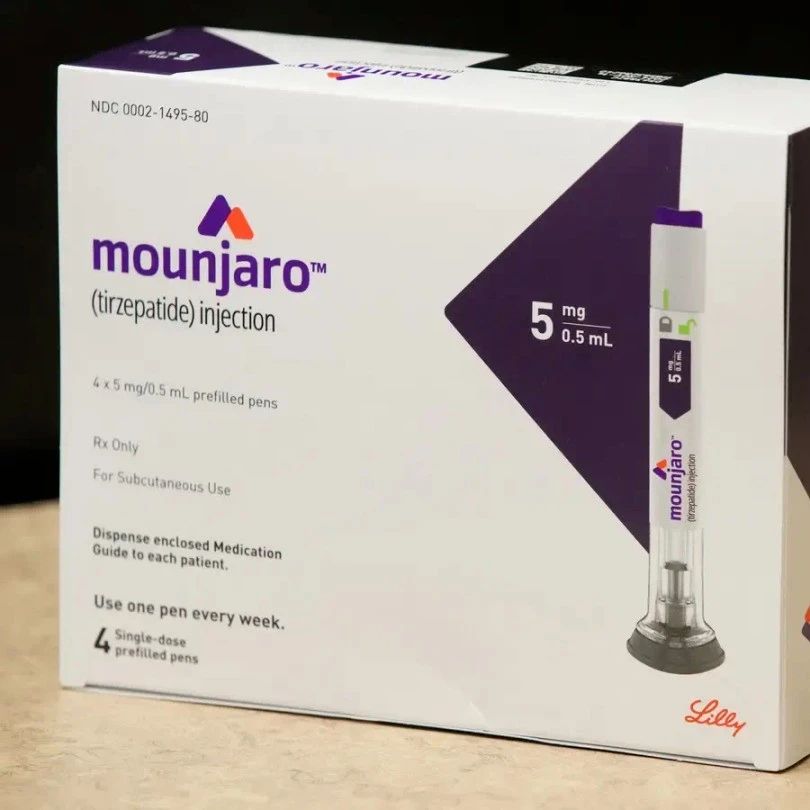
沙特主权财富基金PIF Q2持仓:买入礼来(LLY.US)等医药股看涨期权 清仓Meta(META.US)
智通财经网· 2025-08-15 02:33
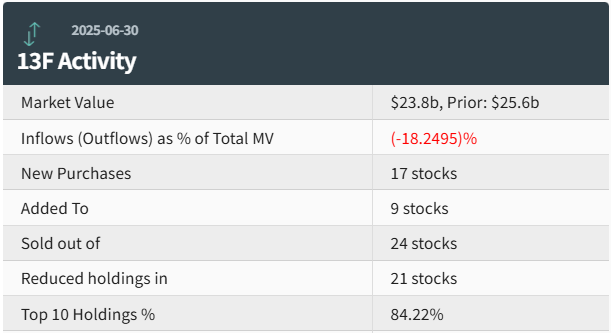
Core Insights - The Saudi Public Investment Fund (PIF) reported a total market value of $23.8 billion for its U.S. stock holdings as of June 30, 2025, down from $25.6 billion in the previous quarter, representing a 7% decrease [1][2] - PIF added 17 new stocks, increased holdings in 9 stocks, reduced holdings in 21 stocks, and completely sold out of 24 stocks during the second quarter [1][2] Holdings Overview - The top five holdings include Uber (UBER.US) with approximately 72.8 million shares valued at $6.8 billion, representing 28.54% of the portfolio; Electronic Arts (EA.US) with about 24.8 million shares valued at $4 billion, accounting for 16.64%; Lucid (LCID.US) with around 1.77 billion shares valued at $3.7 billion, making up 15.69%; Take-Two Interactive (TTWO.US) with about 11.4 million shares valued at $2.8 billion, representing 11.64%; and Arm call options (ARM.US) with approximately 8.97 million shares valued at $1.5 billion, constituting 6.09% of the portfolio [3][4][5] Changes in Holdings - The top five purchases by percentage change in the portfolio were Arm call options, Lilly call options (LLY.US), UnitedHealth call options (UNH.US), Vertex Pharmaceuticals call options (VRTX.US), and Mastercard call options (MA.US) [6][7] - The top five sales by percentage change in the portfolio included Salesforce call options (CRM.US), Starbucks call options (SBUX.US), Meta (META.US), Microsoft call options (MSFT.US), and Linde call options (LIN.US) [6][7] Additional Insights - The top ten holdings accounted for 84.22% of the total market value of PIF's U.S. stock portfolio [1][2] - PIF's significant sell-offs included major companies such as Visa (V.US), Shopify (SHOP.US), Sea (SE.US), PayPal (PYPL.US), Meta (META.US), and FedEx (FDX.US) [5]



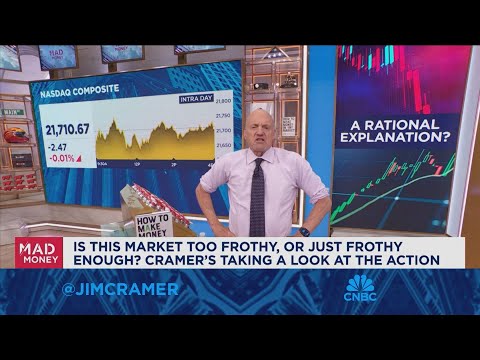
Jim Cramer discusses if this market is too frothy
CNBC Television· 2025-08-14 23:49
[Music] Hey, I'm Kramer. Welcome to Mad Money. Welcome to Cra America.I've been with friends. I'm just trying to make you a little money. My job not just to entertain, but to educate.So call me 1800743 CBC. Tweet Jim Kramer. This morning, listening to our network, I heard a fund manager blast this market because of all the froth.Our excellent anchor Frank Holland pressed her on the notion of froth and she reiterated that the market was riddled with it. To which I say, if this is froth, bring it on. Honestly ...

美股收盘:通胀先兆指标“爆表”,三大指数挣扎平收
Feng Huang Wang· 2025-08-14 22:32
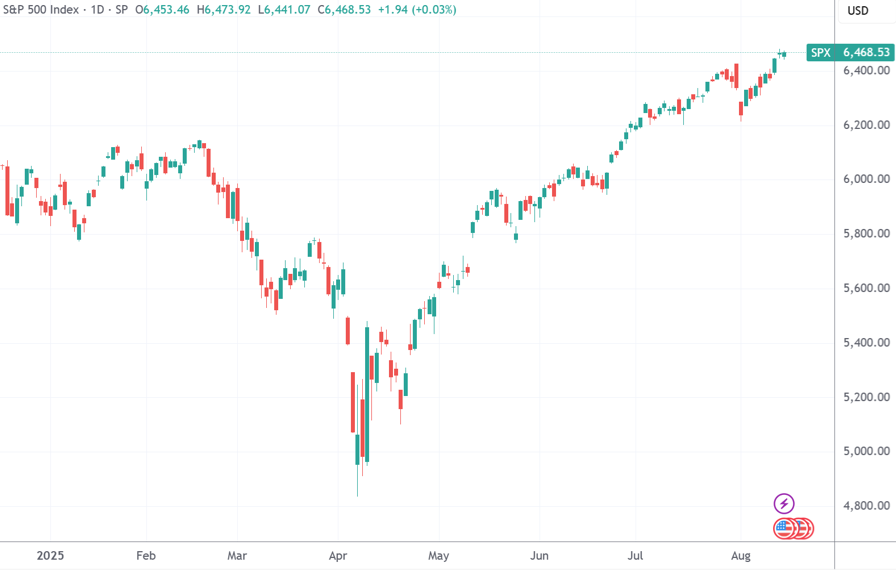
Market Overview - The U.S. stock market faced challenges as inflation concerns emerged due to tariffs, leading to a struggle among major indices, with the S&P 500 closing at a record high but in a subdued manner [1] - The S&P 500 index rose by 0.03% to 6468.54 points, while the Nasdaq Composite fell by 0.01% to 21710.67 points, and the Dow Jones Industrial Average decreased by 0.02% to 44911.26 points [1] Economic Indicators - The Producer Price Index (PPI) for July surged by 0.9% month-on-month, marking the largest increase since June 2022, significantly exceeding the market expectation of 0.2% [3] - Year-on-year, the PPI growth reached 3.3%, surpassing the anticipated 2.5% [3] - Analysts suggest that the PPI report may indicate future consumer price pressures in the U.S. [3] Interest Rate Expectations - Market sentiment shifted as traders reduced the probability of a 25 basis point rate cut in September from 100% to 92% following the PPI report [4] Corporate Performance - Major tech stocks showed mixed performance, with Apple down 0.24%, Microsoft up 0.36%, and Amazon rising 2.86% [7] - Intel shares surged by 7.38% amid rumors of potential government investment to support domestic semiconductor manufacturing [8] - Tapestry, the parent company of Coach, experienced a significant drop of 15.71% due to tariff impacts and a write-down of $855 million related to Kate Spade [12] - Application Materials saw a decline of over 13% in after-hours trading due to lower-than-expected revenue and profit guidance [11] Notable Developments - Berkshire Hathaway disclosed a new position in UnitedHealth worth $1.57 billion, contributing to a post-earnings surge of 9% in the stock [8] - Eli Lilly announced a price increase of up to 170% for its weight loss drug Mounjaro in the UK, responding to U.S. complaints about high drug prices [9] - Apple plans to reintroduce blood oxygen monitoring features for the Apple Watch in the U.S. through a software update [10] - MIAX, a group operating multiple exchanges, saw a 33.66% increase on its first day of trading on the NYSE [13]




礼来(LLY.US)上调海外市场药品价格 以弥补美国市场降价损失
智通财经网· 2025-08-14 22:28
Core Viewpoint - The White House's actions to lower domestic drug prices are leading to increased drug prices in Europe, as exemplified by Eli Lilly's decision to raise its official drug prices in overseas markets [1][2]. Group 1: Company Actions - Eli Lilly announced an increase in its drug prices in overseas markets, stating that to lower U.S. drug prices, prices in other developed markets like Europe need to rise [1]. - The company raised the official price of its diabetes and obesity drug Mounjaro in the UK by 170% for the largest tablet specification, with lower doses seeing increases of 45% to 138% [2]. Group 2: Market Impact - Eli Lilly's price hikes in Europe may help offset potential profit losses from lowering prices in the U.S. and could also elevate the baseline for the proposed "most favored nation" pricing policy by the White House [2]. - Following the announcement, Eli Lilly's stock price rose by 3.62% [3].