
McDonald's(MCD)

Search documents
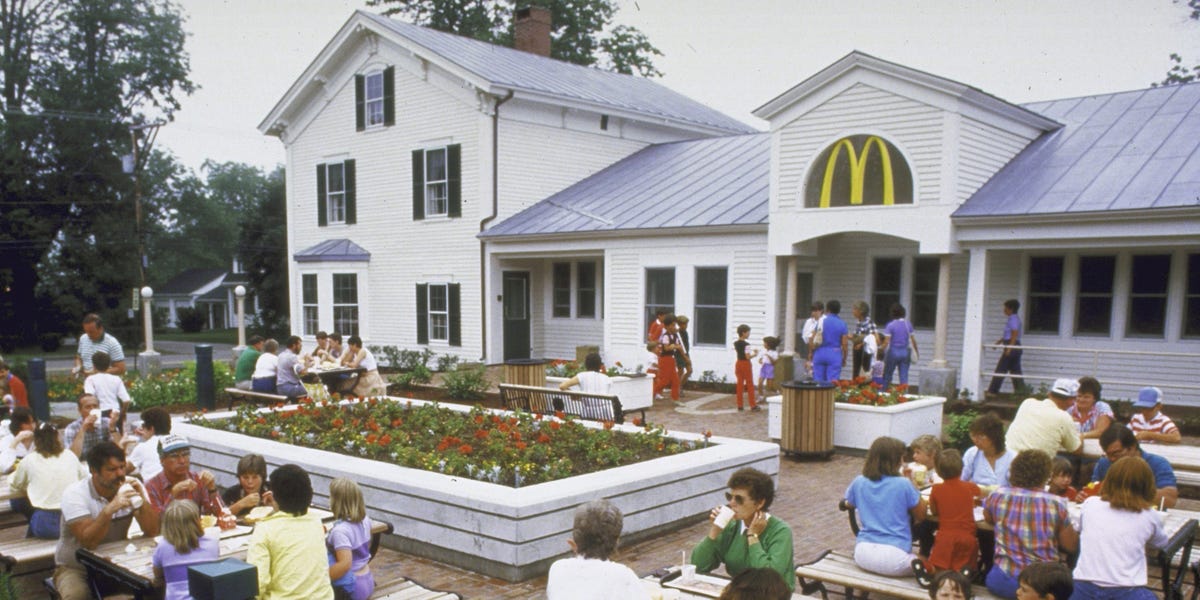
Photos show what it was like to eat at McDonald's in the 1980s
Business Insider· 2025-11-26 15:08
Core Insights - McDonald's has evolved significantly since its inception, becoming a global fast-food leader with over 38,000 locations in more than 100 countries and generating $25.92 billion in revenue in the 2024 fiscal year [2] Historical Growth - The first McDonald's franchise was opened by Ray Kroc in Des Plaines, Illinois, on April 15, 1955, leading to the establishment of McDonald's Corporation [1] - By 1989, systemwide sales reached $17.3 billion, with international sales growing from $900 million in 1979 to $5.3 billion in 1989 [2] Menu Development - The 1980s saw the introduction of several iconic menu items, including Chicken McNuggets in 1983, which became an immediate hit as customers sought leaner protein options [23][28] - The menu had expanded significantly since the 1960s, with the introduction of items like the Filet-O-Fish in 1965, Big Mac in 1968, and Happy Meals in 1979 [21][22] Restaurant Design and Experience - The original McDonald's restaurant design featured a red-and-white color scheme and the now-iconic golden arches, which were added to enhance the building's appearance [6] - By the 1980s, many locations had modernized their designs, while some retained the classic look, showcasing a blend of historical and contemporary architecture [4][10] Cultural Impact - McDonald's became a symbol of American culture in the 1980s, with marketing campaigns linked to events like the 1984 Olympic Games, where customers could win free food based on Olympic outcomes [36][37] - The brand's popularity was further highlighted by notable figures, including President Ronald Reagan, who was photographed enjoying a Big Mac during a campaign stop in 1984 [41][42]


Is McDonald's Stock Underperforming the Dow?
Yahoo Finance· 2025-11-26 09:35
Core Insights - McDonald's Corporation, valued at $217.1 billion, operates over 38,000 restaurants globally, making it the largest quick-service restaurant (QSR) chain in the world [1][2] Financial Performance - McDonald's stock has seen a 4.9% decline from its all-time high of $326.32 reached on March 10, and has underperformed the Dow Jones Industrial Average, which gained 4% in the same period [3] - Year-to-date, McDonald's stock has increased by 7.1% and 4.8% over the past 52 weeks, while the Dow has gained 10.7% and 5.3% respectively [4] - Following the release of mixed Q3 results, McDonald's stock rose by 2.2%. The company reported a 6% increase in systemwide sales on a constant currency basis and an 8% increase including forex impact, with comparable sales growing by 3.6% [5] - McDonald's topline grew 3% year-over-year to $7.1 billion, exceeding market expectations by 15 basis points, although adjusted EPS fell by 31 basis points to $3.22, missing consensus estimates by 3.9% [5] Competitive Position - McDonald's has significantly outperformed its peer Chipotle Mexican Grill, which has seen a 44.6% decline year-to-date and a 46.1% drop over the past year [6]
外资品牌集体 “改姓中”:星巴克、汉堡王易主背后,中国资本手术刀如何改写全球规则
Sou Hu Cai Jing· 2025-11-25 11:19
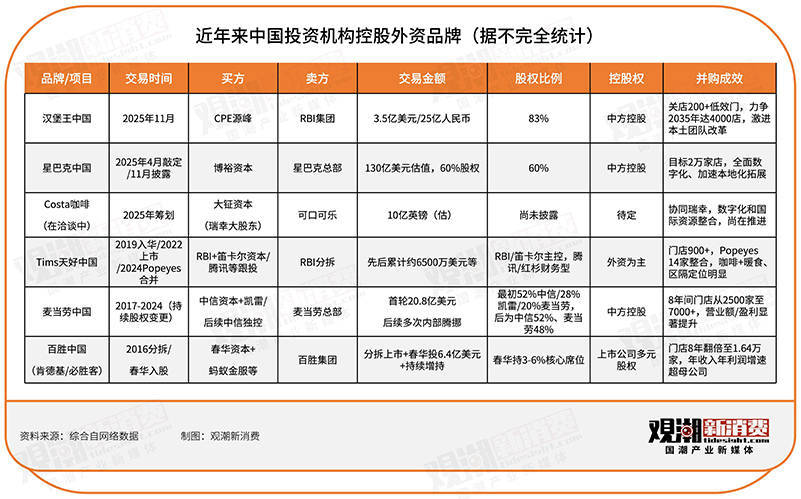
Core Insights - The ownership transfer of international brands in China, such as Starbucks and Burger King, signifies a critical shift in market dynamics, emphasizing the need for localization and adaptation to survive in a competitive landscape [1][3][17] - The decline of international brands in China is attributed to decision-making inefficiencies, digital lag, and a reversal of latecomer advantages, necessitating a reevaluation of their operational strategies [4][5][6][7] Ownership Changes - Starbucks China has transferred 60% of its equity to Boyu Capital, valuing the company at $13 billion, while Burger King China was acquired by CPE Yuanfeng for $350 million, gaining 83% control [2][4] - The trend of Chinese investment in foreign brands reflects a broader strategy to enhance competitiveness through local management and operational restructuring [1][3] Market Challenges - International brands are facing systemic failures in the Chinese market, with Starbucks' market share dropping to 14% in 2024, less than half of its peak [2][4] - The operational models of these brands, which were successful globally, are failing in China due to a lack of adaptability to local consumer preferences and market conditions [4][5][6] Strategic Solutions - The introduction of Chinese capital is seen as a solution to the operational challenges faced by international brands, focusing on local management, digital transformation, and supply chain localization [3][4][11] - Control restructuring is crucial, allowing local teams to make faster decisions and respond to market changes effectively [7][8][12] Digital Transformation - The digitalization of operations is a key strategy, with companies like McDonald's achieving over 90% of orders through digital channels after implementing localized systems [9][10][11] - This transformation is not merely a technological upgrade but a comprehensive overhaul of operational frameworks to enhance efficiency and customer engagement [10][11] Supply Chain Localization - Localizing supply chains is essential for improving cost competitiveness and operational agility, enabling brands to respond swiftly to market demands [11][12] - The establishment of long-term partnerships with local suppliers enhances the overall supply chain ecosystem, crucial for success in the Chinese market [11][12] Future Outlook - The next five years are expected to witness more international brands undergoing transformation under Chinese capital, with the potential for either revival or failure [17][18] - The ultimate success of these brands will depend on their ability to understand Chinese consumers, create genuine value, and balance brand identity with local adaptation [17][18]

外资品牌集体 “改姓中”:星巴克、汉堡王易主背后,中国资本的本土化手术刀
Sou Hu Cai Jing· 2025-11-25 00:11
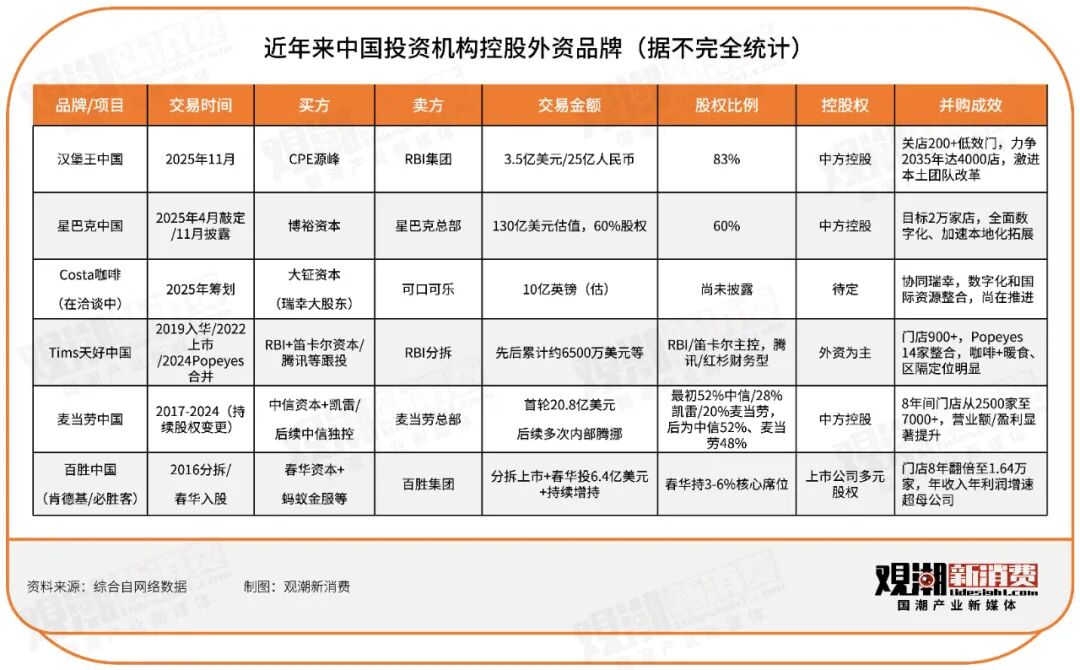
Core Insights - The ownership transfer of Starbucks China and Burger King China signifies a significant shift in market dynamics, where international brands are increasingly relying on local capital to regain competitiveness in the Chinese market [4][7][8] - The era of easy profitability through brand prestige is over, as international brands face systemic challenges and must adapt to local market conditions to survive [4][8][9] Ownership Changes - Starbucks China has transferred 60% of its equity to Hillhouse Capital, valuing the joint venture at $13 billion [6] - Burger King China was acquired by CPE Yuanfeng for $350 million, gaining 83% control [6] - McDonald's China has seen its stake increase to 52% under CITIC Capital, reflecting a trend of local capital taking control of international brands [6][8] Market Challenges - International brands are experiencing a decline in market share, with Starbucks' share dropping to 14% in 2024, less than half of its peak [6][8] - The competitive landscape has shifted, with local brands like Luckin Coffee surpassing international giants, highlighting the failure of traditional business models [8][9] Structural Issues - Decision-making inefficiencies in multinational corporations hinder their ability to respond quickly to market changes, leading to missed opportunities [11] - A digital capability gap exists, as international brands struggle to adapt their global IT systems to the unique Chinese market, resulting in operational inefficiencies [12] - Local teams possess a better understanding of the market and are more willing to innovate, reversing the advantages once held by international brands [13] Strategic Solutions - Local capital is restructuring control by acquiring stakes in international brands, allowing for more agile decision-making and operational autonomy [14][17] - Digital transformation is being prioritized, with companies like McDonald's leveraging partnerships to enhance their digital capabilities and customer engagement [14][16] - Supply chain localization is being implemented to improve cost efficiency and responsiveness, crucial for competing in the Chinese market [15] Case Studies - CITIC Capital's acquisition of McDonald's China exemplifies a successful model of value creation through phased control and operational restructuring, resulting in significant growth in store numbers and digital engagement [16][17] Strategic Implications - Investors should identify brands with strong potential for operational improvement despite current challenges, as these may offer significant upside [18] - Emphasizing local management teams and operational strategies is essential for navigating the complexities of the Chinese market [18][19]

Guggenheim Lifts McDonald’s (MCD) Price Target to $310 Amid Steady Sales Growth
Yahoo Finance· 2025-11-24 22:52
Core Insights - McDonald's Corporation (NYSE:MCD) is recognized as one of the best long-term stocks to buy according to Reddit discussions [1] - Guggenheim analyst raised the price target for McDonald's to $310 from $295, citing steady same-store sales growth in the US [2] - The company reported nearly $20 billion in revenue for the first three quarters of 2025, a 2% increase from the same period in 2024 [3] - McDonald's maintained cost and expense growth at 2%, resulting in a net income of $6.4 billion, up 3% year over year [4] - The company has a strong track record of dividend growth, marking its 49th consecutive year of increasing its payout, with a new annual dividend of $7.44 per share [5] Financial Performance - Revenue for the first three quarters of 2025 reached nearly $20 billion, reflecting a 2% increase from the same period in 2024 [3] - Third-quarter revenue rose by 3% compared to the previous year [3] - Net income for the first three quarters of 2025 was $6.4 billion, which is a 3% increase year over year [4] - Cost and expense growth was kept to 2% over the nine-month period [4] Dividend Information - McDonald's has approved another dividend increase, marking its 49th consecutive year of raising its payout [5] - The new annual dividend is set at $7.44 per share, representing a yield of approximately 2.41% [5]
外资品牌集体 “改姓中”:星巴克、汉堡王易主背后,中国资本的本土化手术刀如何改写全球规则?
3 6 Ke· 2025-11-24 11:09
Core Insights - The ownership transfer of international brands in China, such as Starbucks and Burger King, signifies a profound market rule restructuring, driven by the need for localization and survival strategies [3][5][6] - The era where international brands could thrive solely on their legacy is over, as they face significant challenges in the Chinese market [5][6][8] Ownership Changes - Starbucks China has transferred 60% of its equity to Hillhouse Capital, with a valuation of $13 billion, aiming for 20,000 stores and accelerated localization [4][5] - Burger King China was acquired by CPE Yuanfeng for $350 million, gaining 83% control, with plans to close over 200 underperforming stores and target 4,000 stores by 2035 [4][5] - Other brands like Costa Coffee and Tims are also undergoing similar transitions, indicating a broader trend of international brands seeking local capital for revitalization [4][5] Market Challenges - Starbucks' market share in China has dropped to 14% in 2024, less than half of its peak, with local competitor Luckin Coffee surpassing it [4][5] - International brands are experiencing systemic failures in the Chinese market, with their traditional centralized operational models proving ineffective [6][10][11] Structural Issues - Decision-making inefficiencies due to centralized control hinder international brands' ability to respond quickly to market changes [10] - A significant digital capability gap exists, with local brands like Luckin leveraging advanced digital systems for operational efficiency [11] - The reversal of latecomer advantages means local teams are now more adept at innovation and market understanding than their international counterparts [12] Strategic Solutions - The restructuring of control through local capital acquisition allows for more agile decision-making and operational autonomy [12][17] - Digital transformation is essential, as seen in McDonald's China, where digital orders surged from under 20% to over 90% post-acquisition [13][14] - Localizing supply chains enhances price competitiveness and operational flexibility, crucial for success in the Chinese market [15] Case Study: McDonald's China - The acquisition by CITIC Capital exemplifies effective value creation, with store numbers increasing from 2,000 to over 7,200 and a robust digital membership system established [16][17] - The transition to a localized decision-making structure has significantly improved operational efficiency [17] Strategic Implications - Investors should identify international brands with strong potential for value enhancement despite operational challenges [18] - Emphasizing the importance of building capable local management teams is critical for successful acquisitions [18] - A deep commitment to localization across all operational aspects is necessary for international brands to thrive in China [19] Market Opportunities - The underdeveloped lower-tier markets present significant growth potential, with retail sales in rural areas exceeding 6 trillion yuan in 2023 and 2024 [20]
2025年营销“5大趋势”| 麦当劳、小红书、追觅、完美日记近40位企业嘉宾齐聚灵眸大赏
Sou Hu Cai Jing· 2025-11-24 07:42
Core Insights - The Morketing Summit 2025 will focus on the new ecosystem of marketing in China, discussing trends and transformations from 2025 to 2026 [2][3] - Key topics include brand building, channel innovation, AI-driven marketing growth, and podcast marketing, with participation from nearly 40 companies [2] Group 1: Marketing Trends - The discussions at the summit will shift from traditional advertising techniques to the broader changes in the marketing ecosystem, including consumer behavior and technological advancements [2] - Five major trends have been identified that will influence brand strategies and marketing decisions in 2025-2026 [2] Group 2: Emotional Economy - The concept of the emotional economy emphasizes that consumers are increasingly motivated by emotional connections rather than just product functionality [42][43] - Brands like McDonald's leverage emotional assets that resonate across generations, highlighting the importance of creating a sense of belonging and happiness for consumers [43] Group 3: Human-Centric Marketing - Human-centric marketing focuses on understanding users as individuals with emotions and motivations, rather than just data points [44] - This approach is driven by the decline in effectiveness of traditional marketing methods, necessitating brands to create content that resonates personally with consumers [44] Group 4: Content as Core Asset - In the fragmented media landscape, engaging content is essential for capturing consumer attention and driving brand loyalty [45] - Brands should develop a content strategy that includes basic product information, professional educational content, and value-driven narratives to connect with consumers [45][46] Group 5: All-Scene Marketing - The concept of "all-scene" marketing recognizes that consumer interactions occur across multiple touchpoints, necessitating a cohesive brand presence in various contexts [47][48] - Brands must ensure consistent experiences across different platforms and touchpoints to enhance consumer engagement and loyalty [49] Group 6: AI in Marketing - AI is a significant focus, with its potential to enhance marketing decision-making, content generation, and consumer engagement [50] - The summit will explore how AI can transform marketing strategies, improve efficiency, and create personalized consumer experiences [50][51]




重新养自己,这七种“幼稚经济”俘获年轻人
Xin Lang Cai Jing· 2025-11-24 05:37
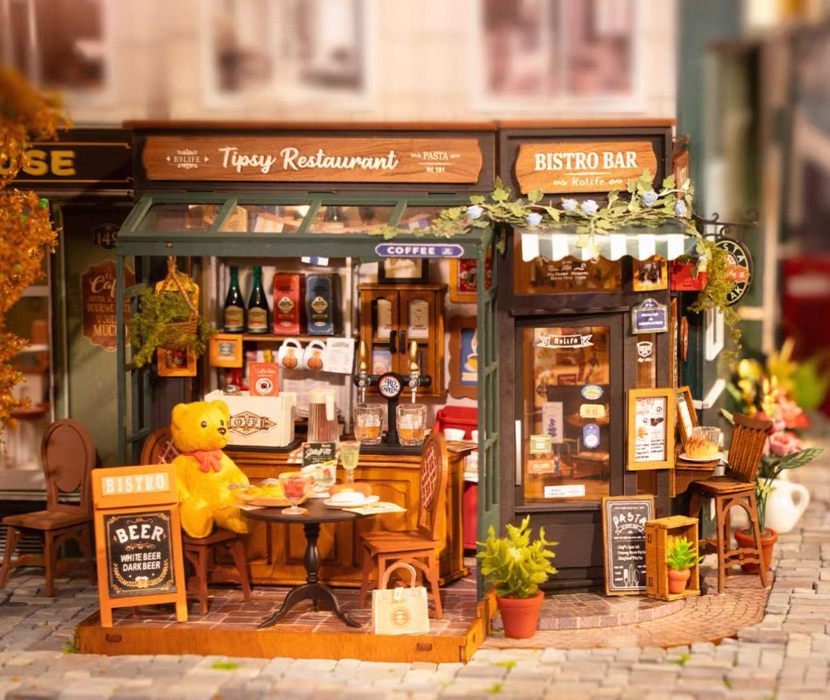
Core Insights - The "childish economy" is emerging as a significant market trend, appealing to adults seeking emotional comfort and nostalgia through products traditionally aimed at children [1][21][30] - This trend reflects a broader shift in consumer behavior, where emotional value and self-compensation are prioritized over mere functionality [6][10][27] Group 1: Miniature Models - Miniature models have gained popularity among adults as a form of emotional expression and stress relief, providing a sense of control and accomplishment [2][5] - The market for miniature models is diverse, with products ranging from affordable to high-end, catering to both beginners and experienced hobbyists [3][5] Group 2: Companion Dolls - Companion dolls have become a central emotional outlet for adults, with over 80% of surveyed individuals owning small toys, indicating a strong demand for emotional value [6][8] - Brands like Jellycat have successfully tapped into this market, achieving significant revenue growth and creating a "companion economy" [6][8] Group 3: Adult Pacifiers - Adult pacifiers are designed to address anxiety and stress, with a growing market presence as consumers seek emotional tools to cope with modern pressures [10][12] - The product's design has evolved to appeal to adults, transforming it into a fashionable accessory rather than a mere child’s item [10][12] Group 4: Retro Gaming Consoles - Retro gaming consoles are experiencing a resurgence, providing adults with a nostalgic escape from the complexities of modern gaming [14][15] - These consoles offer a straightforward gaming experience, allowing players to enjoy simple yet engaging gameplay without distractions [14][15] Group 5: Children's Meal Toys - Children's meal toys have transcended their original market, becoming popular among adults who seek to relive childhood experiences [16][21] - Collaborations between fast-food brands and popular characters have led to significant sales and a vibrant secondary market for these toys [18][21] Group 6: Doll Clothing Economy - The "doll clothing economy" is emerging as a new market, driven by young consumers who seek to express themselves through doll fashion [22][25] - This trend reflects a shift towards emotional consumption, where the act of dressing dolls serves as a form of self-expression and relaxation [26][27] Group 7: "Baby Products" for Adults - The rise of "baby products" for adults indicates a growing trend where consumers prioritize safety and emotional value in their purchases [27][28] - Brands are adapting to this trend by modifying products to appeal to adult consumers, blurring the lines between traditional age-based marketing [27][28] Group 8: Future of the "Childish Economy" - The sustainability of the "childish economy" will depend on brands' ability to understand consumer psychology and create products that balance emotional value with practicality [31][32] - The challenge lies in ensuring that the pursuit of emotional comfort does not lead to further anxiety, emphasizing the need for a thoughtful approach to product development [30][31]

15 Best Long Term Stocks to Buy According to Reddit
Insider Monkey· 2025-11-24 04:11
Core Insights - The article discusses the best long-term stocks to buy according to Reddit, highlighting the significant influence of retail traders in the current market environment [1][4]. Retail Trading Trends - Retail trading activity has surged by 50% compared to the previous year, surpassing levels seen during the GameStop frenzy in 2021, contributing to increased market volatility [2]. - In the first week of October, retail investors made net purchases of approximately $7 billion, a notable increase from the previous two months' average of $5.3 billion [3]. Stock Selection Methodology - The analysis involved reviewing various subreddits to identify stocks favored by Reddit users, focusing on companies with an average annual revenue growth exceeding 20% over the past five years [6]. - A final list of 15 stocks was compiled, all projected to have at least a 10% upside as of November 20 [6]. Company Highlights CrowdStrike Holdings, Inc. (NASDAQ:CRWD) - Projected upside potential of 10.09% as of November 20, with a five-year share price return of 244.02% [8][9]. - In fiscal Q2 2026, revenue grew by 21% year-over-year to approximately $1.17 billion, with subscription revenue increasing by 20% [11]. - The company reported a record net new annual recurring revenue of $221 million, contributing to a total annual recurring revenue of $4.66 billion, reflecting a 20% growth from the previous year [11]. Exxon Mobil Corporation (NYSE:XOM) - Projected upside potential of 10.1% as of November 20, with a five-year share price return of 216.7% [15]. - Exxon announced a joint venture to operate the Bahia natural gas liquids pipeline, acquiring a 40% stake for $650 million, with the project expected to be operational by Q4 2027 [16][17]. - The company plans to invest approximately $140 billion in major capital projects through 2030, aiming to generate an additional $20 billion in earnings and $30 billion in cash flow by that time [18]. McDonald's Corporation (NYSE:MCD) - Projected upside potential of 10.2% as of November 20, with a five-year share price return of 42.07% [20]. - McDonald's reported nearly $20 billion in revenue during the first three quarters of 2025, a 2% increase from the same period in 2024, with a 3% rise in third-quarter revenue [22]. - The company has maintained a consistent dividend growth strategy, marking its 49th consecutive year of increasing its dividend, with a new annual dividend of $7.44 per share, yielding approximately 2.41% [24].



中国业务扎堆分拆洋品牌竞逐大市场
Zheng Quan Shi Bao· 2025-11-23 23:03
Group 1 - Starbucks announced a strategic partnership with Boyu Capital to establish a joint venture for retail operations in China, aiming to expand its store count to 20,000 [1][2] - RBI Group is forming a joint venture with CPE Yuanfeng to enhance Burger King's performance in China, with an initial investment of $350 million to support expansion and marketing [1][2] - Both companies are adapting to the competitive landscape in China, which is seen as a high-growth market with significant opportunities [1][3] Group 2 - Starbucks CEO, Howard Schultz, emphasized that the partnership is not merely about capital but about improving operational efficiency and expanding in smaller cities and emerging regions [2] - As of September 28, 2025, Starbucks had 40,990 global stores, with 8,011 in China, and opened 415 new stores in China during the fiscal year [2] - The competitive environment in China is pushing foreign companies to innovate and adapt their strategies to meet local consumer demands [6][7] Group 3 - McDonald's has successfully localized its operations in China, achieving a threefold increase in store count since 2017, with over 90% of its ingredients sourced locally [4][5] - The Chinese market is characterized by diverse consumer needs, prompting foreign companies to focus on niche markets and specialized offerings [7] - The recent financial performance of Starbucks in China showed a 2% increase in same-store sales and a 6% revenue growth, driven by innovation in non-coffee products and delivery services [7]