
Merck(MRK)

Search documents
低利率催热并购债券市场,季度融资规模创四年新高
Zhi Tong Cai Jing· 2025-12-08 13:17
Group 1 - The current favorable conditions have led companies to rush into the bond market for cheap merger financing, resulting in a global M&A financing scale of $113 billion this quarter, the largest in four years and one of the highest on record [1][4] - Merck and GE Healthcare raised a combined $9.25 billion in a single day for acquisitions announced two weeks prior, indicating strong credit sentiment as corporate spreads approach historical lows [1][4] - The pharmaceutical sector has been particularly active, with Novo Nordisk raising €4 billion for the acquisition of Akero Therapeutics and Pfizer selling $6 billion in bonds for the acquisition of Metsera [4] Group 2 - Demand for bonds has been so strong that borrowers do not need to pay a premium even when including clauses for debt buybacks if mergers are not completed on time, reducing the risk of accumulating additional debt if deals fail [4][5] - Companies like Magnum have included clauses in their bonds allowing for early repayment if their spin-off does not finalize by mid-next year, indicating a strategic approach to financing [5] - The return of M&A activity is being strongly felt, with banks underwriting approximately $65 billion in debt related to leveraged buyouts for 2026, and expectations for a broader recovery in M&A activity in 2026 [6]



中国医保谈判之后,美国医保也学会了“灵魂砍价”
新财富· 2025-12-08 08:05
Core Insights - The 2025 Medicare negotiation results indicate a significant and ongoing impact on the innovative drug industry, with expectations of continued price reductions rather than a one-time event [3][8] - The second round of negotiations confirmed that high discount rates will persist, reshaping the industry's operational landscape and investor expectations [8][20] Group 1: Medicare Negotiation Outcomes - The second round of negotiations involved 15 high-cost drugs, with price reductions reaching up to 85%, and 11 drugs seeing discounts over 50% [5][8] - Notable drugs affected include Ozempic, which saw a price drop from $959 to $274 per month, representing a 71% reduction, saving patients approximately $8,220 annually [19][20] - The consistency in high discount rates between the first and second rounds signals a shift towards a systematic approach to drug pricing reform [8][18] Group 2: Industry Implications - The innovative drug industry's business model is being fundamentally rewritten, with lifecycle values of mature drugs entering a "compression era" due to systematic price reductions [22][24] - The commercialization timeline for innovative drugs is being forced to accelerate, requiring companies to maximize revenue in the early years post-launch [24][26] - The valuation of innovative drugs is shifting from "story pricing" to "cash flow pricing," emphasizing immediate revenue generation over long-term high pricing [26][30] Group 3: Future Landscape - The second round of negotiations has clarified the future regulatory environment, reducing uncertainty and allowing companies to plan around stable policy parameters [29][30] - The focus of competition is shifting back to the core aspects of innovation, such as product quality, clinical differentiation, and commercialization capabilities [30][31] - The industry is entering a new phase characterized by efficiency, speed, and differentiation, which may lead to a healthier and more transparent market for truly valuable innovations [30][31]



Jim Cramer on Merck: “The People Who Run This Company Are Not Idiots”
Yahoo Finance· 2025-12-08 05:32
Core Insights - Merck & Co., Inc. is strategically preparing for the loss of patent protection for Keytruda by making acquisitions to enhance its drug pipeline [1] - The company has focused on respiratory diseases through its acquisition of Verona, which has already launched a new maintenance treatment for chronic obstructive pulmonary disease, marking the first such treatment in over 20 years [1] - Analysts are beginning to recognize Merck's preparations for a future without Keytruda exclusivity, as evidenced by Wells Fargo's recent upgrade of the stock [1] Company Overview - Merck & Co., Inc. is a healthcare company that offers a diverse range of human and veterinary pharmaceuticals, vaccines, and health solutions [2]
Merck's Stock is Suddenly Soaring, but Is the Struggling Healthcare Giant a Buy?
The Motley Fool· 2025-12-07 12:15
Core Viewpoint - Merck's stock has experienced significant volatility, with a recent rebound raising questions about its investment potential, particularly in light of its reliance on the oncology drug Keytruda and upcoming patent expirations [1][4]. Company Overview - Merck is a major pharmaceutical company with over 40 products generating approximately $70 billion in annual revenue [2]. - Keytruda, an oncology drug, accounts for nearly half of Merck's revenue and is approved for 20 different types of cancer [3]. Patent Expiration Concerns - Keytruda's patent protection is set to expire in 2028, which poses a risk as competitors may produce cheaper alternatives [4]. - The stock's decline was largely due to investor concerns over how Merck would address this impending threat [5]. Recent Developments - The approval of Keytruda Qlex in September, a subcutaneous version of Keytruda, indirectly extends its patent protection [8]. - Positive results from a phase 3 trial of Winrevair, a treatment for pulmonary arterial hypertension, could lead to significant revenue growth, with projections of around $8 billion annually [10]. - Merck's development pipeline is expected to generate over $50 billion in annual revenue by the mid-2030s, compensating for Keytruda's eventual revenue loss [11]. Acquisitions and Growth Strategy - Merck has been active in acquisitions, including the purchase of Verona Pharma and Cidara Therapeutics, which will enhance its product offerings [12]. - The company has a history of successful acquisitions that have bolstered its portfolio, including the acquisition of Keytruda in 2009 [12]. Investment Perspective - Despite a 30% increase in stock price since September, Merck's shares are still considered undervalued, trading at less than 12 times projected earnings per share [13]. - The current dividend yield of 3.3% is competitive compared to other blue-chip stocks [13]. - Merck is expected to continue developing new products and profit centers, mitigating the impact of patent expirations [15].
Peptide Therapeutics Market Size to Reach USD 82.19 Billion by 2032; Surging Requirements for Targeted Medicines in Oncology Augment Market Expansion - SNS Insider
Globenewswire· 2025-12-06 14:10
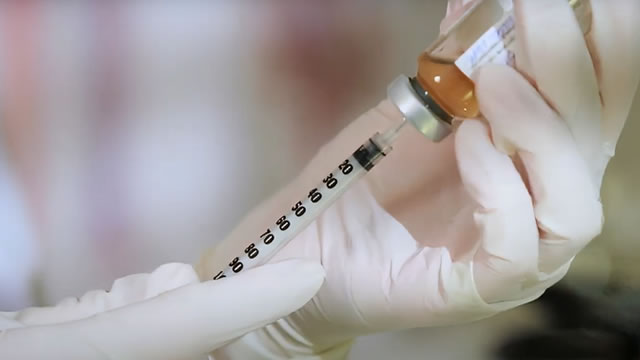
Market Overview - The global Peptide Therapeutics Market was valued at USD 46.04 billion in 2024 and is projected to reach USD 82.19 billion by 2032, with a CAGR of 7.51% from 2025 to 2032 driven by demand for targeted medications in oncology, metabolic diseases, and infectious diseases [1][17]. U.S. Market Insights - The U.S. peptide therapeutics market was valued at USD 20.36 billion in 2024 and is expected to grow to USD 35.71 billion by 2032, with a CAGR of 7.27% during the same period, supported by significant R&D expenditure and regulatory frameworks [2]. Technological Advancements - Innovations in peptide synthesis and drug delivery technologies, such as solid-phase peptide synthesis (SPPS) and liquid-phase peptide synthesis (LPPS), are enhancing manufacturing efficiency, purity, and scalability [4]. - Advances in delivery platforms, including sustained-release formulations and nanoparticles, are improving the stability and usability of peptide medications [4]. Market Challenges - High production costs and complex manufacturing processes pose challenges for the development of peptide therapeutics, as synthesis and purification require expensive equipment and high-purity reagents [5]. Market Segmentation By Application - The metabolic disorders segment held a 26.2% market share in 2024, driven by the prevalence of diseases like type 2 diabetes and obesity, while the pain segment is expected to grow at the highest CAGR due to rising chronic pain disorders [7]. By Therapeutics Type - The innovative segment dominated the market in 2024, reflecting the demand for high-activity and targeted treatment options [8]. By Type of Manufacturers - The in-house segment accounted for 65.25% of the market share in 2024, as major companies prefer control over the drug development process, while the outsourced segment is anticipated to grow at the highest CAGR [9]. By Route of Administration - The parenteral route led the market in 2024 due to poor oral bioavailability of most peptides, with alternative delivery methods expected to grow at the highest CAGR [10]. By Synthesis Technology - The recombinant DNA technology segment held a 64.3% market share in 2024, favored for its ability to produce long and sustained peptides of higher purity [11]. Regional Insights - North America dominated the peptide therapeutics market with a 58.1% share in 2024, attributed to advanced clinical trials and a developed pharmaceutical sector, while the Asia Pacific region is expected to grow significantly due to increased healthcare expenditure and chronic disease prevalence [12]. Key Companies - Major companies in the peptide therapeutics market include Eli Lilly and Company, Amgen Inc., Pfizer Inc., Takeda Pharmaceutical Company Limited, AstraZeneca plc, and Sanofi S.A. [13][18].




Do These 3 Healthcare Stocks Need a Checkup?
The Motley Fool· 2025-12-05 21:05
Core Insights - The pharmaceutical industry is currently facing challenges, particularly for companies like Pfizer, Bristol Myers Squibb, and Merck, which are lagging behind in the development of new weight loss drugs compared to Eli Lilly [1][3][5] - Eli Lilly is leading the market, primarily due to its weight loss drugs Zepbound and Mounjaro, which contribute over 50% of its revenue [1][3] - The expiration of patents for key drugs in the coming years poses a significant risk to Pfizer, Bristol Myers Squibb, and Merck, potentially leading to revenue declines [4][5] Company Summaries Pfizer - Pfizer's stock is down nearly 60% from its 2021 highs, currently priced at $26.02 with a market cap of $146 billion [6][8] - The company has a gross margin of 69.12% and a dividend yield of 6.69%, but it has a 100% dividend payout ratio, making it a higher-risk option for investors [12] - Pfizer is working to enhance its drug pipeline by acquiring Metsera, which has promising weight-loss drugs [8] Bristol Myers Squibb - Bristol Myers Squibb's stock is down nearly 40% from its 2023 highs, currently priced at $52.15 with a market cap of $106 billion [6][10] - The company has a gross margin of 64.33% and a dividend yield of 4.77%, with an 80% payout ratio, which may deter conservative investors [12] - Despite current challenges, Bristol Myers Squibb is also focused on developing new drugs to mitigate the impact of patent expirations [10] Merck - Merck's stock is 20% below its 2024 highs, currently priced at $99.72 with a market cap of $250 billion [6][11] - The company boasts a gross margin of 75.81% and a dividend yield of 3.21%, with a more secure payout ratio of around 40% [12] - Merck is actively working on new drug developments to counteract the effects of upcoming patent cliffs [10] Industry Trends - The pharmaceutical sector is characterized by intense competition, with a tendency for investors to favor innovative companies like Eli Lilly over established players [3][7] - Patent cliffs are a common occurrence in the industry, and while they present challenges, historically successful companies like Pfizer, Bristol Myers Squibb, and Merck are expected to navigate these issues [7][13] - The current market dynamics suggest that while Eli Lilly is performing well, the potential for new drug developments from Pfizer, Bristol Myers Squibb, and Merck could lead to future growth opportunities [10][13]

Is This Pharmaceutical Giant a Buy After a Major Acquisition?
The Motley Fool· 2025-12-05 17:05
Core Viewpoint - Merck is showing signs of recovery with a 27% stock increase over the past month, driven by strategic acquisitions and new product launches [1]. Company Developments - Merck has acquired Cidara Therapeutics for approximately $9.2 billion, focusing on the development of CD388, a long-acting antiviral drug that could provide extended protection against influenza [4][5]. - The company is also launching Winrevair, which generated $360 million in sales in the third quarter, indicating a strong annual run rate of over $1 billion [8]. - Another product, Capvaxive, a pneumonia vaccine, is performing well with $244 million in sales in the third quarter, nearing the $1 billion annual run-rate mark [9]. - Merck has received approval for a subcutaneous formulation of Keytruda, which will maintain patent protection for a longer period and offers advantages in administration [10]. Market Performance - Merck's third-quarter revenue increased by 4% year over year to $17.3 billion, although concerns remain about future sales due to increasing competition for Keytruda [11]. - The company has a market capitalization of $250 billion, with a current stock price of $99.83 and a dividend yield of 3.21% [8][13]. - Merck has increased its dividend payouts by 93.8% over the past decade, positioning itself as a strong blue-chip dividend stock [13].

丰业银行上调默沙东目标价至120美元
Ge Long Hui· 2025-12-05 08:45
Group 1 - The target price for Merck & Co. has been raised from $105 to $120 by Scotiabank, maintaining an "Outperform" rating [1]

These Are the 3 Hottest Stocks in the S&P 500 Heading Into the New Year. Should You Invest in Them?
The Motley Fool· 2025-12-05 08:15
Core Viewpoint - The article highlights three stocks in the S&P 500 that have shown significant upward momentum after a period of underperformance, suggesting potential for continued growth in 2026 [1][2][12]. Group 1: Albemarle (ALB) - Albemarle's stock has increased by 39% over the past month, making it the best performer in the S&P 500 during this period [4]. - The company specializes in lithium extraction and refining, which is in high demand for electric vehicle batteries and large-scale power storage systems [4][7]. - Despite sluggish global EV sales, demand for Albemarle's lithium products is rising in other sectors such as battery storage and solar energy [7]. Group 2: Solventum (SOLV) - Solventum's stock has risen nearly 25% over the past month, positioning it as the second-best performer in the S&P 500 [8]. - The company, spun off from 3M in April 2024, produces a variety of medical products and has seen its stock surge following strong third-quarter earnings that exceeded forecasts [10]. - A $1 billion share repurchase program announced by Solventum has further boosted investor confidence in the company's growth potential [11]. Group 3: Merck (MRK) - Merck's stock has increased by nearly 22% over the past month, following a strong quarterly report that surpassed earnings and revenue expectations [12]. - The company's Keytruda cancer drug achieved quarterly sales exceeding $8 billion, marking a 10% increase from the previous year [12]. - Merck's management has successfully reduced costs, leading to an improved earnings outlook for 2025 [12].



Merck & Co., Inc. (MRK): A Bull Case Theory
Yahoo Finance· 2025-12-04 18:58
Core Thesis - Merck & Co., Inc. is at a critical juncture due to the impending patent expiration of Keytruda, which generated nearly $29.5 billion in 2024, accounting for about half of the company's total revenue [2][3] Revenue Challenges - Keytruda's primary patents are set to expire in 2028, leading to a potential significant decline in earnings [2] - Other key products like Lenvima (2025), Januvia (2026), Lynparza (2027), and Gardasil (2028) also face loss of exclusivity, compounding revenue pressures [3] - In Q3 2025, Keytruda's sales increased by 10% year-over-year to $8.1 billion, while Gardasil's revenue fell by 24% due to decreased demand in China [3] Strategic Response - To address the 2028 patent cliff, Merck is implementing a three-pronged strategy: launching Keytruda Qlex to retain patients, developing new growth pillars through drugs like Winrevair and Ohtuvayre, and pursuing Welireg for renal cell carcinoma [4] - The company is diversifying its portfolio with over 80 late-stage programs and next-generation antibody-drug conjugates [5] Financial Outlook - Merck is targeting $3 billion in cost savings by 2027 and plans to cut 6,000 jobs to streamline operations [5] - The stock is trading at approximately 11 times earnings, compared to the sector's average of 18 times, indicating that the market may be pricing in worst-case scenarios regarding Keytruda [5] - The company offers a 3.8% dividend yield, which may attract investors during the transition period [5] Historical Context - Previous bullish analyses highlighted Merck's strong revenue growth and disciplined execution, with the stock appreciating approximately 23.34% since April 2025 [6]