
Microsoft(MSFT)

Search documents
被员工怒怼“磕了”,追觅CEO:我有肚量;AI恋人陪聊涉黄被判刑,2.4万人付费;马斯克、奥特曼又开撕|AI周报
AI前线· 2026-01-18 05:32
Group 1: AI-related Legal Issues - The first criminal case involving AI-related obscenity in China was brought to trial, with the accused facing charges for providing chat services through the AlienChat software, which had 116,000 users, including 24,000 paying members, generating over 3 million yuan in revenue [3][4]. - The court found that out of 12,495 chat segments sampled from paying users, 3,618 segments were deemed obscene, leading to convictions for the founders [4]. Group 2: Corporate Developments in Technology - Pursuing a goal to create the world's first trillion-dollar company, the CEO of Chasing Technology, Yu Hao, stated that achieving this target is not expected within a year, despite facing internal criticism from employees regarding ambitious strategic goals [5][6][7]. - Ctrip is under investigation for alleged monopolistic practices, with the company confirming it will cooperate with regulatory authorities [10][11]. - The "Dead or Not" app, previously renamed "Demumu," is seeking a new brand name after feedback indicated the original name was considered inauspicious [12]. Group 3: Semiconductor and Tariff Changes - The U.S. government announced a 25% tariff on certain imported semiconductors and related products, effective January 15, 2026, as part of ongoing trade policy adjustments [14][15]. Group 4: Talent Movements in AI - Chen Lijie, a notable figure from Tsinghua University's Yao Class, has joined OpenAI to focus on mathematical reasoning, alongside the return of former OpenAI executives [16][18]. Group 5: Legal Actions and Financial Claims - Elon Musk is suing OpenAI and Microsoft for up to $134 billion, claiming that OpenAI has deviated from its non-profit mission and misled him regarding its financial dealings [19][20]. - OpenAI has characterized Musk's lawsuit as part of a pattern of harassment rather than a legitimate economic claim [20]. Group 6: AI Infrastructure and Innovations - Elon Musk announced the operational status of the "Colossus 2" supercomputer, which is designed to support the Grok AI chatbot, with plans for further upgrades [24][25]. - Meta is launching a new infrastructure initiative called "Meta Compute" to enhance its AI capabilities, while also planning to cut about 10% of jobs in its Reality Labs division [26][27]. Group 7: New AI Models and Technologies - Baichuan Intelligence released a new medical AI model, Baichuan-M3, which outperformed GPT-5.2 in various assessments, showcasing advanced diagnostic capabilities [39]. - Tencent's WeDLM model aims to improve inference efficiency in AI applications, addressing traditional limitations in model performance [35].






9300亿元!马斯克索赔!
Zheng Quan Shi Bao· 2026-01-18 04:46
(原标题:9300亿元!马斯克索赔!) OpenAI和微软均否认马斯克的相关指控。 从理念分歧到法庭对峙,美国企业家马斯克正将昔日亲手参与创立的OpenAI及其核心伙伴微软推向被 告席——他以"欺诈"为由索赔790亿美元至1340亿美元(约合人民币5505亿元—9338亿元)。 理由是OpenAI背弃了其非营利初衷、转而与微软合作,从而对他构成欺诈。 5000亿美元估值的背叛? 根据周五(1月16日)提交至美国联邦法院的一份文件,马斯克在诉状中称,自2015年联合创立OpenAI 以来,他不仅提供了约3800万美元资金,占早期种子融资的60%,还在组织搭建、关键人才招募、战略 方向以及对外公信力方面发挥了决定性作用。因此有权获得OpenAI当前5000亿美元估值中的一大部 分。 马斯克的首席律师Steven Molo表示:"没有埃隆?马斯克,就没有如今的OpenAI。他不仅提供了绝大部 分种子资金,还凭借个人声誉为公司背书,并毫无保留地向团队传授了企业规模化运营的经验。" 文件援引其专家证人、金融经济学家C.Paul Wazzan的评估称,OpenAI因马斯克的综合性贡献,获得的 经济价值在655亿美元至10 ...
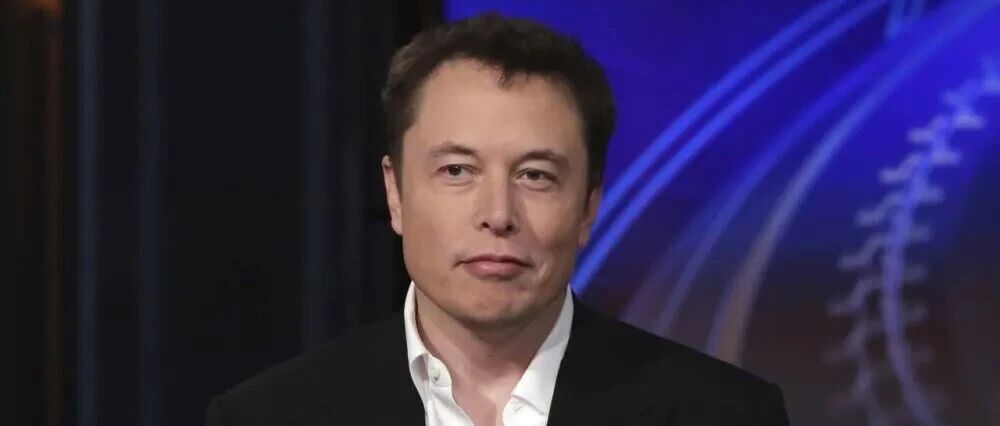
9300亿元!马斯克索赔!
证券时报· 2026-01-18 04:26
从理念分歧到法庭对峙,美国企业家马斯克正将昔日亲手参与创立的OpenAI及其核心伙伴微软推向被告席——他以"欺诈"为由索赔790亿美元至1340 亿美元(约合人民币5505亿元—9338亿元)。 理由是 OpenAI 背弃了其非营利初衷、转而与微软合作,从而对他构成欺诈。 马斯克 方面强调,这并非普通投资回报争议,而是在 OpenAI 背离非营利使命、向营利性结构转型后,对原始贡献价值的"制度性攫取"。 值得注意的是,这场诉讼背后藏着行业竞争暗线:马斯克于 2018 年退出 OpenAI 董事会, 2023 年创办竞品公司 xAI ,如今正与 OpenAI 的 ChatGPT 展开直接对抗。 另外, 估值 5000 亿美元的 OpenAI 正推进 IPO 计划 。 5000 亿美元估值的背叛? 根据周五(1月16日)提交至美国联邦法院的一份文件, 马斯克 在诉状中称,自 2015 年联合创立 OpenAI 以来,他不仅提供了约 3800 万美元资金,占早期种子融资的 60% ,还在组织搭建、关键人才招募、战略方向以及对外公信力方面发挥了决定性作用。 因此有权获得 OpenAI 当前 5000 亿美元估值中的一 ...
马斯克,索赔9300亿元
Sou Hu Cai Jing· 2026-01-18 04:23
据环球时报援引美国彭博社、路透社当地时间1月17日报道,美国亿万富翁埃隆·马斯克(以下简称"马 斯克")要求美国开放人工智能研究中心(OpenAI)和微软公司向其支付790亿至1340亿美元的赔偿, 理由是OpenAI背弃了其非营利初衷、转而与微软合作,从而对他构成欺诈。 彭博社称,马斯克的律师16日在法庭文件中详细说明了这一赔偿请求。 该文件援引金融经济学家、专家证人保罗·瓦赞的估算称,马斯克在2015年协助创立OpenAI时,向其捐 赠了3800万美元种子资金,却遭到欺诈,因此有权获得OpenAI当前5000亿美元估值中的一大部分。 编辑:曹諵 审核:知晏 报道称,该文件显示,专家证人瓦赞在计算赔偿金额时,将马斯克对OpenAI的财务及非金钱贡献一并 纳入考量,包括其提供的技术和商业建议。 瓦赞的估值方法综合考量了马斯克对OpenAI的财务支持与非财务贡献(包括技术与商业建议),最终 计算出不当收益范围在655亿至1094.3亿美元(OpenAI)及133亿至250.6亿美元(微软)。文件同时显 示,马斯克还计划进一步主张惩罚性赔偿。 马斯克于2018 年退出 OpenAI 董事会,并在 2023 年成立 ...
【数智周报】 谷歌DeepMind CEO:中国的AI模型仅落后美国几个月;DeepSeek开源相关记忆模块Engram;微软在人工智能上的支出将达到5...
Tai Mei Ti A P P· 2026-01-18 02:38
Group 1 - Keda Xunfei's Chairman Liu Qingfeng stated that the domestic AI infrastructure has taken initial shape, with domestic large models matching international standards despite having half the parameters [2] - Michael Burry warned that the era of tech giants earning huge profits with minimal investment is ending, primarily due to AI, and investors should focus on Return on Invested Capital (ROIC) rather than revenue growth [3] - A BlackRock survey revealed that while investors are optimistic about AI, they are shifting their investment focus towards energy and infrastructure suppliers, with only one-fifth considering large US tech companies as attractive investment opportunities [4] Group 2 - Demis Hassabis, CEO of Google DeepMind, indicated that Chinese AI models are only a few months behind those in the US and Western countries, with significant advancements made by Chinese developers [5] - DeepSeek released a new paper on conditional memory, significantly improving model performance in various tasks, and has open-sourced a related memory module [6] - Wang Xiaochuan, CEO of Baichuan Intelligent, mentioned that the company has 3 billion yuan on hand and may initiate an IPO plan in 2027 [7] Group 3 - Zhiyu and Huawei launched the first domestically trained multimodal SOTA model on local chips, achieving a full training process on the Ascend Atlas 800T A2 device [8] - Kuaishou announced that Keling AI's revenue exceeded $20 million in December 2025, with an annual recurring revenue (ARR) of $240 million [9] - Yongyou Network projected a net loss of 1.3 to 1.39 billion yuan for 2025, although it expects to reduce losses compared to the previous year [10] Group 4 - JD.com and Lenovo deepened their "hybrid AI" cooperation, launching new products at CES 2026, with a focus on strategic collaboration around smart devices and services [11] - Alibaba's Qianwen app integrated with various services, allowing users to order food and book flights through AI, marking a significant upgrade in functionality [12] - Alipay and partners released China's first AI commercial agreement, aimed at creating a universal language for AI tasks across platforms [13] Group 5 - Yunhai Medical launched the "YunJian AI Spirit," a product that reduces long-term costs for users by offering unlimited access to traditional Chinese medicine infrared algorithms [14] - Zhiyuan purchased thousands of hours of robot training data for various tasks [15] - Meituan released the open-source "ReThink" model, achieving state-of-the-art performance in several benchmarks [16] Group 6 - Teslian introduced the upgraded T-Cluster 512 super node architecture, designed for high-performance AI model training, with a total computing power exceeding 500 PFlops [17] - Keda Xunfei launched a marketing AI platform based on the "SuperAgent" framework, enhancing efficiency in marketing strategies [18] - The first domestically trained text-to-image model was released by Zhiyu and Huawei, completing the entire training process on local chips [19] Group 7 - Tencent Cloud ADP launched the first "AI-native Widget," enhancing task delivery experiences through natural language interaction [20] - Anthropic implemented stricter measures to prevent third-party tools from bypassing rate limits, affecting several developer projects [21] - Google announced a partnership with Walmart to expand AI model shopping capabilities, allowing direct transactions through its AI application [22] Group 8 - Mark Zuckerberg initiated the "Meta Compute" project, aiming to build substantial AI infrastructure by 2030, with a focus on collaboration with governments [23] - Meta plans to lay off hundreds of employees in its Reality Labs department, shifting focus from the metaverse to AI [24] - Alphabet's market value surpassed $4 trillion for the first time, joining a select group of companies [24] Group 9 - Nvidia and Eli Lilly will jointly invest $1 billion to establish an AI drug laboratory over the next five years [26] - The US relaxed export controls on Nvidia's H200 chips to China, potentially impacting the AI hardware market [27] - Microsoft announced a plan to limit the impact of data center energy costs and water usage on local communities [29] Group 10 - OpenAI is reportedly seeking US hardware suppliers for its planned consumer devices and cloud data center expansion [32] - Elon Musk's lawsuit against OpenAI is set to go to trial in late April [33] - OpenAI and Cerebras announced a partnership worth over $10 billion to deploy a large-scale AI inference platform [34] Group 11 - Zivariable Robotics completed a 1 billion yuan A++ round of financing, backed by major investors including ByteDance and Meituan [35] - Qiangnao Technology submitted a confidential IPO application in Hong Kong [36] - OpenAI agreed to acquire the AI health application Torch for approximately $100 million [37] Group 12 - K2 Lab, founded by a former DingTalk executive, secured tens of millions in seed funding to develop an AI-driven content e-commerce agent [38] - Alibaba Cloud completed a strategic investment in ZStack, achieving a controlling stake [39] - Skild AI raised nearly $1.4 billion in funding, reaching a valuation of over $14 billion [40] Group 13 - WeLab completed a $220 million D-round strategic financing, the largest single round since its inception [41] - Merge Labs, a brain-machine interface startup, raised $252 million in seed funding, with OpenAI as a major investor [42] Group 14 - A report indicated that by 2026, the Chinese tech giants index is expected to surpass the US tech giants in profitability growth for the first time since 2022 [43] - China is accelerating the establishment of a data property registration system to enhance data circulation and value [44] - Storage prices are expected to surge by 40%-50% in Q4 2025 and again in Q1 2026 due to increased demand from AI and server capacity [45] Group 15 - A new AI model developed by US researchers can predict the risk of approximately 130 diseases based on sleep data [46] - Foreign investment firms are increasingly incorporating AI into their research processes in the Chinese market [47] - UBS believes the probability of an AI bubble in China is low, with monetization relying on cloud services and advertising [48] Group 16 - The number of AI companies in China has exceeded 6,200, with applications expanding across various industries [49]



【数智周报】 谷歌DeepMind CEO:中国的AI模型仅落后美国几个月;DeepSeek开源相关记忆模块Engram;微软在人工智能上的支出将达到5亿美元;美国放宽对英伟达H200芯片出口中国的管制
Sou Hu Cai Jing· 2026-01-18 02:15
Group 1 - Keda Xunfei's Chairman Liu Qingfeng stated that the domestic AI infrastructure has taken initial shape, with domestic large models matching international standards despite having half the parameters [2] - Michael Burry warned that the era of tech giants earning huge profits with minimal investment is ending, primarily due to AI, and investors should focus on Return on Invested Capital (ROIC) rather than revenue growth [3] - A BlackRock survey revealed that while investors are optimistic about AI, they are shifting their focus to energy and infrastructure suppliers, with only one-fifth considering large US tech companies as attractive investment opportunities [4] Group 2 - Demis Hassabis, CEO of Google DeepMind, indicated that Chinese AI models are only a few months behind those in the US and have made significant advancements in the past year [5] - DeepSeek released a new paper on conditional memory, significantly improving model performance in various tasks, and has open-sourced a related memory module [6] - Baichuan Intelligence's CEO Wang Xiaochuan mentioned that the company has 3 billion yuan on hand and may initiate an IPO plan in 2027 [7] Group 3 - Zhiyun and Huawei have open-sourced a new image generation model, GLM-Image, which is the first SOTA multimodal model trained entirely on domestic chips [8] - Kuaishou Technology announced that Keling AI's revenue exceeded $20 million in December 2025, with an annual recurring revenue (ARR) of $240 million [9] - Yongyou Network expects a net loss of 1.3 to 1.39 billion yuan for 2025, a reduction in loss compared to the previous year [10] Group 4 - JD.com and Lenovo deepened their "hybrid AI" cooperation, launching new products at CES 2026, with a focus on strategic collaboration around smart devices and services [11] - Alibaba's Qianwen app has integrated with various Alibaba ecosystem services, allowing users to perform complex tasks like ordering food and booking flights [12] - Alipay and partners launched China's first AI commercial agreement, ACT, designed to facilitate collaboration between AI and e-commerce platforms [13] Group 5 - Yunhai Medical released the "YunJian AI Spirit," a product that reduces long-term costs for users of infrared medical technology [14] - Zhiyuan purchased thousands of hours of robot training data for various tasks [15] - Meituan launched the open-source "ReThink" model, which significantly reduces training costs for new tools in real-world scenarios [16] Group 6 - Teslin introduced the upgraded T-Cluster 512 super node architecture, achieving over 500 PFlops of total computing power [17] - Keda Xunfei launched a marketing AI platform based on the "SuperAgent" framework to enhance efficiency in marketing strategies [18] - The first domestically trained text-to-image model, GLM-Image, was released by Zhiyun and Huawei [19] Group 7 - Tencent Cloud ADP launched the first "AI native Widget," enhancing task delivery experiences through natural language interaction [20][21] - Anthropic implemented stricter measures that disrupted several AI programming tools, affecting developers' projects [22] - Google announced a partnership with Walmart to expand AI model shopping capabilities, allowing direct transactions through its AI assistant [23] Group 8 - Mark Zuckerberg announced the "Meta Compute" project, aiming to build substantial AI infrastructure by 2030, while also planning layoffs in the Reality Labs department [24][29] - Alphabet's market value surpassed $4 trillion, joining a select group of companies [25] - Google and Apple finalized a multi-year AI collaboration agreement to support Siri with Google's AI technology [26] Group 9 - Nvidia and Eli Lilly plan to invest $1 billion in an AI drug lab over the next five years [27] - The US relaxed export controls on Nvidia's H200 chips to China [28] - Microsoft announced a plan to limit the impact of data center energy costs and water usage [30] Group 10 - Gemini launched personal smart products that allow users to personalize their experience through connected applications [31] - Microsoft is expected to spend $500 million on AI initiatives, including partnerships with Anthropic [32] - OpenAI is seeking US hardware suppliers for its planned consumer devices and robotics expansion [33] Group 11 - Elon Musk's lawsuit against OpenAI is set to go to trial in late April [34][35] - OpenAI and Cerebras announced a partnership worth over $10 billion to deploy a large-scale AI inference platform [36] - Zhi Variable Robotics completed a 1 billion yuan A++ round of financing, attracting investments from major firms [37] Group 12 - Qiangna Technology submitted a confidential IPO application in Hong Kong [38] - OpenAI acquired the AI health application Torch for approximately $100 million [39] - K2 Lab, founded by a former DingTalk executive, secured seed funding for its AI-driven content e-commerce platform [40] Group 13 - Alibaba Cloud completed a strategic investment in ZStack, achieving a controlling stake [41] - Skild AI raised nearly $1.4 billion, reaching a valuation of over $14 billion [42] - WeLab completed a $220 million D-round financing, marking its largest single round to date [43] Group 14 - Merge Labs, a brain-machine interface startup, raised $252 million in seed funding, with OpenAI as a major investor [44] Group 15 - A report indicated that by 2026, the Chinese tech giants index is expected to surpass the US tech giants in profitability growth for the first time since 2022 [45] - China is accelerating the establishment of a data property registration system [46] - A report predicted a significant increase in storage prices due to rising demand from AI and server capacity [47] Group 16 - A new AI model developed by US researchers can predict the risk of about 130 diseases based on sleep data [48] - Foreign investment firms are increasingly incorporating AI into their research processes in China [49] - UBS stated that the probability of an AI bubble in China is low, with monetization relying on cloud and advertising [50] Group 17 - The number of AI companies in China has exceeded 6,200, with applications expanding across various industries [51]


AI大事!马斯克:索赔9300亿元
Xin Lang Cai Jing· 2026-01-18 01:24
据媒体报道,根据周五提交至美国联邦法院的一份文件,马斯克正向OpenAI和微软索赔最高1340亿美 元(折合人民币约9300亿元),主张两家公司因其在OpenAI早期阶段的投入与支持而获得了"不当得 利",这些收益应被依法返还。 马斯克在诉状中称,自2015年联合创立OpenAI以来,他不仅提供了约3800万美元资金,占早期种子融 资的60%,还在组织搭建、关键人才招募、战略方向以及对外公信力方面发挥了决定性作用。 文件援引其专家证人、金融经济学家C.Paul Wazzan的评估称,OpenAI因马斯克的综合性贡献,获得的 经济价值在655亿至1094亿美元之间;而微软在与OpenAI深度绑定的过程中,获得的相关收益估值为 133亿至251亿美元。 马斯克方面强调,这并非普通投资回报争议,而是在OpenAI背离非营利使命、向营利性结构转型后, 对原始贡献价值的"制度性攫取"。 马斯克的首席律师Steven Molo表示:"没有马斯克,就不会有OpenAI。他提供的不只是资金,而是建立 一家可规模化AI机构所需的关键能力。" OpenAI则迅速回应,称该诉讼"毫无根据",并指责马斯克正对其发起一场"骚扰式诉讼" ...
马斯克,索赔1340亿美元
Feng Huang Wang· 2026-01-18 01:20
马斯克与OpenAI及其核心合作伙伴微软之间的矛盾,正从理念分歧升级为一场可能重塑人工智能(AI)产 业规则的高额诉讼。 根据周五提交至美国联邦法院的一份文件,马斯克正向OpenAI和微软索赔最高1340亿美元,主张两家 公司因其在OpenAI早期阶段的投入与支持而获得了"不当得利",这些收益应被依法返还。 马斯克在诉状中称,自2015年联合创立OpenAI以来,他不仅提供了约3800万美元资金,占早期种子融 资的60%,还在组织搭建、关键人才招募、战略方向以及对外公信力方面发挥了决定性作用。 在另一份提交给法院的文件中,OpenAI与微软共同请求法官限制马斯克专家证人的证词,称其估值模 型"凭空捏造、无法验证、史无前例",并警告这实质上是在试图实现一项极不合理的资金转移。 文件援引其专家证人、金融经济学家C. Paul Wazzan的评估称,OpenAI因马斯克的综合性贡献,获得的 经济价值在655亿至1094亿美元之间;而微软在与OpenAI深度绑定的过程中,获得的相关收益估值为 133亿至251亿美元。 马斯克方面强调,这并非普通投资回报争议,而是在OpenAI背离非营利使命、向营利性结构转型后, 对原 ...
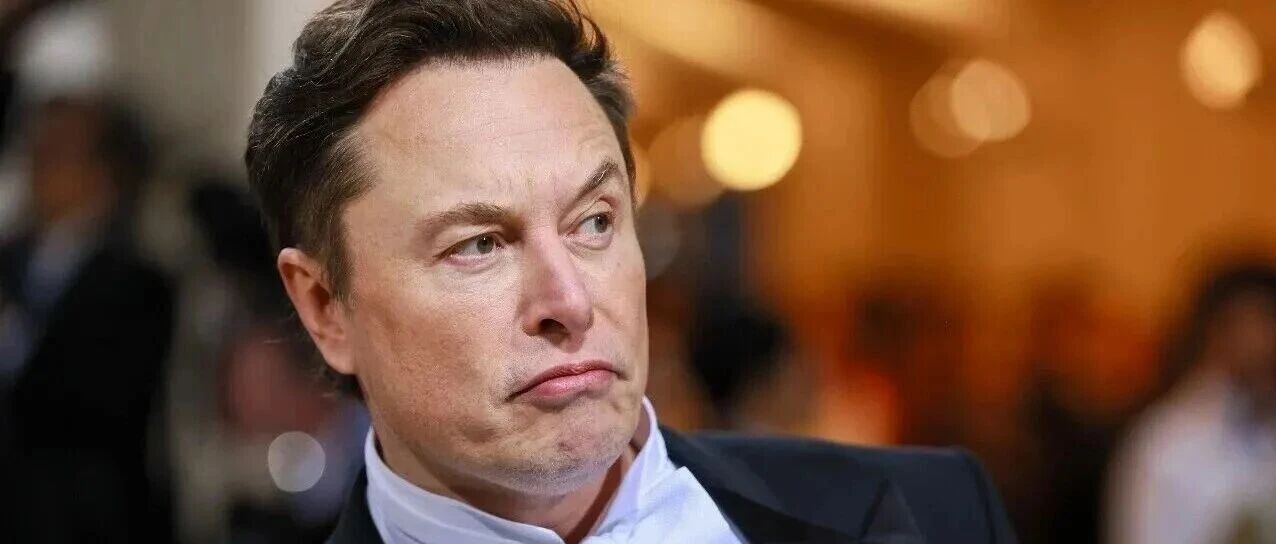
马斯克,索赔1340亿美元
新华网财经· 2026-01-18 01:15
马斯克与OpenAI及其核心合作伙伴微软之间的矛盾,正从理念分歧升级为一场可能重塑人工智能(AI)产业规则的高额诉讼。 更多财经资讯等你来看 往期推荐 案件的核心法律问题在于: OpenAl 最初的非 营利使命,是否构成对创始人及后续合作方具 有法律约束力的承诺。 马斯克认为, OpenAI在引入微软资本、建立 商业化模型并重组为营利性架构后,实质上违 背了"为全人类利益发展 Al"的初心;而 OpenAl则主张,其结构调整是为了确保技术 可持续发展,并未构成法律意义上的违约。 加州奥克兰的一名联邦法官已裁定,该案将交 由陪审团审理,庭审预计于今年4月启动。若 陪审团支持马斯克主张,其不仅可能获得巨额 赔偿,还可能争取包括惩罚性赔偿和法院禁令 在内的进一步救济。 分析人士指出,该案的影响远超当事双方。若 法院认可"非营利使命被商业化侵蚀可触发返 还责任"的逻辑,可能对全球 AI 机构的治理结 构、资本引入方式及捐赠法律边界产生深远影 喧。 来源:财联社 关注" 新华网财经 "视频号 OpenAl则迅速回应,称该诉讼"毫无根据", 并指责马斯克正对其发起一场"骚扰式诉 讼"。微软方面也表示,没有任何证据表明其 ...
马斯克向OpenAI与微软(MSFT.US)索赔最高1340亿美元
智通财经网· 2026-01-18 01:10
在另一份提交给法院的文件中,OpenAI与微软共同请求法官限制马斯克专家证人的证词,称其估值模 型"凭空捏造、无法验证、史无前例",并警告这实质上是在试图实现一项极不合理的资金转移。 智通财经APP获悉,马斯克与OpenAI及其核心合作伙伴微软(MSFT.US)之间的矛盾,正从理念分歧升级 为一场可能重塑人工智能(AI)产业规则的高额诉讼。 根据周五提交至美国联邦法院的一份文件,马斯克正向OpenAI和微软索赔最高1340亿美元,主张两家 公司因其在OpenAI早期阶段的投入与支持而获得了"不当得利",这些收益应被依法返还。 马斯克在诉状中称,自2015年联合创立OpenAI以来,他不仅提供了约3800万美元资金,占早期种子融 资的60%,还在组织搭建、关键人才招募、战略方向以及对外公信力方面发挥了决定性作用。 文件援引其专家证人、金融经济学家C. Paul Wazzan的评估称,OpenAI因马斯克的综合性贡献,获得的 经济价值在655亿至1094亿美元之间;而微软在与OpenAI深度绑定的过程中,获得的相关收益估值为133 亿至251亿美元。 马斯克方面强调,这并非普通投资回报争议,而是在OpenAI背离 ...