Novo Nordisk(NVO)

Search documents
纳指高开0.22%,英伟达涨1.3%,禾赛涨近8%
Ge Long Hui· 2026-01-06 14:37
Market Overview - The U.S. stock market opened with mixed results, with the Nasdaq up by 0.22%, the S&P 500 rising by 0.1%, and the Dow Jones down by 0.03% [1] Company Highlights - Nvidia, selected as one of the "Top 10 Core Assets with Global Vision" for 2026, saw its stock increase by 1.3%. The Vera Rubin platform has fully launched, enhancing AI inference performance by five times while reducing costs to one-tenth [1] - Novo Nordisk's stock rose by 4.3% following the official launch of the world's first oral GLP-1 medication for adult weight loss in the U.S. [1] - Hesai Technologies experienced a nearly 8% increase in stock price, with plans to double its production capacity to 4 million units by 2026 and being selected as a lidar partner by Nvidia [1] - NIO's stock increased by 2.3%, marking the rollout of its one-millionth vehicle, with CEO Li Bin stating that future annual sales are expected to grow by 40% to 50% [1]



Wegovy口服药在美国上市 诺和诺德(NVO.US)盘前续涨超4%
Zhi Tong Cai Jing· 2026-01-06 14:10
Core Viewpoint - Novo Nordisk (NVO.US) has seen a significant stock price increase, rising over 4% in pre-market trading and accumulating an 8% increase over the previous two days, currently priced at $57.33. This surge is attributed to the announcement of the launch of two oral weight loss medications, Wegovy, for self-paying patients in the U.S. starting January 5 [1] Pricing and Product Details - The two initial dosages of Wegovy, 1.5 mg and 4 mg, will be priced at $149 per month. Additionally, two higher dosage forms, 9 mg and 25 mg, will be available at a monthly price of $299 [1] - The price for the 4 mg dosage will increase to $199 per month starting April 15 [1] Regulatory Approval and Market Position - The U.S. Food and Drug Administration (FDA) approved the oral medication Wegovy on December 22 of the previous year, providing Novo Nordisk with a renewed competitive edge against Eli Lilly (LLY.US) in the market [1]
美股异动 | Wegovy口服药在美国上市 诺和诺德(NVO.US)盘前续涨超4%
智通财经网· 2026-01-06 14:06
Core Viewpoint - Novo Nordisk (NVO.US) has seen a pre-market increase of over 4% on Tuesday, following an 8% rise over the previous two trading days, currently priced at $57.33 [1] Group 1: Product Launch - Starting January 5, Novo Nordisk will offer two oral weight loss medications, Wegovy, to self-paying patients in the U.S., with monthly prices set at $149 for the 1.5 mg and 4 mg doses [1] - Additionally, two higher-dose oral formulations—9 mg and 25 mg—will be launched at a monthly price of $299 [1] - The price for the 4 mg dose will increase to $199 per month starting April 15 [1] Group 2: Regulatory Approval and Market Position - The U.S. Food and Drug Administration (FDA) approved the oral medication for market release on December 22 of the previous year [1] - This product launch is expected to provide Novo Nordisk with a renewed competitive edge against Eli Lilly (LLY.US) in the market [1]
【美股盘前】英伟达、AMD、亚马逊和高通集体于CES发布新产品;固态电池股涨跌不一;诺和诺德涨超4%,在美国推出口服GLP-1减肥药;Strategy ...
Mei Ri Jing Ji Xin Wen· 2026-01-06 10:45
Group 1 - Major index futures showed mixed results with Dow futures down 0.19%, S&P 500 futures down 0.06%, and Nasdaq futures up 0.03% [1] - Solid-state battery stocks experienced varied movements, with Plug Power down 0.42%, Solid Power up 1.36%, and Quantumscape Corp up 0.62%. Donut Lab announced the launch of the world's first mass-producible all-solid-state battery for OEM vehicles, set to power Verge Motorcycles by Q1 2026 [1] Group 2 - NVIDIA introduced the open-source AI model Alpamayo aimed at advancing inference-based autonomous driving technology, with the first vehicles expected to hit the road in the US in Q1 and in Europe in Q2 [2] - AMD unveiled the MI455 GPU chip at CES, claiming significant performance improvements, and previewed the MI500 series processors expected to launch in 2027, which will be 1000 times more powerful than the MI300 series [2] Group 3 - Amazon launched a new website, Alexa.com, allowing users to interact with Alexa+ similar to other AI chatbots, now available to all early access users [3] - Qualcomm introduced the Dragonwing IQ10 processor designed for industrial autonomous mobile robots and humanoid robots, emphasizing high performance and energy efficiency [3] Group 4 - Evercore raised Apple's target price to $325, maintaining an "outperform" rating, noting a stabilization in App Store revenue with a 6% year-over-year increase in December [4] - Tesla China announced zero-interest and low-interest financing options for Model 3 and Model Y orders placed by January 31 [4] Group 5 - Novo Nordisk launched the oral GLP-1 weight loss drug Wegovy in the US, priced at $149 per month for the initial 1.5 mg dose, with plans to increase prices for higher doses in the future [5] Group 6 - Strategy reported a Q4 unrealized loss of $17.44 billion due to a decline in the value of its cryptocurrency holdings, with a total Bitcoin holding of 673,783 coins despite the losses [6]


美股异动丨诺和诺德盘前续涨4.4%,Wegovy口服片剂正式在美国上市
Ge Long Hui· 2026-01-06 09:17
Core Viewpoint - Novo Nordisk (NVO.US) has launched the world's first oral GLP-1 medication for adult weight loss in the U.S., which is expected to enhance its market position and revenue potential [1] Group 1: Product Launch - The oral medication, Wegovy, is available in a starting dose of 1.5 mg [1] - Wegovy is now stocked in over 70,000 pharmacies across the U.S., including CVS and Costco [1] - Patients can purchase the starting dose at a price of $149 per month [1] Group 2: Market Impact - Following the announcement, Novo Nordisk's stock price increased by 4.4%, reaching $57.54 [1]
MFN谈判接近尾声,14家药企达成协议
Haitong Securities International· 2026-01-06 05:46
Investment Rating - The report assigns an "Outperform" rating for the pharmaceutical industry [1]. Core Insights - On December 19, the U.S. government announced agreements with 14 pharmaceutical companies, including major players like Amgen, Gilead, and Novartis, to implement Most-Favored-Nation (MFN) pricing, which includes price reductions for certain medications and increased domestic investment [6][17]. - The agreements entail a commitment of at least $150 billion in domestic production investments from the participating companies [18]. - Price reductions are primarily focused on Medicaid and direct sales channels, which are expected to have a limited impact on overall revenue for the companies involved [19]. Summary by Sections MFN Negotiations - The MFN negotiations are nearing completion, with 14 pharmaceutical companies reaching agreements with the government, covering aspects such as Medicaid price reductions and international pricing alignment for new drugs [6][17]. - The agreements include provisions for lowering costs of chronic disease medications and implementing MFN pricing for all listed innovative drugs [18]. Impact on Tariffs and Market Reaction - The MFN agreements provide a three-year exemption from tariffs, alleviating previous uncertainties regarding trade policies affecting the pharmaceutical industry [14][19]. - Following the announcement, the XBI index rose by 2.85%, indicating a neutral to optimistic market reaction to the agreements [11]. Specific Measures and Commitments - Companies are required to lower costs for chronic disease medications, including those for type 2 diabetes and rheumatoid arthritis, through direct sales channels [6][18]. - The agreements also stipulate that companies will donate active pharmaceutical ingredients to a strategic reserve to reduce reliance on foreign sources [7][18].


诺和诺德口服减重药美国上市,每月治疗费用大降
第一财经· 2026-01-06 02:26
Core Viewpoint - Novo Nordisk's oral GLP-1 weight loss drug, semaglutide, was officially launched in the U.S. on January 5, 2026, just two weeks after FDA approval, marking a significant milestone in the weight loss medication market [3][4]. Group 1: Novo Nordisk's Product Launch - The stock price of Novo Nordisk surged over 5% following the launch, while competitor Eli Lilly's stock fell by 3.6% [4]. - The monthly treatment cost for self-paying patients ranges from $149 to $299, significantly lower than the initial $1,000 monthly cost for the injectable version [4]. - The starting dose of oral semaglutide is 1.5 mg, priced at $149 per month, with a planned price increase for higher doses after April 15 [4]. - In a clinical trial involving over 300 obese but non-diabetic adults, patients on the highest dose of oral semaglutide lost an average of 16.6% of their body weight over 64 weeks [4]. Group 2: Competitive Landscape - Eli Lilly's oral GLP-1 weight loss drug, orforglipron, is expected to receive approval in the first quarter of 2026, with clinical data showing an average weight loss of 10.5% at the highest dose [5]. - The oral weight loss medication market is projected to capture 24% of the global weight loss therapy market by 2030, estimated at $950 billion, translating to a market size of approximately $22 billion for oral medications [5]. - Eli Lilly's orforglipron is anticipated to hold about 60% of the oral weight loss drug market, valued at approximately $13.6 billion, while Novo Nordisk's oral semaglutide is expected to capture around 21% of the market, worth about $4 billion [5].

诺和诺德口服减重药美国上市,每月治疗费用大降,最低149美元
Di Yi Cai Jing· 2026-01-06 02:19
Core Insights - Oral weight loss medications are projected to capture 24% of the global weight loss therapy market by 2030, translating to a market size of approximately $22 billion based on an overall weight loss drug market of about $95 billion [1][2] Group 1: Novo Nordisk's Oral Semaglutide - Novo Nordisk's oral version of GLP-1 weight loss drug, semaglutide, was officially launched in the U.S. on January 5, just two weeks after FDA approval [1] - The stock price of Novo Nordisk surged over 5% following the launch, while competitor Eli Lilly's stock fell by 3.6% [1] - The monthly treatment cost for self-paying patients ranges from $149 to $299, significantly reduced from the initial $1,000 monthly cost of the injectable version [1] - The starting dose of oral semaglutide is 1.5 mg, priced at $149 per month, with a planned price increase for higher doses after April 15 [1] Group 2: Clinical Trial Results - In a Phase III clinical trial involving over 300 obese but non-diabetic adults, patients on the highest dose of oral semaglutide lost an average of 16.6% of their body weight after 64 weeks, with an average weight loss of 13.6% overall [2] Group 3: Competitive Landscape - Eli Lilly's oral GLP-1 weight loss drug, orforglipron, is expected to receive approval in the first quarter of this year, with clinical data showing an average weight loss of 10.5% at the highest dose [2] - The oral weight loss therapy market is becoming a competitive battleground among major pharmaceutical companies [2] - Goldman Sachs estimates that Eli Lilly's oral drug could capture about 60% of the oral weight loss drug market, valued at approximately $13.6 billion, while Novo Nordisk's oral semaglutide is expected to hold around 21% of the market, worth about $4 billion [2]
Novo Nordisk's Wegovy Weight Loss Pill Hits US Pharmacies With Lower Starting Cost
Benzinga· 2026-01-05 17:23
Core Insights - Novo Nordisk A/S has launched the Wegovy pill, which was approved in December 2025, contributing to a surge in the company's stock momentum [1] - The Wegovy pill has demonstrated significant efficacy in weight loss, achieving an average reduction of approximately 17% when combined with a reduced-calorie diet and exercise, compared to about 3% for placebo [1] - The pill is available in various dosages and pricing options, making it accessible to a wide range of patients [4][5] Product Availability and Pricing - Wegovy is available through U.S. pharmacies such as CVS and Costco, as well as select telehealth providers [3] - Self-pay patients can start at around $5 per day ($149 per month) for the initial 1.5 mg dose, with prices for higher doses set to increase after April 15, 2026 [4] - Commercially insured patients can access the medication for as little as $25 per month with the Wegovy savings offer [4] Stock Performance and Technical Analysis - Novo Nordisk's stock is currently trading above its 20-day and 50-day simple moving averages, indicating short-term strength, but remains 8.4% below its 200-day SMA, suggesting a bearish long-term trend [6] - The Relative Strength Index (RSI) is at 60.25, indicating neutral territory, which suggests potential for further upside [7] - The Moving Average Convergence Divergence (MACD) is above its signal line, indicating bullish momentum, with key support at $45.50 and resistance at $58.00 [8] Historical Performance - Over the past year, Novo Nordisk's stock has experienced a decline of 35.61%, highlighting the importance of caution despite recent short-term gains [9] - As of the latest publication, Novo Nordisk shares were up 4.14% at $54.55 [9]
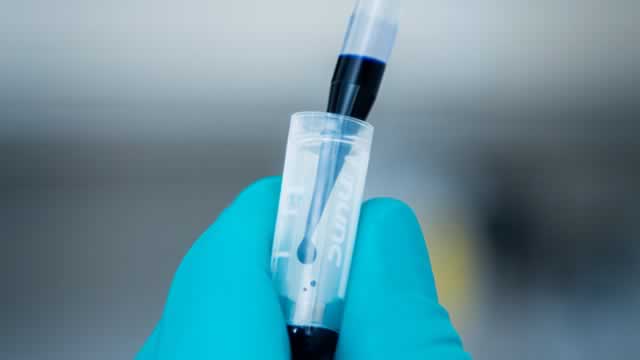
Novo Nordisk launches first oral GLP-1 weight loss pill in the US
Proactiveinvestors NA· 2026-01-05 16:40
Group 1 - Proactive provides fast, accessible, informative, and actionable business and finance news content to a global investment audience [2] - The company focuses on medium and small-cap markets while also covering blue-chip companies, commodities, and broader investment stories [3] - Proactive's news team delivers insights across various sectors including biotech, pharma, mining, natural resources, battery metals, oil and gas, crypto, and emerging technologies [3] Group 2 - Proactive is committed to adopting technology to enhance workflows and improve content production [4] - The company utilizes automation and software tools, including generative AI, while ensuring all content is edited and authored by humans [5]