
Novartis(NVS)

Search documents
Novartis, Genentech file suit alleging illegal importation of prescription drug
CNBC· 2026-02-26 20:44
Core Viewpoint - Novartis and Genentech have filed a lawsuit against SHARx and a Canadian pharmacy for illegally importing their allergy medication Xolair into the U.S., which violates FDA regulations [1][2][4]. Group 1: Legal Action - The lawsuit targets SHARx, an alternative funding program, and a Canadian pharmacy for the importation of Xolair, an injectable medication for severe asthma and allergies [2]. - The plaintiffs are seeking a court order to halt the importation of the drug, which they argue circumvents FDA regulations [4]. Group 2: Drug Safety Concerns - The lawsuit emphasizes that biological medicines like Xolair require careful handling due to their complex composition, which makes them vulnerable to contamination and degradation [3]. - Federal authorities have previously stated that importing medications from foreign markets is illegal and poses health risks to patients [5]. Group 3: Market Context - The lawsuit follows a CNBC investigation revealing the rise of alternative funding programs (AFPs) that connect patients with cheaper medication options, often sourced from overseas at reduced prices [5].



海外制药企业2025Q4、全年业绩回顾:2026会是下一个BD大年吗?
Guoxin Securities· 2026-02-26 14:35
Investment Rating - The report maintains an "Outperform" rating for the pharmaceutical industry [2] Core Insights - 2025 saw a record high in innovative drug asset transactions among multinational pharmaceutical companies, with 142 cases and a total transaction value of $264.5 billion, marking new highs since 2015 [3][9] - Eli Lilly's revenue for 2025 increased by 44% year-on-year, driven by GLP-1 drugs, with Tirzepatide achieving $36.5 billion in sales [3][39] - Novo Nordisk's sales growth was impacted by increased competition in the weight loss drug market, with a projected revenue decline of 5% to 13% for 2026 [3][40] Summary by Sections 1. Innovative Drug Asset Transactions - In 2025, the number of innovative drug transactions reached 142, with mergers and acquisitions (M&A) and collaborations at 36 and 106 respectively, both setting new records since 2015 [3][9] - The total transaction value was $264.5 billion, with M&A accounting for $106 billion and collaborations for $158.4 billion, also new highs since 2015 [3][9] 2. Performance Review of Pharmaceutical Companies - Eli Lilly's total revenue for 2025 was $65.2 billion, with a guidance for 2026 revenue between $80 billion and $83 billion, indicating a projected growth of 25% [3][39] - Novo Nordisk's total revenue for 2025 was 309.1 billion Danish Kroner, with a guidance for 2026 indicating a decline of 5% to 13% [3][40] - Other companies like AbbVie, AstraZeneca, and Roche reported single-digit growth, while JNJ and Gilead faced challenges due to patent expirations [3] 3. Factors Influencing M&A Decisions - Demand for acquisitions is driven by the need to address revenue gaps from expiring patents and declining R&D efficiency [3][19] - Financial capacity for M&A is supported by free cash flow after shareholder returns, allowing for smaller acquisitions [3][20] - Pricing considerations are crucial, as the valuation of innovative drug assets significantly impacts the internal rate of return (IRR) for acquisitions [3][21]


海外制药企业2025Q4&全年业绩回顾:2026会是下一个BD大年吗?
Guoxin Securities· 2026-02-26 14:35
Investment Rating - The report maintains an "Outperform" rating for the pharmaceutical industry [2] Core Insights - 2025 saw a record high in innovative drug asset transactions among multinational pharmaceutical companies, with 142 cases and a total transaction value of $264.5 billion, marking new highs since 2015 [3][9] - Eli Lilly's revenue for 2025 increased by 44% year-on-year, driven by GLP-1 drugs, with Tirzepatide achieving $36.5 billion in sales [3][39] - Novo Nordisk's sales growth was impacted by increased competition in the weight loss drug market, with a projected revenue decline of 5% to 13% for 2026 [3][40] Summary by Sections 1. Innovative Drug Asset Transactions - In 2025, the number of innovative drug transactions reached 142, with mergers and acquisitions (M&A) and collaborations at 36 and 106 respectively, both setting new records since 2015 [3][9] - The total transaction value was $264.5 billion, with M&A accounting for $106 billion and collaborations for $158.4 billion, also new highs since 2015 [3][9] 2. Performance Review of Pharmaceutical Companies - Eli Lilly's total revenue for 2025 was $65.2 billion, with a guidance of $80 billion to $83 billion for 2026, indicating a projected growth of 25% [3][39] - Novo Nordisk's revenue for 2025 was 309.1 billion Danish Krone, with a guidance for 2026 indicating a decline of 5% to 13% [3][40] - Other companies like AbbVie, AstraZeneca, and Roche reported single-digit growth, while JNJ and Gilead faced challenges due to patent expirations [3] 3. Factors Influencing M&A Decisions - Demand for acquisitions is driven by the need to address revenue gaps from expiring patents and declining R&D efficiency [3][19] - Financial capacity for M&A is supported by free cash flow after shareholder returns, allowing for smaller acquisitions [3][20] - Pricing considerations are crucial, as the valuation of innovative drug assets significantly impacts the internal rate of return (IRR) for acquisitions [3][21]


超1.6亿元 2万亿市值药企披露CEO年薪
Sou Hu Cai Jing· 2026-02-25 16:50
Core Insights - AstraZeneca's CEO Pascal Soriot's compensation for 2025 is set to increase to £17.7 million (approximately 164 million RMB), making him one of the highest-paid executives in the FTSE 100 index [1] - Novartis CEO Vas Narasimhan's compensation for 2025 is projected to reach 24.9 million Swiss francs (approximately 220 million RMB), a 30% increase from 2024, marking a new high since he took office in 2018 [2] - The long-term incentive plan for Narasimhan has a payout rate of 188% from 2023 to 2025, valued at 17.3 million Swiss francs [2] Compensation Trends - AstraZeneca's Soriot will receive an annual bonus of up to £4.3 million in 2025, reflecting a 22% increase from 2024 [1] - Novartis's stock price surged from approximately $90 at the end of 2022 to nearly $160 by early 2026, resulting in a total shareholder return of 84%, ranking second among 15 global healthcare peers [2] - Roche's CEO Thomas Schinecker is expected to receive a total compensation of 10.2 million Swiss francs (approximately 90.75 million RMB) in 2025 [2] Other Executive Compensation - Sanofi's CEO Paul Hudson's total compensation for 2025 is disclosed to be valued at €10.9 million (approximately 88.37 million RMB) [2] - Novo Nordisk's new CEO Maziar Mike Doustdar received 20.7 million Danish kroner (approximately 22.46 million RMB) during his initial months in office, while former CEO Lars Fruergaard Jorgensen is set to receive nearly $20 million (approximately 137 million RMB) in 2025, including a severance payment of $6.82 million [3] - U.S. pharmaceutical executives' 2025 compensation details are yet to be disclosed, but historically, they tend to be higher than their European counterparts [3]
Novartis to build radioligand therapy site in Texas to expand US manufacturing
Reuters· 2026-02-25 12:41
Core Viewpoint - Novartis plans to build a radioligand therapy manufacturing site in Texas, marking its first facility of this kind in the state and the fifth in the U.S. [1][4] Group 1: Investment and Expansion - The investment is part of Novartis' broader strategy to spend $23 billion on building and expanding facilities in the U.S. [2] - The new Texas site will enhance Novartis' manufacturing capacity in response to increased domestic demand and regulatory pressures [2][3]. Group 2: Facility Details - The new facility will cover 46,000 square feet and is expected to be fully operational by 2028 [4]. - The site will create jobs in bioengineering, advanced manufacturing, quality, and operations [4]. Group 3: Product Focus - Radioligand therapy is a targeted cancer treatment that delivers radiation directly to tumor cells, with Novartis already marketing Pluvicto and Lutathera for specific cancers [4]. - The addition of this facility will strengthen Novartis' ability to meet the growing demand for next-generation cancer treatments [3].
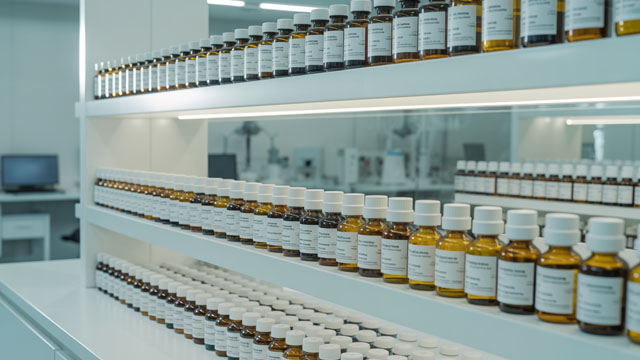
Novartis to build new radioligand therapy site in Denton, Texas, delivering more next‑generation treatments to patients
Globenewswire· 2026-02-25 12:00
Core Insights - Novartis plans to establish a new 46,000-square-foot radioligand therapy (RLT) manufacturing site in Denton, Texas, marking its fifth RLT facility in the US and first in Texas as part of a $23 billion investment in the US [1][2][3] Company Developments - The Denton site is expected to create new jobs in bioengineering, advanced manufacturing, quality, and operations, contributing to economic growth in the region [2] - Construction is set to begin this year, with the facility anticipated to be fully operational by 2028 [2][7] - The new site will enhance Novartis's RLT manufacturing network, which includes existing facilities in New Jersey, Indiana, California, and a new site in Florida, providing extensive RLT capacity across the US [3][7] Industry Impact - RLT has the potential to transform cancer care by delivering targeted radiation directly to cancer cells, with Novartis actively investigating its application across various cancer types [4][5] - The company has one of the most advanced pipelines in the industry, with ongoing trials for multiple cancer types, including prostate, breast, colon, lung, brain, and pancreatic cancers [5]

超1.6亿元!2万亿市值药企披露CEO年薪
Di Yi Cai Jing· 2026-02-25 06:16
Group 1 - In 2025, AstraZeneca's CEO Pascal Soriot received a total compensation of £17.7 million (approximately 164 million RMB), making him one of the highest-paid executives in the FTSE 100 index [1] - AstraZeneca's market capitalization exceeds $320 billion (approximately 2.2 trillion RMB), making it the highest-valued company listed on the London Stock Exchange [1] - Soriot's annual bonus reached £4.3 million in 2025, reflecting a 22% increase compared to 2024 [1] Group 2 - Novartis CEO Vas Narasimhan's compensation for 2025 is reported at 24.9 million Swiss francs (approximately 22 million RMB), marking a 30% increase from 2024 and the highest since he took office in 2018 [2] - Narasimhan's long-term incentive plan had a payout rate of 188% during the 2023-2025 period, valued at 17.3 million Swiss francs [2] - Roche's CEO Thomas Schinecker received a total compensation of 10.2 million Swiss francs (approximately 9.1 million RMB) for 2025 [2] Group 3 - Sanofi's CEO Paul Hudson received a total compensation of €10.9 million (approximately 8.8 million RMB) for 2025, but he will not receive performance bonuses for the 2026 fiscal year as he stepped down on February 17, 2025 [2] - Novo Nordisk's new CEO Maziar Mike Doustdar earned 20.7 million Danish kroner (approximately 2.2 million RMB) during his first few months in office [3] - The previous CEO Lars Fruergaard Jorgensen received nearly $20 million (approximately 137 million RMB) in total compensation for 2025, which included a severance payment of $6.82 million [3] Group 4 - The annual salaries of U.S. pharmaceutical executives for 2025 have not yet been disclosed, but historically, they tend to be higher than those of European pharmaceutical executives [3] - In 2024, Eli Lilly's CEO David Ricks had the highest salary in the global pharmaceutical industry at $29.2 million (approximately 200 million RMB) [3] - Pfizer's CEO Albert Bourla also had a significant salary of $24.6 million (approximately 170 million RMB), ranking second in the industry [3]

NLRP3:“抗炎”能力初步验证,心血管领域又一潜在重磅靶点——美股生物科技前瞻系列
Changjiang Securities· 2026-02-25 01:10
Investment Rating - The report maintains a "Positive" investment rating for the industry [2]. Core Insights - NLRP3 inflammasome is identified as a significant target for drug development due to its role as a "receiver and converter" of inflammatory signals, indicating substantial therapeutic potential [11][12]. - NLRP3 inhibitors, particularly VTX3232, have shown remarkable anti-inflammatory effects and preliminary validation for reducing cardiovascular (CV) risks [22][28]. - The market potential for targeting NLRP3 is significant, with a potential patient population of approximately 25 million in the cardiovascular anti-inflammatory drug scenario [39]. Summary by Sections 1. NLRP3 Inflammasome: A Major Drug Target - NLRP3 acts as an intracellular sensor detecting various microbial patterns and endogenous danger signals, leading to the assembly and activation of the NLRP3 inflammasome [11]. - The NLRP3 inflammasome is linked to several common diseases, including obesity, diabetes, and cardiovascular diseases, highlighting the market potential for NLRP3-targeted therapies [12]. 2. Efficacy of NLRP3 Inhibitors - VTX3232 demonstrated a rapid and significant reduction in high-sensitivity C-reactive protein (hsCRP) levels, with an 80% reduction within the first week and a sustained effect over 12 weeks [28]. - The safety profile of VTX3232 is comparable to placebo, with adverse events occurring at similar rates across treatment groups [29]. 3. Identifying Next-Generation NLRP3 Inhibitors - BGE-102, a novel NLRP3 inhibitor, has shown promising early-phase data, indicating its potential to lower hsCRP levels significantly in obese participants [65][67]. - The competitive landscape for NLRP3 inhibitors includes several active candidates, with BGE-102 being highlighted for its unique structure and mechanism [54].

New real‑world data reinforce earlier use of Pluvicto™ before chemotherapy in metastatic castration-resistant prostate cancer
Globenewswire· 2026-02-24 12:15
Core Insights - Novartis announced new real-world studies on Pluvicto™ for metastatic prostate cancer, utilizing data from the PRECISION platform, to be presented at the ASCO Genitourinary Cancers Symposium [1] Group 1: Efficacy of Pluvicto - Pluvicto demonstrated a median progression-free survival (PFS) of 13.5 months in taxane-naïve mCRPC patients who had received at least one ARPI, with longer PFS observed in those treated after one ARPI (15.8 months) compared to multiple ARPIs (12.7 months) [2][3] - The findings align with the PSMAfore trial, which showed that Pluvicto more than doubled median rPFS compared to a change in ARPI (11.6 months vs. 5.6 months) [3] Group 2: Subsequent Therapies - A study indicated that mCRPC patients achieved meaningful clinical responses with systemic therapies after discontinuing Pluvicto, with median PFS of 8.6 months for all subsequent therapies [5][6] - Patients receiving ARPI after Pluvicto had a median PFS of 10.7 months, while those receiving taxane had a median PFS of 7.2 months [6] Group 3: Treatment Patterns and Guidelines - Real-world evidence showed significant gaps in guideline adherence for metastatic hormone-sensitive prostate cancer (mHSPC), with 39.2% of men receiving ADT monotherapy instead of the recommended combination therapy [8] - The data highlights an opportunity for improved patient care through adherence to clinical guidelines [8] Group 4: PRECISION Data Platform - The PRECISION platform harmonizes data from over 56,500 patients with metastatic prostate cancer to generate real-world evidence studies that inform clinical decisions [9]
未知机构:国泰海通医药春节期间创新药领域重点新闻梳理全球BD根据医药-20260224
未知机构· 2026-02-24 02:45
Summary of Key Points from Conference Call Industry Overview - The conference call discusses the global business development (BD) activities in the pharmaceutical sector during the Chinese New Year period from February 13 to February 23, 2026, highlighting a total of 18 BD transactions globally [1] Core Insights and Arguments - **Key Transactions**: - Qinhai Bio licensed its MAT2A inhibitor (GH31), which has received IND approval in China and the US and is currently in Phase I clinical trials, to Gilead. Qinhai will receive an upfront payment of $80 million, $1.45 billion in milestone payments, and a tiered double-digit percentage royalty based on net sales [1] - Other notable transactions include: - Novartis partnered with Unnatural Products to develop macrocyclic peptide drugs, focusing on cardiovascular applications, with Unnatural Products receiving an upfront payment of $100 million and potential milestone payments of $1.7 billion [1] - Eli Lilly acquired global rights for the IL6 monoclonal antibody clazakizumab from CSL for all indications except end-stage renal disease, with CSL receiving an upfront payment of $100 million [1] - Merck collaborated with Mayo Clinic to integrate clinical and genomic data, focusing on early research translation in inflammatory bowel disease, skin diseases, and neurology [1] - **Year-to-Date Transactions**: - From January 1 to February 23, 2026, there have been 36 BD transactions involving Chinese companies, with 13 of these transactions involving multinational corporations (MNCs) [1] Additional Important Insights - **Comparison with Previous Year**: - In comparison, there were 26 BD transactions during the same period in 2025, with only 3 involving MNCs [2] - **Future Outlook**: - The analysis indicates that MNCs have increased their focus on Chinese BD teams and asset searches since the second half of 2025, suggesting a positive outlook for more BD transactions involving Chinese assets and MNCs in 2026 [2]
