
Oracle(ORCL)

Search documents
AI进化速递丨宇树发布人形机器人App Store
Di Yi Cai Jing· 2025-12-13 12:38
Group 1 - Yushu launched a humanoid robot App Store [1] - Shanghai humanoid robot pilot alliance was announced [1] - Shenzhen will establish the first robot-friendly demonstration city in the country [1] Group 2 - The AI chatbot "Honghua Tong" from Hong Kong has reached 160,000 users [1] - Disney has reached a strategic cooperation and content licensing agreement with OpenAI [1] - Oracle's completion date for part of the data center used for OpenAI has been postponed from 2027 to 2028 [1] - New Times expects to announce new developments in embodied intelligence around early 2026 [1]



AI突发!特朗普,最新签署
Zheng Quan Shi Bao· 2025-12-13 12:19
Group 1 - The U.S. President signed an executive order to unify federal regulations on artificial intelligence, limiting states from creating their own rules [1] - The executive order aims to facilitate innovation in AI by reducing burdensome state-level regulations, which currently create a patchwork of 50 different regulatory systems [1] - A special task force will be established by the Attorney General to challenge state AI laws that contradict the executive order, indicating a pushback against strict regulations favored by some tech companies [1] Group 2 - Oracle has delayed the completion of data centers for OpenAI from 2027 to 2028 due to labor and material shortages, despite maintaining an aggressive construction pace [2] - Oracle signed a $300 billion computing supply agreement with OpenAI, responsible for providing infrastructure for model training and inference [2] - The first data center being built in Abilene, Texas, has made significant progress, with over 96,000 NVIDIA AI chips already in place [2]
AI惊魂一日:甲骨文、博通大跌,Fermi差点“一日腰斩”
华尔街见闻· 2025-12-13 11:54
Core Viewpoint - The article highlights a significant downturn in the stock prices of major tech companies, particularly Oracle and Broadcom, amidst growing concerns about the sustainability of AI infrastructure spending and potential valuation bubbles in the market [1][6][9]. Group 1: Market Reactions - Oracle and Broadcom experienced substantial stock declines, with Oracle's stock dropping over 14.8% in two days following disappointing earnings and news of project delays [1][8]. - The Philadelphia Semiconductor Index fell over 5%, marking its largest drop in nearly two months, reflecting widespread panic among investors [3][6]. - Fermi, an AI infrastructure company, saw its stock plummet by 46% during trading, primarily due to a major client withdrawing a $150 million investment commitment [14][16]. Group 2: Company-Specific Developments - Oracle's delay in completing data centers for OpenAI, pushed from 2027 to 2028, raised concerns about labor and material shortages, contributing to its stock decline [6][7]. - Despite strong earnings, Broadcom's stock fell nearly 12% after investors expressed disappointment over the lack of comprehensive revenue guidance for AI products [10][11]. - Oracle's capital expenditures surged to $12 billion, significantly exceeding expectations, leading to a negative free cash flow of $10 billion and a total debt of $106 billion [8][9]. Group 3: Industry Concerns - The article discusses a potential bubble in AI infrastructure spending, with Texas facing a projected power demand of over 220 GW by 2030, primarily driven by data centers [1][6]. - Analysts are questioning whether the massive investments in AI infrastructure can continue at the current pace, especially given the recent financial performance of key players [6][9]. - The overall sentiment in the market has shifted from optimism about AI growth to concerns about high investments, increasing debt, and slow returns [9].


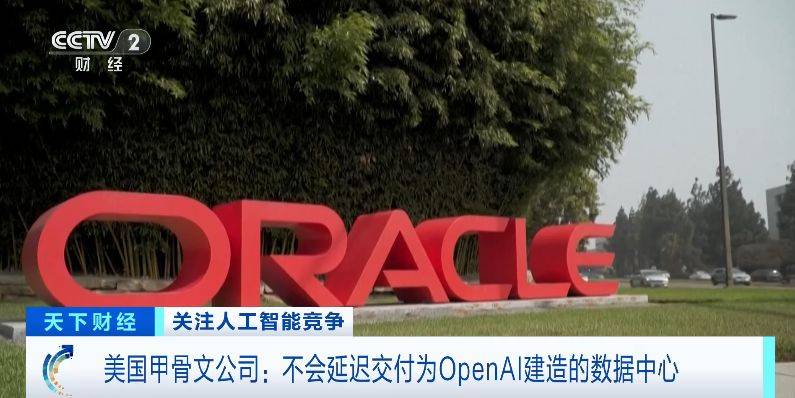
美国甲骨文公司:不会延迟交付为OpenAI建造的数据中心
Sou Hu Cai Jing· 2025-12-13 11:38
Group 1 - Oracle Corporation is reported to delay the delivery of data centers built for OpenAI from 2027 to 2028 due to labor and material shortages, causing Oracle's stock to drop nearly 4.5% on the same day [3] - Oracle later denied the report, stating that the data center delivery is on track and all critical processes are proceeding as planned, with site selection and delivery timelines agreed upon in coordination with OpenAI [3] - OpenAI announced in September that it is collaborating with Oracle and SoftBank on the "Stargate" project, which includes the construction of five AI data centers in the U.S., with over $300 billion in total cooperation over the next five years [5] Group 2 - The flagship data center in Abilene, Texas, will also be expanded as part of the collaboration between OpenAI and Oracle [5]
甲骨文3000亿美元豪赌:AI泡沫的“震中”,市场的“晴雨表”
美股IPO· 2025-12-13 11:14
Core Viewpoint - Oracle's aggressive investment in AI positions it as a critical indicator of whether the tech industry is experiencing genuine growth or a speculative bubble [1][26]. Group 1: The "Stargate" Project - The "Stargate" project, the largest cloud computing deal in history, originated from a LinkedIn message from OpenAI to Oracle, leading to a partnership that significantly boosted Oracle's market value [3][7]. - OpenAI committed approximately $300 billion to lease servers from Oracle, necessitating the construction of multiple large-scale data centers [10][14]. - Oracle's stock surged by $250 billion following the announcement of the Stargate project, temporarily making its co-founder Larry Ellison the world's richest person [3][4]. Group 2: Financial Pressures and Market Reactions - Oracle's stock price has dropped over one-third from its peak, and the company reported negative free cash flow for the first time since 1992 [4][6]. - The financial strain is exacerbated by rising costs for materials and labor, with Oracle needing to invest hundreds of billions upfront for data center construction [13][14]. - Analysts predict Oracle will face approximately $70 billion in free cash flow losses over the next four to five years, raising concerns about the sustainability of its aggressive strategy [14][19]. Group 3: Competitive Landscape and Strategic Decisions - Microsoft, a long-time partner of OpenAI, has expressed concerns about the capacity demands from OpenAI, leading to a decision to allow OpenAI to seek other cloud providers [17][18]. - The relationship dynamics between Oracle and OpenAI are critical, as OpenAI's growth trajectory directly impacts Oracle's financial health and stock performance [15][21]. - Analysts suggest that Oracle's heavy investment in AI could be a double-edged sword, with potential scenarios ranging from a downward revision of forecasts to a complete collapse of the partnership with OpenAI [25]. Group 4: Industry Implications and Future Outlook - The tech industry is at a crossroads, with Oracle's fate serving as a bellwether for the broader market's health regarding AI investments [1][26]. - The speculative nature of AI investments raises questions about their long-term viability, especially as transformative advancements remain elusive [26]. - Oracle's significant commitment to AI could either lead to substantial rewards or expose the company to severe risks if the anticipated growth does not materialize [24][26].
AI突发!特朗普,最新签署!
证券时报· 2025-12-13 10:06
特朗普最新签署。 美国总统特朗普近日签署一项行政令,在联邦层面统一对人工智能领域的监管规则,限制各州各自制定规 则。该行政令称,要想取得胜利,美国的人工智能企业必须能够在不受繁琐监管束缚的情况下自由地进行 创新,但"过度的州级监管"阻碍了这一目标。该行政令指出,当前各州分别制定监管规则,必然会形成由 50种不同监管制度拼凑而成的局面,使合规变得更加困难,对初创企业而言更是如此。该行政令称将建 立一个"负担最小"的全国性标准。 该行政令还要求司法部长成立一个人工智能诉讼特别工作组,其"唯一职责"是对与本行政令相悖的各州人 工智能法律提出异议。美国一些科技企业一直反对严格的监管制度,最新的行政令被一些当地媒体解读为 这些企业的胜利。有媒体指出,最新政策可能会导致人工智能监管弱化,带来风险。 证券时报各平台所有原创内容,未经书面授权,任何单位及个人不得转载。我社保留追 究相关 行 为主体 法律责任的权利。 转载与合作可联系证券时报小助理,微信ID:SecuritiesTimes END 点击关键字可查看 AI芯片股当地时间周五大跌。 据媒体援引知情人士消息报道,甲骨文公司已将部分为大模型开发商OpenAI建设的数据 ...

Oracle’s collapsing stock shows the AI boom is running into two hard limits: physics and debt markets
Yahoo Finance· 2025-12-13 10:03
Core Insights - Oracle's stock has dropped 45% since its September peak, with a 14% decline in the past week due to disappointing earnings and high capital expenditures of $12 billion, exceeding analyst expectations of $8.25 billion [1][3] Financial Performance - The company's earnings guidance was weak, with an additional $15 billion added to its fiscal 2026 capital expenditure forecast, primarily for data centers supporting OpenAI, Oracle's $300 billion partner in the AI sector [2] Revenue Concerns - Investors are concerned about Oracle's ability to finance its significant capital outlays, as its cloud revenue and cloud-infrastructure sales fell short of Wall Street expectations, leading analysts to describe its AI expansion as debt-fueled [3] Project Delays - Oracle has delayed the completion of some U.S. data centers for OpenAI from 2027 to 2028 due to labor and material shortages, highlighting the challenges of aligning rapid digital growth with physical infrastructure development [4] Industry Challenges - The industry faces a disparity between the rapid deployment of capital and the lengthy timelines for acquiring necessary equipment, such as turbines and transformers, which can take several years to procure [5]
AI泡沫担忧加剧,美国三大股指下跌,博通超跌11%
Sou Hu Cai Jing· 2025-12-13 05:17
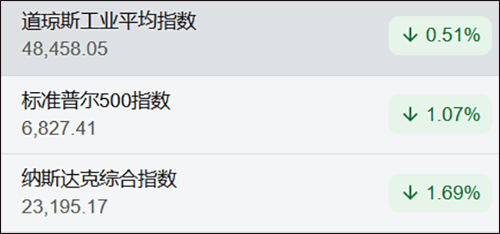
受博通与甲骨文业绩引发的人工智能泡沫担忧,加之美联储降息后市场对政策的谨慎情绪,以及美国国 债收益率的上扬,当地时间12月12日,美股主要指数全线下跌。 截至收盘,道指下跌245.96点,跌幅0.51%,报48458.05点;纳指下跌1.69%,报23195.17点,创两周新 低;标普500指数在11日创新高后,12日下跌1.07%,报6827.41点。 | 道琼斯工业平均指数 | ↓ 0.51% | | --- | --- | | 48.458.05 | | | 标准普尔500指数 | ↓ 1.07% | | 6,827.41 | | | 纳斯达克综合指数 | ↓ 1.69% | | 23,195.17 | | "股价下跌皆因投资者对科技公司在人工智能竞赛中巨额投入未能带来显著回报表现出极度不安情 绪。"扎德勒补充道:"尽管该股在2025年业绩公布前已上涨75%,但在甲骨文业绩明显低于市场预期 后,投资者普遍认为博通也容易出现获利回吐。" 本周早些时候,美国云计算公司甲骨文也公布了大规模的支出计划,并同时给出了疲软的财务预期。彭 博社援引知情人士消息称,部分原因在于公司推迟了至少一个数据中心的建设。因此在1 ...
甲骨文和博通大跌,OpenAI沦为“股价毒药”;泽连斯基主张选举或公投解决“和平计划”分歧;下任美联储主席候选人有变;英伟达下周将就“缺电”问题开会 |...
Mei Ri Jing Ji Xin Wen· 2025-12-13 04:23
Core Insights - OpenAI's association with companies like Oracle and Broadcom has shifted from a growth driver to a source of significant stock price declines, with Oracle's stock dropping 16% and Broadcom's 11% in a short period [4][5][6] - The market is increasingly skeptical about OpenAI's revenue potential and ability to fulfill its contracts, particularly in light of competition from Google [4][5][7] Company Performance - Oracle reported a total revenue of $16.06 billion for Q2 FY2026, which fell short of expectations, while its cloud business revenue of $8 billion grew 34% year-over-year but did not meet analyst forecasts [12][14] - Oracle's remaining performance obligations (RPO) surged 438% to $523 billion, with $300 billion attributed to a five-year computing power procurement agreement with OpenAI, raising concerns about OpenAI's ability to meet its spending commitments [12][14][16] - Broadcom's Q4 FY2025 earnings per share reached $1.95, exceeding analyst expectations, and revenue was $18.02 billion, also above forecasts. However, the stock fell sharply due to concerns over the timing of revenue from its $73 billion AI product backlog [7][9][11] Market Impact - The combined market capitalization of major AI companies, including Oracle and Broadcom, saw a significant decline, with a total loss of approximately $547 billion (around 3.8 trillion yuan) in a single day [5][6] - Companies deeply tied to OpenAI, such as Oracle, SoftBank, Microsoft, and Nvidia, have experienced substantial stock price drops since late October, with Oracle's stock down 27.7% and SoftBank's down 34% [20][21] Competitive Landscape - OpenAI faces increasing pressure from Google's new Gemini 3 model, which is perceived to have a competitive edge in the AI ecosystem, leading to concerns about OpenAI's long-term viability [22][26] - Analysts suggest that OpenAI's ambitious expansion plans may be unrealistic, with estimates indicating that it would require over $1 trillion in investments to fulfill its commitments, raising doubts about its business model sustainability [23][25][26]



Oracle-Broadcom one-two punch hits AI trade
The Economic Times· 2025-12-13 03:53
Core Viewpoint - The recent turbulence in AI-related stocks, particularly due to negative updates from Oracle and Broadcom, has reignited concerns about overvaluation and a potential AI bubble, yet many investors remain optimistic about the long-term prospects of AI technology [1][2][3]. Company-Specific Summaries - Oracle's stock has faced significant pressure, dropping as much as 17% since Wednesday's close, following a warning that capital expenditures for fiscal 2026 are expected to be $15 billion higher than previously estimated, and the completion dates for data centers for OpenAI have been pushed back to 2028 from 2027 [3][4][5]. - Broadcom shares fell over 11% after the company indicated that increasing sales of lower-margin custom AI processors are impacting profitability, raising concerns about the sustainability of its business model [4][5]. - Meta's shares also experienced an 11% decline after forecasting significantly larger capital expenses for the upcoming year due to AI investments, including the construction of new data centers [8]. Industry Trends - Investors are becoming more selective in the AI sector, showing less willingness to reward indiscriminate spending on AI, which has led to a notable shift in the correlation between capital spending and stock prices [7][8]. - Despite concerns about a potential bubble, data indicates that investors are not aggressively betting against the largest AI companies, with short-selling activity primarily focused on smaller and mid-cap AI stocks [10][12]. - The overall sentiment suggests that while there is skepticism regarding individual AI stocks, there is no broad consensus on an impending collapse of the AI market [11][13].
