
Oracle(ORCL)

Search documents
AI泡沫担忧加剧,美国三大股指下跌,博通超跌11%
Sou Hu Cai Jing· 2025-12-13 05:17
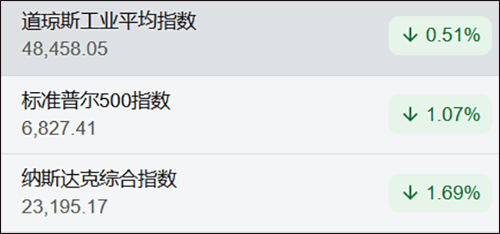
受博通与甲骨文业绩引发的人工智能泡沫担忧,加之美联储降息后市场对政策的谨慎情绪,以及美国国 债收益率的上扬,当地时间12月12日,美股主要指数全线下跌。 截至收盘,道指下跌245.96点,跌幅0.51%,报48458.05点;纳指下跌1.69%,报23195.17点,创两周新 低;标普500指数在11日创新高后,12日下跌1.07%,报6827.41点。 | 道琼斯工业平均指数 | ↓ 0.51% | | --- | --- | | 48.458.05 | | | 标准普尔500指数 | ↓ 1.07% | | 6,827.41 | | | 纳斯达克综合指数 | ↓ 1.69% | | 23,195.17 | | "股价下跌皆因投资者对科技公司在人工智能竞赛中巨额投入未能带来显著回报表现出极度不安情 绪。"扎德勒补充道:"尽管该股在2025年业绩公布前已上涨75%,但在甲骨文业绩明显低于市场预期 后,投资者普遍认为博通也容易出现获利回吐。" 本周早些时候,美国云计算公司甲骨文也公布了大规模的支出计划,并同时给出了疲软的财务预期。彭 博社援引知情人士消息称,部分原因在于公司推迟了至少一个数据中心的建设。因此在1 ...


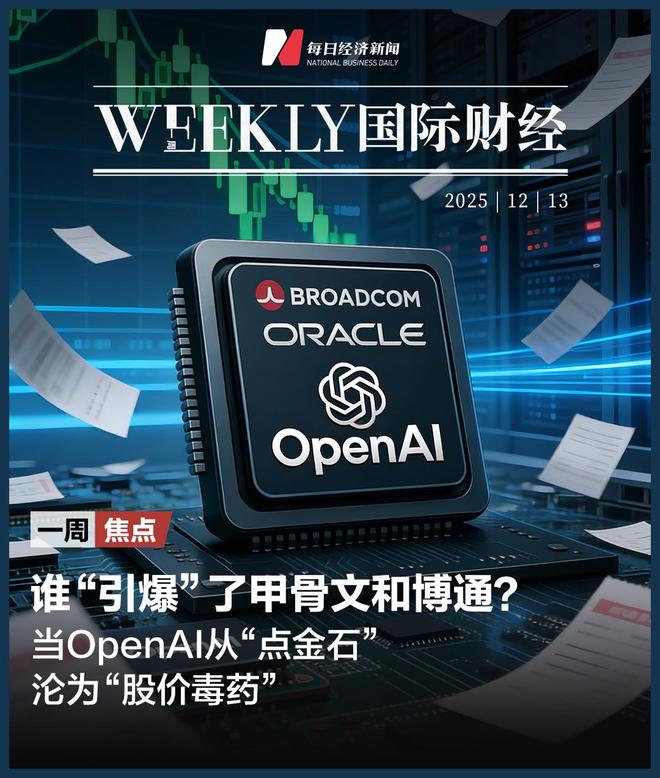
甲骨文和博通大跌,OpenAI沦为“股价毒药”;泽连斯基主张选举或公投解决“和平计划”分歧;下任美联储主席候选人有变;英伟达下周将就“缺电”问题开会 |...
Mei Ri Jing Ji Xin Wen· 2025-12-13 04:23
Core Insights - OpenAI's association with companies like Oracle and Broadcom has shifted from a growth driver to a source of significant stock price declines, with Oracle's stock dropping 16% and Broadcom's 11% in a short period [4][5][6] - The market is increasingly skeptical about OpenAI's revenue potential and ability to fulfill its contracts, particularly in light of competition from Google [4][5][7] Company Performance - Oracle reported a total revenue of $16.06 billion for Q2 FY2026, which fell short of expectations, while its cloud business revenue of $8 billion grew 34% year-over-year but did not meet analyst forecasts [12][14] - Oracle's remaining performance obligations (RPO) surged 438% to $523 billion, with $300 billion attributed to a five-year computing power procurement agreement with OpenAI, raising concerns about OpenAI's ability to meet its spending commitments [12][14][16] - Broadcom's Q4 FY2025 earnings per share reached $1.95, exceeding analyst expectations, and revenue was $18.02 billion, also above forecasts. However, the stock fell sharply due to concerns over the timing of revenue from its $73 billion AI product backlog [7][9][11] Market Impact - The combined market capitalization of major AI companies, including Oracle and Broadcom, saw a significant decline, with a total loss of approximately $547 billion (around 3.8 trillion yuan) in a single day [5][6] - Companies deeply tied to OpenAI, such as Oracle, SoftBank, Microsoft, and Nvidia, have experienced substantial stock price drops since late October, with Oracle's stock down 27.7% and SoftBank's down 34% [20][21] Competitive Landscape - OpenAI faces increasing pressure from Google's new Gemini 3 model, which is perceived to have a competitive edge in the AI ecosystem, leading to concerns about OpenAI's long-term viability [22][26] - Analysts suggest that OpenAI's ambitious expansion plans may be unrealistic, with estimates indicating that it would require over $1 trillion in investments to fulfill its commitments, raising doubts about its business model sustainability [23][25][26]


Oracle-Broadcom one-two punch hits AI trade
The Economic Times· 2025-12-13 03:53
Core Viewpoint - The recent turbulence in AI-related stocks, particularly due to negative updates from Oracle and Broadcom, has reignited concerns about overvaluation and a potential AI bubble, yet many investors remain optimistic about the long-term prospects of AI technology [1][2][3]. Company-Specific Summaries - Oracle's stock has faced significant pressure, dropping as much as 17% since Wednesday's close, following a warning that capital expenditures for fiscal 2026 are expected to be $15 billion higher than previously estimated, and the completion dates for data centers for OpenAI have been pushed back to 2028 from 2027 [3][4][5]. - Broadcom shares fell over 11% after the company indicated that increasing sales of lower-margin custom AI processors are impacting profitability, raising concerns about the sustainability of its business model [4][5]. - Meta's shares also experienced an 11% decline after forecasting significantly larger capital expenses for the upcoming year due to AI investments, including the construction of new data centers [8]. Industry Trends - Investors are becoming more selective in the AI sector, showing less willingness to reward indiscriminate spending on AI, which has led to a notable shift in the correlation between capital spending and stock prices [7][8]. - Despite concerns about a potential bubble, data indicates that investors are not aggressively betting against the largest AI companies, with short-selling activity primarily focused on smaller and mid-cap AI stocks [10][12]. - The overall sentiment suggests that while there is skepticism regarding individual AI stocks, there is no broad consensus on an impending collapse of the AI market [11][13].

黑天鹅突袭!“AI交易”,全线重挫!
天天基金网· 2025-12-13 03:38
Core Viewpoint - The article discusses the significant decline in the US stock market, particularly in technology stocks, driven by concerns over the "AI bubble" and hawkish signals from Federal Reserve officials [2][9]. Market Performance - On December 12, US technology stocks experienced a sharp decline, with the Dow Jones falling by 0.51%, the Nasdaq dropping by 1.69%, and the S&P 500 decreasing by 1.07% [3]. - Major tech companies saw substantial losses, with Broadcom plummeting over 11%, Oracle and TSMC ADR down over 4%, and Nvidia down over 3% [3]. - The Philadelphia Semiconductor Index fell by over 5%, with Micron Technology down over 6% and AMD, Intel, and Applied Materials all declining by over 4% [3]. Oracle's Situation - Reports indicated that Oracle postponed the completion of data centers for OpenAI from 2027 to 2028 due to labor and material shortages, which heightened concerns about the "AI bubble" [6][8]. - Following these reports, Oracle's stock saw a significant drop, with a decline of over 6% at one point [7]. - Oracle later denied the reports, asserting that all milestones for the project remain on track and that they are in close coordination with OpenAI [7][8]. Federal Reserve's Influence - Several Federal Reserve officials released hawkish statements, leading to increased bond yields and prompting investors to withdraw from technology stocks [9][10]. - Kansas City Fed President Esther George noted that inflation remains high and the economy shows growth, advocating for a moderately restrictive monetary policy [9]. - The market is anticipating upcoming employment and inflation data, which could influence the Fed's decisions in January [10]. Interest Rate Expectations - According to CME FedWatch, the probability of a 25 basis point rate cut in January is 24.4%, while maintaining the current rate is at 75.6% [10]. - Morgan Stanley and UBS expect only one rate cut in 2024, likely in the first quarter [10][11]. - Analysts from Goldman Sachs, Wells Fargo, and Barclays predict two rate cuts in 2024, potentially in March and June [11].



甲骨文退出自研AI芯片赛道,董事长埃里森阐述背后原因
Sou Hu Cai Jing· 2025-12-13 03:00
Core Insights - Oracle's chairman Larry Ellison announced the sale of its stake in Ampere Computing, resulting in a pre-tax profit of approximately $2.7 billion (around 19.07 billion RMB) [1] - SoftBank Group acquired Ampere Computing for $6.5 billion in cash, with Oracle selling about 29% of its shares in the company [1] - This transaction signifies Oracle's exit from direct investment in general-purpose server chip design [1][3] Strategic Shift - Ellison stated that Oracle no longer sees strategic value in designing, manufacturing, and using self-developed chips for cloud data centers [3] - Oracle is adopting a "Chip Neutrality" policy to remain agile in response to rapid changes in AI technology, allowing for the deployment of any type of chip as needed [4] - This approach contrasts with competitors like Microsoft, AWS, and Google, which are heavily investing in developing custom processors to reduce computing costs and meet AI demands [4] Hardware Partnerships - Oracle is accelerating the expansion of its hardware partner network, maintaining close collaboration with NVIDIA while also partnering with AMD [4] - A public AI supercluster powered by AMD Instinct MI450 GPUs is set to launch in Q3 of next year, initially featuring 50,000 GPUs [5] - This initiative aims to create a more resilient and cost-effective cloud infrastructure by diversifying top chip suppliers [5]

黑天鹅突袭!“AI交易”,全线重挫!
券商中国· 2025-12-13 02:38
Core Viewpoint - The US stock market experienced a significant downturn, particularly in the technology sector, driven by concerns over an "AI bubble" and hawkish signals from Federal Reserve officials [2][9]. Market Performance - On December 12, US stock indices collectively fell, with the Dow Jones down 0.51%, the Nasdaq down 1.69%, and the S&P 500 down 1.07% [3]. - Major tech stocks saw substantial declines, with Broadcom dropping over 11%, Oracle and TSMC ADR down over 4%, and Nvidia down over 3% [4]. AI Sector Concerns - Oracle's stock plummeted after reports indicated delays in data center construction for OpenAI due to labor and material shortages, which Oracle later denied [2][8]. - Broadcom's AI market sales outlook failed to meet investor expectations, raising fears about the sustainability of the AI sector [8]. Federal Reserve Influence - Hawkish comments from multiple Federal Reserve officials led to increased bond yields and a sell-off in tech stocks. Kansas City Fed President Esther George noted persistent inflation and a need for restrictive monetary policy [9][10]. - The market is anticipating key employment and inflation data that will influence the Fed's January policy decisions [10]. Future Rate Expectations - Current predictions suggest a 24.4% chance of a 25 basis point rate cut in January, with a 75.6% probability of maintaining current rates. By March, the cumulative probability of a 25 basis point cut rises to 41.9% [10][11].

Wall Street ends lower; fears of AI bubble and inflation send investors away
The Economic Times· 2025-12-13 02:26
Company Performance - Broadcom shares fell 11.4% after the company warned of slimmer future margins, raising concerns about the profitability of AI investments [1][11] - Oracle's stock dropped 4.5% following a nearly 11% decline the previous day due to a weak financial forecast, despite denying reports of delays in data centers for OpenAI [1][11] - Nvidia, a major player in AI chips, saw a decline of 3.3%, contributing to the overall negative sentiment in the semiconductor sector [8][11] - SanDisk experienced a significant drop of 14.7%, marking it as the largest percentage decliner in the S&P 500 [8][11] - CoreWeave and Oklo also faced declines of 10.1% and 15.1%, respectively, as investors moved away from AI infrastructure companies [8][11] Market Trends - The S&P 500 and Nasdaq Composite both closed down more than 1%, with the S&P 500 losing 73.59 points (1.07%) and the Nasdaq dropping 398.69 points (1.69%) [4][11] - For the week, the S&P 500 fell 0.63% while the Nasdaq declined 1.62% [5][11] - The Dow Jones Industrial Average decreased by 245.96 points (0.51%) but managed a weekly gain of 1.05% [7][11] - Six of the 11 S&P 500 sectors closed lower, with technology stocks leading the decline at 2.9%, marking their deepest daily loss since October 10 [9][11] Investor Sentiment - Investors are shifting focus to more defensive sectors amid concerns over the AI theme and upcoming labor market and inflation data [2][3][11] - The market is exhibiting caution ahead of significant economic reports, including nonfarm payrolls and consumer inflation data, which may provide insights into economic health [3][11] - Declining issues outnumbered advancers on both the NYSE and Nasdaq, indicating a bearish sentiment among investors [10][11]

一条消息引爆狂抛,甲骨文债券遭垃圾债待遇,CDS爆表至2009年来最高
美股IPO· 2025-12-13 02:19
Core Viewpoint - Oracle is becoming a key indicator for measuring AI risks in the credit market due to its weaker credit rating and expanding debt, which has drawn market attention [1][11][10] Group 1: Market Reactions - A report about Oracle's data center delays triggered significant volatility in AI infrastructure-related stocks and bonds, with the Philadelphia Semiconductor Index dropping over 5%, marking its largest decline in two months [3][6] - Oracle's stock price fell by nearly 4.5% after the report, accumulating a total drop of 14.8% over two trading days [3][12] - The panic spread across the tech sector, affecting major companies like Nvidia and CoreWeave, with Nvidia's stock down over 3% and CoreWeave down 11% [5][6] Group 2: Bond Market Impact - Oracle's investment-grade bonds faced severe sell-offs, with its 5.2% coupon bond maturing in 2035 seeing its yield rise to 5.9%, surpassing the average yield of the highest-rated junk bonds at 5.69% [5][8] - Investors in Oracle's $18 billion investment-grade bonds issued in September are facing paper losses totaling approximately $1.35 billion [8] - The credit default swap (CDS) spreads for Oracle surged, indicating heightened concerns about potential debt defaults, reaching levels not seen since the 2009 financial crisis [8][12] Group 3: AI Infrastructure Concerns - The market's concerns about the sustainability of AI infrastructure spending were exacerbated by disappointing earnings from Broadcom, which revealed that AI order backlogs did not meet high expectations [7][10] - Oracle is a core participant in the "Stargate" project, which aims to invest $500 billion in AI infrastructure, further increasing its debt exposure [10][11] - The uncertainty surrounding the future of data centers and the potential for oversupply due to more efficient chips raises alarms for credit investors [12]

担忧雪上加霜!甲骨文被爆部分数据中心推迟至2028年竣工,AI股大跌
美股IPO· 2025-12-13 02:19
在甲骨文AI支出激增、博通业绩电话会未达投资者高预期后,媒体称,甲骨文将部分为OpenAI开发的数 据中心竣工日期从2027年推迟至2028年。甲骨文盘中跌超6%,抛售甚至波及电力股。后公司否认消 息,称所有合约数据中心均未出现延误,股价收跌4.5%。 继甲骨文和博通的业绩表现引发投资者担忧后,周五甲骨文传出的数据中心延期消息令AI概念股雪上加 霜,投资者对人工智能(AI)领域泡沫的疑虑加剧。 美东时间12日周五美股早盘,媒体报道称,甲骨文将部分为OpenAI开发的数据中心竣工时间从2027年 推迟至2028年。美股午盘时段,甲骨文否认此消息,该司发言人在电邮中表示: "选址和交付时间表是在与OpenAI签署协议后密切协调制定,并经双方共同商定。所有履行合同义务所需的 (数据中心)地址均未出现延误,有望按计划达成所有里程碑。" 甲骨文和OpenAI均拒绝对周五的数据中心消息置评。 周五当天,甲骨文盘中跌幅一度扩大至6%以上,进一步加剧了前一日业绩公布后暴跌11%后的颓势, 甲骨文否认媒体消息后,午盘跌幅还超过4%,收跌近4.5%,公布财报后两日累跌14.8%。截至周五收 盘,股价已较9月10日的巅峰跌去40% ...

Analysts revamp Oracle stock price target after slump
Yahoo Finance· 2025-12-13 02:03
U.S. tech stocks were lower again on Dec. 12 as investors continued to reassess the sector’s rapid run-up. Oracle (ORCL) shares sank 10.83% on Dec. 11 and slipped another 4.66% on Dec. 12, extending a sharp selloff that followed the company’s latest earnings report. The weakness, combined with Broadcom’s (AVGO) pullback despite delivering a solid quarter, has added to growing concerns of an AI bubble. Oracle, the 48-year-old cloud and database software company, reported quarterly results on Dec. 10 that ...