Oracle(ORCL)

Search documents
2026美股展望:AI泡沫的内部熔点与外部拐点
智通财经网· 2025-12-13 01:35
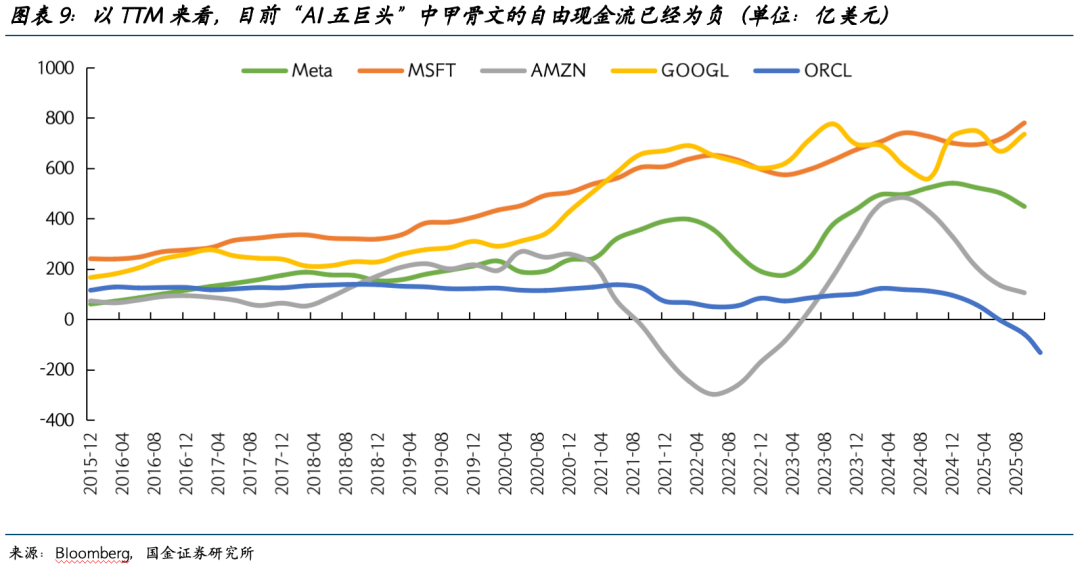
Core Viewpoint - The U.S. stock market in 2025 faced significant challenges from tariff impacts, fiscal shifts, and industrial trends, yet demonstrated resilience post-shock, particularly with the influence of AI investments and favorable monetary policies [1][2]. Group 1: AI Investment and Market Dynamics - The scale and concentration of AI investments today far exceed those during the 2000 tech bubble, indicating that issues with major AI companies could have catastrophic effects on the financial and tech ecosystems [2]. - The current AI investment landscape is characterized by a consensus among market participants, with various stakeholders motivated to inflate the bubble, including tech firms, financial institutions, and media [3]. - The potential bursting of the AI bubble could create a fertile ground for new innovations, similar to the aftermath of the 2000 internet bubble, where excess infrastructure became affordable for future growth [3][4]. Group 2: Industry Structure and Profitability - The AI industry is segmented into three layers: chip manufacturers, cloud service providers, and model developers, with profitability and cash flow varying significantly across these segments [5][7]. - Chip manufacturers, exemplified by Nvidia, are currently enjoying high profitability due to strong demand for AI chips, while cloud service providers like Amazon and Microsoft have established resilient business models [7]. - Model developers face intense competition and higher costs, with companies like OpenAI incurring substantial R&D expenses, leading to a notable disparity in profitability across the AI value chain [7][8]. Group 3: Financial Health and Capital Expenditure - The capital expenditure of major AI firms has surged, with the top five AI companies collectively spending $105.77 billion in Q3 2025, a 72.9% increase year-over-year, raising concerns about cash flow sustainability [9]. - The average capital expenditure to cash flow ratio for these firms reached 75.2%, indicating a significant strain on financial health as they continue to invest heavily in AI [9][12]. - Companies like Oracle are facing challenges with negative free cash flow, relying on external financing to support their capital expenditures [9][13]. Group 4: Risks from Financing Structures - The reliance on off-balance-sheet financing and complex investment structures among tech giants poses significant risks, as these methods can obscure true financial health and lead to systemic vulnerabilities [16][17]. - Historical precedents suggest that such opaque financing practices can lead to major financial crises, raising concerns about the potential for similar outcomes in the current AI investment landscape [18]. Group 5: Political and Economic Influences - Political uncertainty, particularly surrounding the upcoming elections, is expected to impact liquidity and market sentiment, potentially exacerbating vulnerabilities in the AI narrative [19][21]. - The interplay between political decisions and monetary policy will be crucial in shaping the future of AI investments and the broader stock market, with potential implications for economic stability [20][21].






甲骨文回应:不会推迟与OpenAI相关的数据中心建设
Ge Long Hui· 2025-12-13 01:25
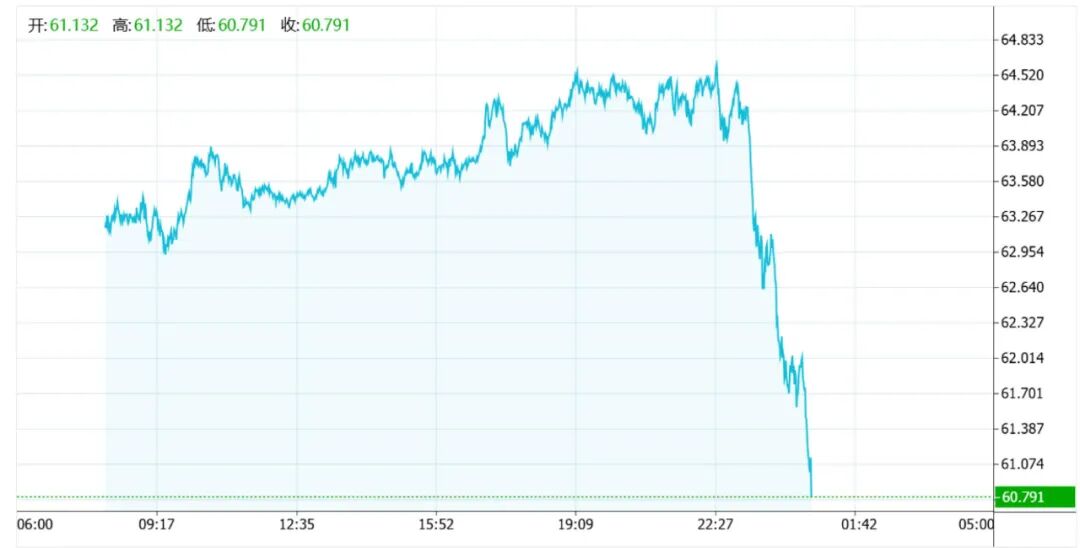
Core Viewpoint - Oracle has denied reports of delays in its data center construction related to OpenAI, asserting that all milestones are on track and that they are in close coordination with OpenAI [1] Group 1 - Reports indicated that Oracle would delay the construction timeline from 2027 to 2028 due to labor and material shortages [1] - Oracle spokesperson Michael Egbert stated that there are no delays in the required sites for fulfilling contract commitments and that all milestones are on schedule [1] - Following the denial of the delay reports, Oracle's stock price recovered some losses [1]
云巨头放弃自研芯片
半导体行业观察· 2025-12-13 01:08
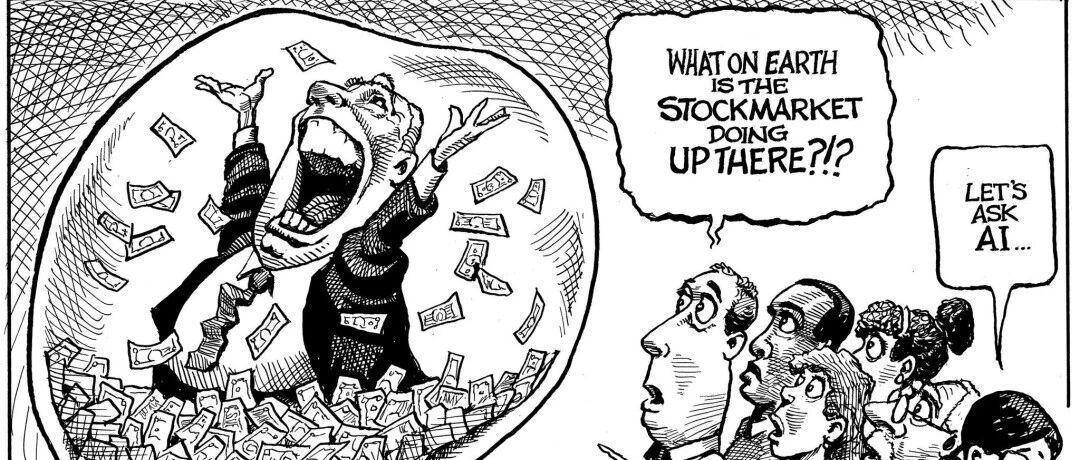
Core Viewpoint - Oracle's decision to sell its stake in Ampere Computing reflects a strategic shift away from designing and manufacturing its own chips for cloud data centers, aligning with a chip-neutral policy to collaborate with various CPU and GPU suppliers [2][3]. Group 1: Sale of Ampere Stake - Oracle sold its stake in Ampere Computing for a pre-tax gain of $2.7 billion, indicating a significant financial move [2]. - The sale was motivated by a belief that continuing to design and manufacture proprietary chips was no longer strategically beneficial for Oracle [2]. - SoftBank acquired Ampere for $6.5 billion in cash to enhance its AI capabilities, highlighting the growing importance of AI infrastructure investments [2]. Group 2: Competitive Landscape - Oracle's approach contrasts sharply with that of major competitors like Microsoft, Amazon Web Services, and Google, which are developing their own chips to meet high AI demand and reduce computing costs [3]. - Despite being a major buyer of Ampere CPUs, Oracle's strategy involves a shift towards a chip-neutral policy, working closely with all CPU and GPU suppliers [3][4]. - The semiconductor industry is witnessing changes, with Qualcomm planning to re-enter the server CPU market and Google exploring the deployment of its TPU technology to customer data centers [5]. Group 3: Future Developments - Oracle plans to continue purchasing GPUs from NVIDIA while also collaborating with AMD to launch an AI supercluster powered by AMD Instinct MI450 GPUs, expected to deploy 50,000 GPUs by Q3 next year [4][5]. - The company emphasizes the need to remain agile in response to rapid changes in AI technology over the coming years [4].
特朗普,最新签署!美股全线下跌,英伟达市值一夜蒸发1400亿美元,金价上涨,银价跳水!事关降息,美联储官员密集发声,“左右互搏”
Sou Hu Cai Jing· 2025-12-13 01:05
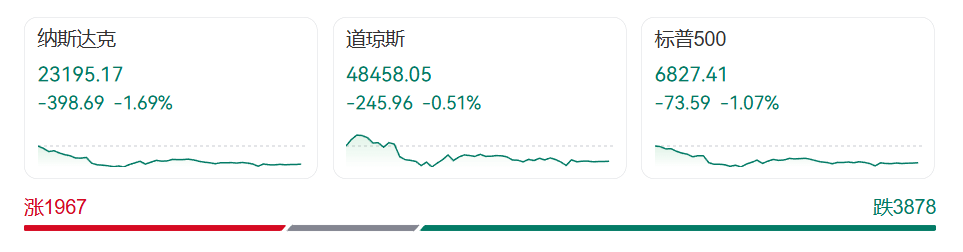
Market Overview - On December 12, US stock indices collectively declined, with the Dow Jones down 0.51%, the Nasdaq down 1.69%, and the S&P 500 down 1.07% [1] - Over 3,800 stocks experienced declines during the trading session [1] Company Performance - Nvidia's market value dropped by over $140 billion, equivalent to approximately 1013.1 billion RMB, following a decline of more than 3% in its stock price [3] - Oracle's stock fell over 4% on December 12, adding to a previous drop of over 10% on December 11, due to delays in data center completion for OpenAI, pushing the timeline from 2027 to 2028 [6] - Broadcom's stock plummeted over 11% after reporting Q4 sales of $18 billion, a 28% year-over-year increase, but concerns arose regarding profit margins and the short-term revenue impact of OpenAI contracts [8] Sector Trends - The technology sector saw widespread declines, with major companies like Google, Microsoft, Meta, and Amazon all dropping over 1%, while Tesla rose over 2% [3] - Storage concept stocks and semiconductor sectors faced significant losses, with Corning down nearly 8% and Micron Technology, Dell Technologies, and Intel all experiencing declines of over 4% [3] Economic Indicators - The Nasdaq China Golden Dragon Index fell by 0.3%, with most Chinese concept stocks declining, while a few, such as TAL Education and New Oriental, saw gains [11] - COMEX gold futures rose by 0.39% to $4329.8 per ounce, while WTI crude oil futures fell by 0.28% to $57.44 per barrel [11] Regulatory Developments - On December 12, President Trump signed an executive order to unify AI regulatory rules at the federal level, aiming to prevent states from creating their own regulations [12][14] - Analysts express skepticism about the effectiveness of this order in halting state-level legislation on AI [14][15]
2026美股展望:AI泡沫的内部熔点与外部拐点(国金宏观陈瀚学)
雪涛宏观笔记· 2025-12-13 00:57
Core Viewpoints - The fragility of capital expenditure will manifest through deteriorating liquidity, with potential financial risks arising from interconnected transactions and off-balance-sheet financing. The "political-liquidity-narrative" framework is identified as a key source of external volatility [2] Group 1: AI Investment Bubble - Many believe that there is no bubble in the AI investment sector, citing the healthy revenue and cash flow of tech giants compared to the dot-com bubble era. However, this comparison overlooks fundamental differences in scale and concentration of AI investments today [7] - The value of AI in enhancing productivity across industries will take a long time to materialize, as organizational and process changes lag behind technological advancements. AI currently serves more as a predictive tool rather than a decision-making replacement [9] - Despite the long-term nature of AI's impact on productivity, investment in AI has become a market consensus, driven by various stakeholders including tech companies, financial institutions, and media [10] Group 2: Capital Expenditure Vulnerability - From Q3 2025, capital expenditures among major tech firms investing heavily in AI reached $105.77 billion, a 72.9% year-on-year increase. This surge raises concerns about cash flow sustainability, with the average Capex/CFO ratio rising by 29.7 percentage points to 75.2% [24] - Projections indicate that by Q2 2027, the average Capex/CFO ratio for these firms could reach 95.9%, nearing the peak levels seen during the dot-com bubble [25] - The potential for negative free cash flow could deepen vulnerabilities, particularly for firms like Meta, which may face a cash flow crisis by Q4 2026 [32] Group 3: Financial Risks from High Leverage and Off-Balance-Sheet Financing - In the first 11 months of the year, the total issuance of corporate bonds by hyperscaler companies reached $103.8 billion, significantly exceeding previous years. This surge has led to increased bond spreads and heightened financial risk [39] - Companies like Meta are employing off-balance-sheet financing strategies to manage massive capital needs while maintaining favorable financial statements. This approach poses significant risks, especially if technology bubbles burst or market conditions shift [42][43] Group 4: Political Uncertainty and Liquidity Risks - The sustainability of the AI narrative is closely tied to liquidity conditions, which have been bolstered by recent interest rate cuts. However, political uncertainties, particularly surrounding upcoming elections, could tighten liquidity and impact market sentiment [44][48] - The interplay between political decisions and liquidity will likely lead to increased volatility in the stock market, particularly for AI-related investments [50]
美股三大股指齐跌,纳指创两周新低
第一财经· 2025-12-13 00:27
2025.12. 13 本文字数:1409,阅读时长大约2分钟 作者 | 第一财经 樊志菁 受博通与甲骨文引发的人工智能泡沫担忧情绪影响,叠加部分美联储官员发声反对宽松货币政策、推 高美国国债收益率,美股主要指数周五全线走低。截至收盘,道指跌245.96点,跌幅0.51%,报 48458.05点,纳指跌1.69%,报23195.17点,创两周新低,标普500指数跌1.07%,报6827.41 点。 本周,道指累涨1.05%,纳指累跌1.62%,标普500指数累跌0.63%。 【热门股表现】 博通跌11.4%,市值蒸发约2300亿美元。 此前该芯片制造商表示,公司第一财季综合毛利率将出现 环比下滑。 甲骨文下跌4.8%,尽管公司否认关于其为人工智能公司 OpenAI打造的数据中心项目延期的报道, 其股价在前一交易日大跌超10%后周五继续下挫。 费城半导体指数跌5.1%, AMD跌4.8%,英伟达跌3.3%,英特尔跌4.3%。今年早些时候曾受益于 人 工 智 能 投 资 热 潮 的 部 分 个 股 , 在 周 五 同 样 遭 遇 重 挫 。 晟 碟 ( SanDisk ) 暴 跌 14.6% , CoreWeav ...


刚刚,崩了!银价暴跌,金价跳水!利空来袭→
Qi Huo Ri Bao· 2025-12-13 00:23
Market Overview - Silver prices experienced a significant drop after reaching a historical high, with a decline of over 4% during trading, while gold prices also fell sharply after touching $4,350 per ounce [4][5] - The recent performance of tech stocks in the U.S. has been negatively impacted by concerns over AI investments, particularly following disappointing earnings reports from Oracle and Broadcom [5][6] Silver and Gold Demand - The demand for silver in AI hardware and data centers is robust, with annual growth rates exceeding 20%, and projections suggest a 35% increase by 2026 [7] - The World Gold Council reported that global physical gold ETF inflows reached $5.2 billion in November, marking six consecutive months of inflows [8] Federal Reserve Insights - Several Federal Reserve officials expressed a preference for maintaining a slightly tight monetary policy, citing persistent inflation above the 2% target [10][11] - The recent rate cuts have been met with opposition from some officials who advocate for a wait-and-see approach regarding further monetary easing [11][12] Tin Market Dynamics - Tin prices have surged, with the Shanghai tin price stabilizing above 330,000 yuan per ton, driven by supply concerns and positive macroeconomic sentiment [13][16] - Analysts indicate that the tin market is experiencing a tight supply situation, exacerbated by geopolitical tensions and reduced imports from Myanmar [17][18] Long-term Outlook for Tin - The long-term outlook for tin suggests a potential easing of supply constraints by 2026, with expectations of increased production from Myanmar and a stabilization of geopolitical tensions [18] - The demand for tin is expected to grow, particularly in technology and renewable energy sectors, despite ongoing supply challenges [18]
科技股低迷美股开启板块轮动,年末行情如何演绎
Di Yi Cai Jing· 2025-12-13 00:12
Group 1 - The cyclical sectors, including financials, are regaining investor interest as market sentiment shifts towards small-cap and value stocks amid concerns over AI growth potential and valuation risks following Oracle and Broadcom's earnings reports [1][2] - Oracle's recent quarterly revenue was weak, with high capital expenditures and long-term lease commitments, leading to a nearly 16% drop in stock price over two trading days, which also negatively impacted other AI-related companies like Nvidia and Micron [2] - Broadcom's stock fell over 10% despite exceeding revenue and profit expectations, as concerns grew over its largest customer, Google, potentially increasing in-house chip development, and rising storage chip prices affecting profit margins [2][3] Group 2 - Broadcom secured significant contracts, including a $21 billion deal for custom chips from Anthropic, despite a recent stock decline, with a year-to-date increase of over 57% [3] - The current enterprise value to forward core earnings ratio for Broadcom is approximately 32 times, compared to Nvidia's 19.6 times and AMD's 30.2 times, indicating a premium valuation [3] - Recent market trends show a divergence in stock performance, with small-cap indices like Russell 2000 and sectors like healthcare outperforming the S&P 500, suggesting a rotation of funds from large-cap tech stocks to other areas [3][4] Group 3 - Investors net bought $3.3 billion in U.S. equity funds over the past week, with significant inflows into metals and mining, industrials, and healthcare funds [4] - Market analysts believe that as long as no unexpected disruptions occur, the holiday season may bring a favorable market outlook, driven by signals of economic resilience from the Federal Reserve [4] - Goldman Sachs strategists maintain a long-term target for the S&P 500 index at around 7600 points by 2026, supported by steady economic growth and the widespread application of AI technology in business [5]
甲骨文股价短线跳水,跌超5%
Mei Ri Jing Ji Xin Wen· 2025-12-13 00:04
每经AI快讯,12月13日,甲骨文股价短线跳水,跌超5%。 (文章来源:每日经济新闻) ...
博通暴跌
财联社· 2025-12-12 23:56
Core Viewpoint - The article discusses the recent decline in major U.S. stock indices, driven by concerns over AI investments and rising U.S. Treasury yields, leading investors to withdraw from the technology sector [1][2]. Market Dynamics - On the closing day, the Dow Jones fell by 245.96 points (0.51%) to 48,458.05, the Nasdaq dropped by 398.69 points (1.69%) to 23,195.17, and the S&P 500 decreased by 73.59 points (1.07%) to 6,827.41 [6]. - The semiconductor ETF fell by 4.53%, the global tech stock index ETF declined by 2.92%, and the tech sector ETF decreased by 2.89%, while consumer staples ETF rose by 0.79% [6]. Sector Performance - Most sectors in the S&P 500 experienced declines, with the technology sector leading the drop at 2.87%, followed by energy at 0.93% and telecommunications at 0.69% [7]. - Major tech stocks mostly fell, with Nvidia down 3.27%, Amazon down 1.78%, and Meta down 1.30%, while Apple rose slightly by 0.09% [8]. Company News - Broadcom's stock plummeted over 11% due to warnings of future profit margin contractions, raising concerns about the sustainability of AI investments [3]. - Oracle's stock also fell over 4% after reports indicated delays in completing data centers for OpenAI, although Oracle later refuted these claims [4]. - Dell is rumored to increase commercial PC pricing next week [12]. - Google announced the launch of its AI voice simultaneous interpretation feature, enhancing its translation capabilities [13]. Investment Trends - Following a strong performance in previous weeks, the market saw a sell-off, with funds shifting towards defensive sectors like consumer staples [5]. - The upcoming release of key economic data, including non-farm payrolls and consumer inflation, is expected to provide clearer insights into economic health [5].