
Oracle(ORCL)

Search documents
Jim Cramer Says 'Electric Power Gating' And OpenAI's Balance Sheet Will Halt Hyperscaler AI Spending Spree - First Trust DJ Internet Index Fund (ARCA:FDN), Fidelity MSCI Information Technology Index E
Benzinga· 2026-01-05 08:23
Core Viewpoint - CNBC host Jim Cramer endorses a J.P. Morgan report indicating that physical and financial constraints, rather than a market crash, will limit tech giants' spending on artificial intelligence (AI) [1] Group 1: Physical Constraints - Cramer argues that fears of an AI bubble similar to the dot-com era lack nuance, with "electric power gating" being the main factor preventing overspending by hyperscalers [2] - The J.P. Morgan report highlights U.S. power generation constraints as a significant risk for the AI sector, with data centers expected to drive two-thirds of U.S. load growth while only adding 25 GW of reliable capacity in 2024 [3] - This scarcity of electricity acts as a hard cap on the speed at which companies can deploy new infrastructure, effectively limiting their capital expenditures [3] Group 2: Financial Constraints - Major players like OpenAI will face balance sheet constraints, with the J.P. Morgan report noting substantial financial commitments that may exceed current revenues [3] - OpenAI has committed to pay Oracle Corp. $60 billion per year for compute facilities that are not yet built, highlighting the financial strain [3] - OpenAI's commitments to corporate partners total $1.4 trillion, while its revenue primarily comes from subscription fees, making profitability a significant challenge [4] Group 3: Market Dynamics - Cramer suggests that tangible constraints on power and capital will slow AI spending, preventing the speculative behavior seen during the 2000 market bubble [4] - The J.P. Morgan report contrasts today's market with the dot-com bubble, noting that current high valuations are supported by high profit margins, with 42 AI-related companies contributing up to 75% of S&P 500 earnings growth since late 2022 [7] - A shift in financing is occurring, with companies like Meta Platforms and Oracle increasingly relying on debt markets for data center expansions, indicating a new discipline in capital management [8][9]


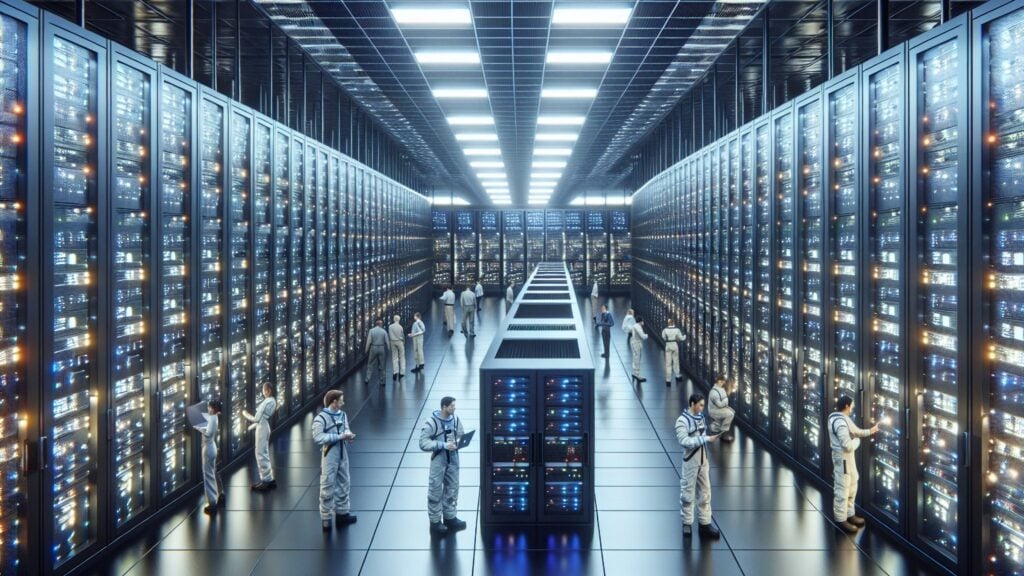
Short Oracle To Hedge AI Credit Risk? Expert Explains 'Cheap Proxy' Trade For Broader AI Sector Risks - Oracle (NYSE:ORCL)
Benzinga· 2026-01-05 07:21
Core Viewpoint - Wall Street investors are concerned about a credit bubble in the AI sector and are using Oracle Corp. as a hedging strategy by shorting its stock [1][2] Group 1: Investment Strategy - Oracle is viewed as a "cheap proxy" for investors looking to hedge against credit risks associated with smaller AI infrastructure firms like CoreWeave [2] - The cost of hedging CoreWeave's debt directly through Credit Default Swaps has become prohibitively expensive, leading investors to use Oracle shorts instead [2] Group 2: Operational Risks - Oracle's heavy reliance on OpenAI, its largest customer, poses significant risks, especially as OpenAI reportedly loses nearly $12 billion per quarter [3][4] - If OpenAI encounters a liquidity crisis, Oracle may face operational challenges due to billions in contracted data centers that cannot be easily repurposed [4] Group 3: Financial Health - Oracle's capital expenditures have surged from $6 billion to $20 billion in the last six months, primarily funded by debt, indicating strain on its balance sheet [5] - The widening of Oracle's credit spreads suggests that bond markets are becoming increasingly cautious about the company's rapid, credit-fueled expansion [5] Group 4: Stock Performance - Oracle's stock (ORCL) has declined by 15.74% over the last six months but has increased by 18.12% over the past year, closing at $195.71 [6] - The stock maintains a weaker price trend across short, medium, and long terms, with a poor value ranking [6]


AI吞噬电力,小型模块化反应堆(SMR)成为关键解法,未来五年是关键窗口期
Hua Er Jie Jian Wen· 2026-01-05 04:09
Core Insights - The nuclear energy sector is experiencing a pivotal moment, driven by the explosive growth in energy demand due to artificial intelligence and electric vehicle adoption, with Small Modular Reactors (SMRs) emerging as a key solution [1][2]. Group 1: Industry Trends - Global electricity demand is growing at twice the rate of total energy demand, necessitating stable baseload power that traditional intermittent renewable sources cannot provide [1]. - SMRs aim to transform nuclear energy from large-scale projects into industrial products by reducing construction time to 3-5 years and lowering initial capital requirements [1][3]. - The shift in nuclear energy's driving force from government to private sector, particularly technology giants like Microsoft, Google, Amazon, and Oracle, marks a significant change in the industry [1][6]. Group 2: Economic Viability and Challenges - The economic feasibility of SMRs hinges on transitioning from custom-built to factory mass production, with the next five years being critical for the industry's survival [2][8]. - The International Energy Agency (IEA) projects that annual investments in SMRs could reach $25 billion by 2030, but establishing the first factory is costly and requires overcoming significant initial barriers [8]. - The average cost target for SMRs is $2,500 per kilowatt, but achieving this requires producing around 3,000 units to realize true economies of scale [8]. Group 3: Market Opportunities - SMRs have substantial potential in the industrial heating sector, with a projected market value of $1.5 trillion by 2050, particularly for high-temperature applications currently reliant on fossil fuels [9]. - SMRs are also being explored for seawater desalination in regions like the Middle East and North Africa, with costs for freshwater production becoming economically viable [9]. Group 4: Supply Chain and Geopolitical Factors - The development of SMRs faces challenges related to fuel supply, particularly high-assay low-enriched uranium (HALEU), with geopolitical factors affecting stability [10]. - Western countries are working to diversify uranium supply chains, but new mining operations take 7-10 years to establish, impacting the timeline for SMR deployment [10]. Group 5: Corporate Initiatives - Major tech companies are actively engaging in the nuclear sector through long-term power purchase agreements (PPAs) and investments in SMR projects, providing the necessary order certainty for manufacturers [7][11].


Oracle vs. Palantir: Wall Street Is Neutral on One of These AI Stocks but Expects the Other to Surge
The Motley Fool· 2026-01-05 00:40
Core Insights - The artificial intelligence sector is currently the hottest market segment, with Oracle and Palantir being closely monitored stocks within this space [2][3] Palantir - Palantir has seen remarkable stock performance, with a 147% increase over the past year and a staggering 1,920% rise since its IPO in October 2020 [5] - The company utilizes AI to analyze data from various sources, identifying trends and recommending actions, making it appealing to both government and business sectors [6] - Despite strong fundamentals, Palantir's stock trades at 256 times forward earnings, leading to concerns about overvaluation among analysts; currently, 3 analysts recommend buying, 11 suggest holding, and 2 recommend selling [8][9] Oracle - Oracle reported $455 billion in remaining performance obligations (RPOs) due to AI data center demand, which initially led to a nearly 40% stock price surge [10] - However, concerns arose regarding the debt required for data center expansion and the thin margins in this business, leading to a decline in investor confidence [11][12] - Despite these challenges, Oracle's stock is up approximately 18% over the past year, and analysts remain optimistic, with 24 out of 34 recommending a buy and an average 12-month price target suggesting a 60% upside [15][16]


美股牛市迈入第四年:以史为鉴,“AI泡沫将破裂”还是“这次真的不一样”?
Zhi Tong Cai Jing· 2026-01-05 00:12
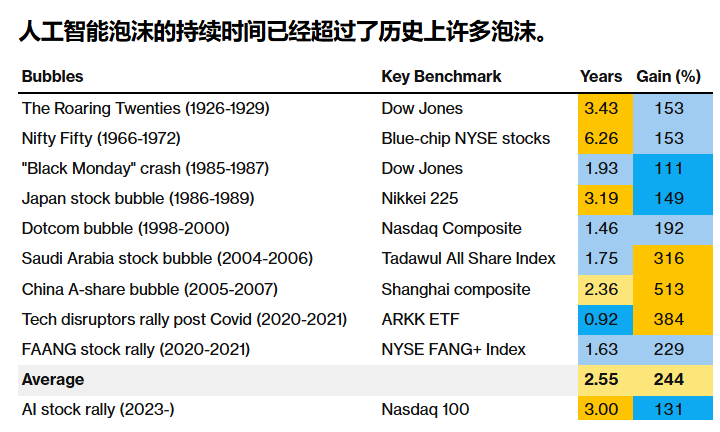
Core Viewpoint - The ongoing rise of AI-driven trading has led to new highs in the U.S. stock market, raising concerns about a potential financial bubble, but historical context suggests the situation is more complex than it appears [1][2]. Group 1: Market Performance - The S&P 500 index rose by 16% in 2025, with significant contributions from AI leaders like Nvidia, Alphabet, Broadcom, and Microsoft [1]. - Since the end of 2022, the S&P 500 index has increased by 79%, while the Nasdaq 100 index has surged by 130% [3]. Group 2: Investment and Spending - Major tech companies, including Microsoft, Alphabet, Amazon, and Meta Platforms, are projected to increase capital expenditures by 34% to approximately $440 billion over the next year [1]. - OpenAI has committed to investing over $1 trillion in AI infrastructure, a staggering amount for a non-public company that has yet to turn a profit [1]. Group 3: Historical Context and Comparisons - Historical analysis shows that past market bubbles have lasted an average of just over two and a half years, with peak gains averaging 244% [2]. - The current AI-driven market rally has already entered its third year, raising questions about its sustainability compared to previous market bubbles [3]. Group 4: Concentration of Stocks - The top 10 stocks in the S&P 500 now account for about 40% of the index, a level of concentration not seen since the 1960s [5]. - Historical precedents exist for high concentration levels, as seen in the 1930s and 1960s, but current levels are still a cause for concern among investors [5]. Group 5: Fundamentals and Valuation - Current AI giants have lower debt-to-earnings ratios compared to companies during the internet bubble, indicating stronger fundamentals [8]. - The S&P 500 index's valuation is at its highest level since the early 2000s, based on the cyclically adjusted price-to-earnings ratio [12]. - Despite rising valuations, some investors argue that the growth rates of tech stocks are not as inflated as during the internet bubble, with Nvidia's P/E ratio below 50 compared to Cisco's over 200 at its peak [15]. Group 6: Investor Sentiment and Risks - A recent survey indicated that investors view the AI bubble as the largest "tail risk" event, with over half of respondents considering the "seven major tech stocks" as the most crowded trade on Wall Street [18]. - Concerns are growing regarding whether the investments in AI will yield adequate returns, especially in light of increasing debt issuance [18].




甲骨文老板提供超400亿美元担保,助儿子收购华纳兄弟
Sou Hu Cai Jing· 2026-01-04 13:39
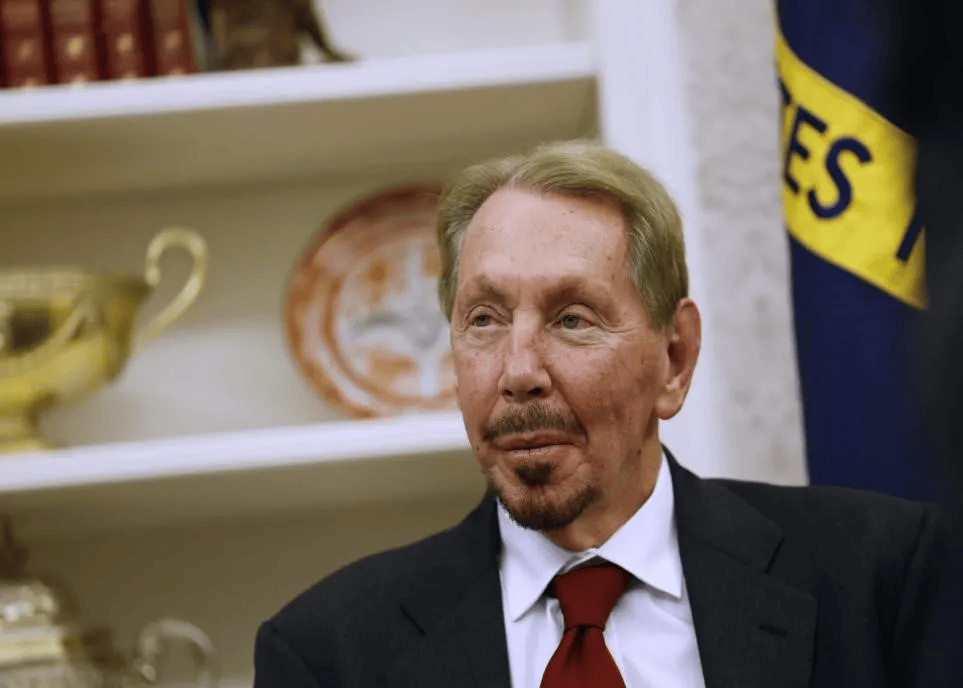
Core Viewpoint - Larry Ellison, co-founder and CTO of Oracle, is personally backing his son David Ellison's acquisition bid for Warner Bros. Discovery with a $40.4 billion irrevocable personal guarantee, addressing concerns about the financing capabilities of their company, Paramount Skydance [2][3]. Group 1: Acquisition Details - David Ellison's Paramount Skydance proposed an all-cash acquisition offer of $108 billion for Warner Bros. Discovery, equating to approximately $30 per share, which was rejected by the Warner Bros. Discovery board [2]. - The Warner Bros. Discovery board opted to partner with Netflix instead, agreeing to sell its film production and streaming assets for about $83 billion [2]. Group 2: Financing Concerns - The rejection of the acquisition offer was primarily due to doubts regarding the Ellison family's financing capabilities, with board members criticizing the financing plan as "unrealistic" and highlighting the risks associated with the "revocable family trust" [3]. - Larry Ellison's submission of the $40.4 billion guarantee aims to eliminate these financing concerns, as it represents about one-sixth of his personal net worth of $247.3 billion [3]. Group 3: Strategic Positioning - David Ellison emphasized that their acquisition proposal is the only way to maintain the overall integrity of Warner Bros. Discovery, contrasting with Netflix's plan that excludes the global television network division, which includes CNN [4]. - The decision now lies with the Warner Bros. Discovery board to choose between continuing their partnership with Netflix or negotiating with the buyer who has committed $40 billion in personal assets [4].


Oracle: A Hard Pass—or a Hard-to-Pass Opportunity?
Yahoo Finance· 2026-01-04 13:36
Oracle logo spans a high-speed data center, highlighting cloud infrastructure expansion. Key Points Oracle’s 2025 stock pullback masks its long-term strength, backed by accelerating AI-driven data center growth and rising RPO. With a growing global footprint and leadership in multicloud infrastructure, Oracle is emerging as a key hyperscaler in the AI ecosystem. Despite short-term volatility, analysts maintain a bullish long-term outlook, projecting Oracle’s revenue to double by fiscal 2028. Intereste ...
4 Stocks to Buy in January That Could Join Nvidia in the $1 Trillion Club by 2030
The Motley Fool· 2026-01-04 13:09
Core Insights - Visa, ExxonMobil, Oracle, and Netflix are identified as potential investments with the ability to join the $1 trillion market cap club by 2030, appealing to patient investors [2][19] Visa - Visa has a straightforward path to reaching a $1 trillion market cap, supported by high margins, reasonable valuation, and steady earnings growth [4] - In 2025, Visa's non-GAAP earnings per share grew by 14%, indicating strong growth potential that could lead to a market cap exceeding $1 trillion by 2030 [5] - Current market cap stands at $663 billion, with a gross margin of 77.31% and a dividend yield of 0.70% [6][7] ExxonMobil - ExxonMobil needs to double its market cap in five years to surpass $1 trillion, but it has strong fundamentals to achieve this [7] - The company generates significant free cash flow and high earnings, even with oil prices at four-year lows, and has reduced production costs [8] - ExxonMobil's corporate plan forecasts double-digit earnings growth through 2030, with a potential 15% annual growth rate that could double earnings [9][10] Oracle - Oracle nearly reached a $1 trillion market cap but faced a decline due to concerns over AI spending and debt [11] - The company is investing heavily in data center infrastructure to grow its cloud computing market share, with $523 billion in remaining performance obligations indicating high demand [12] - Despite being free cash flow negative, Oracle's aggressive AI investments present a high-risk, high-reward opportunity for investors [13] Netflix - Netflix's market cap has decreased from over $560 billion to under $400 billion due to valuation concerns and uncertainties regarding its acquisition of Warner Bros. Discovery [14] - The company is expected to grow earnings through global subscriber growth and pricing power, with potential benefits from the acquisition [15][16] - Netflix has demonstrated strong pricing power and effective content spending strategies, positioning it as a likely outperformer over the next five years [17]



Is Oracle Stock Really Capable of Surging to $400? Or is That a Pipe Dream?
247Wallst· 2026-01-03 16:21
Core Viewpoint - Oracle shares finished 2025 with respectable, market-beating gains, up around 17%, outperforming the S&P 500 by close to a full percentage point [1] Summary by Relevant Categories - **Company Performance** - Oracle's stock increased by approximately 17% in 2025 [1] - The performance surpassed the S&P 500 index by nearly one percentage point [1]

Founders and CEOs cashed in more than $16 billion of stock last year. Here are the top 5 biggest sellers.
Yahoo Finance· 2026-01-03 01:32
Insider stock sales amounted to $16 billion in 2025, according to data from Washington Service. Jeff Bezos cashed in nearly $6 billion of Amazon stock throughout the year. Detailed below are the top five sellers of 2025, ranked by proceeds. 2025 was — on the whole — a good time to cash in profits on stock positions, considering the S&P 500 finished 16% higher. The gains were even bigger in tech, particularly for companies with their wagons hitched to the red-hot AI trade, which lifted the likes of ...
