
Pony Ai(PONY)

Search documents
小马智行通过聆讯:「全球Robotaxi第一股」有望率先实现“美+港”双重上市
IPO早知道· 2025-10-17 11:14
Core Viewpoint - Pony AI Inc. is set to achieve a dual listing in the U.S. and Hong Kong, marking a significant milestone as the first global Robotaxi company to go public, with strong institutional backing and a notable increase in stock price since its IPO [3][4][19]. Group 1: IPO and Market Position - Pony AI has passed the Hong Kong Stock Exchange hearing and plans to list on NASDAQ under the code "PONY" in November 2024, potentially becoming the largest IPO in the U.S. autonomous driving sector for 2024 [3]. - The company has attracted significant investments from renowned institutions such as Baillie Gifford, Baron Capital, and ARK Invest, with its stock price rising over 42% since its Q2 2025 earnings report [3][19]. - The successful listing in Hong Kong is expected to broaden the investor base and enhance liquidity, potentially allowing for participation in the Hong Kong Stock Connect [4]. Group 2: Fleet and Operations - Pony AI operates a fleet of over 680 Robotaxi vehicles, with plans to exceed 1,000 by the end of the year, and aims to achieve operational profitability per vehicle by 2025 [5][11]. - The company has accumulated over 55 million kilometers of autonomous driving testing, including more than 10 million kilometers of fully autonomous testing [6]. - The Robotaxi service operates 24/7 in cities like Guangzhou and Shenzhen, with an average of over 15 orders per day, marking a significant milestone in commercial operations [6]. Group 3: Financial Performance - In Q2 2025, Pony AI's Robotaxi business revenue surged by 157.8% year-on-year to 10.9 million RMB (1.5 million USD), driven by increased user demand and an expanded fleet [8]. - The company has optimized its unit economic model, significantly improving its cost structure and aiming for a break-even point with a fleet of 1,000 vehicles [11]. Group 4: Global Expansion - Pony AI has established R&D centers in multiple locations, including Silicon Valley and Luxembourg, and is expanding its autonomous driving services in countries like South Korea, Saudi Arabia, and the UAE [13][14]. - Recent partnerships with Uber and local authorities in Dubai and Qatar aim to accelerate the commercialization of Robotaxi services in these regions [14][16]. - The global Robotaxi market is projected to reach 29 billion USD by 2025 and 666 billion USD by 2030, with China expected to dominate this market [17][18]. Group 5: Investment and Market Sentiment - The company has received multiple buy ratings from leading investment banks and has been included in the NASDAQ China Golden Dragon Index, attracting more long-term investors [21]. - Notable investments from long-term funds, including ARK Invest, indicate strong market confidence in Pony AI's future growth and technological capabilities [19][20].

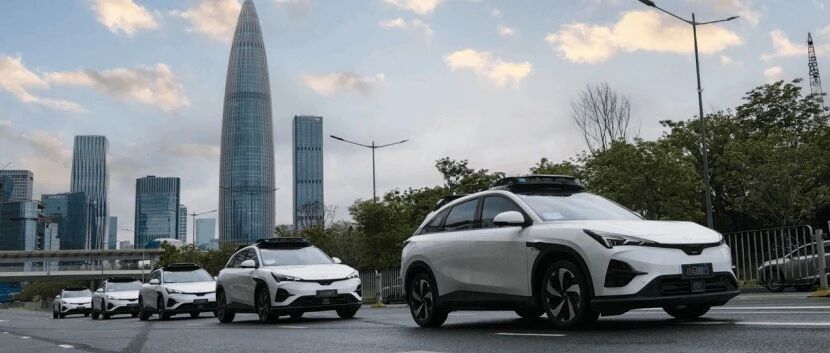
“全球Robotaxi第一股”小马智行通过港交所聆讯,启动港股上市冲刺
Sou Hu Cai Jing· 2025-10-17 11:09
Group 1 - The core viewpoint is that China's leading autonomous driving company, Pony.ai, has officially passed the Hong Kong Stock Exchange hearing and is set to enter the Hong Kong market [1] - Pony.ai's PHIP prospectus indicates that the company's revenue is expected to continue expanding from 2022 to 2024, with a notable growth rate of 43.3% in the first half of 2025, reaching $35.43 million (approximately RMB 254 million) [3] - The Robotaxi business is experiencing strong revenue growth, with earnings in the first half of 2025 reaching $3.256 million (approximately RMB 23.32 million), marking a significant year-on-year increase of 178.8% [3] Group 2 - Passenger fare revenue for the Robotaxi service saw extraordinary growth, with increases of approximately 800% and over 300% year-on-year in the first and second quarters of 2025, respectively [3] - Pony.ai completed its listing on NASDAQ in November 2024 under the ticker "PONY," becoming the world's first publicly traded Robotaxi company [3] - As of October 16, 2023, Pony.ai's closing price was $20.415, reflecting a more than 57% increase from its IPO price of $13 [3]
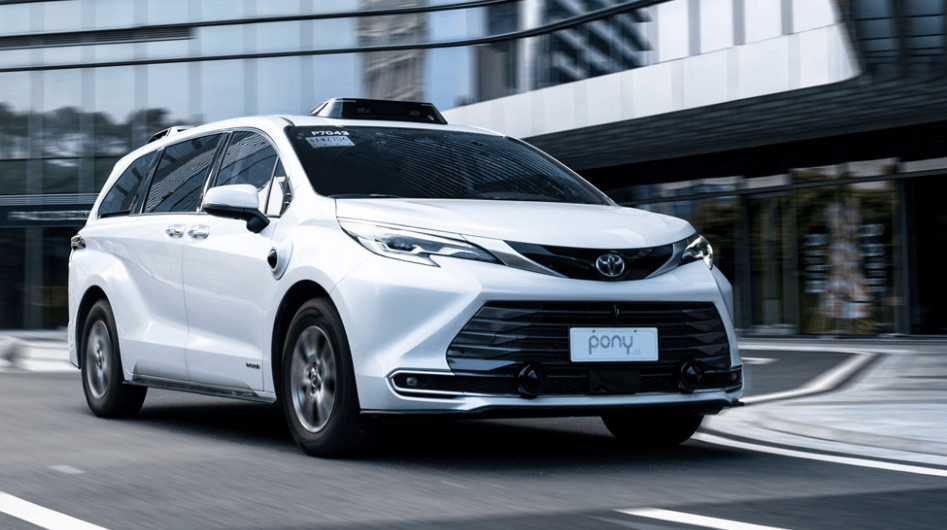
“全球Robotaxi第一股”小马智行(PONY.US)通过港交所聆讯 启动港股上市冲刺
智通财经网· 2025-10-17 10:53
2024年11月,小马智行以"PONY"为代码在纳斯达克完成上市,成为全球Robotaxi第一股。10月16日, 其收盘价报20.415美元,较其13美元的美股IPO发行价涨超57%。 智通财经APP获悉,据港交所10月17日披露,中国头部自动驾驶企业小马智行(PONY.US)已正式通过港 交所聆讯,即将踏入港股市场。小马智行PHIP版招股书显示,公司2022年至2024年营收规模持续扩 大,2025年上半年增速尤为明显,同比增长43.3%,达3543万美元(约合人民币2.54亿元)。Robotaxi业务 收入在2025年上半年涨势强劲,达325.6万美元(约合人民币2332万元),同比激增178.8%,其中乘客车费 收入在2025年第一季度和第二季度分别实现约800%与超300%同比飙升。 ...
【汽车智能化10月投资策略】先发优势稳固,后发发力追赶,继续看好智能化主线!
东吴汽车黄细里团队· 2025-10-17 09:20
Core Viewpoint - The market is expected to refocus on investment opportunities in smart technology in Q4, driven by the ongoing AI trend and advancements in autonomous driving capabilities, particularly in Robotaxi applications [2][8]. Group 1: Q4 Smart Technology Outlook - The Q4 market will see a renewed emphasis on smart technology investment opportunities, as AI applications in the physical world are anticipated to exceed expectations in the next 3-5 years [2][8]. - Key catalysts for smart technology in Q4 include the release of Tesla's V14 version, Xiaopeng's upcoming technology day, and the introduction of new autonomous vehicles by various companies [2][8]. Group 2: Comparison with Last Year - Similarities with last year's Q4 include the expansion of AI applications, but this year emphasizes the evolution of AI logic rather than the resonance between automotive and AI logic [3][9]. - The focus has shifted from hardware opportunities and consumer sales to software opportunities and breakthroughs in B2B applications [3][9]. Group 3: Investment Strategy - The preferred investment strategy favors Hong Kong stocks over A-shares, prioritizing software over hardware and B2B over B2C applications, with recommended stocks including Xiaopeng Motors, Horizon Robotics, and Cao Cao Mobility [4][9]. - Key investment targets include integrated models for Robotaxi, technology providers, and the transformation of ride-hailing services [4][9]. Group 4: Smart Technology Market Dynamics - The price war among passenger car manufacturers is more intense than expected, which could significantly impact profitability across the supply chain [5]. - The recovery of terminal demand is below expectations, which may affect sales growth for car manufacturers [5]. Group 5: Smart Technology Development Review - In August, the penetration rate of smart technology reached 23.3%, with significant advancements in autonomous driving capabilities among leading players [10]. - By October, the focus will be on the iterative development of next-generation driving architectures and the sales performance of key smart vehicles [10]. Group 6: Consumer Willingness to Pay - The consumer willingness to pay for smart technology is expected to evolve in two phases, with the first phase focusing on helping car manufacturers sell vehicles and the second phase aiming for software monetization [20][18]. Group 7: Future Projections - By 2025-2027, the core task of automotive smart technology will be to achieve a penetration rate of 50%-80% for new energy vehicles, while the period from 2028-2030 is expected to see the large-scale commercialization of Robotaxi services [20][19]. Group 8: Smart Technology Supply Chain Tracking - The supply chain for smart technology is being closely monitored, with various companies contributing to different aspects of the technology, including perception, decision-making, and execution [14][13]. Group 9: Key Metrics and Trends - The penetration rates for smart driving capabilities among different brands show significant variation, with Xiaopeng at 76.1% and Wey at 95.6% [25][26]. - The overall market dynamics indicate a competitive landscape with rapid advancements in technology and varying consumer adoption rates [24][23].






Chinese robotaxi company Pony.ai to work with Stellantis on Europe expansion
CNBC· 2025-10-17 08:38
Core Insights - Pony.ai has initiated testing of robotaxi rides with human staff in Beijing and plans to expand testing in Europe in collaboration with Stellantis [1][2] - The partnership aims to leverage Pony.ai's autonomous driving software and Stellantis's electric vehicles, starting with the Peugeot e-Traveller [1] - The companies are focusing on establishing a safety track record through local testing to gain regulatory approval for mass market deployment [2] Group 1 - Pony.ai is collaborating with Stellantis to test self-driving taxis in Luxembourg, with plans for a gradual rollout across European cities starting next year [1][3] - Stellantis recognizes Pony.ai for its technical expertise and collaborative approach in the autonomous driving sector [2] - Major cities in the U.S. and China have been early adopters of public-facing robotaxi operations, setting a precedent for regulatory approval [2] Group 2 - Pony.ai and WeRide have received regulatory approval in China for dual listings in Hong Kong, indicating a strategic move to expand their market presence [3] - The recent activities of U.S. robotaxi operator Waymo, including plans to test in London, highlight the competitive landscape in the autonomous vehicle sector [3]
美股异动丨小马智行盘前涨超1% 港股IPO获备案
Ge Long Hui· 2025-10-16 08:37
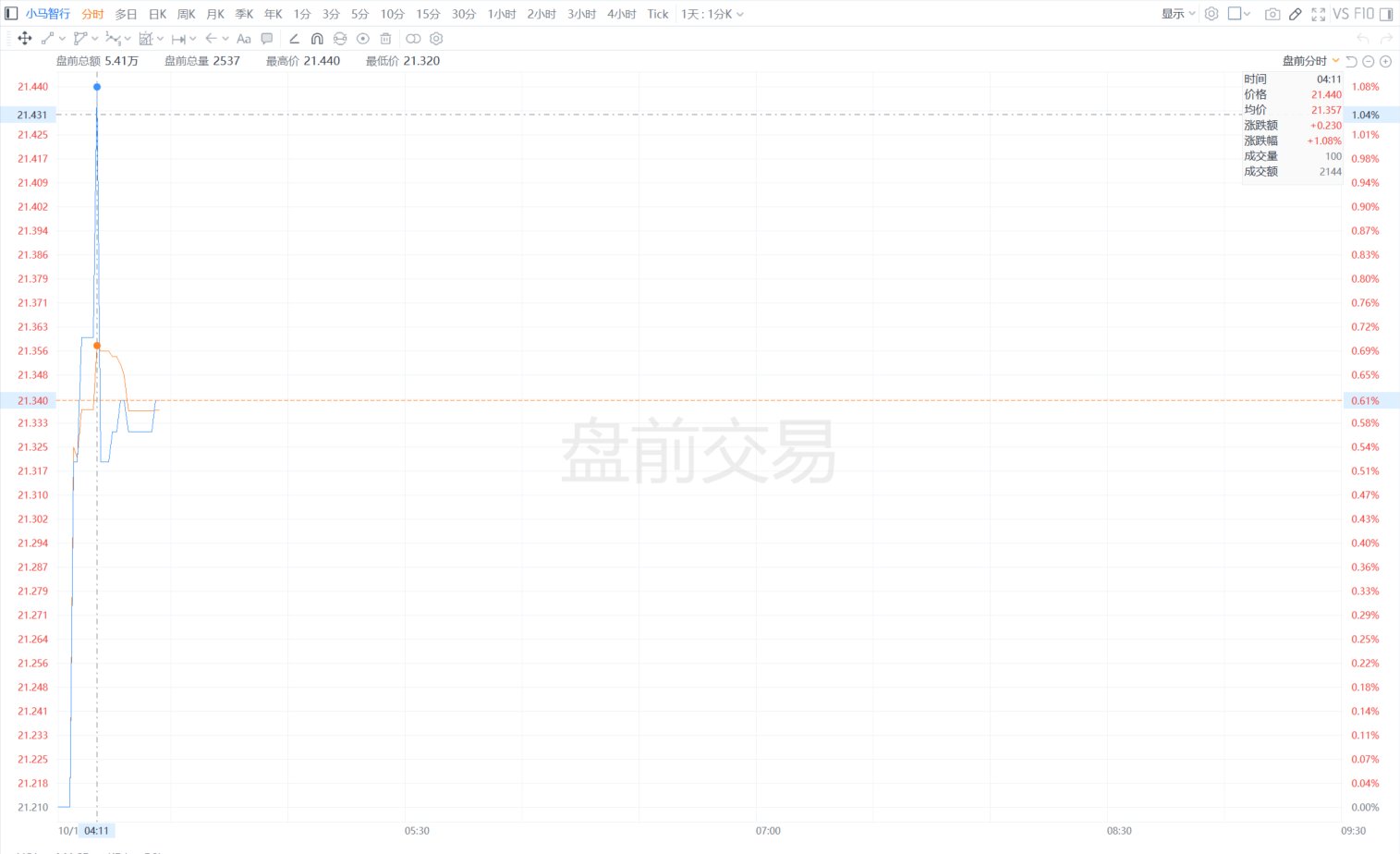
小马智行(PONY.US)盘前涨1.08%报21.44美元。消息面上,10月14日,中国证监会国际合作司发布关于Pony AI Inc.(小马智行股份有限公司)境外发行上市备 案通知书,公司拟发行不超过102,146,500股普通股并在香港联合交易所上市。此次备案落地凸显资本对自动驾驶赛道的持续看好,标志着这家自动驾驶头部 企业赴港上市计划跨过核心监管门槛,距离其2024年11月纳斯达克上市不足一年,有望成为行业内少数实现"美+港"双重上市的企业。(格隆汇) ■ 小马智行 分时 多日 日K 周K 月K 李K 年K 1分 3分 5分 10分 15分 30分 1小时 2小时 3小时 4小时 Tick 1天:1分K v 中 8 × B . . . . . . 08 0 . . . . . . 24.774 24.061 23,349 22.636 21.924 21.210 20.499 19.786 19.073 18.361 17.648 16.936 16.223 15.511 14.798 14.086 13.373 12.661 11.948 11.235 10.523 9.810 9.098 8.385 ...
小马智行回港:Robotaxi“第一股”的二次资本冲锋
阿尔法工场研究院· 2025-10-16 00:07
Core Viewpoint - The article discusses the challenges and opportunities faced by Pony AI, a leading player in the Robotaxi sector, highlighting its rapid revenue growth alongside increasing losses and the need for successful commercialization [2][3][5]. Financial Performance - Pony AI reported a total revenue of 154 million RMB for Q2 2025, marking a year-on-year increase of 75.9% and a quarter-on-quarter growth of 53.5% [8]. - The Robotaxi business generated revenue of 10.9 million RMB, a year-on-year increase of 157.8%, with passenger fare revenue growing over 300% [8]. - Despite the revenue growth, the net loss for Q2 reached 382 million RMB, a year-on-year increase of 72.49% [9]. Investment Landscape - International institutions are increasing their investments in Pony AI, indicating confidence in its Robotaxi commercialization potential and AI mobility strategy [4][10]. - Notable investors include Fidelity Investments and Baillie Gifford, with significant purchases made by ARKQ fund totaling over 12.9 million USD [10]. Commercialization Risks - The company faces significant risks related to expanding losses, funding pressures, and tightening industry regulations, which could hinder its commercialization efforts [5][9]. - The high costs associated with R&D and operational expenses are major contributors to the financial strain, with R&D expenses reaching 350 million RMB in Q2 [9]. Competitive Landscape - Pony AI is competing with other major players like Baidu and Waymo, which have established a stronger market presence and operational scale [15]. - The global Robotaxi market is projected to reach 66.6 billion USD by 2030 and 352.6 billion USD by 2035, indicating a long path to commercialization maturity [16]. Strategic Moves - Pony AI is pursuing a dual listing in both the US and Hong Kong, which is seen as a strategy to secure necessary funding and enhance its operational capabilities [6][16]. - The CEO has indicated that achieving a fleet size of 1,000 Robotaxis is crucial for reaching operational breakeven, with current operations at 500 vehicles [9].

Jefferies Says This 1 Robotaxi Stock Will Be a ‘Long-Term Winner’
Yahoo Finance· 2025-10-15 17:25
Core Insights - Pony AI is a leading autonomous driving technology company focused on the development and commercialization of autonomous mobility solutions, including robotaxi and robotruck services, with operations in major global cities [1][2] - The company has achieved significant milestones, including securing permits for fully driverless public services in key Chinese cities and completing over 45 million kilometers of autonomous testing by 2025 [1] Financial Performance - In Q2 2025, Pony AI reported revenue of $21.5 million, exceeding analyst expectations by nearly 9% and reflecting a 76% year-over-year increase [6] - Despite a net loss of $53.1 million and an EPS of -$0.14, the company showed positive gross margins of 16.1%, benefiting from production scale and cost reductions [6][8] - Robotaxi service revenues increased by 158% to $1.5 million, while licensing income surged over 900%, contributing to overall financial outperformance [7] Market Position and Growth Strategy - Pony AI's stock has experienced significant volatility, with a 10% decline over the past five days but a 27% gain over the past month, and a remarkable 300% increase over the last six months [4] - The company maintains a strong cash reserve of $747.7 million, supporting ongoing investments and global expansion efforts [8] - For the remainder of 2025, Pony AI aims for double-digit revenue and fleet growth, with a focus on achieving positive unit economics and a breakeven goal by 2026 [9]
Self-driving car companies Pony.ai and WeRide get the OK for Hong Kong listing
TechCrunch· 2025-10-15 16:21
Group 1 - Pony.AI and WeRide have received approval from Chinese securities regulators for secondary listings on the Hong Kong Stock Exchange [1][2] - Both companies are already publicly traded in the U.S. on the Nasdaq Exchange, with WeRide debuting in October 2024 and Pony.AI following in November 2024 [1] - The approval from the China Securities Regulatory Commission (CSRC) allows these companies to pursue their proposed listings, which is part of a broader trend of Chinese companies seeking secondary listings [2] Group 2 - WeRide has engaged Morgan Stanley and China International Capital Corp to assist with its dual primary listing in Hong Kong, with plans to complete the listing in December [3]
小马智行20251015
2025-10-15 14:57
Summary of the Conference Call for LuoBo Technology Industry Overview - LuoBo Technology operates in the autonomous driving industry, specifically focusing on Robotaxi services in major cities in China and exploring international markets. Key Points and Arguments Autonomous Driving Operations - LuoBo Technology has achieved over 2,000 square kilometers of autonomous taxi operations in first-tier cities like Beijing, Shanghai, Guangzhou, and Shenzhen, covering millions of residents [2][3] - The company currently operates approximately 700 autonomous vehicles, with a target of reaching 1,000 vehicles by the end of 2025, of which nearly 500 will be used for external operations [2][5] Vehicle Cost and Profitability - The seventh-generation vehicle costs 300,000 yuan, with 150,000 yuan attributed to the vehicle itself and 150,000 yuan for sensors and autonomous driving kits [5] - The company anticipates achieving breakeven for individual vehicles in a city by late 2025 to early 2026, maintaining previous profitability expectations [2][11] Daily Orders and Pricing - The average daily order volume for LuoBo's Robotaxi is 15 orders per vehicle, with a per-kilometer price of approximately 2.4 yuan as of June 2025, which has more than doubled compared to 2024 but remains lower than ride-hailing services [2][17] Market Expansion and Licensing - LuoBo has obtained the final stage of commercial licensing for autonomous driving in the four major cities, making it the only company to achieve this [3] - The company is exploring potential overseas markets, including Dubai, Qatar, Southeast Asia, and Europe, but notes that most countries outside of China and the U.S. have conservative policies regarding autonomous driving [4][9] Future Growth and Fleet Expansion - The company aims to significantly increase its fleet size, projecting to reach several thousand vehicles by 2026 and potentially over ten thousand by 2027 [10] - The operational area in Beijing is expected to expand from 600 square kilometers to 3,000 square kilometers, although a specific timeline for this expansion is not yet determined [13] Strategic Partnerships - LuoBo is collaborating with West Lake Group to explore a light-asset operation model, which may involve selling or leasing some vehicles, contingent on achieving breakeven for individual vehicles [4][14] Safety and Remote Assistance - All vehicles operate without safety drivers, relying on remote assistance personnel who only provide route planning in special traffic situations, indicating confidence in the company's algorithms and technology [6] Comparison with Competitors - LuoBo's autonomous taxi service is positioned as a leader in the market, with operational capabilities that exceed those of competitors like Tesla and Didi, which have not yet deployed fully autonomous vehicles [20] Limitations and Future Considerations - The company is currently not considering expansion into the robotics market, focusing instead on the rapidly growing Robotaxi sector, which has strong policy support and technological maturity [22] Additional Important Information - The company is actively negotiating partnerships with various taxi companies, leasing firms, and internet platforms to enhance its operational model [4][14] - The flexibility of vehicle stop points is limited to fixed locations, but the density of these stops is high, allowing for some degree of passenger choice in stop selection [15]