Rio Tinto(RIO)

Search documents
美股今夜看点 Meta签数千兆瓦核能协议撑AI!力拓嘉能可密谋合并成全球最大矿业巨头,三大股指期货涨跌互现
Jin Rong Jie· 2026-01-09 13:45
Market Overview - US stock index futures continued to rise after the release of December non-farm payroll data, with Dow Jones futures up 0.19%, S&P 500 futures up 0.23%, and Nasdaq 100 futures up 0.29% [1] - Major European indices also saw gains, with the Euro Stoxx 50 up 1.09%, FTSE 100 up 0.48%, CAC 40 up 0.83%, and DAX 30 up 0.42% [1] - WTI crude oil rose by 0.87% to $58.26 per barrel, while Brent crude increased by 0.85% to $62.52 per barrel [1] Economic and Trade Developments - The EU member states voted to approve a free trade agreement between the EU and the Southern Common Market [1] - The US Bank raised its average palladium price forecast for 2026 to $1,725 per ounce [1] - The average oil production in Russia for December was reported at 9.326 million barrels per day [1] - The US Secretary of Commerce stated that the lack of a phone call between the Indian Prime Minister and Trump has stalled the US-India trade agreement [1] - Trump announced the cancellation of the second wave of sanctions against Venezuela, with oil giants planning to invest at least $10 billion in the country [1] Company News - Meta Platforms signed a multi-gigawatt nuclear energy agreement to power AI data centers, investing in nuclear plants in Ohio and Pennsylvania [1] - Rio Tinto and Glencore are in preliminary discussions for a merger to form the world's largest mining company [1] - Rolls-Royce reported a 0.8% year-on-year decline in deliveries for 2025, with a total of 5,664 cars delivered [1] - Honda is recalling 2,155 units of the 2024-2025 CBR650R motorcycles in the US [1] - Nissan is recalling 4,655 units of the 2026 Rogue models in the US [1] - Apple's next-generation foldable phone hinges will be exclusively supplied by Chi Mei and Amphenol, each holding a 50% share, while Luxshare Precision is developing related technology [1] - Cook revealed that Apple expects a leadership change this year, with current Senior Vice President of Hardware Engineering, John Ternus, as the top candidate for succession [1] - Nvidia hired a Google Cloud executive as Chief Marketing Officer to further enhance its brand influence [1]





Futures Muted Ahead Of Two Key Events
ZeroHedge· 2026-01-09 13:28
Group 1: Market Reactions and Economic Indicators - Stock futures are muted as traders await a Supreme Court ruling on Trump's tariffs and December payrolls data, with S&P 500 futures up 0.1% and Nasdaq 100 contracts up 0.2% [1] - Mortgage stocks surged after President Trump announced a directive for the purchase of $200 billion in mortgage bonds, with LoanDepot (LDI) rising 16% and Rocket Companies (RKT) increasing by 5% [1][4] - The December jobs report and other economic indicators are scheduled for release, including October housing starts and University of Michigan sentiment [1][19] Group 2: Corporate News - Rio Tinto is in discussions to acquire Glencore, potentially creating the world's largest mining company with a combined market value exceeding $200 billion [2] - TSMC reported quarterly sales that surpassed estimates, raising expectations for sustained global AI spending in 2026 [2] - General Motors shares fell after announcing an additional $6 billion in charges related to cutbacks in electric vehicle and battery operations [2] Group 3: Stock Movements and Company Performance - Mag 7 stocks showed mixed performance in premarket trading, with Alphabet up 0.8% and Meta down 0.2% [3] - AXT Inc. saw a 14% decline after disappointing fourth-quarter revenue forecasts due to fewer export control permits from China [4] - Revolution Medicines gained 13% following reports of Merck's interest in acquiring the cancer drugmaker [4] Group 4: Economic Outlook and Market Sentiment - The S&P 500's early-year rally has slowed, with a shift away from AI stocks towards a broader range of tech players and sectors [5] - Traders are preparing for significant risk events, including the payrolls data and the Supreme Court ruling, which may impact global equities [6] - The market is anticipating a mixed reaction to the jobs data, with expectations for nonfarm payrolls to be around 70,000, in line with consensus [8][34]



两矿业巨头,重启合并谈判
证券时报· 2026-01-09 13:06
在全球能源转型和人工智能推动下,铜正成为关键资源。据《金融时报》报道, 矿业巨头 力拓与嘉能可近期重启了合并谈判 。分析认为,这笔潜在交易,折射出全球铜需求长期上 行的背景下,矿业公司对规模和资源的重新考量。不过,市场对这一消息反应谨慎,力拓 股价在澳大利亚证券交易所一度下跌超5%。 此前英美资源集团和加拿大特克资源公司达成了一笔"零溢价"合并,这对包括必和必拓、力 拓等竞争对手构成了压力,促使这些矿业公司通过扩张规模来争夺更多铜资源。 当地时间周四,据《金融时报》报道,全球两大矿业巨头嘉能可和力拓近期重启了合并谈 判。双方此前曾就合并进行磋商,但相关谈判在大约一年前破裂。 当地时间周四,两家公司分别确认,双方正就"部分或全部业务的潜在合并"展开初步讨论, 其中可能包括力拓和嘉能可之间的全股票合并 。不过在《金融时报》披露相关谈判后不久, 双方同时也强调,目前尚不确定是否会达成任何交易。 知情人士表示,按照目前设想的方案,体量更大的力拓可能在交易中收购嘉能可,但潜在交 易的具体架构仍不明朗。目前尚不清楚嘉能可的大宗商品贸易业务是否会被纳入到合并方案 中。 如果这笔潜在的交易最终落地,这将会产生一家企业价值超过 ...
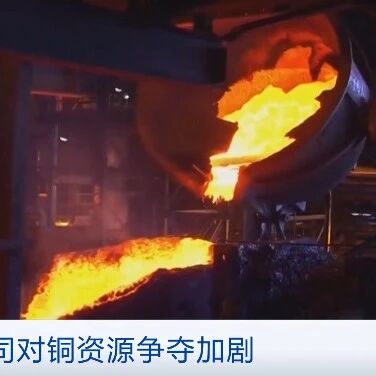
矿业巨头策略大转向!为吞并嘉能可,力拓(RIO.US)不惜重拾煤炭业务
Zhi Tong Cai Jing· 2026-01-09 12:15
Core Viewpoint - Rio Tinto is open to retaining Glencore's substantial coal business if merger talks succeed, indicating a significant strategic shift for the company, which had previously agreed to sell its last coal mines in 2018 [1] Group 1: Merger Discussions - Rio Tinto and Glencore are in discussions regarding a potential merger of part or all of their businesses, driven by a wave of transactions in the mining sector as major producers seek to expand their copper operations [1] - The structure and scope of any potential deal are still under discussion, with one key option being a full acquisition of Glencore, including its coal business [2][1] Group 2: Market Context - Glencore remains heavily invested in coal, contrasting with competitors like Rio Tinto, which have exited the coal sector due to investor pressure [1] - The willingness of Rio Tinto to re-enter the coal market reflects a broader reversal in the business and political climate, particularly in the context of U.S. policies under President Trump that resist green initiatives [3] Group 3: Financial Performance - Glencore's coal business has historically been its largest profit driver, although it has underperformed in the past year due to falling coal prices [4] - In 2023, Glencore announced plans to spin off its coal business into a separate company after acquiring a series of steelmaking coal mines from Teck Resources, but this proposal was abandoned following opposition from major shareholders [4]
两大矿业巨头,重启合并谈判
中国能源报· 2026-01-09 12:05
矿业巨头力拓与嘉能可近期重启了合并谈判。 在全球能源转型和人工智能推动下,铜正成为关键资源。据《金融时报》报道,矿业巨头力拓与嘉能可近期重启了合并谈判。分析认 为,这笔潜在交易,折射出全球铜需求长期上行的背景下,矿业公司对规模和资源的重新考量。不过,市场对这一消息反应谨慎,力拓 股价在澳大利亚证券交易所一度下跌超5%。 当地时间周四,据《金融时报》报道,全球两大矿业巨头嘉能可和力拓近期重启了合并谈判。双方此前曾就合并进行磋商,但相关谈判 在大约一年前破裂。 如果这笔潜在的交易最终落地,这将会产生一家企业价值超过2 600亿美元的矿业巨头,而这也体现出当下全球的矿业巨头对铜资源的 争夺。 此前英美资源集团和加拿大特克资源公司达成了一笔"零溢价"合并,这对包括必和必拓、力拓等竞争对手构成了压力,促使这些矿业公 司通过扩张规模来争夺更多铜资源。 而嘉能可近期已将自身战略重新聚焦于铜业务的增长。嘉能可的首席执行官去年曾表示,嘉能可的目标是成为"全球最大的铜生产商"。 目前,嘉能可是全球第六大铜生产商。根据公司的扩张规划,预计到2035年,嘉能可的年铜产量有望达到160万吨,是当前水平的大约 两倍。 过去六个月,受益于 ...

绿色转型遭遇煤炭难题 力拓与嘉能可世纪豪赌的前景迷雾
Ge Long Hui A P P· 2026-01-09 10:52
格隆汇1月9日|Hargreaves Lansdown的分析师Derren Nathan写道,随着力拓和嘉能可确认正在进行初步 合并谈判,这桩被誉为"矿业交易之母"的超级并购案可能重新回到桌面。他补充称,虽然这次合并将打 造一个在多种金属领域均处于全球领导地位的巨头,但并购交易并非为投资者创造价值的自动路径。他 指出,虽然合并可能带来协同效应,但嘉能可的煤炭业务和贸易部门将如何与力拓的业务模式相融合仍 存在疑问。Nathan认为,考虑到力拓一直致力于提升可持续发展信誉,煤炭业务可能成为一个特别棘手 的症结。受此消息影响,嘉能可股价大涨9%,而力拓在伦敦上市的股票下跌近2%。 ...
Rio Tinto and Glencore in Talks to Form World’s Biggest Miner
Yahoo Finance· 2026-01-09 10:44
Core Viewpoint - Rio Tinto Group is in discussions to acquire Glencore Plc, potentially creating the world's largest mining company with a combined market value exceeding $200 billion, following previous talks that collapsed over a year ago [1]. Group 1: Company Valuations and Market Impact - Glencore shares increased by 10% in London, while Rio Tinto shares fell by 2.2% after a 6.3% decline in Australia [2]. - Rio Tinto has a market capitalization of approximately $137 billion, while Glencore is valued at $71 billion [6]. Group 2: Industry Context and Strategic Importance - A merger would represent the largest deal in the mining industry, driven by a surge in demand for copper, a key metal for energy transition, which is currently trading near record highs [3]. - The mining sector is experiencing a wave of consolidation as major producers seek to enhance their copper assets [3]. Group 3: Deal Structure and Considerations - Discussions are ongoing regarding the structure of the deal, with one scenario involving a full takeover of Glencore, including its coal business, which Rio Tinto had previously exited [5]. - Analysts have raised concerns about cultural differences between the two companies and potential hurdles due to Glencore's significant coal production [4]. Group 4: Market Conditions and Future Prospects - Copper prices have recently surged to record highs above $13,000 per ton, influenced by mine outages and stockpiling in the US amid potential tariffs [8]. - Mining executives have warned of tight future supplies of copper, as demand is expected to grow while new mine developments are lacking [8].
Stock Market Today: Nasdaq 100, S&P 500 Futures Gain As Investors Await December Jobs Report— General Motors, Offerpad, Tilray In Focus - SPDR S&P 500 (ARCA:SPY)
Benzinga· 2026-01-09 10:43
Market Overview - U.S. stock futures showed a recovery from earlier losses, with major benchmark indices trading higher [1] - Rising unrest in Iran influenced investor sentiment, leading to an increase in WTI Crude futures [1] Economic Indicators - The U.S. Supreme Court is expected to announce a ruling on tariffs imposed by President Trump [2] - Investors are anticipating the December jobs report, with the 10-year Treasury bond yielding 4.18% and the two-year bond at 3.50% [2] - The CME Group's FedWatch tool indicates an 86.2% likelihood of the Federal Reserve maintaining current interest rates in January [2] Futures Performance - Dow Jones increased by 0.05%, S&P 500 by 0.08%, Nasdaq 100 by 0.15%, and Russell 2000 by 0.11% [3] - SPDR S&P 500 ETF Trust (SPY) rose by 0.067% to $689.97, while Invesco QQQ Trust ETF (QQQ) advanced by 0.084% to $620.99 [3] Company Highlights - General Motors (NYSE: GM) saw a decline of 0.63% after reporting a $7.1 billion loss from electric vehicle investments [5] - Rio Tinto PLC ADR (NYSE: RIO) dropped 2.46% amid merger talks with Glencore [5] - Tilray Brands Inc. (NASDAQ: TLRY) surged by 8.32% after exceeding earnings expectations in its second-quarter report [5] - Offerpad Solutions Inc. (NYSE: OPAD) surged by 38.82% following a new proposal by President Trump impacting the housing market [13] - Kalvista Pharmaceuticals Inc. (NASDAQ: KALV) shares increased by 13.65% after reporting preliminary global net product revenue of $35 million to $49 million for the fourth quarter [13] Sector Performance - U.S. markets experienced broad gains, particularly in the Energy and Consumer Staples sectors, while Information Technology and Health Care sectors posted losses [7] Analyst Insights - Scott Wren from Wells Fargo Investment Institute emphasizes the importance of focusing on economic and policy trends rather than daily news [9] - Wren identifies four key pillars for the year: resilient AI capital spending, significant tax benefits, continued Federal Reserve rate cuts, and deregulation [9] - He sees opportunities in Industrials and Utilities, as well as Midstream Energy and Industrial Metals like copper, to support infrastructure development [10][11]





Global Markets Navigate ECB Liquidity, Major Mining Merger Talks, Middle East Tensions, and Tech Upgrades
Stock Market News· 2026-01-09 10:38
Group 1: Eurozone Banking Liquidity - The European Central Bank (ECB) reported no overnight borrowings, with 2495.58 billion euros deposited in its overnight deposit facility, indicating robust liquidity in the eurozone banking system [2][8]. Group 2: Rio Tinto and Glencore Merger - Rio Tinto is considering retaining coal assets if it successfully acquires Glencore, which could create a mining giant with an enterprise value exceeding $260 billion [3][4]. - This potential acquisition marks a strategic shift for Rio Tinto, which had divested its last coal mine in 2018, highlighting complexities in decarbonization strategies within the mining sector [4]. Group 3: Alphabet Inc. Price Target Adjustment - Scotiabank raised its price target for Alphabet Inc. to $336 from $310, maintaining an "Outperform" rating, reflecting continued analyst confidence in the company's performance and growth prospects [7][9]. - The upgrade follows previous positive assessments, with Scotiabank having raised Alphabet's price target to $310 from $240 in October 2025, citing a recovery in the advertising business and strong YouTube performance [10].

Glencore Stock Jumps, and Rio Tinto Shares Fall. The Two Miners Confirm Early Merger Talks.
Barrons· 2026-01-09 10:17
Core Viewpoint - Mining and minerals companies have indicated uncertainty regarding the likelihood of any transaction or offer being made or agreed upon [1] Group 1 - The companies are cautious about potential transactions in the industry [1]