Rio Tinto(RIO)

Search documents
Rio Tinto: Primed To Benefit From The Growth In AI Infrastructure (NYSE:RIO)
Seeking Alpha· 2025-11-25 09:10
Core Insights - Rio Tinto (RIO) shares have experienced a significant increase of 19% year-to-date in 2025, indicating strong market performance [1] Company Performance - The stock price rise suggests positive investor sentiment and potential growth opportunities for Rio Tinto [1] Investment Strategy - The focus on generating growth and income aligns with the overall market trends, emphasizing the importance of thorough research in investment decisions [1]



Rio Tinto: Primed To Benefit From The Growth In AI Infrastructure
Seeking Alpha· 2025-11-25 09:10
Core Insights - Rio Tinto (RIO) shares have experienced a significant increase of 19% year-to-date in 2025, indicating strong market performance [1] Company Performance - The stock price rise suggests positive investor sentiment and potential growth opportunities for Rio Tinto [1] Investment Strategy - The focus on generating growth and income through research and analysis of different companies highlights a strategic approach to investment [1]
All You Need to Know About Rio Tinto (RIO) Rating Upgrade to Buy
ZACKS· 2025-11-24 18:01
Core Viewpoint - The recent upgrade of Rio Tinto to a Zacks Rank 2 (Buy) indicates a positive outlook on its earnings estimates, which is a significant factor influencing stock prices [1][3]. Earnings Estimates and Stock Price Impact - Changes in a company's future earnings potential, as reflected in earnings estimate revisions, are strongly correlated with near-term stock price movements [4]. - Institutional investors often base their valuation models on earnings estimates, leading to buying or selling actions that affect stock prices [4]. Company-Specific Insights - For Rio Tinto, the rising earnings estimates and the Zacks rating upgrade suggest an improvement in the company's underlying business, likely resulting in increased stock prices [5]. - The Zacks Consensus Estimate for Rio Tinto is projected at $6.09 per share for the fiscal year ending December 2025, with a 3.4% increase in estimates over the past three months [8]. Zacks Rating System - The Zacks Rank system classifies stocks into five groups based on earnings estimates, with a strong historical performance, particularly for Zacks Rank 1 stocks, which have generated an average annual return of +25% since 1988 [7]. - The upgrade of Rio Tinto to a Zacks Rank 2 places it in the top 20% of Zacks-covered stocks, indicating a strong potential for market-beating returns in the near term [10].

铁矿石暗战升级!
Sou Hu Cai Jing· 2025-11-24 02:12
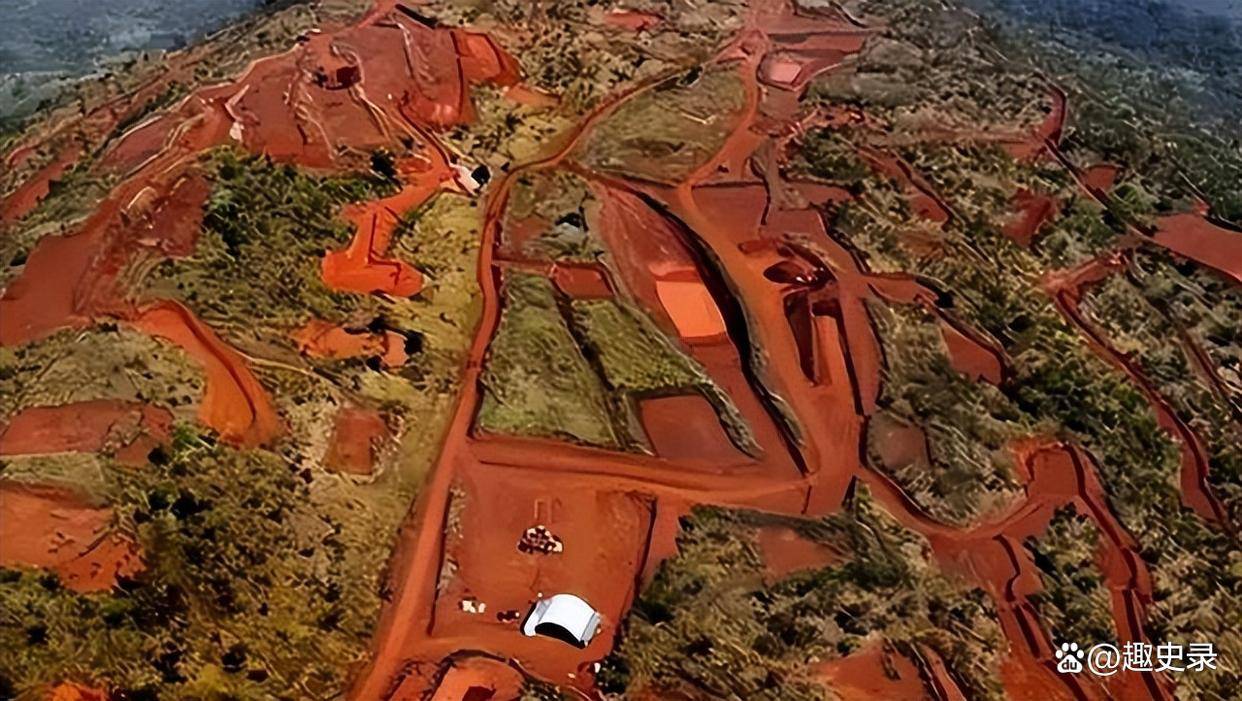
Core Insights - The rise of China's steel industry in the global iron ore market represents a significant shift in power dynamics, moving from a passive role to an active one in price negotiations [1][15] Group 1: Historical Context - In 2003, China became the world's largest iron ore importer, surpassing Japan with imports of 148 million tons [3] - From 2003 to 2008, iron ore prices experienced extreme volatility, with annual increases of up to 71.5%, leading to additional costs for China amounting to 700 billion RMB [3] - The number of companies with import licenses peaked at 523, leading to market chaos and price manipulation by agents [3][4] Group 2: Market Regulation and Price Negotiation - In 2005, the China Iron and Steel Association (CISA) reduced the number of licensed importers to 118, yet high prices persisted due to ongoing speculation [4] - The 2008 financial crisis caused a dramatic drop in demand, resulting in losses for many companies due to long-term contracts priced above spot market rates [4][6] - A significant bribery scandal involving a representative from Rio Tinto revealed the complexities of price negotiations and led to a shift in contracts towards more favorable terms for China [6][8] Group 3: Shift in Pricing Mechanism - Post-2010, China began using the Platts index for iron ore pricing, although this method faced criticism for not accurately reflecting the Chinese market [8] - By 2024, the Platts index was still high at $130/ton, while China's import costs were significantly inflated compared to mining costs in Australia [8][10] Group 4: Development of Equity Mines - China aims to increase its share of equity mines from 8% to over 20% by 2025, with significant projects like the Simandou iron ore project in Guinea [10][11] - The Simandou project is expected to produce 30 million tons annually by the end of 2026, contributing to a total of 300 million tons of equity mines, which will reduce reliance on traditional suppliers [11][12] Group 5: Currency and Trade Dynamics - In 2024, negotiations with BHP broke down over currency settlement, leading to a shift towards RMB settlements for iron ore trade, impacting 70% of global transactions [12][14] - Australia's iron ore export share to China decreased from 60% to 45%, with predictions of a $110 billion drop in export revenue by 2025 [14][15] Group 6: Future Outlook - The completion of the Simandou project and stable steel demand in China will pose challenges for Australian iron ore sales, potentially leading to lower prices [15] - The ongoing transformation in the iron ore market indicates a shift in power, with China gaining significant leverage in negotiations and pricing [15]


What's Next After Rio's 18% Surge
Forbes· 2025-11-21 11:45
Core Viewpoint - Rio Tinto demonstrated strong operational performance in Q3 2025, with significant increases in production and shipments across various segments despite challenging commodity markets [2][4][9] Production and Shipments - Pilbara iron-ore shipments reached 84.3 million tons, a 6% increase from the previous quarter [2] - IOC iron-ore pellets and concentrate production rose by 11% year-on-year [2] - Copper-equivalent production grew by 9% compared to Q3 2024 [2] - Bauxite production increased to 16.4 million tons, reflecting a 9% year-on-year rise, while aluminum output rose by 6% to approximately 0.86 million tons [2] Financial Performance - The share price of Rio Tinto increased by approximately 18% year-to-date, driven by diversified production and a focus on higher-growth sectors like copper and lithium [4][9] - The company revised its full-year bauxite guidance to a range of 59–61 million tons, up from 57–59 million tons [2] Growth Drivers - Copper production reached 204 kt in Q3, marking a 10% year-on-year increase, with expectations to meet the higher end of annual guidance [7] - The growth in bauxite and aluminum segments, supported by updated guidance, presents potential upside for the company [8] Future Outlook - Q4 2025 will be critical for iron-ore volumes and operational stability, especially following earlier weather disturbances [6] - Consistent Pilbara shipments alongside growth in bauxite and aluminum could lead to a strong finish for the year [6]
Rio cuts alumina output in Australia
MINING.COM· 2025-11-19 20:29
Core Viewpoint - Rio Tinto plans to reduce output at its Yarwun alumina refinery by 40% starting October 2026 to extend the plant's operational life to 2035, amounting to a reduction of approximately 1.2 million tonnes of alumina annually, while ensuring customer supply commitments remain unaffected [1][2]. Company Summary - The decision to cut production is described as difficult but necessary, aimed at preserving future options for the site and maintaining its economic contribution, with substantial investment required for the refinery [2]. - High costs related to power, labor, and capital are challenging alumina processing in Australia, compounded by increasing low-cost supply from Indonesia and China, which is pressuring margins [2]. - The current alumina prices are significantly lower than the peak of $800 per tonne experienced last year, with Rio's production cut representing only 1% of the global alumina market, which is approximately 140 million tonnes [2]. Industry Summary - Alumina prices have been under consistent downward pressure due to increased domestic capacity in China and other parts of Asia, with the CRU's Atlantic Basis Price index recently assessed at $340 per tonne, nearing its low of $334 per tonne [3]. - The reduction in output at the Yarwun refinery is driven by tailings-storage constraints, with the existing plant expected to reach capacity by 2031 at current production rates [4]. - The cost of constructing a second tailings area is deemed unviable in the current market conditions [4]. Operational Impact - The output reduction will provide Rio Tinto with an additional four years to explore alternative technical solutions for the refinery, as previous studies on site engineering improvements have been financially daunting [5]. - The reduction will not affect the company's bauxite mines or aluminum smelters, which will continue to operate at full capacity, although approximately 180 of the refinery's 725 jobs are expected to be impacted [6]. - The company plans to utilize the time from the output reduction to test various tailings-management options to extend the life of the existing storage footprint [6][7].

RIO to Extend Operational Life of Yarwun With Production Cut
ZACKS· 2025-11-19 15:57
Core Insights - Rio Tinto Group (RIO) will reduce production by 40% at its Yarwun Alumina Refinery starting October 2026 to extend the operation's life until 2035 [1][8] - The production cut will lower alumina output by 1.2 million tons annually, but will not affect customer requirements [4][8] - The company is exploring options for staff redeployment across its Gladstone sites due to the impact on 180 roles [4][8] Production and Operational Impacts - The production reduction allows Rio Tinto time to explore life-extension and modernization options at Yarwun, as the tailings facility is expected to reach capacity by 2031 [3][8] - Other facilities, including bauxite mines and aluminum smelters, will continue to operate at full capacity [3] - Rio Tinto's alumina production is anticipated to be between 7.4 million tons and 7.8 million tons for 2025 [6] Financial Guidance and Performance - Rio Tinto expects Pilbara iron ore shipments at the lower end of 323-338 million tons due to cyclone impacts in Q1 2025 [5] - Bauxite guidance has been increased to 59-61 million tons from 57-59 million tons, indicating higher utilization rates [5] - In the past year, Rio Tinto shares have gained 18.5%, outperforming the industry's growth of 14.2% [7]
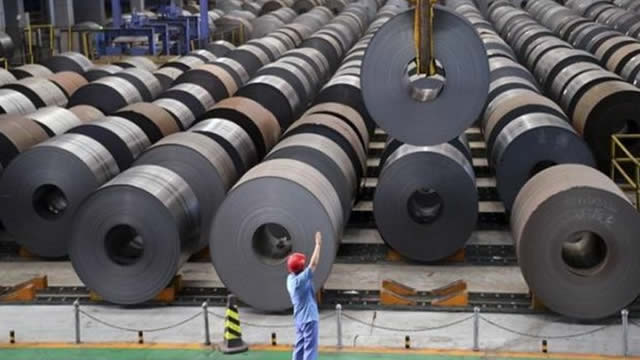
铜盛铁衰,铁矿石巨头们纷纷加码铜矿!
Xin Lang Cai Jing· 2025-11-19 04:45
Group 1: Core Insights - Rio Tinto's iron ore profit margin is projected to decline from 81% in 2023 to 48% in 2026, indicating a significant shift in revenue sources as global steel demand decreases [1] - The copper business of Rio Tinto has shown substantial growth, with EBITDA reaching $3.105 billion in the first half of 2025, a 69% increase year-on-year, and now accounting for over 20% of the group's EBITDA [3] - BHP's copper production reached a record 2.017 million tons in the 2025 fiscal year, marking a 28% increase from the previous year, with copper contributing 45% to the group's EBITDA [3][5] Group 2: Company Strategies and Investments - BHP plans to invest between $7.3 billion and $9.8 billion for technological upgrades and new concentrator plants, aiming to stabilize copper production at around 1.4 million tons annually by 2031 [5] - Rio Tinto's key copper assets include the Oyu Tolgoi mine in Mongolia and the Escondida mine in Chile, with plans to expand copper resources significantly through various projects [6] - Vale's copper production is expected to grow, with a target of reaching 700,000 tons annually by 2030, reflecting the increasing focus on copper as a strategic asset [7] Group 3: Market Trends and Demand - The demand for copper is surging due to its applications in renewable energy, electric vehicles, and AI data centers, prompting mining companies to invest heavily in copper assets [9] - Despite a stable demand for iron ore, the supply is slightly increasing, indicating a potential shift in market dynamics as companies explore copper resources in various regions [9]

Is OR Royalties Inc. (OR) Outperforming Other Basic Materials Stocks This Year?
ZACKS· 2025-11-18 15:41
Group 1 - OR Royalties (OR) is currently outperforming its peers in the Basic Materials sector, with a year-to-date gain of approximately 76.2% compared to the sector's average return of 18.6% [4] - The Zacks Rank for OR Royalties is 1 (Strong Buy), indicating a strong potential for outperformance based on earnings estimate revisions and improving earnings outlooks [3] - Over the past 90 days, the Zacks Consensus Estimate for OR's full-year earnings has increased by 8.1%, reflecting stronger analyst sentiment [4] Group 2 - OR Royalties is part of the Mining - Miscellaneous industry, which consists of 68 individual stocks and currently ranks 81 in the Zacks Industry Rank [6] - The Mining - Miscellaneous industry has seen an average gain of 21.2% this year, indicating that OR Royalties is performing better than the industry average [6] - Another stock in the Basic Materials sector, Rio Tinto (RIO), has also shown strong performance with a year-to-date return of 19.9% and a Zacks Rank of 2 (Buy) [5]


Rio Tinto's Yarwun alumina refinery to slash production, prolonging plant life until 2035
Invezz· 2025-11-18 06:05
Core Viewpoint - Rio Tinto plans to reduce production at its Yarwun alumina refinery by 40% starting next October to extend the facility's operational life [1] Production Decision - The company has opted not to construct a second waste facility at Yarwun due to the conclusion that the necessary substantial investment is not currently viable [1]