Rio Tinto(RIO)

Search documents
Rio Tinto Hits the Brakes on Lithium in Strategy Shakeup
Yahoo Finance· 2025-12-02 00:00
Core Viewpoint - Rio Tinto is undergoing a strategic overhaul to streamline operations and enhance project returns under the leadership of new CEO Simon Trott [1][2] Group 1: Strategic Changes - The reorganization may involve asset sales, a slowdown in lithium project developments, and further cost reductions [2] - Trott has introduced a new operating model, simplifying Rio Tinto's structure into three main business segments: Iron Ore, Aluminium & Lithium, and Copper [3] - The Lithium business has been integrated into the Aluminium product group, led by Jérôme Pécresse [3] Group 2: Focus on Lithium - While Rio Tinto will continue to invest in lithium, projects will need to compete with iron ore and copper developments for resources [3] - Trott emphasized the importance of being selective in the lithium sector to focus on the most profitable projects, given the high bar for options available [5] - Strong lithium demand is supported by a 27% year-over-year increase in global electric vehicle sales in the first seven months of the year [6] Group 3: Project Developments - Despite the strong demand for lithium, Rio Tinto decided to halt a $2.4 billion lithium project in Serbia due to permitting challenges [6]

德银:月产5000万只!当Labubu不再稀缺,泡泡玛特拿什么接棒?
美股IPO· 2025-12-01 10:38
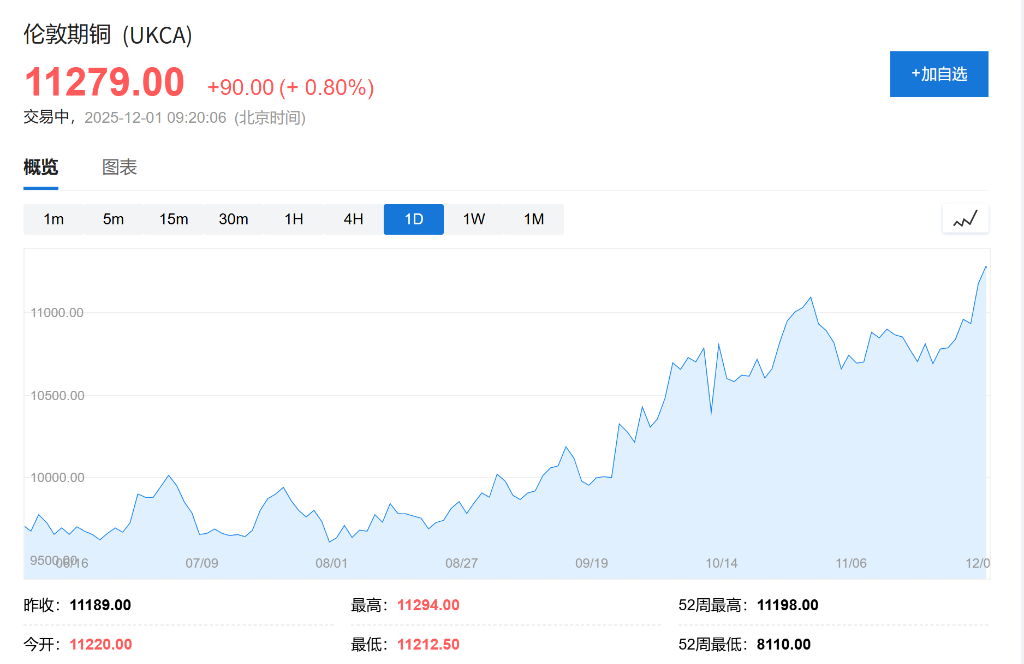
Group 1: Availability Paradox and Market Dynamics - Deutsche Bank warns that Pop Mart is facing an "Availability Paradox" as its production capacity aggressively expands to 50 million units per month by year-end, leading to Labubu transitioning from a scarce trendy IP to a mass consumer product, which may signal a decline in popularity for trend-driven toys [1] - If Labubu's popularity peaks in 2026 without new hit products, valuation pressure on Pop Mart will increase significantly [1] Group 2: Copper Market Supply and Price Forecast - Deutsche Bank indicates that the global copper market is experiencing a supply squeeze, with severe supply disruptions pushing copper prices close to historical highs [3] - The report predicts a decline in mine supply by 2025, with only a 1% rebound expected the following year, resulting in a "clear deficit" in the market [3] - As a result, Deutsche Bank raises its copper price forecast for 2026 to $10,600 per ton, with potential peaks exceeding $11,000 per ton in the first half of 2026 [3][6] Group 3: Key Company Updates and Investment Focus - Glencore is set to hold its first Capital Markets Day (CMD) in two years, aiming to restore market confidence in its operational capabilities, while Rio Tinto focuses on business simplification and capital discipline [4][9] - Deutsche Bank lists Anglo Teck, Glencore, and Freeport as preferred stocks, adjusting ratings for Boliden to "Buy" and First Quantum to "Hold" [7] - Glencore's CMD on December 3 is highly anticipated, with expectations that it will provide guidance on copper production and capital expenditures, while also addressing potential M&A discussions [8] Group 4: Rio Tinto's Strategic Focus - Rio Tinto's CMD on December 4 is expected to emphasize capital discipline, business simplification, and divestment of non-core assets, with a projected annual capital expenditure guidance of $10-11 billion [10] - The market will closely monitor production guidance for the Simandou project, amid concerns of potential oversupply [10]



德银预警:严重供应中断+行业大整合,明年铜市赤字状态恐将持续
Hua Er Jie Jian Wen· 2025-12-01 07:23
1. 电气化与数字化趋势: 2024年全球电力需求增速已超过GDP增速,并预计将继续以健康的速度扩张。 德银的分析明确指出,全球铜市正面临一场供应挤压。在行业整合加速的背景下,严重的供应中断已将铜价推至接近历史高位的水平。 据追风交易台,11月30日,德银报告认为,由于严重的供应中断和行业整合加速,2025年矿山供应将出现下滑,并在次年仅反弹约1%,市场将处 于"明确的赤字状态"。 12月1日,伦铜价报11279美元/吨,创下历史新高。 铜市展望:供应短缺已成定局 尽管报告也提示了风险,例如对"人工智能泡沫"的担忧,但德银认为,除非全球经济出现严重放缓,否则铜价的激励性定价机制将持续存在。其 背后的长期驱动力在于: 对投资者的影响:这一判断直接导致德银将2026年的铜价预测上调至10,600美元/吨,并预计在2026年上半年峰值可超过11,000美 元/吨。铜市已进入一个由激励性定价主导的新阶段。投资者应密切关注即将到来的几大矿业巨头的"资本市场日"(CMD),尤 其是嘉能可(Glencore),其在并购(M&A)方面的动向以及高达10%的预期自由现金流收益率(2026E)使其成为市场焦点。 关键公司动态:嘉 ...
投行Jefferies:矿业股跑赢大盘 因投资者关注美联储降息
Sou Hu Cai Jing· 2025-12-01 00:28
Jefferies分析师报告称,矿业"重获青睐"。过去一周,矿业公司股票大幅跑赢大盘,因投资者押注美联 储将在即将召开的会议上降息。Jefferies的分析师表示:"这可能是2026年将要发生的事情的预演,因为 美联储主席鲍威尔的继任者可能会支持更大幅度的降息。"他们表示,此举将成为矿商的看涨驱动因 素,因为降息往往会支持经济增长。这些分析师表示,过去一个月,买方对矿商的平均预期出现了"重 大的积极转变"。在悉尼市场,必和必拓和力拓分别上涨0.9%和0.3%。 ...

铁矿石周报 2025/11/29:铁水小幅下滑,矿价区间内运行-20251129
Wu Kuang Qi Huo· 2025-11-29 11:56
1. Report Industry Investment Rating No relevant content provided. 2. Core View of the Report - The overall inventory of iron ore remains high, but due to limited availability of some resources, structural contradictions still exist, providing some support for spot prices. - In November, there were no significant macro - events. Starting from December, the macro - impact is expected to gradually increase. - Overall, iron ore prices are expected to move within an oscillatory range [11][13][14]. 3. Summary According to the Table of Contents 3.1 Week - on - Week Assessment and Strategy Recommendation - **Supply**: The total global iron ore shipment volume was 32.784 million tons, a week - on - week decrease of 2.38 million tons. The total shipment volume from Australia and Brazil was 26.374 million tons, a decrease of 2.713 million tons. Australia's shipment volume was 18.396 million tons, a decrease of 2.109 million tons, and the volume shipped from Australia to China was 15.536 million tons, a decrease of 3.194 million tons. Brazil's shipment volume was 7.978 million tons, a decrease of 0.604 million tons. The total arrival volume at 47 Chinese ports was 29.395 million tons, an increase of 5.696 million tons; the total arrival volume at 45 Chinese ports was 28.171 million tons, an increase of 5.482 million tons [11][13]. - **Demand**: The daily average pig iron output was 2.3468 million tons, a decrease of 0.016 million tons from the previous week. The blast furnace iron - making capacity utilization rate was 87.98%, a decrease of 0.60 percentage points from the previous week; the steel mill profitability rate was 35.06%, a decrease of 2.60 percentage points from the previous week [11][13]. - **Inventory**: The total inventory of imported iron ore at 47 ports across the country was 159.0122 million tons, an increase of 1.6637 million tons; the daily average port clearance volume was 3.4406 million tons, an increase of 0.0067 million tons [11][13]. 3.2 Futures and Spot Market - **Price Spread**: The PB - Super Special powder price spread was 111 yuan/ton, a week - on - week change of - 3.0 yuan/ton. The Carajás fines - PB powder price spread was 91 yuan/ton, a change of - 4.0 yuan/ton. The Carajás fines - Jinbuba powder price spread was 147 yuan/ton, a change of - 1.0 yuan/ton. The ((Carajás fines + Super Special powder)/2 - PB powder) price spread was - 10.0 yuan/ton, a change of - 0.5 yuan/ton [17][19][22]. - **Feed Ratio and Scrap Steel**: The pellet feed ratio was 14.52%, a change of - 0.03 percentage points from the previous period. The lump ore feed ratio was 12.22%, a change of - 0.23 percentage points. The sinter feed ratio was 73.27%, a change of + 0.27 percentage points. The price of scrap steel in Tangshan was 2145 yuan/ton, a week - on - week change of - 10 yuan/ton. The price of scrap steel in Zhangjiagang was 2080 yuan/ton, a change of - 50 yuan/ton [23][25]. - **Profit**: The steel mill profitability rate was 35.06%, a change of - 2.6 percentage points from the previous week; the import profit of PB powder according to the Steel Union's data was - 8.18 yuan/wet ton [26][28]. 3.3 Inventory - The inventory of imported iron ore at 45 ports across the country was 152.1012 million tons, a week - on - week change of + 1.5547 million tons. The pellet inventory was 302,350 tons, a change of + 91,800 tons. The iron concentrate powder inventory at ports was 1.28443 million tons, a change of + 360,000 tons. The lump ore inventory at ports was 1.97937 million tons, a change of + 163,300 tons. The Australian ore port inventory was 63.0746 million tons, a change of + 0.8122 million tons. The Brazilian ore port inventory was 59.8703 million tons, a change of - 0.1998 million tons. The inventory of imported iron ore at 247 steel mills this week was 8.94248 million tons, a change of - 0.05875 million tons from the previous week [32][35][45]. 3.4 Supply Side - **Overseas Shipments**: The latest shipment volume from Australia to China through 19 ports was 15.27 million tons, a week - on - week change of - 2.851 million tons. Brazil's shipment volume was 7.931 million tons, a change of - 0.548 million tons. Rio Tinto's shipment volume to China was 4.975 million tons, a week - on - week decrease of 0.497 million tons. BHP Billiton's shipment volume to China was 4.445 million tons, a decrease of 1.045 million tons. Vale's shipment volume was 5.462 million tons, a decrease of 1.254 million tons. FMG's shipment volume to China was 4.002 million tons, a decrease of 0.184 million tons [47][50][53]. - **Arrival and Import**: The latest arrival volume at 45 ports was 28.171 million tons, a week - on - week increase of 5.482 million tons. In October, China's non - Australian and non - Brazilian iron ore imports were 19.8492 million tons, a month - on - month increase of 1.2656 million tons [47][59]. - **Domestic Mines**: The latest domestic mine capacity utilization rate was 60.77%, a change of - 0.02 percentage points. The daily average output of iron concentrate powder from domestic mines was 474,800 tons, a change of - 20,000 tons [47][65]. 3.5 Demand Side - The daily average pig iron output in China was 2.3468 million tons, a decrease of 0.016 million tons from the previous week. The blast furnace capacity utilization rate was 87.98%, a decrease of 0.60 percentage points from the previous week. The daily average port clearance volume of iron ore at 45 ports was 3.3058 million tons, a week - on - week change of + 0.0066 million tons. The daily consumption of imported iron ore at 247 steel mills was 2.8943 million tons, a week - on - week change of - 0.0225 million tons [67][70][73]. 3.6 Basis - As of November 28, the calculated basis of iron ore BRBF was 44.83 yuan/ton, and the basis rate was 5.34% [75][78].

RIO vs. VALE: Which Global Mining Powerhouse is the Better Buy Now?
ZACKS· 2025-11-28 17:41
Core Insights - Rio Tinto Group and Vale S.A. are major competitors in the global metals and mining sector, both poised to benefit from increasing infrastructure investments and long-term demand for essential minerals for clean energy technologies [1] Company Overview - Rio Tinto, headquartered in London, operates in 35 countries with a market capitalization of $118 billion, focusing on iron ore, copper, aluminum, and other minerals [2] - Vale, based in Rio de Janeiro, operates in 20 countries with a market capitalization of $53.5 billion, producing iron ore, nickel, copper, cobalt, and precious metals [3] Rio Tinto's Position - Rio Tinto has leading positions in iron ore, copper, and aluminum, with its Pilbara operations delivering high margins due to scale and automation [4] - The company is heavily investing in the Oyu Tolgoi copper project in Mongolia, expected to become the fourth-largest copper mine globally [5] - Rio Tinto is expanding its lithium portfolio to meet rising demand for batteries and electric vehicles, aiming for over 200 thousand tons per year of lithium carbonate equivalent by 2028 [6] - In Q3 2025, Rio Tinto reported iron ore shipments of 84.3 million tons, flat year-over-year but a 6% sequential rise, with stable production at 84.1 million tons [7] - The company expects Pilbara iron ore shipments for 2025 to be between 323-338 million tons, reflecting a potential year-over-year decline of 2% to growth of 3% [8] - Copper production is expected to be near the high end of 780-850 thousand tons for 2025, supported by the ramp-up at Oyu Tolgoi [9] Vale's Position - Vale is the largest producer of iron ore and iron ore pellets, known for its high-grade ore, which is advantageous for the decarbonization of the steel industry [11] - In Q3, Vale produced 94.4 million tons of iron ore, a 3.8% increase year-over-year, with sales volumes up 5% [11] - Vale expects iron ore production in 2025 to range between 325-335 million tons and copper production between 340-370 thousand tons [12] - The company plans to increase production capacity to 340-360 million tons by 2026 and 360 million tons by 2030 [13] - Vale is investing in its Energy Transition Metals business, with the Voisey's Bay Mine Expansion project expected to ramp up production by the second half of 2026 [14] Earnings Estimates - For Rio Tinto, the Zacks Consensus Estimate for 2025 earnings indicates a year-over-year drop of 5.7%, with a projected growth of 13.8% for 2026 [16] - Vale's 2025 earnings estimate indicates year-over-year growth of 8.2%, with a slight dip of 1.27% projected for 2026 [19] Price Performance and Valuation - Year-to-date, Rio Tinto's stock has appreciated by 22.8%, while Vale has gained 41% [20] - Rio Tinto trades at a forward price-to-sales multiple of 1.59X, while Vale's multiple is at 1.41X [21] Conclusion - Both companies are positioned to benefit from rising demand for steelmaking materials and energy transition metals, with Rio Tinto offering greater diversification and growth in copper and lithium, while Vale has an edge with its high-grade iron ore [22]

Rio Tinto CEO's Big Test: What to Do With Lithium
WSJ· 2025-11-28 11:08
Core Insights - The world's second-largest mining company made significant investments in lithium last year, distinguishing itself from other major mining firms [1] Company Strategy - The company has focused on lithium as a key growth area, indicating a strategic shift towards materials essential for electric vehicle batteries and renewable energy technologies [1] Industry Trends - The investment in lithium reflects broader trends in the mining industry, where other major players have not prioritized this sector to the same extent [1]
Rio2 Announces Participation in Royal Road’s Private Placement
Globenewswire· 2025-11-27 23:00
Core Points - Rio2 Limited has participated in a non-brokered private placement of Royal Road Minerals Limited, purchasing 4,166,667 ordinary shares at $0.18 per share, totaling $750,000 [1] - Following this transaction, Rio2 now holds a total of 44,021,667 shares in Royal Road, representing approximately 15% of the issued and outstanding shares on a non-diluted basis [3] - The acquisition of shares is for investment purposes, and Rio2 may acquire additional shares or dispose of its holdings in the future, subject to the Investor Rights Agreement [4] Summary by Sections Investment Details - Rio2 acquired 4,166,667 shares of Royal Road at a price of $0.18 per share, amounting to $750,000 [1] - The purchase allows Rio2 to maintain its pro rata ownership in Royal Road and potentially increase its ownership interest up to 15% [2] Ownership Status - After the private placement, Rio2's total beneficial ownership in Royal Road is 44,021,667 shares, which is approximately 15% of the total shares [3] - Prior to this placement, Rio2 held 39,855,000 shares, also representing around 15% of Royal Road's shares [3] Company Profile - Rio2 is focused on mining operations and development, particularly the Fenix Gold Project in Chile, emphasizing environmental responsibility and sustainable practices [6]

传力拓(RIO.US)拟剥离在美硼资产 估值或达20亿美元
智通财经网· 2025-11-27 06:10
Core Viewpoint - Rio Tinto is seeking to divest its boron assets in the U.S., with a potential sale price of up to $2 billion, as part of a strategy to streamline its operations under new CEO Simon Trott [1][2]. Group 1: Company Strategy - The divestiture of boron assets is part of Rio Tinto's broader strategy to simplify its business and focus on high-quality assets [2]. - Under CEO Simon Trott, who took office three months ago, the company has been restructured into three departments, with a review of the minerals division, including borates [2]. Group 2: Asset Details - The boron business includes a mine and processing facility in Boron, California, a refining and shipping facility at the Port of Los Angeles, and mining operations near Owens Lake in the Sierra Nevada [1]. - Rio Tinto's California operations account for approximately 30% of global boron demand [1]. Group 3: Market Context - Boron is a critical mineral with various industrial applications, including fertilizers, glass and ceramics manufacturing, fiberglass insulation, and strengthening metal alloys [1]. - The U.S. Geological Survey has recently listed boron as a critical mineral, highlighting its importance to the U.S. economy and national security [1][2].
Rio Tinto strengthens support for organisations responding to gender-based violence across Canada
Businesswire· 2025-11-25 14:00
Core Viewpoint - Rio Tinto is reaffirming its commitment to combat gender-based violence in Canada by providing financial support to local organizations that assist affected individuals and communities [1][3]. Financial Contributions - This year, Rio Tinto is contributing $400,000 to support 15 organizations that deliver essential services to those affected by gender-based violence [2]. - Since 2020, the company has provided a total of $2.335 million in funding for this initiative in Canada [3]. Partnerships and Supported Organizations - Rio Tinto is partnering with 15 organizations across Canada, including SOS violence conjugale, to provide shelter, counseling, education, and training [5]. - The organizations supported include various centers in Quebec, British Columbia, Newfoundland and Labrador, and Northwest Territories [5]. Corporate Responsibility and Employee Support - The company emphasizes the importance of safety and support for its employees, offering resources such as additional paid leave, emergency accommodation, and financial support for those experiencing gender-based violence [4]. - Employees also receive training to assist colleagues in need of support [4]. Leadership Statements - Jérôme Pécresse, Chief Executive of Rio Tinto Aluminium & Lithium, highlighted the company's responsibility to ensure safety for both employees and surrounding communities [3]. - Jocelyne Jolin, Executive Director of SOS violence conjugale, noted that Rio Tinto's support helps modernize tools for victim safety and sends a strong message about corporate commitment to addressing intimate partner violence [4].