Starbucks(SBUX)

Search documents
消息称星巴克将在重组中裁减约900个工作岗位
Ge Long Hui A P P· 2025-09-25 11:12
Group 1 - Starbucks plans to cut approximately 900 jobs as part of its restructuring process [1] - The company will also close some of its stores [1]

Starbucks closing stores, including iconic Seattle roastery, as CEO deepens restructuring
Yahoo Finance· 2025-09-25 11:08
Core Insights - Starbucks is closing underperforming stores in North America, including its Seattle roastery, as part of a restructuring effort led by CEO Brian Niccol, which is expected to cost $1 billion to revive sales [1][2] - The overall store count in the U.S. and Canada is projected to decrease by 1%, equating to several hundred stores, by the end of the 2025 fiscal year [2] - The closures include a flagship unionized location in Seattle and a unionized store in Chicago, amidst ongoing contract negotiation disputes with the Workers United union [2][3][4] Union Relations - Talks between Starbucks and the Workers United union, representing over 12,000 baristas, have stalled since April, with strikes occurring during the peak holiday season [3] - The union criticized the closures, emphasizing the need for union support for baristas and plans to negotiate for affected workers to be transferred to other stores [5] - Starbucks stated that the union status of stores did not influence the decision to close them [5] Restructuring Strategy - CEO Niccol's strategy focuses on investing in stores to reduce service times and restore a coffeehouse atmosphere while streamlining management [6] - The company has experienced a series of quarterly sales declines in the U.S. due to changing consumer preferences and increased competition [6]
Starbucks to Cut Hundreds More Corporate Jobs, Close Stores
WSJ· 2025-09-25 11:08
Group 1 - The coffee chain is laying off approximately 900 employees as part of a turnaround strategy [1] - The restructuring effort includes streamlining corporate functions [1]

Starbucks to close underperforming stores, cut jobs in latest restructuring
Reuters· 2025-09-25 11:08
Starbucks said on Thursday it has approved a restructuring plan to close underperforming coffee houses in North America, and cut some jobs as the company looks to revive sales and profits under CEO Br... ...

露胸肌自拍推销星巴克中秋礼盒,店员为完成卖月饼KPI快被逼成男模了?
3 6 Ke· 2025-09-25 09:34
Core Insights - Starbucks employees face immense pressure to sell mooncakes, leading to creative and sometimes desperate sales tactics [1][24][31] - The company has introduced two new mooncake products this year, priced at 468 yuan and 358 yuan, respectively [2] - Despite high profit margins of 65%, the low repurchase rate of 23% for Starbucks mooncakes indicates a struggle to sell the product [35][36] Group 1: Employee Sales Pressure - Employees are resorting to various methods to sell mooncakes, including creative social media promotions and even self-purchasing to meet sales targets [1][6][31] - The pressure to meet sales KPIs is significant, with some employees reporting that they must sell over 200 boxes of mooncakes [24][31] - Official company policy prohibits employees from self-purchasing, yet the pressure to meet sales targets often leads to this behavior [26][31] Group 2: Product Performance - The new mooncake offerings include a variety of flavors, but employee feedback suggests that the taste does not align with consumer preferences [32][35] - The mooncake sales strategy appears to be a mix of high pricing and promotional offers, yet the effectiveness of these strategies is questioned due to low consumer interest [27][36] - The company has faced criticism for its mooncake products, which are perceived as overpriced and not meeting quality expectations [35][36] Group 3: Company Strategy and Market Position - Starbucks is attempting to adapt to local market demands while facing competition from lower-priced alternatives [36][37] - The company has recently lowered prices on several non-coffee products, indicating a response to competitive pressures in the market [36] - The ongoing challenges in mooncake sales reflect broader issues within Starbucks regarding employee satisfaction and product alignment with consumer expectations [37]

Starbucks: Value Has Suffered More Than Necessary; Give It A Break
Seeking Alpha· 2025-09-24 19:24
Core Insights - The logistics sector has seen significant engagement from investors, particularly in the ASEAN and US markets, highlighting its growth potential [1] - The popularity of insurance companies in the Philippines since 2014 indicates a shift in investment strategies among local investors [1] - The diversification of investment portfolios across various industries and market capitalizations is becoming a common practice among investors [1] Investment Trends - There is a notable trend of investors moving from traditional savings in banks and properties to stock market investments for better returns [1] - The entry into the US market by investors from the Philippines reflects a growing interest in international investment opportunities [1] - The use of platforms like Seeking Alpha for analysis and comparison of market trends is becoming increasingly popular among investors [1] Sector Focus - Key sectors of interest include banking, telecommunications, logistics, and hospitality, indicating a broad investment strategy [1] - The logistics and shipping industries are particularly highlighted as areas of investment, suggesting their importance in the current economic landscape [1] - The trend of holding stocks for retirement alongside trading for profits shows a balanced approach to investment [1]
星巴克海外店员被指辱骂消费者!成功食品集团:已解雇员工
Nan Fang Du Shi Bao· 2025-09-24 15:05
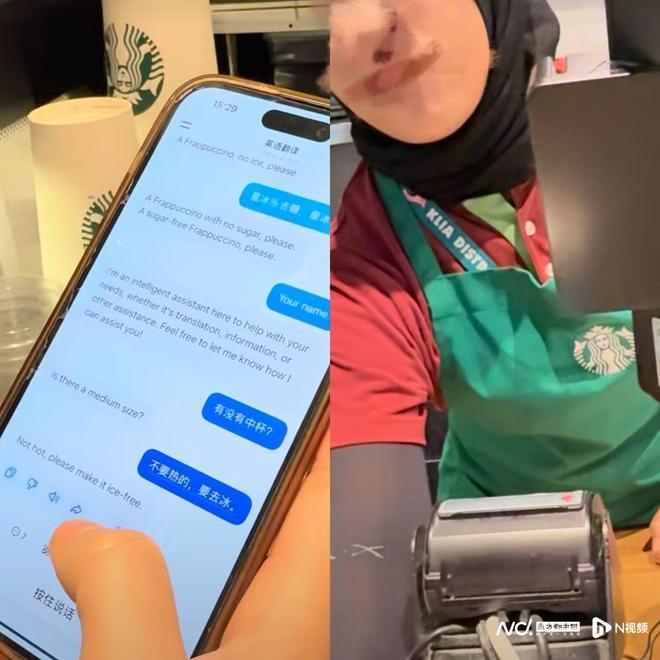
Core Viewpoint - A recent incident involving a customer at a Starbucks in Malaysia has sparked controversy after the barista allegedly insulted the customer using a local language, leading to public outcry and an official response from Starbucks [1][2][4]. Company Response - Starbucks Malaysia, operated by Berjaya Food Berhad, issued a statement emphasizing that respect is non-negotiable and that the behavior of the barista does not reflect the company's values [4][8]. - The barista involved was dismissed on September 21, 2025, following an internal review, and Starbucks is reinforcing training programs to enhance cultural sensitivity and customer service standards [6][7]. Incident Details - The incident occurred on September 18, when a Guangdong consumer shared a video of her ordering at a Starbucks using a translation app, which led to complaints from local netizens about the barista's disrespectful behavior [2][5]. - The consumer expressed gratitude for the support received but noted that she did not understand what the barista was saying at the time [1][2]. Business Context - Starbucks operates in Malaysia through a licensing model, with Berjaya Food Berhad being the exclusive franchisee since its entry into the market in 1998 [9]. - As of now, there are 405 Starbucks locations in Malaysia, and the company reported a revenue of $27.615 billion for the first nine months of fiscal year 2025, reflecting a year-over-year growth of 1.9% [9].
星巴克们的中国往事:从黄金十年到败退时刻
3 6 Ke· 2025-09-24 11:15
Group 1 - The core viewpoint of the article highlights the accelerated divestment of foreign brands in China, marking a significant shift in the market dynamics that have evolved over the past 40 years [4][71]. - The initial entry of foreign brands into China during the reform and opening-up period was characterized by a cooperative approach, as they sought to establish a foothold in a market with limited consumer spending power [5][9]. - By the mid-1990s, as urban consumer groups began to grow, foreign brands started to adopt aggressive strategies, leading to the decline of many domestic brands [10][12]. Group 2 - The article discusses the "two-lever" strategy employed by foreign brands, which involved both establishing retail channels and leveraging brand power to dominate the market [29][40]. - The entry of foreign supermarkets in the 1990s transformed the retail landscape in China, introducing advanced business models and changing consumer shopping habits [30][32]. - The rise of e-commerce and mobile internet has further disrupted traditional retail, allowing smaller domestic brands to thrive by leveraging online platforms [47][51]. Group 3 - The case of Luckin Coffee's rise against Starbucks illustrates how domestic brands have begun to leverage capital and technology to compete effectively with established foreign brands [60][67]. - The article emphasizes that the decline of foreign brands in China is a result of their inability to adapt to the rapidly changing market dynamics and consumer preferences [72]. - The current trend of foreign brands considering divestment to local teams is seen as a potential positive step for their operations in China, allowing for better alignment with local market conditions [71].
Starbucks baristas are still fighting to secure a formal union contract (SBUX:NASDAQ)
Seeking Alpha· 2025-09-24 11:13
Starbucks baristas are more than three years into their battle to work out a finalized union contract with the company. The baristas represented by the Workers United union have seen their formal talks with Starbucks (NASDAQ:SBUX) progress slowly this ...
Fold Launches Visa Credit Card With Bitcoin Rewards; Shares Swing Sharply
FinanceFeeds· 2025-09-23 18:48
Core Insights - Fold is launching a Visa credit card powered by Stripe Issuing that offers bitcoin rewards on every purchase, leading to a significant increase in its share price during pre-market trading [1] - The card provides up to 3.5% back on spending, with 2% unlimited instantly and an additional 1.5% for customers who pay balances from a Fold checking account with qualifying activity [2] - Fold has processed $3.1 billion in transaction volume and distributed $83 million in bitcoin rewards to date, with over 500,000 active users [3] Company Developments - Fold's new credit card is part of its consumer suite, which includes banking, custody, exchange, and debit services [3] - The company has transitioned from a bitcoin gift card business to a crypto rewards model since 2019 [3] Industry Trends - Stripe has expanded its crypto initiatives, including partnerships that allow Shopify merchants to accept USDC, indicating a growing trend in fintech bridging traditional payments and blockchain [4] - Visa reported an estimated $1 billion in annualized stablecoin settlement volume, highlighting the increasing competition in payments-linked digital asset rewards [5] Market Reaction - Fold shares initially rose over 23% in pre-market trading but fell about 10% to $3.46 by mid-afternoon, reflecting challenges in maintaining momentum in the U.S. fintech sector [6]