Starbucks(SBUX)

Search documents
星巴克需要你在下午买一杯冰萃饮品
Xin Lang Cai Jing· 2026-02-20 15:25
Core Viewpoint - Starbucks is regaining morning customers but must capture the afternoon market to win back investor favor [2][12] Revenue Structure - Over half of the sales (approximately $12 billion annually) at U.S. company-operated stores occur before 11 AM [2][12] - After the morning caffeine peak, customer traffic significantly declines, leading to a low-traffic period [2][12] CEO's Strategy - CEO Brian Niccol aims to improve afternoon efficiency to match the peak morning hours from 7 AM to 9:30 AM, which could enhance store profitability and revive stagnant stock [2][12] Investor Sentiment - Investors are currently optimistic, with the stock rising 14% this year due to strong early performance signals [5][14] - Starbucks reported its strongest same-store sales growth in two years, indicating improved operational efficiency and transaction volume [5][14] - The company projects revenue growth of 5% or higher by fiscal year 2028 [5][14] Valuation Concerns - The stock's expected price-to-earnings ratio is around 37, significantly higher than competitors like McDonald's [5][14] - To justify this high valuation, Starbucks must not only recover morning traffic but also drive internal growth [5][14] Afternoon Market Opportunity - The afternoon period presents a significant opportunity, but it is challenging to develop [6][14] - Starbucks has been attempting to create a true consumption peak in the afternoon, investing in staff, faster equipment, and redesigned seating to enhance store appeal [6][14] Industry Comparisons - Successful turnarounds in the restaurant industry often come from expanding consumption into new time slots, as seen with McDonald's breakfast offerings [6][15] Brand Strategy - Starbucks is attempting to transform into a true all-day snack and beverage brand, which presents strategic contradictions [7][16] - The company is reviving its core brand identity and promoting a cozy café atmosphere while also offering a range of afternoon products [7][16] Consumer Trends - As the day progresses, consumers tend to shift towards sparkling drinks, iced teas, or cold brew energy drinks, indicating a need for Starbucks to adapt [7][16] - Starbucks must balance restoring its classic café vibe while promoting a full suite of afternoon offerings [8][16] Product Innovations - The company is implementing electronic menu boards to highlight afternoon products like matcha drinks and protein energy balls [8][17] - New beverage platforms are being introduced, allowing customers to customize sweetness and caffeine levels, which aligns with health trends [9][17] Afternoon Business Growth - Starbucks' afternoon business is already substantial, but filling the gap between morning lattes and afternoon energy boosts is essential for growth [9][18]

越亏越投!星巴克(SBUX.US)印度门店破500家,CEO放话:扩张优先于盈利
智通财经网· 2026-02-20 13:36
Core Viewpoint - Starbucks is expanding its presence in India despite increasing losses, focusing on new store openings and product launches to enhance its influence in the world's most populous country [1] Group 1: Company Performance - Tata Starbucks, a joint venture between Starbucks and Tata Group, reported a nearly doubled loss of 1.5 billion rupees (approximately 16.5 million USD) in the year ending March, while revenue grew by 4.8% [1] - The company has achieved positive cash flow but has not provided a timeline for profitability [1] Group 2: Market Strategy - Starbucks is prioritizing expansion over profitability in India, which is considered a key market, ranking among the top five globally for the company [1] - The company is localizing its menu by offering regional flavors, such as Malabar egg rolls and Vada Pao-style buns, to cater to local tastes [2] - The company is also responding to the demand from younger consumers for cold brew coffee and lighter beverages, including plant-based milk options [2] Group 3: Competitive Landscape - Tata Starbucks faces competition from local brands that attract coffee drinkers with basic offerings and specialty coffee [1] - The company has maintained same-store sales growth at 3% for two consecutive quarters, recovering from previous declines [2] - Tata Starbucks has expanded its footprint by adding 12 new stores, bringing the total to 504 across 81 cities in India [2]
Starbucks: What The 3-Step DuPont Model Reveals About Valuation
Seeking Alpha· 2026-02-20 08:39
Group 1 - The small business owner in Connecticut supplies equipment and supplies to restaurants and food service establishments, aiming to reallocate profits into a portfolio for passive retirement income [1] - The owner has a background in finance, having earned a CFA charter and CIPM certificate, and has experience in assisting firms with compliance to Global Investment Performance Standards (GIPS) [1] - The owner is sector agnostic and writes about any company they can understand, often based on personal investment considerations [1] Group 2 - The analyst has a beneficial long position in SBUX shares and is in the process of unwinding this position, expecting to be fully out within 30 days [2]


Starbucks' investor group urges shareholders to replace directors over labor row
Yahoo Finance· 2026-02-18 16:32
Core Viewpoint - Starbucks is facing pressure from a coalition of investors, including public-sector pension funds, urging shareholders to vote against the reelection of two directors due to ongoing labor relations issues [1][4]. Group 1: Labor Relations and Union Activities - The coalition's move targets lead independent director Jorgen Vig Knudstorp and Beth Ford, chair of the Nominating and Corporate Governance Committee, amid Starbucks' struggle to finalize a collective agreement with its unionized baristas [2]. - Over 3,800 baristas participated in a nationwide strike last year, marking the longest work stoppage in Starbucks' history, as the union demands better staffing, predictable schedules, and higher pay [3]. - Investors expressed concerns that a lack of constructive relations with the unionized workforce could hinder the company's turnaround efforts [4]. Group 2: Investor Concerns and Company Response - The investor group previously raised concerns about the board's decision to eliminate the Environmental, Partner, and Community Impact Committee without explanation [5]. - Starbucks stated that the responsibilities of the eliminated committee were reassigned to existing committees, with the full board taking on primary labor oversight [6].
市场消息:星巴克投资者团体准备就劳动关系倒退问题与董事会展开斗争。

Xin Lang Cai Jing· 2026-02-18 14:13
Group 1 - The core issue revolves around a labor relations regression that has prompted a group of Starbucks investors to prepare for a confrontation with the board of directors [1] Group 2 - The investor group is focused on addressing concerns related to labor practices and employee relations within the company [1] - This development indicates potential challenges for Starbucks in maintaining positive labor relations amidst investor scrutiny [1] - The situation may impact the company's reputation and operational dynamics if not addressed effectively [1]
Starbucks investor group gears up for board fight over backsliding labor relations
Business Insider· 2026-02-18 14:01
Core Viewpoint - A coalition of Starbucks investors is intensifying pressure on the company's board regarding ongoing labor issues, urging votes against the reelection of key board members due to perceived failures in labor relations oversight [2][5][6] Labor Relations and Unionization - Starbucks baristas began unionizing in late 2021, but as of now, the company has not reached its first collective bargaining agreement despite multiple strikes and political support [3] - Starbucks Workers United claims to represent over 12,000 baristas across more than 600 locations, although a company spokesperson indicated that the union represents closer to 550 stores, or less than 5% of its company-owned locations [3] - The company has faced over 700 charges of labor rights violations filed with the National Labor Relations Board, marking a significant historical high [7] Investor Concerns - Investors, including notable funds and officials, argue that the board has retreated from its commitments to improve labor relations, which they believe is inconsistent with the company's turnaround strategy [5][6][12] - The investor coalition highlights a lack of transparency and engagement from the board, noting a decline in shareholder interactions related to labor oversight matters [15] Financial and Legal Implications - Starbucks has faced a $38.9 million settlement over alleged violations of the Fair Workweek Law, affecting over 15,000 workers, which is noted as the largest labor law settlement in New York City's history [9] - Since January 2025, workers have filed more than 125 unfair labor practice charges, including allegations of retaliatory firings and failure to bargain in good faith [8] Governance and Oversight Changes - The board's decision to eliminate the Environmental, Partner, and Community Impact (EPCI) Committee, which was responsible for overseeing labor relations, has raised concerns among investors about the board's commitment to labor oversight [11][12] - The abrupt governance changes have led to questions regarding the board's accountability for the ongoing labor tensions, particularly for board members who have held significant roles in labor oversight [14]
Worried About AI Stock Prices? This Beaten-Down Alternative Is Potentially the Smarter Bet
The Motley Fool· 2026-02-15 12:05
Core Viewpoint - Concerns about an AI stock bubble are prevalent, prompting a look at Starbucks as a potential investment opportunity due to its recent recovery signs after two years of struggles [1][2]. Company Overview - Starbucks operates a chain of café restaurants and has undergone significant changes under new CEO Brian Niccol, shifting back to being a "third place" for customers rather than just a grab-and-go coffee shop [7]. Recent Performance - Starbucks has experienced stagnant and declining sales over the past two years, with only a 2% increase since 2021, while the S&P 500 rose over 75% in the same period [5]. - The company reported a 3% increase in comparable transactions per store and a 4% global sales growth in Q1 of fiscal 2026, marking the first sales growth in eight quarters [9]. - Consolidated net revenue grew 6% to $9.9 billion in the latest quarter, although operating margin fell by 640 basis points to 41.3% and earnings per share (EPS) decreased by 62% [10]. Strategic Initiatives - Starbucks plans to renovate 10% of its U.S. stores to enhance customer comfort, which includes adding comfier chairs and more power outlets to encourage longer stays [8]. - The company opened 128 new stores in the last quarter, bringing the total to 41,118 worldwide, with 52% being company-operated and 48% franchised [9]. Market Position - The stock has recovered by almost 11% over the past month, indicating positive momentum for the company following its latest earnings release [6]. - The international operations of Starbucks showed strong performance, with net revenue from these locations surging by 10.3% and operating income growing by 19.2% [10].
星巴克2026年业务调整与财务展望引关注
Jing Ji Guan Cha Wang· 2026-02-13 16:33
Core Insights - Starbucks is expected to undergo significant changes by 2026, particularly in its China operations and overall business strategy [1] Business Progress - The joint venture with Boyu Capital is anticipated to complete by spring 2026, transitioning Starbucks' China retail operations (involving 8,011 stores) to a franchising model, which will no longer be included in consolidated financial statements [2] - The company plans to add 600-650 net new stores globally in fiscal year 2026, with nearly half of these in the Chinese market, aiming to gradually achieve an annual increase of over 1,000 stores, focusing on lower-tier cities [2] - A store upgrade plan is in progress, with over 1,000 store renovations expected to be completed by the end of fiscal year 2026 [2] Financial Performance - For the first quarter of fiscal year 2026 (ending December 28, 2025), management anticipates an improvement in profit margins in the second half of the fiscal year, primarily due to a cost reduction plan targeting approximately $2 billion in savings over the next two years and supply chain optimization [3] - Global same-store sales are projected to grow by 3% or more in fiscal year 2026 [3] Recent Events - A Seattle court ruled in November 2025 that Starbucks must face a shareholder lawsuit alleging the company concealed information about declining sales in 2024; subsequent legal proceedings may impact the company's reputation and stock price [4]
星巴克中国业务转型加速,轻资产模式助力扩张
Jing Ji Guan Cha Wang· 2026-02-11 22:58
Core Viewpoint - Starbucks is transitioning its China operations to a franchise model through a joint venture with Boyu Capital, expected to be completed by spring 2026, aiming to accelerate store expansion in the Chinese market [1][2]. Recent Events - The joint venture will see Boyu holding 60% of the equity while Starbucks retains 40%, with the Chinese operations no longer included in Starbucks' consolidated financial statements. This shift aims to enhance profit margins through a light-asset model, with expected international operating profit margins increasing from 13% to a range of 16%-19% [2]. Business Progress - Following the transaction, all 8,011 of Starbucks' directly operated stores in China will convert to a franchise model, marking a significant shift towards light-asset expansion. Starbucks will continue to engage in the Chinese market through brand licensing fees and supply chain revenues rather than direct operations [3]. Company Project Advancement - Starbucks plans to increase its store count in China from approximately 8,000 to between 15,000 and 20,000, with a target of opening over 1,000 new stores annually. The expansion will focus on lower-tier markets, having already entered 13 county-level cities in the first quarter of fiscal year 2026. The company is also enhancing competitiveness through product adjustments (such as price reductions and healthier options) and innovative scenarios (like breakfast offerings) [4]. Performance and Operations - In the first quarter of fiscal year 2026 (ending December 28, 2025), Starbucks reported a 5% year-over-year increase in global revenue, with China experiencing an 11% double-digit growth in revenue and positive same-store sales for three consecutive quarters. The company is strengthening global cost controls to address pressures from coffee bean prices and tariffs, with expectations that total management expenses for fiscal year 2026 will be lower than those in fiscal year 2023 [5]. Future Development - Starbucks is facing a shareholder lawsuit due to allegations of concealing declines in sales in the U.S. and China markets, with future developments dependent on updates from judicial proceedings [6].
亮剑浦江:网络法治在上海的生动实践
Xin Lang Cai Jing· 2026-02-11 08:50
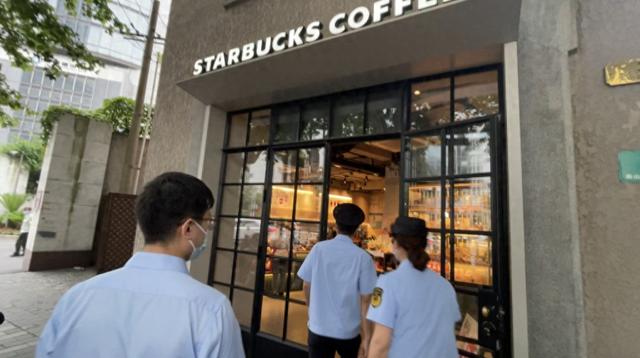
Core Viewpoint - The "Liangjian Pujiang" initiative in Shanghai aims to enhance personal information protection through legal enforcement, addressing the challenges posed by digital technology in daily life [1][9]. Group 1: Initiative Overview - The "Liangjian Pujiang" personal information protection enforcement action was launched in June 2023, focusing on consumer scenarios that frequently collect personal data [2][4]. - The initiative has evolved over three years, with 2023 focusing on "small cuts" in daily life, 2024 targeting typical scenarios, and 2025 aiming for ecological construction in governance [1][19]. Group 2: Enforcement Actions - The initiative identified eight consumer scenarios with significant data collection issues, including QR code dining, parking payments, and children's education [2][4]. - Major coffee chains like Starbucks were targeted for frequent data collection practices, leading to compliance training and guidance from regulatory bodies [5][6]. Group 3: Legal Framework and Governance - The implementation of the Personal Information Protection Law in 2021 marked a new phase in legal governance, with Shanghai establishing a scene-based governance model [9][10]. - The initiative has created a governance framework that includes collaboration among various departments, breaking down silos for effective enforcement [11][12]. Group 4: Innovative Solutions - The introduction of the "Pure Code" for parking payments allows users to pay without providing personal information, demonstrating innovative governance thinking [13][14]. - The initiative emphasizes a balanced approach to sensitive data collection, advocating for minimal use and maximum transparency [15][16]. Group 5: Long-term Mechanisms - The "Liangjian Pujiang" initiative has transitioned from a special action to a sustainable governance model, establishing a closed-loop enforcement process [19][20]. - By 2025, the initiative aims to solidify its achievements through continuous legal guidance and compliance resources for businesses [20][21].