Starbucks(SBUX)

Search documents
X @The Wall Street Journal
The Wall Street Journal· 2026-03-01 12:24
The marketing chief of Dutch Bros, which is on the heels of Starbucks, discusses the beverage wars https://t.co/jRHnr3alSN ...

Why Is Starbucks (SBUX) Up 4.5% Since Last Earnings Report?
ZACKS· 2026-02-27 17:36
Core Viewpoint - Starbucks reported mixed Q1 fiscal 2026 results, with earnings missing estimates but revenues exceeding expectations, indicating a potential for sustainable growth driven by the "Back to Starbucks" strategy [3][4]. Financial Performance - Earnings per share (EPS) for Q1 fiscal 2026 were 56 cents, missing the Zacks Consensus Estimate of 58 cents, and down 19% from 69 cents in the prior-year quarter [5]. - Net revenues reached $9.91 billion, surpassing the consensus mark of $9.64 billion, reflecting a year-over-year increase of 5.5% [5]. - Global comparable store sales increased by 4% year over year, supported by a 3% rise in comparable transactions and a 1% increase in average ticket [6]. Segment Analysis - North America segment net revenues were $7.28 billion, up 3% year over year, with comparable store sales rising 4% [8]. - International segment net revenues increased by 10% year over year to $2.06 billion, with comparable store sales up 5% [9]. - Channel Development segment net revenues grew by 20% year over year to $522.7 million, driven by contributions to the Global Coffee Alliance [10]. Margin and Cost Analysis - Non-GAAP operating margin contracted by 180 basis points to 10.1% due to increased labor costs and inflationary pressures [7]. - North America operating margin decreased by 480 basis points to 11.9%, while the International segment's operating margin improved by 100 basis points to 13.7% [8][9]. Financial Position - The company ended Q1 with cash and cash equivalents of $3.41 billion, up from $3.22 billion at the end of the previous quarter [11]. - Long-term debt remained stable at $14.6 billion [11]. Future Outlook - Starbucks anticipates global and U.S. comparable store sales to rise at least 3% in fiscal 2026, with overall net revenues expected to increase at a similar pace [12]. - Non-GAAP EPS is projected to be between $2.15 and $2.40, with plans to open approximately 600 to 650 net new locations [13].

净利暴跌40%,超3万家的瑞幸真的“碾压”星巴克了么?规模膨胀下的尴尬!
Xin Lang Cai Jing· 2026-02-27 11:39
Core Insights - Luckin Coffee has achieved significant growth in both scale and revenue, surpassing competitors like Starbucks, with a total revenue of 49.288 billion yuan in 2025, a year-on-year increase of 43.0%, and a total of 31,048 stores, a 39.0% increase [1][9] - However, the fourth quarter revealed a concerning drop in net profit by 39.1%, with the net profit margin plummeting from 8.8% to 4.1%, indicating that for every 100 yuan in revenue, only 4.1 yuan is profit [1][9] Group 1: Financial Performance - In 2025, Starbucks China reported revenue of approximately 22 billion yuan, only 44.6% of Luckin's revenue, with 8,011 stores, less than a quarter of Luckin's total [2] - Luckin's total operating expenses reached 11.955 billion yuan in Q4 2025, a year-on-year increase of 38.9%, outpacing revenue growth by 6 percentage points [3][16] - Delivery costs surged by 94.5% to 1.631 billion yuan, meaning that 1 yuan out of every 12 yuan in revenue is paid to delivery platforms [7][16] Group 2: Business Models - Luckin's "fast coffee" model is facing growth bottlenecks, as the marginal benefits of new stores decrease while costs continue to rise [5][6] - Starbucks' "third space" model shows resilience, with same-store sales growth for two consecutive quarters and a 9% year-on-year increase in same-store transaction volume [7] - The competition highlights two different growth philosophies: Luckin focuses on rapid expansion and market penetration, while Starbucks emphasizes profitability and customer loyalty [8][14] Group 3: Strategic Adjustments - Starbucks has made a significant strategic adjustment by transferring 60% of its core business in China to a local investor, aiming to enhance decision-making efficiency and market responsiveness [10] - The end of the price war indicates a shift in market dynamics, with both companies needing to prove their value propositions in a more normalized pricing environment [10][12] - Luckin's strategy of prioritizing scale is under scrutiny as the market questions the sustainability of growth without profit conversion [12][14]

一个小镇青年的春节账单:我在老家过春节,花钱像在一线
3 6 Ke· 2026-02-26 12:59
Core Insights - The 2026 Spring Festival has seen an unprecedented consumption boom in China's county towns, driven by returning young people who bring urban consumption habits back home [1][8][17] - Despite a national decline in box office revenue, county cinemas have raised ticket prices significantly, indicating a shift in consumer spending power in these areas [5][11] - The surge in consumption is not just a seasonal trend but reflects deeper changes in China's consumption structure, with county towns emerging as vital economic engines [17] Consumption Trends - During the Spring Festival, county towns experienced a dramatic increase in consumer activity, with restaurant revenues up by 36.2% year-on-year [5][11] - Coffee shops and tea houses in county towns reported long queues and high sales, with some establishments seeing sales triple compared to normal periods [3][12] - Young consumers are increasingly opting for leisure activities such as KTV and gaming, with significant growth in these sectors during the holiday [3][15] Price Dynamics - Average ticket prices in county cinemas have surged to 80-100 yuan, surpassing prices in major cities like Beijing and Shanghai [5][11] - The price of coffee and snacks in county towns is now comparable to that in first-tier cities, indicating a shift in local consumer expectations [2][6] Market Opportunities - The influx of young consumers returning home has activated the lower-tier market, leading to increased demand for modern retail formats like coffee shops and fitness centers [8][11] - Major brands like Luckin Coffee and Starbucks are expanding into county markets, recognizing the potential for growth in these areas [11][16] Challenges for Businesses - Many businesses that thrive during the Spring Festival face challenges in maintaining sales throughout the year, as the post-holiday period often sees a significant drop in customer traffic [13][15] - National chains must adapt to local market conditions and consumer preferences, which can vary significantly from urban areas [16][17] - The sustainability of the consumption boom in county towns will depend on businesses' ability to convert seasonal traffic into regular customers [17]

IPO-bound OYO parent PRISM appoints former SEBI chairman Ajay Tyagi to board
BusinessLine· 2026-02-25 07:32
Core Insights - PRISM, the parent entity of OYO, has appointed former SEBI Chairman Ajay Tyagi as an Independent Director to enhance its board and governance framework as it prepares for an IPO [1][3] - The company aims to raise ₹6,650 crore (approximately $800 million) through a confidential Initial Public Offering (IPO), with a projected valuation between $7-8 billion [3][4] Board Composition - The board includes notable Independent Directors such as William Steve Albrecht, Troy Matthew Alstead, Deepa Malik, Bejul Somaia, Sumer Juneja, and Aditya Ghosh, bringing diverse expertise in governance, consumer businesses, technology, and strategic investments [2] Ajay Tyagi's Background - Ajay Tyagi has extensive experience in capital-markets regulation, governance, and public-institution stewardship, which is expected to be invaluable for PRISM's growth and governance standards [3][4] - He served as the Chairman of SEBI from 2017 to 2022, overseeing India's securities markets and enhancing regulatory frameworks [5] - Tyagi has held various senior policy roles in the Indian government and currently serves as an Independent Director on multiple boards [6]

实探春节一线:连续3天日收超10万,奶茶“发财地图”变了
3 6 Ke· 2026-02-25 02:59
Core Insights - The beverage industry experienced significant growth during the extended Spring Festival holiday, with many brands reporting record sales and consumer demand [1][4][6] Group 1: Market Trends - Small towns and rural areas have become key contributors to beverage sales, with over 60% of stores in these regions outperforming national averages [4][6] - Brands like Gu Ming and Yi He Tang reported that some stores in third and fourth-tier cities achieved daily sales exceeding 1,000 cups, with certain locations reaching up to 3,000 cups [4][6] - The trend of returning youth bringing urban consumption habits back to their hometowns has led to an 85% increase in sales in county and town areas during the festival [6][8] Group 2: Consumer Behavior - There has been a notable increase in multi-cup orders, with sales of group meals (5 cups or more) rising to 1.5 times the usual volume during the holiday [10][12] - The practice of ordering multiple cups for family gatherings has become more common, with consumers often ordering seven to ten cups at a time [14][16] - The introduction of special seasonal products has resonated with younger consumers, making beverages a part of family traditions during the holiday [18][20] Group 3: Coffee Market Growth - Coffee shops in small towns have seen a surge in popularity, with some locations experiencing a doubling of revenue during the Spring Festival [20][22] - Unique coffee offerings and themed drinks have become popular among younger consumers, contributing to increased sales [20][22] Group 4: Promotional Strategies - Beverage brands have adopted innovative marketing strategies, including giveaways of gold bars and other high-value items to attract customers [31][33] - Social media engagement has increased, with consumers actively participating in promotional activities and sharing their experiences online [33] Group 5: Future Outlook - The beverage industry is expected to continue its growth trajectory, with a projected market size increase of over 20% by 2026 [39][41] - Companies are focusing on differentiation and quality to capture market share, particularly in underdeveloped areas [34][36]

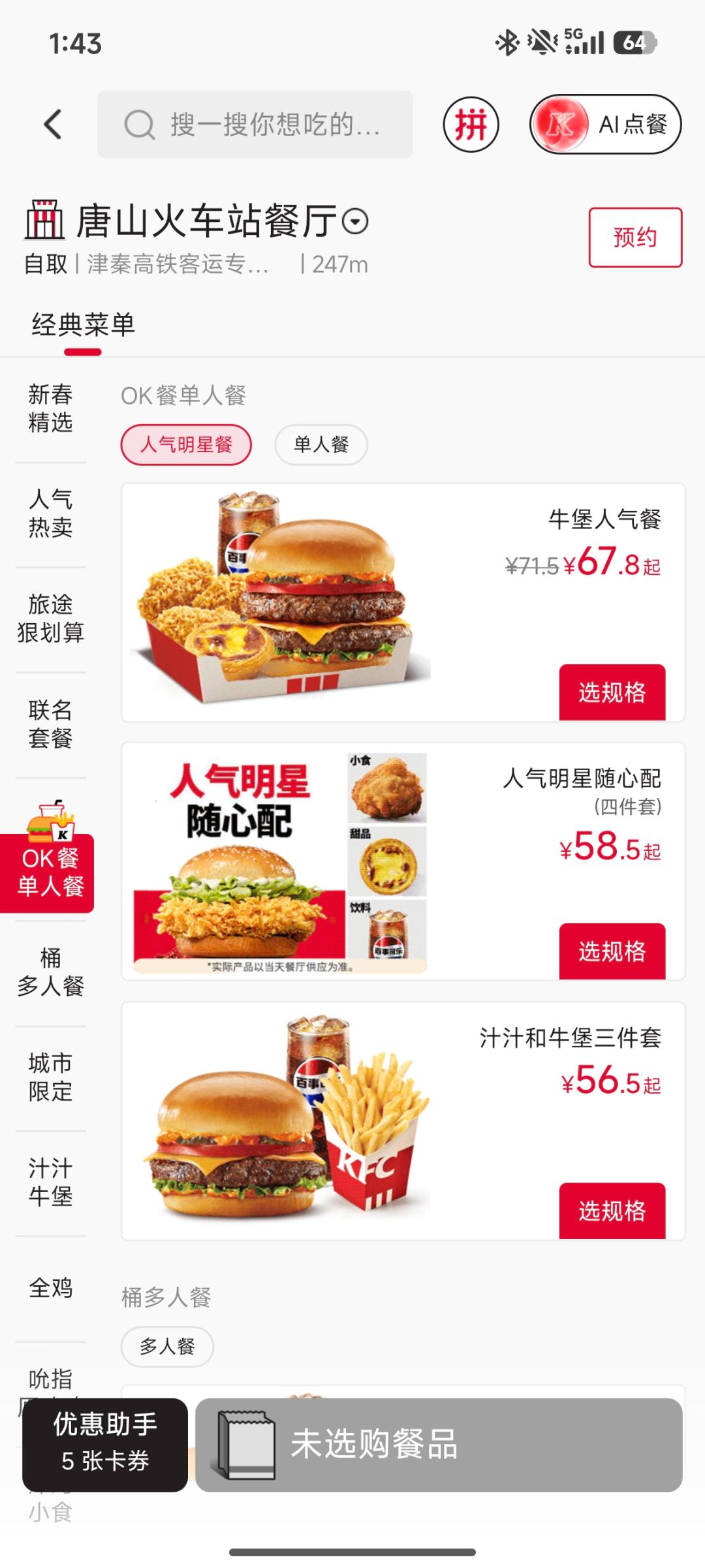
为什么在高铁、机场,肯德基涨价,星巴克不涨价?
3 6 Ke· 2026-02-25 02:35
Core Insights - The article discusses the pricing strategies of KFC and Starbucks in high-traffic transportation hubs, highlighting how different business models and brand philosophies influence their pricing decisions. Group 1: Pricing Strategies - KFC's pricing strategy in transportation hubs involves raising prices significantly due to high operational costs, including rent and revenue sharing, which are not sustainable under its traditional low-margin model [6][7][12] - Starbucks maintains a consistent national pricing strategy, leveraging its high gross margins to absorb increased costs without alienating customers [7][9] Group 2: Cost Structures - KFC's cost structure is heavily reliant on fresh ingredients and complex logistics, making it vulnerable to increased costs in high-rent areas [7] - Starbucks benefits from a lower cost of goods sold relative to its selling price, allowing it to maintain profitability even in high-cost environments [7][8] Group 3: Demand Elasticity - Consumer behavior in transportation hubs shows reduced price sensitivity due to limited options, allowing KFC to increase prices without losing significant sales [8][12] - Starbucks faces higher demand elasticity; significant price increases could lead to a drop in sales as consumers may opt for alternatives [8][9] Group 4: Brand Philosophy - KFC's approach is focused on maximizing transaction volume and market penetration, adapting its pricing to capitalize on high foot traffic [9][12] - Starbucks prioritizes brand consistency and customer experience, maintaining uniform pricing to uphold its premium brand image [9][11] Group 5: Competitive Landscape - KFC competes in a crowded fast-food market within transportation hubs, where price increases are common among competitors [12][13] - Starbucks operates in a less competitive space, allowing it to avoid price wars and maintain stable pricing [12][13] Group 6: Consumer Behavior Trends - Increasingly, consumers are using delivery apps to bypass high prices in transportation hubs, indicating a shift in consumer behavior that could challenge traditional pricing models [15][16]

最具价值和最强大的餐厅品牌25强2026年度报告(英)2026
Brand Finance· 2026-02-24 03:30
Investment Rating - The report indicates a stable investment environment for the restaurant sector, with a focus on brand value growth and resilience despite economic pressures [20][23]. Core Insights - The global restaurant sector's brand value reached a record $190.1 billion in 2026, with McDonald's leading at $42.6 billion, marking a 5% increase [10][30]. - Chick-fil-A emerged as the fastest-growing brand, with a 44% increase in brand value to $8.1 billion, driven by strong revenue and expansion [36]. - Haidilao retained its title as the strongest brand with a Brand Strength Index (BSI) score of 89.5/100, despite a slight decline in its score [49]. Sector Overview - The restaurant sector has shown resilience, with a collective brand value increase of approximately 20% since 2015, driven by changing consumer habits towards takeout and delivery [20][21]. - Technology investments, including AI-enabled forecasting and digital ordering, have become essential for growth, particularly in the US market [22]. - There is a noted disconnect between brand value growth and Brand Strength Index scores, indicating pressures on pricing and consumer trust [23]. Valuation Analysis - The top 10 restaurant brands remain stable, with minor shifts in rankings based on brand value growth rates rather than fundamental changes in competitive positions [25][34]. - McDonald's, Starbucks, and KFC maintain their top three positions, with brand values of $42.6 billion, $37 billion, and $16.5 billion respectively [30][31]. - Subway and Chick-fil-A showed significant growth, with Subway's brand value increasing by 18% and Chick-fil-A's by 44% [28][36]. Brand Strength Analysis - Haidilao is recognized as the strongest restaurant brand globally, followed closely by Greggs and McDonald's, with BSI scores of 89.5, 88.2, and 88.1 respectively [52][54]. - The report highlights the importance of local relevance and consumer perceptions in driving brand strength, as seen with Jollibee's performance in the Philippines [58]. Sustainability Analysis - Sustainability is increasingly influencing consumer choices, contributing to 6.4% of consideration in the restaurant sector [64]. - Brands like Chili's and Mixue are noted for their strong sustainability perceptions, which are linked to higher quality and credibility among consumers [65]. Brand Value Ranking - The report lists the top 10 most valuable restaurant brands for 2026, with McDonald's, Starbucks, and KFC leading the rankings [30][71]. - Notable newcomers include Mixue, valued at $4.6 billion, reflecting a strong focus on affordability and rapid expansion [44].



Citi Sees Continued Uncertainty around Starbucks (SBUX) Recovery, Cuts Target
Yahoo Finance· 2026-02-23 02:27
Core Insights - Starbucks Corporation (NASDAQ:SBUX) is recognized as one of the 13 Best NASDAQ Dividend Stocks to buy currently [1] - Citi analyst Jon Tower has lowered the price target for Starbucks from $94 to $92, maintaining a Neutral rating due to lingering uncertainties following the company's recent earnings report [2][8] Financial Performance - In fiscal Q1 2026, Starbucks reported a global revenue increase of 5% year-over-year, reaching $9.9 billion, with comparable store sales up by 4% [3] - Operating margin was recorded at 10.1%, and earnings per share (EPS) reached $0.56 [4] - North America revenue grew by 3% to $7.3 billion, while international markets saw a 10% revenue increase to $2.1 billion, indicating varied growth across regions [4] Strategic Initiatives - The company is focused on stabilizing and growing revenue as part of its "Back to Starbucks" plan, with expectations for earnings improvement to follow [3] - Starbucks is investing in technology, appointing Anand Varadarajan as Chief Technology Officer to enhance its technology platforms and operational efficiency [5] - The company is reviewing its menu and operations to ensure product availability while minimizing waste, as part of a broader efficiency improvement effort [4]
县城精品咖啡馆 , 靠春节“续命”
3 6 Ke· 2026-02-22 01:51
Core Insights - The article discusses the challenges faced by independent coffee shops in small towns, particularly in the context of rising competition from larger chain brands like Starbucks and Luckin Coffee, which have begun to dominate the market [2][3][9]. Group 1: Market Dynamics - The coffee market in China has seen significant growth, with the market size exceeding 380 billion yuan in 2021, and independent coffee shops initially thrived due to a lack of competition [6][18]. - In 2023, the growth rate of the coffee market in small towns surged to 66.68%, contrasting with the stagnation in first-tier cities, indicating a shift in consumer behavior and market dynamics [18][19]. - Major brands like Luckin Coffee and Starbucks are aggressively expanding into lower-tier cities, increasing competition for independent coffee shops [19][20]. Group 2: Consumer Behavior - Consumers in small towns are increasingly drawn to coffee shops for social and recreational purposes rather than as a daily necessity, making it difficult for independent shops to secure repeat customers [22]. - The average price of coffee in these shops, ranging from 30 to 40 yuan, does not align well with the average spending habits of local consumers, who often prefer cheaper alternatives [22][15]. Group 3: Operational Challenges - Independent coffee shops face high operational costs, including rent and employee wages, which can lead to financial strain, especially during off-peak seasons [10][11]. - Many independent coffee shop owners rely heavily on the revenue generated during the Chinese New Year holiday to sustain their businesses throughout the year, highlighting the seasonal nature of their income [12][18]. Group 4: Competitive Strategies - Some independent coffee shop owners are exploring alternative business models, such as collaborating with local communities or leveraging social media to enhance their visibility and customer loyalty [25]. - The article notes that while some independent shops struggle, others with established customer bases have managed to thrive despite the influx of larger brands [25].