Uber(UBER)

Search documents
Jim Cramer Discusses “Over Trading” In Uber (UBER) Stock
Yahoo Finance· 2026-02-18 17:50
Core Viewpoint - Uber Technologies, Inc. (NYSE: UBER) has experienced a significant decline in its stock price, despite reporting strong gross bookings and revenue growth, leading to discussions about investment strategies and market dynamics [2][3]. Financial Performance - Uber's shares are down by 13.6% over the past year and 15% year-to-date [2]. - The company reported gross bookings of $54.1 billion, exceeding analyst estimates of $53.1 billion [2]. - Revenue for the period was $14.37 billion, surpassing analyst expectations of $14.32 billion [2]. Market Sentiment and Analyst Commentary - Bank of America reduced its price target for Uber's stock from $110 to $109 while maintaining a Buy rating, anticipating bookings growth and revenue upside [2]. - Aristotle Capital noted that despite record trip volumes and significant year-over-year gross bookings growth, Uber's stock underperformed due to shifting investor focus towards margin trajectory and regulatory risks [3]. - Jim Cramer highlighted concerns about "over trading" in Uber's stock, suggesting a need for investors to adopt a more strategic investment approach [4]. Strategic Challenges - Management indicated a deliberate moderation in margin expansion as profits are reinvested into affordability and autonomous vehicle initiatives [3]. - Regulatory concerns, particularly in Europe regarding driver classification and data protection, pose potential cost and margin headwinds [3]. - Competitive pressures from advancements in autonomous vehicles, especially following Lyft's partnership with Waymo and Tesla's ambitions, are intensifying [3]. Long-term Outlook - Despite near-term challenges, the long-term thesis for Uber remains positive, supported by its global scale, deepening network effects, and growing free cash flow [3].

From Rides To Robots: Uber's Path Through The AV And AI Era
Seeking Alpha· 2026-02-18 16:48
Core Insights - The article emphasizes the importance of identifying businesses with strong cash generation capabilities and competitive advantages for long-term investment [1] - The author aims for a minimum of 15 percent annualized returns and is open to investing in takeover targets, provided they have robust business fundamentals [1] - The author has achieved an annualized time-weighted return of approximately 16 percent over three years of personal investing [1] Company Analysis - Uber Technologies is highlighted as a potential investment opportunity due to its strong cash-generating ability and competitive positioning [1] - The author expresses confidence in Uber's longevity and marketability, suggesting it could be a solid investment for the next decade [1] Investment Strategy - The investment strategy focuses on companies that are either undervalued relative to their asset base or have a strong business model that can withstand market fluctuations [1] - The author plans to continue improving investment returns through ongoing learning and market analysis [1]

Euronext quarterly revenue rises about 10%, matches forecasts
Reuters· 2026-02-18 16:46
Core Insights - Euronext reported a revenue of 456.4 million euros ($539.5 million) for Q4 2025, marking a nearly 10% increase from 2024 and aligning closely with the forecast of 457.1 million euros [1] - EBITDA rose by 8.9% to 275 million euros, meeting expectations but showing a slowdown from previous double-digit growth [1] - The company plans to propose a dividend of 321.5 million euros, representing 50% of its reported net income for 2025, at the upcoming annual general meeting in May [1] Listings Activity - After a period of low activity, Euronext experienced a resurgence in listings towards the end of 2025, highlighted by notable debuts such as Czech arms producer CSG and Magnum Ice Cream, which was spun off by Unilever [1] - The defense sector has emerged as a key area for IPOs, driven by high valuations and strong investor demand for growth opportunities [1] - Upcoming prominent listings in Paris are anticipated for 2026, including a dual listing for KNDS, a Franco-German tank manufacturer, planned for June or July [1] Market Consolidation - Euronext CEO Stéphane Boujnah emphasized the need for deeper pan-European market consolidation, particularly as the company integrates the recently acquired Athens Stock Exchange [1] - Boujnah argued that fragmented liquidity in Europe necessitates consolidation to effectively compete with major exchanges like NYSE and Nasdaq [1] - He suggested that some form of consolidation is likely within the next decade, either proactively or reactively in response to market pressures [1]

优步将推出激励措施,推动电动汽车充电桩建设
Xin Lang Cai Jing· 2026-02-18 16:21
Core Viewpoint - Uber announced an incentive policy to encourage the construction of electric vehicle charging stations in the communities where its drivers live and work, aiming to boost the electric vehicle market impacted by recent U.S. policy changes [3][4]. Group 1: Incentive Policy and Impact - Uber will ensure that charging stations installed in driver communities meet minimum usage hours, helping operators recover their investments more quickly [3][4]. - Despite a significant drop in electric vehicle sales due to policy changes, the growth rate of charging station installations reached a historical high last year, partly due to the increasing number of electric vehicle drivers among Uber's 13,000 drivers in New York City [3][4]. - Uber plans to promote the construction of 1,000 charging stations to alleviate the issue of charging accessibility for drivers who cannot charge at home [4][16]. Group 2: Collaboration and Infrastructure Development - Uber is collaborating with European charging company Ionity, which will utilize Uber's data to determine optimal locations for new charging stations [5][16]. - The company announced a $100 million investment to build charging hubs for autonomous electric vehicles, which may pose a threat to Uber's business model [6][16]. - Uber's partnership with EVgo indicates that ride-hailing drivers account for about 25% of the charging volume, up from 10% in 2021, highlighting the growing trend of electrification in ride-hailing services [8][18]. Group 3: Driver Support and Market Trends - Uber provides a $4,000 subsidy for drivers purchasing electric vehicles, contingent on completing at least 100 rides [19]. - A survey by Uber indicates that charging issues are a major barrier to purchasing electric vehicles, despite the lower costs of used electric vehicles compared to gasoline counterparts [18][19]. - The company aims to address the charging needs of renters and urban residents who rely on public charging stations, which are often overcrowded [4][16].
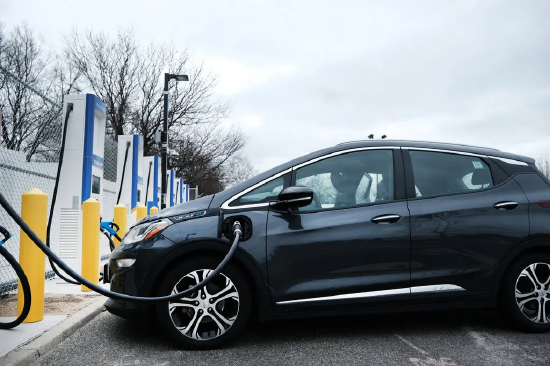
加码自动驾驶基建布局,优步(UBER.US)斥资1亿美元自建快充站
智通财经网· 2026-02-18 13:36
Core Viewpoint - Uber plans to invest over $100 million in building fast-charging stations for autonomous vehicles in the U.S. to establish a key position in the self-driving taxi industry [1] Group 1: Investment and Infrastructure - The investment will focus on developing high-capacity charging hubs in the San Francisco Bay Area, Los Angeles, and Dallas [1] - The funding will cover site development costs, equipment, grid connections, and capital expenditures related to charging infrastructure [1] - Uber aims to enhance efficiency, reduce costs, and maximize vehicle utilization and operational time by owning some of the charging stations [1] Group 2: Competitive Landscape - Uber is responding to Wall Street's skepticism about its human-driven ride-hailing platform by increasing investments to become a leading supplier and operational partner in autonomous driving technology [1] - The company has invested hundreds of millions in autonomous driving firms like Lucid, Nuro, and Wayve, and has agreements to purchase autonomous taxi fleets for large-scale deployment on its platform [1] Group 3: Strategic Partnerships and Services - Uber's autonomous driving strategy has received mixed reactions from investors, with its stock down 14% this year, while it remains optimistic about providing autonomous vehicle services in at least 10 cities by the end of 2026 [2] - The company plans to launch autonomous taxi services using Lucid and Nuro in the Bay Area and Volkswagen's autonomous delivery vehicles in Los Angeles this year [2] - Uber has partnered with Waymo in Austin and Atlanta to provide autonomous services, managing vehicle operations through third-party companies [2] Group 4: Charging Solutions and Electric Vehicle Strategy - Uber announced new agreements with charging operators to enhance charging convenience for its electric ride-hailing drivers, ensuring usage guarantees for partners [2][3] - The partnerships include companies like EVgo in New York, Los Angeles, San Francisco, and Boston, as well as Hubber in London and Ionity in Europe [3] - The shift in Uber's electric vehicle investment strategy comes as driver concerns about charging convenience have surpassed worries about vehicle purchase costs [3]
Uber to invest over $100 million in autonomous vehicle charging amid robotaxi push
Reuters· 2026-02-18 12:01
Core Insights - Uber Technologies announced an investment of over $100 million to develop autonomous vehicle charging hubs, highlighting its commitment to scaling up self-driving operations [1] Company Developments - The investment aims to enhance the infrastructure necessary for the deployment of autonomous vehicles, indicating a strategic focus on the future of transportation [1] - This move is part of Uber's broader strategy to integrate self-driving technology into its ride-hailing services, potentially transforming the company's operational model [1] Industry Trends - The development of charging hubs for autonomous vehicles reflects a growing trend in the transportation industry towards electrification and automation, as companies seek to innovate and improve efficiency [1] - The investment signifies a competitive push within the ride-hailing sector, as companies race to establish leadership in autonomous vehicle technology [1]
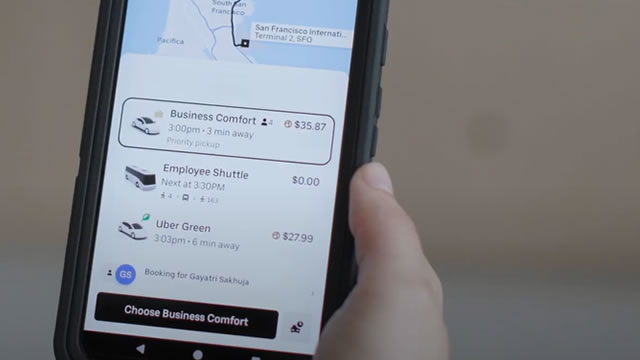
Uber Taking Steps to Expand Number of EV Chargers Near Its Drivers
Nytimes· 2026-02-18 12:00
Core Viewpoint - The company aims to promote the installation of chargers in neighborhoods where its drivers reside and work [1] Group 1 - The company will encourage charger operators to focus on locations that are convenient for its drivers [1]

The Optimist Fund Q4 2025 Quarterly Letter
Seeking Alpha· 2026-02-18 00:50
Core Insights - The Optimist Fund aims to deliver exceptional long-term investment performance, targeting capital compounding at mid-teens or better over decades [2] - The fund has been operational for nearly four years and is tracking positively towards its five-year investment lens [3] Performance Overview - As of December 31, 2025, the fund's compound returns are as follows: 1 Year: 32.2%, 2 Year: 48.4%, 3 Year: 59.1%, Since Inception: 19.1% [4] - In Q4 2025, the fund experienced a decline of 8.5%, but remains optimistic about the fundamental performance of its holdings [4] Investment Strategy - The fund focuses on identifying businesses where deep research reveals a gap between market expectations and long-term realities, referred to as developing unique insights [5] - The strategy emphasizes long-term investment outcomes over short-term volatility, allowing the fund to capitalize on market dislocations [9][10] Key Holdings and Performance - Top contributors in Q4 included Wayfair and Carvana, both showing significant year-over-year revenue growth [22][23][24] - Top detractors included ThredUp and Monday.com, with ThredUp showing strong fundamentals despite stock price declines [25][26][27] Portfolio Adjustments - The fund exited its position in Fiverr due to a lack of conviction in its growth trajectory, while initiating new positions in Root and Affirm [32][33][35] - DiscoverIE is highlighted as a high-quality industrial compounder with potential for significant EPS growth over the next five years [36][38][39] Future Outlook - The fund believes the next five years will outperform the previous four, driven by improved valuations and stronger underlying business fundamentals [20][21]







What Adyen gets by embracing Uber at the airport
Yahoo Finance· 2026-02-17 20:28
Core Insights - Uber has been utilizing Adyen's payment infrastructure for 17 years, focusing on expanding its presence in ride-hailing and embedded payments [1] - The partnership is now expanding with the introduction of airport kiosks that allow international travelers to connect with Uber drivers and pay using local payment methods [2] Expansion of Services - The first kiosk is located at La Guardia Airport, with plans for additional kiosks in other international airports, hotels, and ports [2] - Adyen has recently expanded its merchant acquiring services in several countries, including Japan, Mexico, New Zealand, and Australia, and has introduced new payment methods like Pix in Brazil and AfterPay in Australia [3] Payment Personalization - Adyen aims to support local payment methods for travelers from various regions, enhancing the user experience for Uber customers [4] - Uber's strategy includes creating local entities to improve approval rates and reduce costs associated with cross-border transactions [5] Competitive Landscape - Uber employs multiple payment service providers, including Adyen, Stripe, and PayPay, to ensure redundancy and optimize payment processing [6] - The collaboration with Adyen has resulted in increased transaction volume, particularly in the past year [6] Future Prospects - Uber is considering deploying kiosks in hotels and popular tourist destinations, indicating a strategy to further enhance customer convenience [6]
Life360 and Uber Announce New Integration to Help Families Stay Connected on Every Trip
Prnewswire· 2026-02-17 18:00
Core Insights - Uber and Life360 have expanded their strategic partnership to enhance family transportation coordination and safety [1] - The integration allows users to link their accounts for real-time trip tracking and ride booking, particularly benefiting parents and teens [1] - The collaboration aims to address the evolving needs of modern families, providing a seamless experience in managing transportation [1] Company Overview - Life360 serves approximately 95.8 million monthly active users across more than 180 countries as of December 31, 2025 [1] - Uber has completed over 61 billion trips since its inception in 2010, focusing on creating opportunities through movement [1] Product Features - The new integration will include features such as real-time trip tracking, ride booking, and membership benefits for Life360 and Uber users [1] - Uber's teen accounts, launched in 2023, allow teens aged 13-17 to request rides with parental supervision and safety features [1] - Only highly-rated drivers undergo a multi-step safety screening to accept requests from teen account holders [1]