UBS(UBS)

Search documents
X @Chainlink
Chainlink· 2025-11-04 11:05
Key Achievements - UBS successfully completed the world's first in-production, end-to-end tokenized fund workflow leveraging the Chainlink Digital Transfer Agent (DTA) technical standard [1] - The live transaction proves how fund operations can be seamlessly automated onchain for increased efficiency and utility gains [2] Companies & Assets - UBS, one of the world's largest private banks, manages over $6 trillion in Assets Under Management (AUM) [1] - DigiFT functioned as the onchain fund distributor and leveraged the DTA standard [2] Technology & Standards - The Chainlink DTA technical standard was leveraged to complete the first-ever subscription and redemption request of a tokenized fund [1] - The new end-to-end tokenized fund workflow covers every stage of the fund lifecycle [3] - Chainlink platform capabilities include Chainlink Runtime Environment (CRE), Cross-Chain Interoperability Protocol (CCIP), Automated Compliance Engine (ACE), and NAVLink [3][4]

UBS, Chainlink Execute First Onchain Tokenized Fund Redemption in $100T Market
Yahoo Finance· 2025-11-04 11:00
Core Insights - UBS has completed the first on-chain redemption of a tokenized fund using Chainlink's Digital Transfer Agent, marking a significant step in integrating blockchain technology with the global fund industry valued at $100 trillion [1][2] - The transaction involved the UBS USD Money Market Investment Fund Token (uMINT), which is built on the Ethereum blockchain [1] - This achievement highlights the potential of smart contract-based technologies to enhance fund operations and improve the investor experience, according to UBS' group chief operating and technology officer [2][3] Industry Developments - The transaction is part of UBS Tokenize, the bank's platform for blockchain-based financial products, indicating a broader trend towards tokenized finance [3] - By automating functions such as order-taking, execution, and settlement, the technology aims to reduce operational complexity and processing time within the $100 trillion global fund industry [4] - A recent pilot project demonstrated Chainlink's ability to connect existing bank systems to blockchains via Swift, allowing banks to utilize blockchain technology without needing to overhaul their legacy systems [5]

瑞银喊多黄金:回调已暂时平息,乐观目标看向4700
Jin Shi Shu Ju· 2025-11-04 08:16
瑞银(UBS)分析师表示,当前黄金市场的回调仅为暂时现象,金价仍有望达到每盎司4200美元;若地 缘政治或市场风险加剧,乐观情况下金价甚至可能冲高至每盎司4700美元。 "市场期待已久的回调已暂时平息,"瑞银在周一发布的研究报告中称,"除技术面因素外,我们未发现 此次抛售存在基本面支撑。" 这家瑞士银行业巨头指出,"价格动能减弱引发期货持仓量出现第二轮下滑",但同时强调,黄金的潜在 需求依然强劲。 瑞银分析师还援引世界黄金协会(World Gold Council)《第三季度黄金需求趋势报告》称,该报告证 实"各国央行与个人投资者的购金需求均表现强劲且持续升温"。 他们在报告中写道:"今年以来各国央行已购金634吨,虽低于去年同期速度,但第四季度购金量正逐步 回升,符合我们对2025年全年900-950吨购金量的预测。" 黄金ETF资金流入达222吨,金条与金币需求连续第四个季度超过300吨,这些数据均表明投资者对黄金 的兴趣已显著增强。瑞银指出,"珠宝需求也未如预期般疲软"。 "我们倾向于逢低买入黄金,"分析师表示,并补充称他们仍认为投资者对黄金的"配置比例偏低"。瑞银 建议,投资者应在投资组合中配置中等个 ...
瑞银:全球影子银行体系缺乏有效监管 美国保险业潜藏系统性风险
智通财经网· 2025-11-04 08:09
Core Viewpoint - UBS Chairman Colm Kelleher highlighted two major disconnections in global regulation: the lack of oversight in the shadow banking system and inconsistent regulatory speeds across regions [1] Group 1: Regulatory Concerns - Kelleher called for a relaxation of regulations in the banking sector to enable more capital to support credit provision to the real economy [1] - He cited the regulatory failures surrounding the Silicon Valley Bank incident, emphasizing that regulators have been overly rigid in applying rules [1] - The U.S. has recognized the need for effective regulatory mechanisms to promote economic growth after addressing banks' capital issues, with the UK gradually following suit [1] Group 2: Shadow Banking and Systemic Risks - Kelleher pointed out that excessive regulation has led to a significant shift of financial products from the banking system to the shadow banking sector, which is not subject to the same regulatory standards [1] - The U.S. government lacks a comprehensive understanding of the shadow banking situation, as it increasingly favors state-level regulation of the insurance industry over federal oversight, posing systemic risks [1]
瑞银敲响警钟:美国保险业浮现大量评级套利 系统性风险恐“日益逼近”
智通财经网· 2025-11-04 08:09
Group 1: Insurance Industry Risks - The chairman of UBS warns that the U.S. insurance industry is facing potential risks due to weak and complex regulation, exacerbated by unprecedented private financing growth [1] - There is a significant increase in the allocation of private debt investments by U.S. life insurance companies, with nearly one-third of their $5.6 trillion assets invested in this area last year, up from 22% a decade ago [1] - The rise of small rating agencies, which may be driven by commercial motives, poses a risk of inflated credit assessments, leading to systemic risks in the insurance sector [2] Group 2: Financial System Concerns - Recent bankruptcies of Tricolor Holdings and First Brands Group have raised concerns about potential hidden risks within the financial system, prompting warnings from JPMorgan's CEO [1] - The International Bank for Settlements (BIS) highlights that insurance companies often seek higher ratings to lower capital requirements, which can lead to reliance on smaller rating agencies [2] Group 3: Wealth Management Landscape - UBS chairman criticizes the Swiss market for losing its attractiveness as a wealth management center, facing significant competition from Hong Kong and Singapore [2] - By 2031, the private wealth managed in Hong Kong is expected to nearly double to $2.6 trillion, with Hong Kong projected to surpass Switzerland as the largest cross-border wealth management center this year [2] Group 4: UBS Strategic Moves - UBS is currently integrating Credit Suisse following a rescue plan agreed upon earlier this year, while also seeking to persuade the Swiss government to relax proposed banking regulatory reforms [3]
UBS Warns of Systemic Risk From Weak US Insurance Regulation
Insurance Journal· 2025-11-04 08:04
Group 1: Risks in the US Insurance Industry - UBS Group AG's chairman highlighted risks in the US insurance sector due to weak regulations and a surge in private financing [1][4] - The chairman noted a significant increase in private debt investments by US life insurers, with nearly one-third of their $5.6 trillion in assets allocated to this sector last year, up from 22% a decade ago [3] - Concerns were raised about the potential systemic risks to the banking system stemming from the rapid growth in private debt investments by insurers [3][4] Group 2: Rating Agency Concerns - The chairman pointed out the emergence of rating agency arbitrage in the insurance business, drawing parallels to the subprime crisis of 2007 [2] - Smaller rating agencies are increasingly used by insurers, which may lead to inflated assessments of creditworthiness due to commercial incentives [5] Group 3: Wealth Management Landscape - The chairman criticized Switzerland's declining status as a wealth management hub, facing competition from Hong Kong and Singapore [6] - Hong Kong's private wealth under management is projected to nearly double to $2.6 trillion by 2031, potentially surpassing Switzerland as the largest cross-border center [7] Group 4: UBS's Strategic Moves - UBS is currently integrating Credit Suisse following its acquisition in early 2023 and is negotiating with the Swiss government regarding proposed regulatory changes that could impose up to $26 billion in new capital requirements [8]


X @Bloomberg
Bloomberg· 2025-11-04 03:20
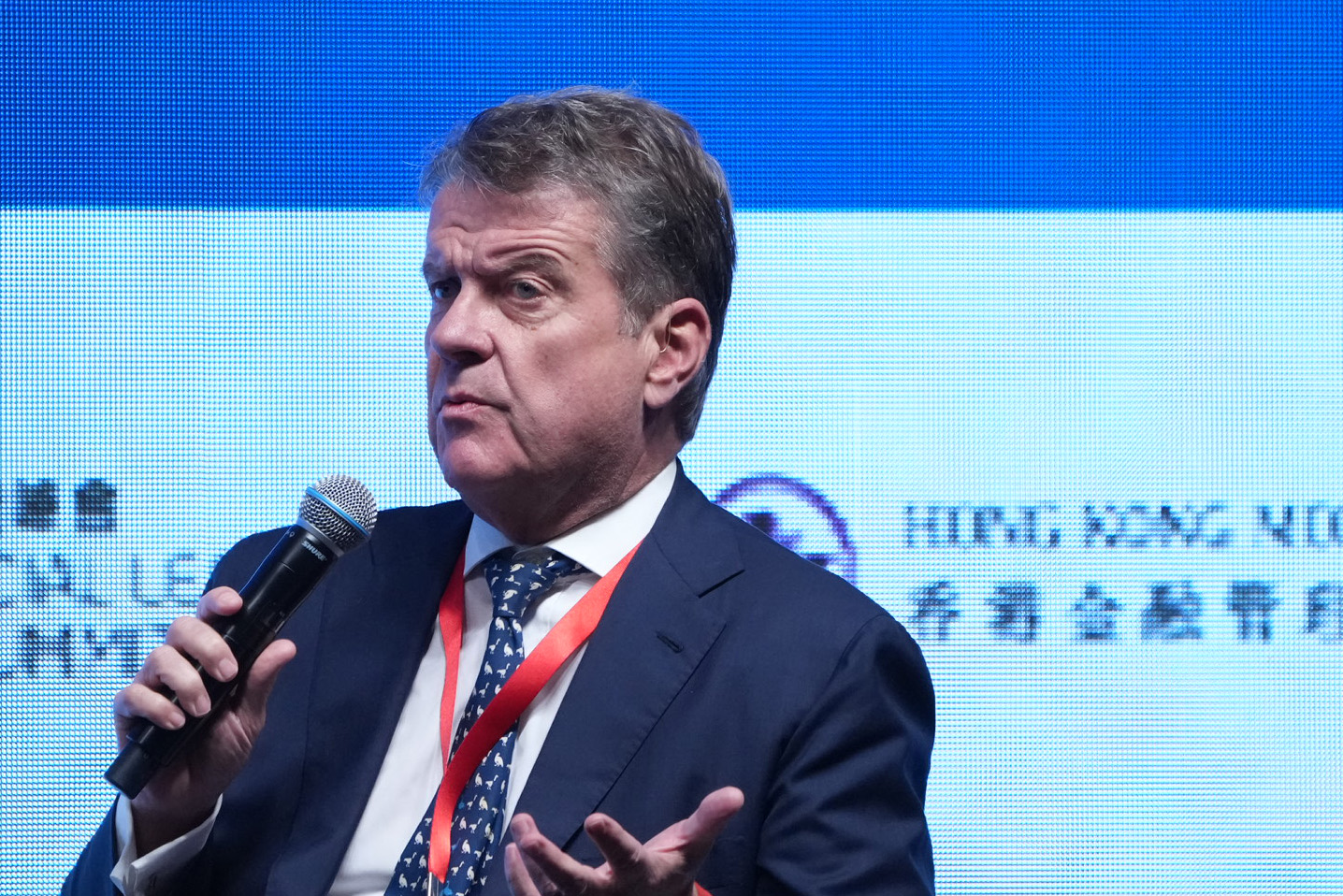
UBS Group’s chairman blasted his home market of Switzerland as losing its luster as a wealth management hub to Hong Kong and Singapore, while also warning against looming risks in the US insurance industry https://t.co/xq02rJJC2c ...
UBS chairman says Switzerland is having an 'identity crisis'
Reuters· 2025-11-04 03:10
Core Viewpoint - UBS Chairman Colm Kelleher stated that Switzerland is experiencing an "identity crisis" regarding its position in the global banking sector [1] Group 1 - The statement reflects concerns about Switzerland's evolving role in international finance [1]

Cisco Systems upgraded by UBS analysts on AI growth potential
Proactiveinvestors NA· 2025-11-03 20:24
Core Insights - Proactive provides fast, accessible, and informative business and finance news content to a global investment audience [2] - The company focuses on medium and small-cap markets while also covering blue-chip companies and broader investment stories [3] - Proactive's news team delivers insights across various sectors including biotech, mining, oil and gas, and emerging technologies [3] Technology Adoption - Proactive is committed to adopting technology to enhance workflows and content production [4] - The company utilizes automation and software tools, including generative AI, while ensuring all content is edited and authored by humans [5]

全球财富将迎来传承浪潮,家族艺术收藏如何转型?
第一财经· 2025-11-03 08:53
Core Viewpoint - The article discusses the unprecedented wealth transfer expected to occur globally over the next 20 to 25 years, amounting to $83 trillion, and its implications for the art market and collections [3][4]. Group 1: Wealth Transfer and Art Market Impact - The UBS Global Wealth Report predicts that approximately $9 trillion will be transferred between spouses, while $74 trillion will be passed down to the next generation [3]. - The art collection is a significant component of wealth for high-net-worth individuals, and the upcoming wealth transfer will influence art and collections [4]. Group 2: Female Wealth and Art Collection Trends - The UBS Art Market Report reveals a significant increase in female wealth, driven by rising incomes and improved opportunities in work and education [7]. - Female collectors are increasingly focusing on works by female artists, including both contemporary pieces and historically overlooked artists [8]. - Women collectors tend to be more sensitive to themes such as "motherhood" and are interested in the social value of collections, often integrating philanthropy into their collecting practices [8]. Group 3: Inheritance and Art Collection - In China, 97% of billionaires are self-made, and 47% of high-net-worth collectors have never inherited art, indicating a forthcoming large-scale transfer of wealth and art collections [9]. - The ideal scenario for art collection inheritance involves the next generation being involved from a young age, understanding the significance of collecting, and gradually taking over decision-making [9]. Group 4: Strategies for Collection Continuation - Some collectors may choose not to continue their collections, opting to sell them, a trend expected to increase as the art market matures in Asia [10]. - Charitable donations of important collections to public or private institutions are also common, often in a mixed approach where some pieces are retained for family legacy while others are sold or donated [10]. - A case study illustrates how a family found common ground between generations, leading to a decision on which artworks to keep and which to sell, emphasizing the narrative behind their collection [11].