Vale(VALE)

Search documents
大摩看好淡水河谷(VALE.US)2026年增长:铁矿石与铜矿业务双轮驱动
Zhi Tong Cai Jing· 2025-09-19 08:44
Core Viewpoint - Morgan Stanley's recent report on Vale (VALE.US) highlights discussions with CFO Marcelo Bacci regarding shareholder returns, railway operations, iron ore product flexibility, copper business growth strategies, and challenges in the nickel segment [1][2]. Group 1: Financial Strategies and Shareholder Returns - The company may distribute a special dividend if net debt falls below $15 billion, with expectations for this to occur by December 2025 if iron ore prices remain high and operations are stable [2][3]. - Management is optimistic about the Brazilian railway concession, despite previous unsuccessful negotiations with the government, and is focused on maintaining control over railway assets until 2057 [2][3]. Group 2: Market Outlook and Product Strategy - The iron ore market is expected to tighten by 2026, with prices projected to remain above $90 per ton, prompting Vale to invest in a flexible product portfolio with an annual capacity of 360 million tons [2][3]. - The company plans to focus on supplying high-silica iron ore to the Chinese market and introducing new mid-grade products, which could generate additional revenue [3]. Group 3: Copper and Nickel Business Developments - The copper business aims to increase production to 700,000 tons per year, primarily relying on internal resources rather than acquisitions, with the Manara project aligning with this growth strategy [3]. - Although the nickel segment has seen cost reductions, it has not yet reached breakeven, and there are no plans for expansion in Canada, with a preference for developing multi-metal mines instead [3].

Target initiated, Nike upgraded: Wall Street's top analyst calls
Yahoo Finance· 2025-09-18 13:38
Upgrades Summary - RBC Capital upgraded Nike (NKE) to Outperform from Sector Perform with a price target of $90, increased from $76, citing a "steeper revenue recovery" than market estimates due to new product contributions and World Cup sales [2] - Needham upgraded Amicus (FOLD) to Buy from Hold with a price target of $14, indicating reduced regulatory risk for Amicus' DMX-200 following FDA's decision regarding Travere's Filspari [2] - Goldman Sachs upgraded Stepstone Group (STEP) to Buy from Neutral with a price target of $83, up from $64, expecting a 25% CAGR in management fees from 2024-28 driven by growth in Private Wealth and record levels of shadow AUM [2] - RBC Capital upgraded CSX (CSX) to Outperform from Sector Perform with a price target of $39, increased from $37, viewing CSX shares as well positioned for consolidation scenarios in the railroad sector [2] - Scotiabank upgraded Vale (VALE) to Outperform from Sector Perform with a price target of $14, up from $12.50, anticipating benefits from the upcoming "decarbonization wave" [2]




X @Bloomberg
Bloomberg· 2025-09-17 21:48
A Brazilian court said that iron ore producer Vale lost 200 million reais after disadvantages in government decisions amid a corruption and money laundering scheme https://t.co/Dtm1wwplmb ...
【环球财经】淡水河谷加码投资 应对全球矿业格局新变局
Xin Hua Cai Jing· 2025-09-12 07:18
Group 1 - Vale S.A. plans to invest approximately 137 billion Brazilian Reais (around 180 billion RMB) over the next five years in Minas Gerais and Pará states to accelerate project development and technological upgrades [1] - Anglo American and Teck Resources announced a merger to form a new company "AngloTech" with an estimated market value of 53 billion Brazilian Reais (about 70 billion RMB), which is expected to enhance their competitiveness in the global mining market [1] - The merger is anticipated to strengthen the companies' positions in key metals, particularly copper, and highlights the need for Brazilian mining companies to increase investments to maintain competitiveness [1] Group 2 - Vale will invest 67 billion Brazilian Reais (approximately 88.5 billion RMB) in Minas Gerais, focusing on the development of Itabira and surrounding mining areas, tailings dam management, and innovative technology applications [2] - The Capão do Meio mine has resumed operations, with an expected annual production capacity of 15 million tons [1] - In Pará, Vale will advance the "New Carajás Project" with an investment of 70 billion Brazilian Reais (around 92.5 billion RMB), which includes mining restructuring and collaboration with its metal business to expand capacity in the Amazon region [2]
央行货币政策适度宽松 矿价延续震荡略偏强运行
Jin Tou Wang· 2025-09-11 07:10
News Summary Core Viewpoint - The iron ore market is experiencing a decline in transaction volumes and production, but there are signs of resilience in demand as the industry transitions from a seasonal low to a peak period [1][2][3]. Group 1: Market Activity - On September 10, the national main port iron ore transactions totaled 648,000 tons, a decrease of 30.55% month-on-month; forward spot transactions reached 1,055,000 tons [1]. - Daily pig iron production decreased by 112,900 tons to 2,288,400 tons, with a reduction noted around the military parade period, but recovery is expected post-parade as steel mills resume operations [1]. Group 2: Company Updates - Vale, a Brazilian mining company, reported that a fire at an auxiliary tower in its Ponta da Madeira port was extinguished without affecting iron ore shipping plans or expected shipment volumes [1]. Group 3: Industry Insights - According to Zhongzhou Futures, both production and consumption of the five major steel materials have declined, leading to an accumulation of total inventory. The expectation is for a significant rebound in pig iron production in the upcoming period [2]. - The real estate sector is showing poor performance in sales, starts, construction, and completions, while steel exports remain resilient with low total inventory levels for finished products [2]. - Chaos Tiancheng Futures noted a significant drop in iron ore shipments recently, but with rapid recovery in blast furnace operations, the fundamentals indicate a decrease in supply and an increase in demand, suggesting a slightly stronger price trend in the short term [3].
X @Bloomberg
Bloomberg· 2025-09-10 16:40
Company Strategy - Vale CEO 表示公司在铜矿竞争中落后 [1] - Vale 将加速自身矿业资产的开发,而非寻求潜在交易,以重新获得优势 [1]
BHP settles Australian Samarco shareholder class action for $72m
Yahoo Finance· 2025-09-09 09:24
BHP has reached a settlement agreement to resolve the Australian Samarco shareholder class action, which is pending approval by the Federal Court of Australia. The lawsuit was initiated on behalf of investors who purchased BHP shares before the 2015 Fundão tailings dam collapse. The class action was filed in the Federal Court of Australia in 2018, representing individuals who acquired shares in BHP Group Limited or BHP Group (UK) between 8 August 2012 and 9 November 2015. Samarco Mineração, the joint ve ...

淡水河谷重启卡帕内玛矿区 将投670亿雷亚尔推动绿色采矿
Zhong Guo Xin Wen Wang· 2025-09-05 13:46
Core Viewpoint - Vale has restarted the Capanema mine in Brazil after 22 years, planning to invest 67 billion reais (approximately 12.27 billion USD) by 2030 to enhance green mining technologies and expand production capacity [2][4]. Investment and Production Capacity - The Capanema mine is expected to increase Vale's annual production capacity by approximately 15 million tons, contributing to the goal of reaching a production capacity of 340 to 360 million tons by 2026 [4]. - Vale has already invested 5.2 billion reais in modernizing the mine, with construction taking five years and peak employment reaching around 6,000 workers [4][5]. Technological Advancements - The mine utilizes natural moisture separation technology, eliminating the need for water and the generation of tailings, thus reducing reliance on tailings dams [4]. - Vale has implemented five autonomous mining trucks and is reprocessing historical waste piles [4]. Economic Impact - The Capanema mine is projected to generate 440 million reais in royalties and create approximately 3 billion reais in salaries for 60,000 professionals [4]. - In 2023, Vale's operations accounted for 3.5% of Minas Gerais' GDP [5]. Environmental Initiatives - Future investments will focus on increasing the scale of tailings filtration and dry stacking, aiming to reduce the use of tailings dams from 30% to 20% [7]. - Vale is actively dismantling upstream dams, with eight out of thirteen currently undergoing removal, and all are under constant monitoring [7]. Circular Mining and By-product Development - Since 2020, Vale has been promoting circular mining in Minas Gerais, producing 9 million tons of iron ore in the first half of 2025, a 14% increase year-on-year [7]. - The company has achieved significant results in by-product development, with sustainable sand sales exceeding 3 million tons over two years [7].

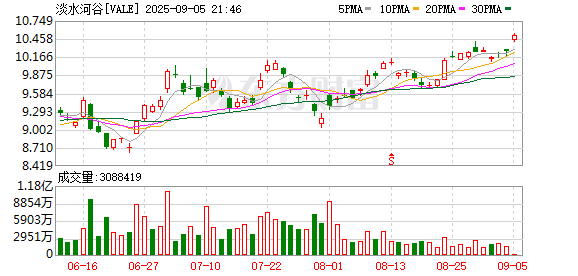
Vale: Staying The Course While The Cycle Works Against It
Seeking Alpha· 2025-09-05 03:59
Group 1 - The article supports a bullish thesis on Vale (VALE), emphasizing its solid operational efficiency as a unique characteristic of the company [1] - The analyst focuses on undercovered stocks primarily in Brazil and Latin America, occasionally discussing global large caps [1] - The article is part of a broader analysis that aims to identify investment opportunities in the market [1] Group 2 - The analyst has a beneficial long position in Vale shares, indicating confidence in the company's future performance [2] - The article reflects the analyst's personal opinions and is not influenced by external compensation [2] - There is no business relationship with any company mentioned in the article, ensuring an unbiased perspective [2]
铁矿周度发运报告-20250904
Zhong Xin Qi Huo· 2025-09-04 08:18
Report Summary 1. Report Industry Investment Rating No relevant content provided. 2. Report's Core View - The total global iron ore shipping volume this period was 3657 (+24) million tons. Specifically, Australia's shipping volume decreased quarter - on - quarter, while Brazil and non - mainstream countries' shipping volume increased quarter - on - quarter. The domestic ore arrival volume was 2526 (+133) million tons, as the ore from the previous shipping peak period arrived successively [2]. 3. Summary According to Relevant Catalog Global Shipping Volume - On August 29, 2025, the global shipping volume was 3556.8 million tons, with a quarter - on - quarter increase of 241 million tons and a year - on - year increase of 107.9 million tons [3]. Shipping Volume by Region - **Australia**: On August 29, 2025, the shipping volume was 1811.5 million tons, with a quarter - on - quarter decrease of 69.5 million tons and a year - on - year decrease of 24.6 million tons. Rio Tinto and non - mainstream mines decreased quarter - on - quarter, FMG's shipping volume slightly decreased, and BHP's shipping volume increased. Overall, Australia's shipping volume decreased [2][3]. - **Brazil**: On August 29, 2025, the shipping volume was 996.6 million tons, with a quarter - on - quarter increase of 184.9 million tons and a year - on - year decrease of 62.4 million tons. Vale's shipping volume increased quarter - on - quarter, while non - mainstream mines decreased [2][3]. - **Non - mainstream countries**: The shipping volume increased quarter - on - quarter [2]. Shipping Volume by Major Mines - **Rio Tinto**: On August 29, 2025, the global shipping volume was 611 million tons, with a quarter - on - quarter decrease of 114.1 million tons and a year - on - year decrease of 4.2 million tons; the shipping volume to China was 472.1 million tons, with a quarter - on - quarter decrease of 124.5 million tons and a year - on - year decrease of 31.8 million tons [3]. - **BHP**: On August 29, 2025, the global shipping volume was 522.7 million tons, with a quarter - on - quarter increase of 61.6 million tons and a year - on - year decrease of 49.5 million tons; the shipping volume to China was 447.4 million tons, with a quarter - on - quarter increase of 62 million tons and a year - on - year decrease of 31.8 million tons [3]. - **FMG**: On August 29, 2025, the global shipping volume was 435 million tons, with a quarter - on - quarter decrease of 0.4 million tons and a year - on - year increase of 60.9 million tons; the shipping volume to China was 388.7 million tons, with a quarter - on - quarter decrease of 28.1 million tons and a year - on - year increase of 70.9 million tons [3]. - **Vale**: On August 29, 2025, the global shipping volume was 803.7 million tons, with a quarter - on - quarter increase of 230.8 million tons and a year - on - year increase of 18.6 million tons [3]. Domestic Ore Arrival Volume - On August 29, 2025, the domestic ore arrival volume was 2526 million tons, with a quarter - on - quarter increase of 132.7 million tons and a year - on - year increase of 316.8 million tons [3]. Shipping Ratio to China from Australia - On August 29, 2025, the ratio of Australia's shipping volume to China was 0.801, with a quarter - on - quarter decrease of 0.081 and a year - on - year increase of 0.01 [3].