
Vale(VALE)

Search documents
铁矿石到货、发运周度数据(2025年第35周)-20250901
Bao Cheng Qi Huo· 2025-09-01 10:24
Group 1: Report Industry Investment Rating - No information provided Group 2: Core Viewpoints of the Report - Domestic arrivals at 47 ports reached 26.45 million tons, an increase of 1.827 million tons from the previous week, mainly due to an increase in Brazilian ore. Overseas ore shipments rebounded, with the total shipments from 19 global ports reaching 35.568 million tons, an increase of 2.4095 million tons from the previous week. According to ship schedules, arrivals of Australian and Brazilian ore at domestic ports are expected to increase, and overseas ore supply will remain at a high level [2] Group 3: Summary by Related Catalogs 1. Brief Evaluation - Domestic 47 - port arrivals increased, with the increment mainly from Brazilian ore. Overseas ore shipments rebounded, with increments from Brazilian and non - Australian - Brazilian ore, while Australian - Brazilian ore decreased slightly. Ship schedules indicate a rise in Australian and Brazilian ore arrivals at domestic ports and high overseas supply [2] 2. Ore Arrival and Shipment Data - **Arrival Data**: Northern six - port arrivals were 13.008 million tons, up 12.83% week - on - week; national 45 - port arrivals were 25.26 million tons, up 5.54% week - on - week; national 47 - port arrivals were 26.45 million tons, up 7.42% week - on - week. The increase in national 47 - port arrivals was mainly due to Brazilian ore, which increased by 21.72% week - on - week [3] - **Shipment Data**: Australian shipments (original caliber) were 16.409 million tons, down 4.54% week - on - week; Brazilian shipments (original caliber) were 9.741 million tons, up 30.21% week - on - week. The total shipments from 19 global ports were 35.568 million tons, up 7.27% week - on - week [3] 3. Relevant Charts - The report includes charts on domestic port arrivals, global iron ore shipments, shipments of the four major miners, and estimated domestic arrivals of iron ore [4][8][10]



全球矿业公司_从上半年业绩中吸取的经验:关注中国、关税问题。讨论铜矿项目-Big Global Miners_ Learnings from H1 earnings. Eyes on China, tariffs. Talking copper projects.
2025-08-31 16:21
Summary of Key Points from the Conference Call Industry Overview - The focus is on tariffs and China, with a mention of a potential "new" EU market [1] - Key themes post H1 results include the impact of tariffs on global growth and efficiency, particularly in the copper sector [2] Core Themes and Arguments - **Tariffs**: Ongoing changes are seen as detrimental to the US and global growth, with copper tariffs negatively affecting valuations [2] - **Dollar**: Speculation on whether the dollar has peaked or if further declines are expected, with the market pricing in potential rate cuts [2] - **China**: Mixed signals with credit data appearing stable, but property market issues persist; grid investment in China is projected to increase by 8% this year [2] - **Energy Transition**: Rapid developments outside the US, with battery storage becoming a new driver for metal demand and solar energy being the lowest cost option [2] Company-Specific Insights - **BHP**: Focus on smoothing copper production and managing costs despite project overruns [6] - **Rio Tinto**: New CEO, emphasis on copper growth and potential lithium price stabilization [6] - **Glencore**: Coal market recovery, but challenges in copper production expected in H2 [6] - **Anglo American**: Restructuring efforts and key commodities performing well [6] - **Vale**: Volume growth and cost improvements in base metals driving profits [6] - **Teck**: Issues with QB ramp-up affecting guidance despite copper growth [6] - **South32**: Copper and aluminum are key growth drivers, with challenges in nickel [6] - **Fortescue**: Profit impacted by iron price fluctuations, with a focus on decarbonization capital expenditures [6] - **Freeport**: Positioned as a leading copper company in the US, with growth driven by leaching processes [6] - **Antofagasta**: Notable 30% low-risk volume growth with strong copper leverage [6] - **ArcelorMittal**: Consolidation efforts in the EU market are generating investor optimism [6] Commodities Market Insights - **Copper**: Supply issues due to incidents in DRC and Chile, with treatment and refining charges remaining negative [4] - **Iron Ore**: Marginal cost support highlighted, with the market able to absorb new supply from Simandou [4] - **Lithium**: Prices recovering from lows due to supply cuts in China [4] - **Gold**: Current windfall cash flows in the sector, while bulk commodities show subdued free cash flow [4] Market Sentiment - The end of downgrades in many commodities is seen as a positive sign for the sector [5] - The overall equity story for the sector is improving, with many companies showing resilience despite market challenges [5] Additional Insights - The revenue breakdown indicates that copper and iron ore are key revenue drivers, accounting for over 60% of aggregate revenues for major companies [13][15] - The report includes detailed financial metrics and projections for various companies, indicating a cautious but optimistic outlook for the mining sector [12]


Should You Invest in VALE (VALE) Based on Bullish Wall Street Views?
ZACKS· 2025-08-26 14:30
Core Viewpoint - The average brokerage recommendation (ABR) for VALE S.A. is 2.00, indicating a Buy, based on recommendations from 14 brokerage firms, with 50% of these being Strong Buy [2][5]. Brokerage Recommendation Trends for VALE - The ABR of 2.00 is derived from 14 recommendations, with seven classified as Strong Buy [2]. - Despite the positive ABR, reliance solely on this metric for investment decisions may not be prudent, as studies indicate limited success of brokerage recommendations in predicting stock price increases [5][10]. Analyst Bias and Recommendations - Brokerage analysts tend to exhibit a strong positive bias in their ratings, with five Strong Buy recommendations for every Strong Sell [6][10]. - This bias suggests that the interests of brokerage firms may not align with those of retail investors, potentially misleading them regarding future stock price movements [7][10]. Zacks Rank vs. ABR - The Zacks Rank, which is based on earnings estimate revisions, is a more reliable indicator of near-term stock performance compared to the ABR [8][11]. - The Zacks Rank is displayed in whole numbers (1 to 5) and is updated more frequently than the ABR, which may not reflect the most current information [9][12]. Earnings Estimate Revisions for VALE - The Zacks Consensus Estimate for VALE has decreased by 0.7% over the past month to $1.69, indicating growing pessimism among analysts regarding the company's earnings prospects [13]. - This decline in earnings estimates has resulted in a Zacks Rank of 4 (Sell) for VALE, suggesting caution despite the Buy-equivalent ABR [14].

印尼主权财富基金:将与中国格林美、韩国Ecopro以及镍矿商淡水河谷和美都镍业共同投资开发镍加工项目
Zhi Tong Cai Jing· 2025-08-26 13:53
Group 1 - Indonesia's sovereign wealth fund will collaborate with China's Greeenmei, South Korea's Ecopro, and nickel miners Vale and Mindo Nickel to invest in nickel processing projects [1]

When Yield Meets Strategy: Vale's Rare Combination
Seeking Alpha· 2025-08-21 03:33
Group 1 - The core viewpoint is that Vale has not only reaffirmed its transformation process but has also deepened it, presenting unique strategic opportunities despite a challenging context [1]. Group 2 - The company is positioned as a value company with solid long-term potential, which aligns with the investment approach focused on identifying such opportunities [1].
四大矿山二季度产销数据简析
Hua Tai Qi Huo· 2025-08-12 00:52
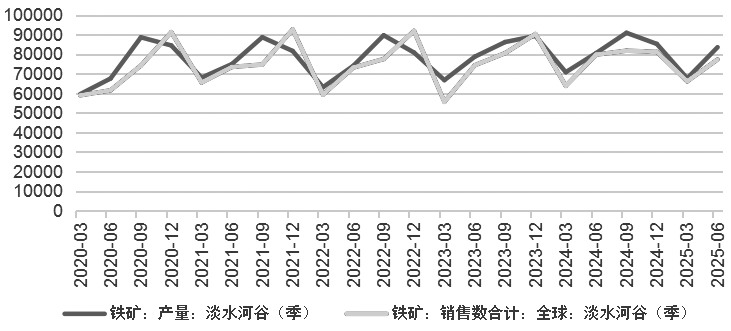
Report Industry Investment Rating No relevant content provided. Core Views - The production and sales of Vale in the second quarter showed differentiation, and the annual production target remained unchanged. Vale's quarterly iron ore production in the second quarter was 83.6 million tons, a quarter-on-quarter increase of 23.6% and a year-on-year increase of 3 million tons or 3.7%. The quarterly iron ore sales volume was 77.346 million tons, a quarter-on-quarter increase of 16.9% and a year-on-year decrease of 2.45 million tons or 3.1% [3][4]. - Rio Tinto's production and sales both increased significantly in the second quarter, and the shipment of Simandou iron ore was advanced to November. In the second quarter of 2025, Rio Tinto's iron ore production from its Pilbara operations was 83.74 million tons, a quarter-on-quarter increase of 20% and a year-on-year increase of 5.4%. The sales volume was 86.47 million tons, a quarter-on-quarter increase of 14.8% and a year-on-year decrease of 1.1%, with the decline significantly narrowing compared to the first quarter [5][6]. - BHP Billiton's iron ore production and sales both increased quarter-on-quarter and year-on-year in the second quarter, and the target for the 2026 fiscal year was slightly raised. In the second quarter of 2025, BHP Billiton's iron ore production from its Pilbara operations (100% basis) was 77.48 million tons, a quarter-on-quarter increase of 14.2% and a year-on-year increase of 0.9%. The total sales volume was 76.723 million tons, a quarter-on-quarter increase of 14.9% and a year-on-year increase of 1.1% [8][9]. - FMG's production and sales both increased quarter-on-quarter and year-on-year in the second quarter, and the single-quarter shipment reached a record high. In the second quarter, FMG's total iron ore processing volume was 54.4 million tons, a quarter-on-quarter increase of 14.3% and a year-on-year increase of 7.1%. The iron ore shipment volume reached 55.2 million tons, a quarter-on-quarter increase of 19.7% and a year-on-year increase of 2.8% [10]. Summary by Directory Vale - Production: The quarterly iron ore production in the second quarter was 83.6 million tons, a quarter-on-quarter increase of 23.6% and a year-on-year increase of 3 million tons or 3.7%. The increase was mainly due to the strong performance of the Brucutu mine in Minas Gerais and the record-high production of the S11D mine in Parana. The annual production target for 2025 is 325 - 335 million tons, and the new projects VGR1 and Capanema are expected to contribute incremental output in the second half of the year [3][16]. - Sales: The quarterly iron ore sales volume in the second quarter was 77.346 million tons, a quarter-on-quarter increase of 16.9% and a year-on-year decrease of 2.45 million tons or 3.1%. Sales decreased in most regions, with the overall sales volume turning negative year-on-year [4][21]. - Shipping and Arrival: From the steel shipping data, Vale's shipments showed a positive year-on-year growth in the second quarter. As of July 21, the cumulative year-on-year increase in iron ore shipments was 2.24 million tons, and the cumulative year-on-year decrease in China's port iron ore arrivals narrowed to about 5.6 million tons [26]. Rio Tinto - Production: In the second quarter of 2025, the iron ore production from its Pilbara operations was 83.74 million tons, a quarter-on-quarter increase of 20% and a year-on-year increase of 5.4%. The Simandou iron ore will ship its first cargo in November 2025, earlier than previously planned, with a limited supply volume this year [5][31]. - Sales: The sales volume in the second quarter was 86.47 million tons, a quarter-on-quarter increase of 14.8% and a year-on-year decrease of 1.1%, with the decline significantly narrowing compared to the first quarter. The 2025 Pilbara iron ore shipment target (100%) remains unchanged at 323 - 338 million tons, but the shipment volume is expected to be at the lower end of the guidance due to the difficult-to-make-up reduction caused by extreme weather events in the first quarter [6][36]. - Shipping and Arrival: The incremental iron ore shipments in the second quarter showed a pattern of high in the front and low in the back. As of July 21, the cumulative year-on-year decrease in iron ore shipments was 4.65 million tons, and the cumulative year-on-year decrease in shipments to China was 1.08 million tons. The cumulative year-on-year decrease in China's port iron ore arrivals was 1.66 million tons [44]. BHP Billiton - Production: In the second quarter of 2025, the iron ore production from its Pilbara operations (100% basis) was 77.48 million tons, a quarter-on-quarter increase of 14.2% and a year-on-year increase of 0.9%. The production in 2025 fiscal year was 288 million tons, the same as last year, meeting the fiscal year target. The target guidance for the 2026 fiscal year is 284 - 296 million tons (100% basis) [8][51]. - Sales: The total sales volume in the second quarter was 76.723 million tons, a quarter-on-quarter increase of 14.9% and a year-on-year increase of 1.1% [9][54]. - Shipping and Arrival: The shipments continued to recover year-on-year. As of July 21, the cumulative year-on-year decrease in iron ore shipments was 1.09 million tons, and the cumulative year-on-year decrease in shipments to China was 1.67 million tons. The cumulative year-on-year decrease in China's port iron ore arrivals reached 7 million tons [60]. FMG - Production and Sales: In the second quarter, the total iron ore processing volume was 54.4 million tons, a quarter-on-quarter increase of 14.3% and a year-on-year increase of 7.1%. The iron ore shipment volume reached 55.2 million tons, a quarter-on-quarter increase of 19.7% and a year-on-year increase of 2.8%, with a record-high single-quarter shipment [10][63]. - Iron Bridge Project: The Iron Bridge magnetite project contributed 2.4 million tons, with continuous production increase and still in the phased capacity ramp-up [63]. - Fiscal Year Target: The 2026 fiscal year shipment target is set at 195 - 205 million tons (with a target shipment volume of 10 - 12 million tons for the Iron Bridge project), with the upper and lower limits of the guidance target for the 2025 fiscal year increased by 5 million tons respectively [10][63]. - Shipping and Arrival: The cumulative year-on-year growth in shipments was maintained. As of July 21, the cumulative year-on-year increase in iron ore shipments was 5.59 million tons, and the cumulative year-on-year increase in shipments to China was 5.84 million tons. The cumulative year-on-year decrease in China's port iron ore arrivals was 3.07 million tons [66].
二季度四大矿山铁矿石产量同比均有增长
Qi Huo Ri Bao Wang· 2025-08-11 23:22
Core Insights - The global iron ore shipment volume in the first half of 2025 was 78.387 million tons, a slight year-on-year decrease of 0.23%, with the four major mining companies accounting for 67.2% of the total shipments, an increase of 0.4 percentage points from the previous year [1] - The production of the four major mining companies is expected to see a slight increase in the second half of the year, following a historical high in the second quarter [1] Group 1: Vale - Vale's iron ore production in Q2 reached 83.6 million tons, a quarter-on-quarter increase of 14.2% and a year-on-year increase of 4% [2] - The production showed regional differentiation, with the Northern system increasing production by 2.2 million tons, while the Southern system saw a decrease due to maintenance [2][6] - Vale maintained its annual production target of 325 million to 335 million tons, expecting to achieve the midpoint of this range [2] Group 2: Rio Tinto - Rio Tinto's Pilbara iron ore production in Q2 reached 83.74 million tons, a year-on-year increase of 20%, while shipments were 79.9 million tons, a slight decrease of 0.5% [7] - The West Angelas project is progressing well, with first shipments expected in November 2025, and a total output of 5 to 10 million tons anticipated for that year [7] - The company is also advancing other projects, including the Brockman Syncline 1, which has a projected investment of $1.8 billion and a design capacity of 34 million tons [8] Group 3: BHP - BHP's iron ore production in Q2 reached 70.3 million tons, a year-on-year increase of 2%, while shipments were 76.7 million tons, a year-on-year increase of 1.1% [10] - The company expects its total production for the 2025 fiscal year to reach 262.98 million tons, a year-on-year increase of 1% [10] - The South Flank project has significantly contributed to production, achieving over 80 million tons in its first year [12] Group 4: Fortescue Metals Group (FMG) - FMG's iron ore production in Q2 reached 54.4 million tons, a year-on-year increase of 14.3%, while shipments were 55.2 million tons, a year-on-year increase of 2.8% [13] - The company achieved record shipping volumes despite disruptions from tropical cyclones, demonstrating strong operational efficiency [14] - FMG's guidance for the 2026 fiscal year is set at 195 million to 205 million tons, indicating continued growth potential [14] Group 5: Overall Market Outlook - The four major mining companies collectively increased production in Q2, with a total estimated production of approximately 29.6 million tons, reflecting a significant recovery [15] - The overall market is expected to maintain stability in iron ore supply, with ongoing projects and production guidance indicating a slight increase in output for the second half of the year [15]
四大矿山供应显著改善
Guo Tou Qi Huo· 2025-08-06 11:16
Group 1: Production, Sales, and Shipping Volume - In Q2 2025, FMG's production was 83.6, a 23.6% increase from Q1 2025 and a 3.7% increase from Q2 2024; sales were 77.3, a 16.9% increase from Q1 2025 but a 3.1% decrease from Q2 2024 [7] - In Q2 2025, for another data set, production was 77.5, a 14.3% increase from Q1 2025 and a 0.9% increase from Q2 2024; sales were 76.7, a 14.8% increase from Q1 2025 and a 1.1% increase from Q2 2024 [7] - In Q2 2025, for yet another data set, production was 83.7, a 19.9% increase from Q1 2025 and a 5.3% increase from Q2 2024; shipping volume was 79.9, a 13.0% increase from Q1 2025 but a 0.5% decrease from Q2 2024; FMG's shipping volume was 55.2, a 19.7% increase from Q1 2025 and a 2.8% increase from Q2 2024 [7] Group 2: Product Data (PB and Others) - In Q2 2025, PB block was 11.2, with a -10% year - on - year change and a 14% quarter - on - quarter change; PB powder was 21.5, with a -13% year - on - year change and a 14% quarter - on - quarter change [15] - In Q2 2025, Robe River block was 1.4, with a 4% year - on - year change and a 20% quarter - on - quarter change; Robe River powder was 2.6, with a -15% year - on - year change and an 18% quarter - on - quarter change [15] - In Q2 2025, Yangdi powder was 10.6, with a -6% year - on - year change and a 14% quarter - on - quarter change; SP10 block was 8.3, with a 64% year - on - year change and a 3% quarter - on - quarter change; SP10 powder was 12.5, with a 52% year - on - year change and a 9% quarter - on - quarter change [15] Group 3: Other Product Data - In Q2 2025, Newman was 15.07, with a 5% year - on - year change and a 26% quarter - on - quarter change; Area C was 32.82, with a 13% year - on - year change and an 18% quarter - on - quarter change [22] - In Q2 2025, Yangdi was 3.85, with a -27% year - on - year change and a 1% quarter - on - quarter change; Jinbuba was 16.6, with a -14% year - on - year change and a 1% quarter - on - quarter change [22] Group 4: More Product Data - In Q2 2025, Tieqiao was 2.4, with a 300% year - on - year change and a 60% quarter - on - quarter change; Western Pilbara powder was 3.5, with a 192% year - on - year change and a 3% quarter - on - quarter change [25] - In Q2 2025, King powder was 3.5, with a 6% year - on - year change and a -13% quarter - on - quarter change; Mixed powder was 21.5, with a 4% year - on - year change and a 24% quarter - on - quarter change [25] - In Q2 2025, FMG block was 1.8, with no year - on - year change and a 0% quarter - on - quarter change; Super Special powder was 22.6, with a -19% year - on - year change and a 26% quarter - on - quarter change [25]
铁矿石与煤炭_中国的反内卷政策与大宗商品-Iron Ore & Coal_ China‘s Anti-Involution policy & commodities
2025-08-05 03:19
Summary of Key Points from the Conference Call Industry Overview - **Industry Focus**: The conference call primarily discusses the **basic materials sector** in China, particularly focusing on **coal**, **steel**, **cement**, and **lithium** in the context of China's **anti-involution policy** [5][12]. Core Insights and Arguments - **Anti-Involution Policy**: This policy aims to rectify low-price and disorderly competition, eliminate outdated capacity, and create a unified national market. It emphasizes sectors like **electric vehicles (EV)**, **solar**, and **e-commerce**, while focusing on **lithium** and **coal** in basic materials [5][12]. - **Coal Inspections**: The National Energy Administration (NEA) is inspecting coal mines in eight provinces to address overproduction. The impact is more significant in **metallurgical coal** (26% volume impact) compared to **thermal coal** (3% volume impact). Production cuts are anticipated, but execution remains uncertain [6][14]. - **Price Projections**: - **Met Coal**: Prices are expected to average around **RMB 1,200/ton** with potential curtailments [6][14]. - **Thermal Coal**: Prices may recover to **RMB 670/ton** during summer but are expected to soften in Q4, averaging **RMB 630/ton** in 2025 [14]. - **Steel Sector**: Steel is considered a lower priority in the anti-involution campaign due to previous successful reforms. Steel output has already declined by **7-9% year-on-year** in May-June [7][14]. Additional Important Insights - **Hydropower Project Impact**: The Yarlung Zangbo hydropower project, costing **RMB 1.2 trillion**, is expected to consume **4.3 million tons per annum (mtpa)** of cement and **0.6 mtpa** of steel, which is not anticipated to significantly impact overall commodity consumption [10][12]. - **Iron Ore Market**: Iron ore prices have increased from **$93/ton** to **$103/ton** due to expectations of property stimulus and supply reform. Steel production in China has slowed, and exports remain strong at **~112 million tons** in June [11][12]. - **Inventory Levels**: Both thermal and metallurgical coal inventories are healthier compared to earlier in 2025, with thermal coal inventories at Independent Power Producers (IPPs) remaining elevated [14]. Conclusion - The conference call provided a comprehensive overview of the implications of China's anti-involution policy on the basic materials sector, particularly coal and steel. The anticipated production cuts and price adjustments reflect the government's efforts to stabilize the market while addressing overproduction issues. The impact of new infrastructure projects on commodity demand appears limited, and the overall sentiment in the iron ore market remains cautiously optimistic.

综合晨报:美联储官员Daly称今年可能需要降息两次以上-20250805
Dong Zheng Qi Huo· 2025-08-05 01:17
Report Industry Investment Ratings - Gold: Short - term, the trend is expected to be oscillating and bullish [13] - US Dollar Index: Short - term, expected to be oscillating [17] - US Stock Index Futures: Attention should be paid to the risk of correction at the current level [19] - Stock Index Futures: It is recommended to allocate each stock index evenly [21] - Treasury Bond Futures: In early August, it is a favorable period for the bond market, but the upward rhythm is relatively tortuous. It is not recommended to chase the long position [25] - Soybean Meal: The futures price is expected to maintain a pattern of being strong domestically and weak overseas. If Sino - US relations do not make substantial progress, the price center is expected to rise [29][30] - Edible Oils (Soybean, Rapeseed, Palm): For palm oil, pay attention to Indonesia's production recovery in August; for soybean oil, pay attention to the sustainability of domestic exports [32] - Sugar: Zhengzhou sugar is expected to be weakly oscillating in the short - term, with an operating range of 5500/5600 - 5900 yuan/ton [37] - Steam Coal: The price is expected to oscillate around the long - term agreement price of 670 yuan. Pay attention to the price performance after the decline in rigid demand in mid - to late August [39] - Rebar/HRC: Adopt a cautious and oscillating approach in the near future [43] - Iron Ore: In the short - term, it is expected to continue the oscillating market. Pay attention to the impact of the switch of production restriction expectations [45] - Corn Starch: The price difference between rice and powder is expected to remain low and oscillating [49] - Corn: In the medium - to long - term, it is expected to maintain an oscillating downward trend. It is recommended to hold new - crop short positions [51] - Coking Coal/Coke: In the short - term, it is expected to be oscillating. The 09 contract will focus on the delivery situation [54] - Polysilicon: In the short - term, the price is expected to operate between 45000 - 57000 yuan/ton. Consider a callback - bullish strategy and sell out - of - the - money put options [57] - Industrial Silicon: The short - term decline sentiment has not been fully released. Consider gradually closing short positions and look for potential long - entry opportunities later [59] - Lead: Pay attention to short - term buying opportunities at low prices and manage positions well. For arbitrage, temporarily observe. Consider long - short arbitrage opportunities between domestic and foreign markets [61] - Zinc: Unilaterally, it is recommended to observe. Low - position speculative long positions can be held in the short - term. For arbitrage, pay attention to medium - term long - short arbitrage opportunities. Observe the domestic and foreign markets [66] - Copper: Unilaterally, it is expected to oscillate at a high level. Pay attention to overseas mine disturbance risks. Consider long positions at low prices. For arbitrage, pay attention to the copper long - short arbitrage strategy between domestic and foreign markets [71] - Lithium Carbonate: Consider lightly going long at low prices. For the 9 - 11 spread, take profit [73] - Nickel: In the short - term, it is difficult for the price to fall deeply. Pay attention to band trading opportunities [76] - Liquefied Petroleum Gas: The price is expected to be weakly oscillating [79] - Crude Oil: Short - term price volatility is expected to increase [82] - Caustic Soda: The subsequent market is expected to be oscillating [83] - Pulp: The futures price is expected to decline following the commodities [85] - PVC: The futures price is expected to decline following the commodities [86] - Styrene: The near - month contract is expected to be weakly oscillating. For pure benzene, consider allocation opportunities if the expected decline occurs [89][90] - Bottle Chip: Consider the opportunity to expand the processing margin by rolling long at low prices [93] - Urea: The Indian tender result is better than expected, which may support the futures price [96] Core Views - The employment market data is weakening, and the Fed's expectation of interest rate cuts is increasing. Gold is oscillating and bullish in the short - term. The US dollar is affected by Trump's tariff policy and is expected to be oscillating in the short - term [12][16][17] - A - share market shows strong resilience, with high risk appetite. The service trade deficit in China has decreased significantly in the first half of the year [21] - In the agricultural product market, the increase in sugar imports in some countries indicates low global consumer inventories. The supply and demand of various agricultural products are affected by factors such as production, weather, and inventory [26][36] - In the black metal market, steel prices are oscillating, and the impact of environmental protection production restrictions on actual output needs to be rationally evaluated. The supply and demand of coal and iron ore are affected by factors such as weather and policy [38][42] - In the non - ferrous metal market, the price trends of different metals are affected by factors such as production, demand, and policy. For example, copper is affected by the Fed's interest rate cut expectation and overseas mine disturbances [71] - In the energy and chemical market, the prices of various products are affected by factors such as supply, demand, and international market conditions. For example, the price of crude oil is affected by OPEC+ production decisions and Trump's tariff policy [81] Summary by Directory 1. Financial News and Reviews 1.1 Macro Strategy (Gold) - Trump plans to significantly increase tariffs on India, and the Fed's interest rate cut expectation is increasing. Gold is oscillating and bullish in the short - term [11][12][13] 1.2 Macro Strategy (Foreign Exchange Futures - US Dollar Index) - Trump's tariff policy against India and the Fed official's statement on interest rate cuts. The US dollar is expected to be oscillating in the short - term [15][16][17] 1.3 Macro Strategy (US Stock Index Futures) - The EU suspends trade counter - measures against the US, and the June factory orders in the US decreased. Attention should be paid to the risk of correction at the current level [18][19] 1.4 Macro Strategy (Stock Index Futures) - China's service trade deficit decreased in the first half of the year. A - shares show strong resilience. It is recommended to allocate each stock index evenly [21] 1.5 Macro Strategy (Treasury Bond Futures) - The central bank conducts reverse repurchase operations. In early August, it is a favorable period for the bond market, but the upward rhythm is tortuous. It is not recommended to chase the long position [22][24][25] 2. Commodity News and Reviews 2.1 Agricultural Products (Soybean Meal) - Brazil's soybean production is expected to increase, and the US soybean's good - to - excellent rate is 69%. The domestic soybean meal futures price is expected to be strong domestically and weak overseas [26][27][29] 2.2 Agricultural Products (Soybean, Rapeseed, Palm Oils) - The inventory of soybean oil increased, and that of palm oil decreased. Pay attention to Indonesia's palm oil production and the sustainability of domestic soybean oil exports [31][32] 2.3 Agricultural Products (Sugar) - Pakistan and the Philippines plan to import sugar. The international sugar price is expected to be weakly oscillating, and Zhengzhou sugar is expected to be weakly oscillating in the short - term [34][35][37] 2.4 Black Metals (Steam Coal) - Rainfall in Inner Mongolia affects coal production. The coal price is expected to oscillate around 670 yuan, and pay attention to the price after the decline in rigid demand [38][39] 2.5 Black Metals (Rebar/HRC) - Trump's tariff policy on multiple countries. Steel prices are oscillating, and the impact of environmental protection production restrictions needs to be rationally evaluated [40][42][43] 2.6 Black Metals (Iron Ore) - The transportation of Mariposa iron ore is approved. The iron ore price is expected to oscillate in the short - term [44][45] 2.7 Agricultural Products (Corn Starch) - The prices of starch by - products are weak and stable. The price difference between rice and powder is expected to remain low and oscillating [46][49] 2.8 Agricultural Products (Corn) - Typhoons affect the weather in some areas. Corn is expected to decline oscillatingly in the medium - to long - term [50][51] 2.9 Black Metals (Coking Coal/Coke) - Rainfall in Inner Mongolia affects coal production. The coking coal and coke prices are expected to be oscillating in the short - term [52][53][54] 2.10 Non - Ferrous Metals (Polysilicon) - India releases a solar cell list. The polysilicon price is expected to operate between 45000 - 57000 yuan/ton in the short - term [55][57] 2.11 Non - Ferrous Metals (Industrial Silicon) - The production of industrial silicon in July increased. The short - term decline sentiment has not been fully released [58][59] 2.12 Non - Ferrous Metals (Lead) - The lead ingot inventory decreased slightly. Consider short - term buying opportunities at low prices [60][61] 2.13 Non - Ferrous Metals (Zinc) - The zinc inventory increased. The zinc price is expected to be oscillating, and pay attention to the integer - level support [62][65][66] 2.14 Non - Ferrous Metals (Copper) - Vale emphasizes copper growth. The copper price is expected to oscillate at a high level, and pay attention to overseas mine disturbances [67][71] 2.15 Non - Ferrous Metals (Lithium Carbonate) - MinRes and Dynamic modify the lithium joint - venture terms. Consider lightly going long at low prices [72][73] 2.16 Non - Ferrous Metals (Nickel) - The price of nickel iron is difficult to repair. Nickel is expected to have band trading opportunities [75][76] 2.17 Energy and Chemicals (Liquefied Petroleum Gas) - The price of LPG is expected to be weakly oscillating [78][79] 2.18 Energy and Chemicals (Crude Oil) - Trump threatens to increase tariffs on India. Short - term price volatility is expected to increase [80][81][82] 2.19 Energy and Chemicals (Caustic Soda) - The caustic soda market is expected to be oscillating [82][83] 2.20 Energy and Chemicals (Pulp) - The pulp market is expected to decline following the commodities [84][85] 2.21 Energy and Chemicals (PVC) - The PVC market is expected to decline following the commodities [86] 2.22 Energy and Chemicals (Styrene) - The near - month contract of styrene is expected to be weakly oscillating. For pure benzene, consider allocation opportunities if the expected decline occurs [87][89][90] 2.23 Energy and Chemicals (Bottle Chip) - Consider the opportunity to expand the processing margin by rolling long at low prices [92][93] 2.24 Energy and Chemicals (Urea) - The Indian tender result is better than expected, which may support the futures price [95][96]